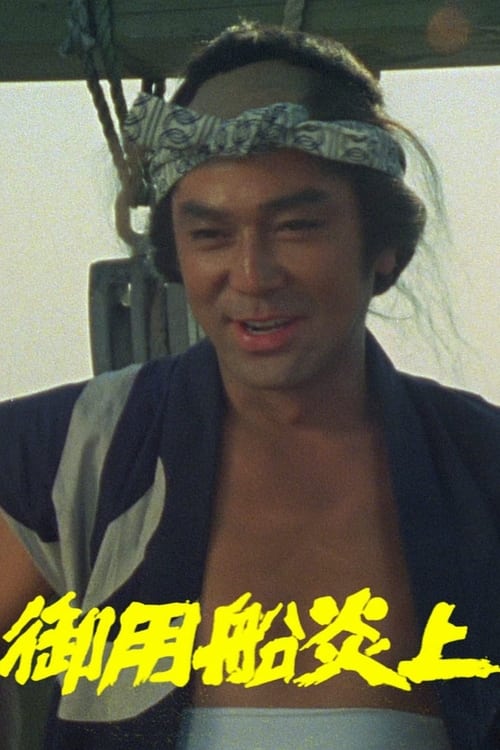
Akio Satake
Acting
Known For

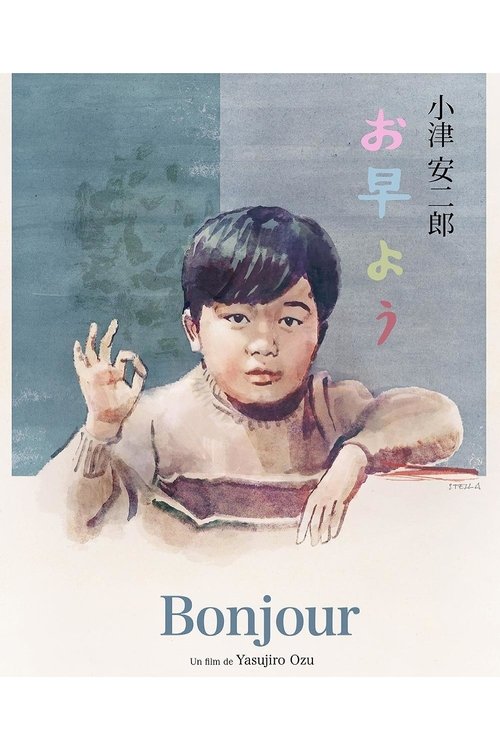
A lighthearted take on director Yasujiro Ozu’s perennial theme of the challenges of intergenerational relationships, Good Morning tells the story of two young boys who stop speaking in protest after their parents refuse to buy a television set. Ozu weaves a wealth of subtle gags through a family portrait as rich as those of his dramatic films, mocking the foibles of the adult world through the eyes of his child protagonists. Shot in stunning color and set in a suburb of Tokyo where housewives gossip about the neighbors’ new washing machine and unemployed husbands look for work as door-to-door salesmen, this charming comedy refashions Ozu’s own silent classic I Was Born, But . . . to gently satirize consumerism in postwar Japan.
Good Morning

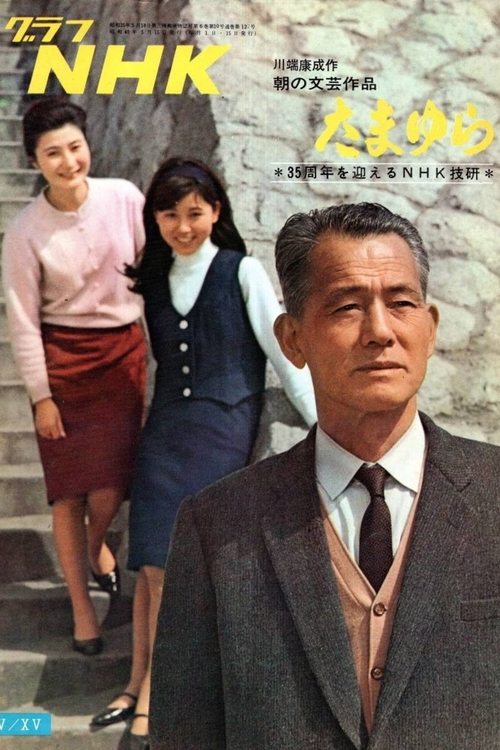
The 5th NHK Asadora. Starring Chishuu Ryuu as an old man who begins to travel after he retires. From a story written for television by Yasunari Kawabata.
Tamayura

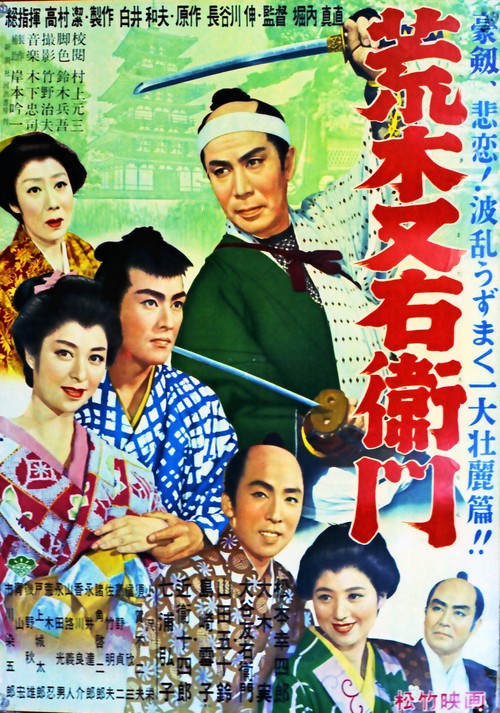
Watanabe Kazuma and Kawai Matagorō from the Bizen Okayama Ikeda clan were close friends, but they inevitably became enemies after Matagorō killed Kazuma's younger brother, Gentayū, and fled. Seeking assistance, Kazuma asked his brother-in-law, Araki Mataemon, for help, but Mataemon refused, saying that it was against the code for a brother to avenge another brother's death. On the other hand, the lord of the clan, Ikeda Tadao, ordered a search for Matagorō, who was found to be sheltered by the Hatamoto, including Andō Jiemon, in Edo. Tadao was furious but unable to act. Matagorō, in Edo, came to regret his birth as a samurai. He met and fell in love with Okō, a bathhouse maid. As the discord between the Hatamoto and the Ikeda clan deepened, Tadao died of illness. Seizing the opportunity to ease the conflict, the shogunate ordered the Ikeda clan to be succeeded by the young lord Katsugorō and to relocate to the Ikeda clan of Inshū Tottori. Meanwhile, Matagorō was exiled from Edo.
荒木又右衛門

No description available.
Goyou Sen Enjou

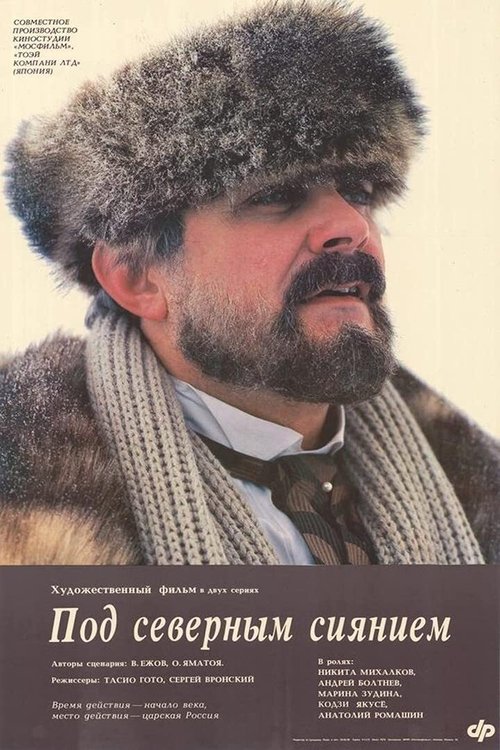
The story of a man and a wolf-dog in East Siberia during the early 1900s.
Aurora Borealis

No description available.
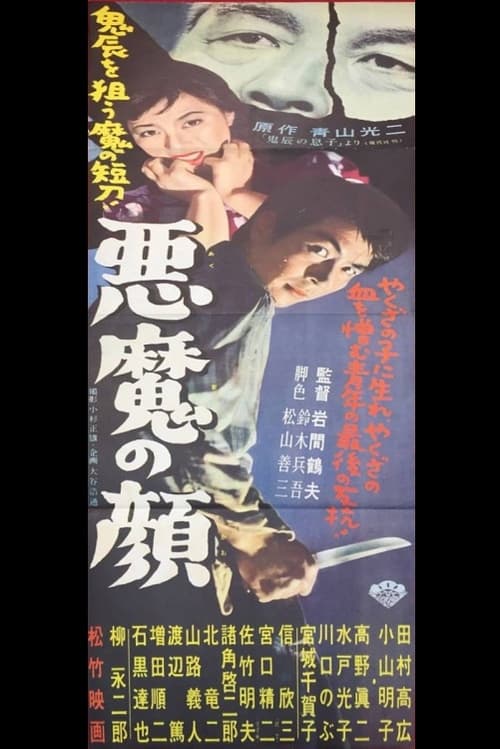
Akuma no kao
No description available.
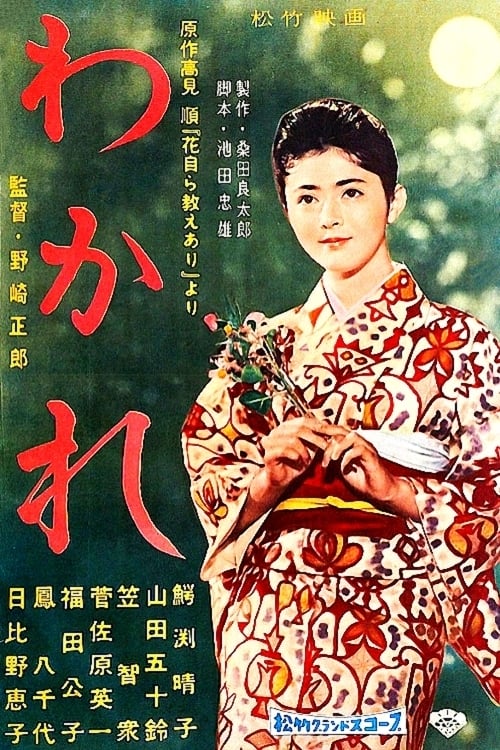
Hearts A-Flutter

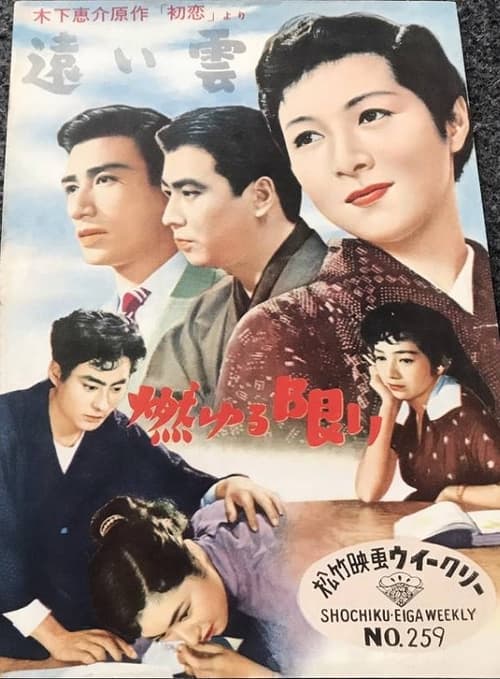
A mother and her daughter who run a quiet mountain hotel, and guests who visit the hotel. A girl who does not know what a broken heart is, the attractive joy of first love, and separation is like parting with life. The mother-daughter duet with Isuzu Yamada attracted a lot of attention at that time. Haruko Wanibuchi, demonstrated rare attractiveness and pure charm by playing a heroine living in a beautiful and pure first love.
Love in the Mountains

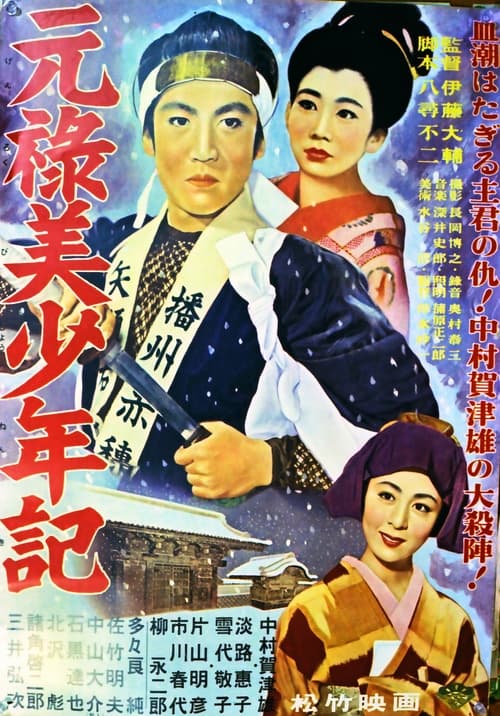
On February 4th of the 16th year of the Genroku era, Yatō Uemon no Shichi reminisces while waiting his turn for seppuku at the Mizuno residence. When news of his lord, Asano Naganori, attacking Kira Yoshinaka in the palace reached Akō, Uemon no Shichi was sixteen. The family elder, Ōishi Kuranosuke, determined to avenge, gathered allies, but Uemon no Shichi's father, Chōsuke, being sickly and considered too young, was not included. Chōsuke committed suicide.
元祿美少年記

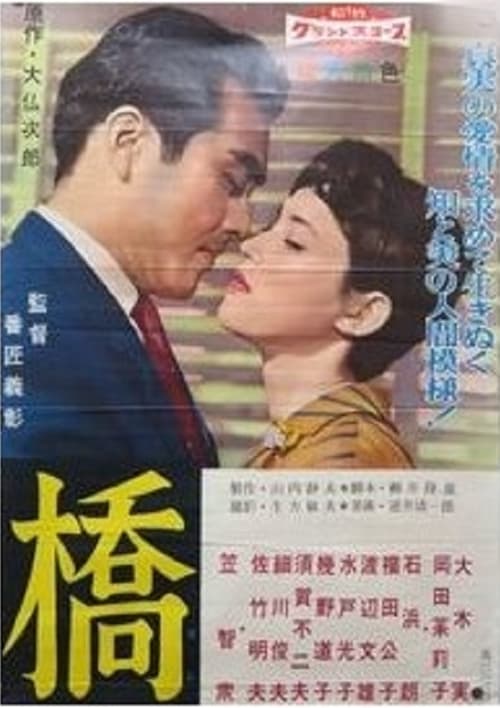
A 1959 Yoshiaki Bansho adaptation of an Osaragi Jiro story.
Bridge

1960 Japanese movie
Jiyūgaoka fujin

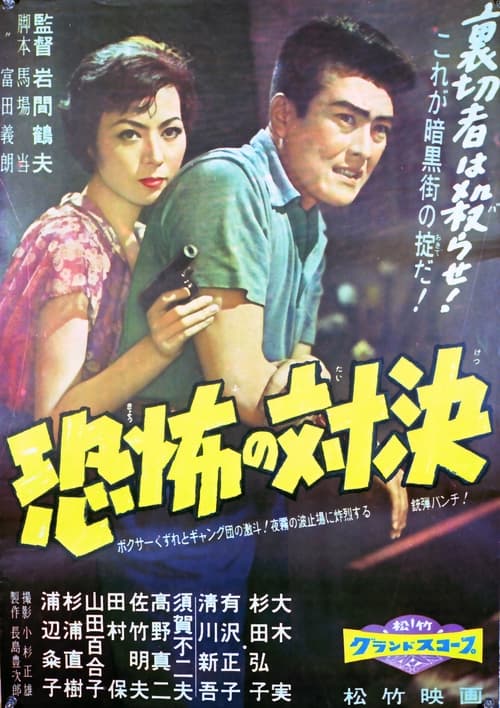
Former boxer Goro Kawasaki was attacked by the organizer of the fights for knocking out his opponent because he could not stand the fight. He is being released from prison, where he was imprisoned on charges of causing bodily harm. He meets his younger brother Fumio, who is going to become a boxer and dreams of owning his own car repair shop. Goro tries to help Fumio, but is refused. At this time, the boss of the underworld, whom Goro met in prison, is released, and this escalates into a confrontation involving Goro and Fumio.
Confronting Fear

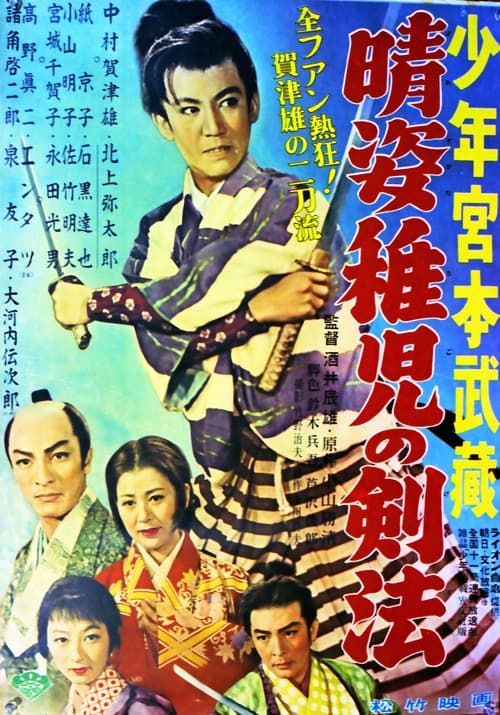
Underneath Himeji Castle, Miyamoto Bensuke was determined to inherit the will of his late father, Shinmen Munenori, and aimed to become a great swordsman. For this purpose, he challenged anyone he could to matches and eventually forced a duel upon a martial artist named Arima Kihei, whom he killed. Munenori's old friend, the monk Guan Ando, reprimanded Bensuke's brutality and told him to go to the capital to refine his skills.
晴姿稚児の剣法

1956 Japanese movie
Midori naru hito: kōhen ai no honryū

No description available.
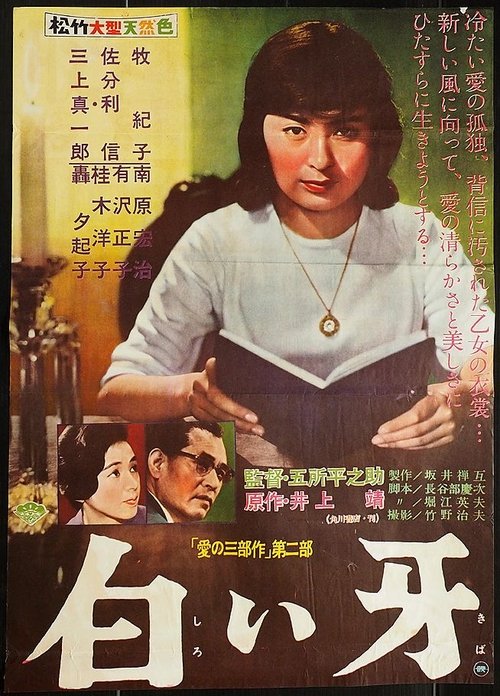
Shiroi Kiba

The movie depicts the youth of kamikaze pilots who scattered young lives in the sky.
Flying in the Air

1956 Japanese movie
Midori naru hito: zenpen wakare no yogisha

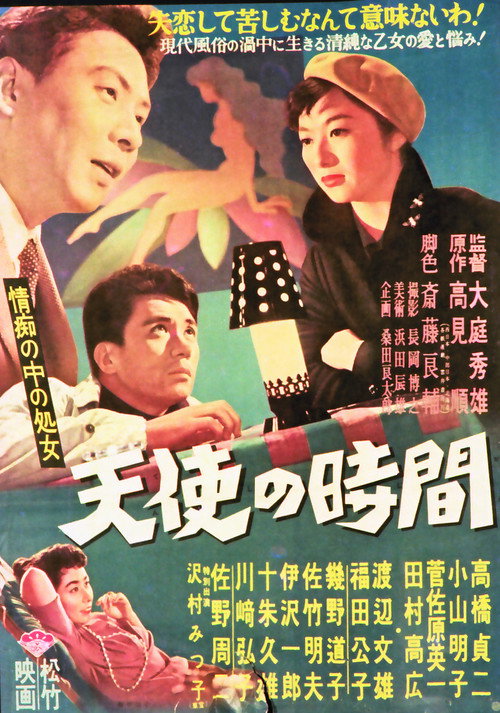
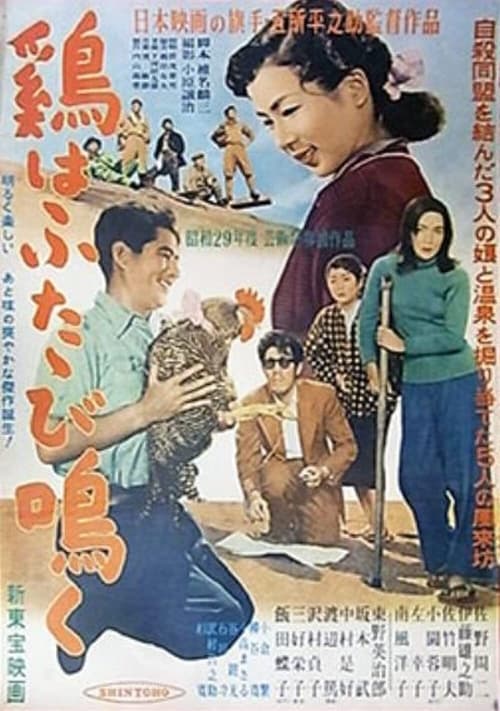
Three young women make a suicide pact, but they grow to have a better understanding of themselves.
The Cock Crows Twice

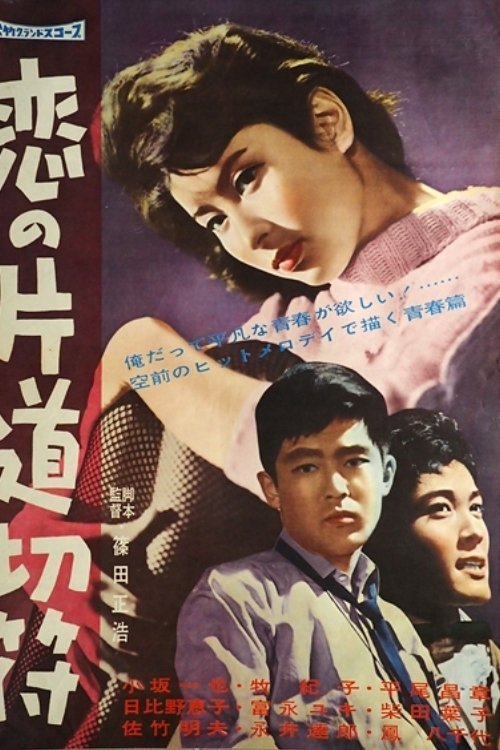
The backstage romances of an egotistical singer and his under-valued manager, a lovelorn bandman and a nude dancer.
One Way Ticket to Love

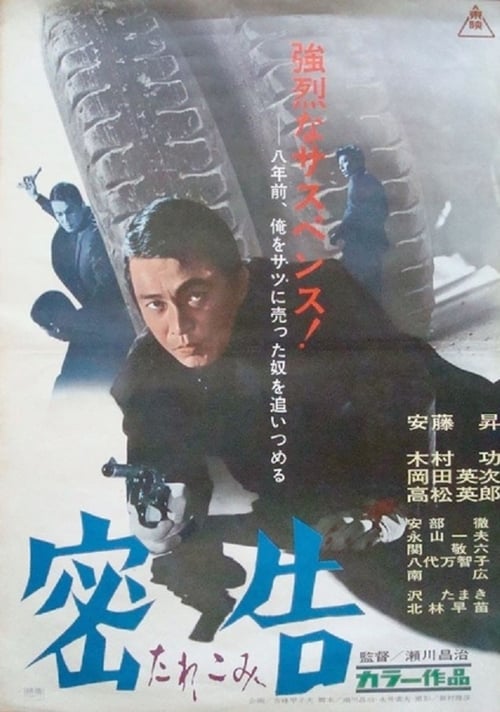
A gangster named Sagara killed a broker at the request of a friend named Oba, was arrested and spent eight years in prison. Now released, he wants to find out who squealed on him.