Bosley Crowther
Acting
Biography
Francis Bosley Crowther Jr. (July 13, 1905 – March 7, 1981) was an American journalist, writer, and film critic for The New York Times for 27 years. His work helped shape the careers of many actors, directors and screenwriters, though some of his reviews of popular films have been seen as unnecessarily harsh. Crowther was an advocate of foreign-language films in the 1950s and 1960s, particularly those of Roberto Rossellini, Vittorio De Sica, Ingmar Bergman, and Federico Fellini. Crowther's career began to decline significantly following his persistent criticism of Arthur Penn's Bonnie and Clyde (1967). While other critics also panned the film, prior to a sudden reversal, Crowther remained one of the most dogged critics. He eventually wrote three negative reviews and periodically blasted the film in other reviews and in a letters column response to unhappy readers. The New York Times replaced Crowther as its primary critic in early 1968, and some observers speculated that his endless attacks on Bonnie and Clyde had shown him to be out of touch with current cinema and weighed heavily in his removal. Crowther worked as an executive consultant at Columbia Pictures after leaving the Times. Crowther died of heart failure on March 7, 1981, at Northern Westchester Hospital in Mount Kisco, New York. He was survived by his wife Florence, who died in 1984; a sister, Nancy Crowther Kappes; three sons, F. Bosley, John, and Jefferson; and four grandchildren.
Known For
Omnibus was an arts-based BBC television documentary series, broadcast mainly on BBC1 in the United Kingdom. The programme was the successor to the long-running arts-based series 'Monitor'. It ran from 1967 until 2003, usually being transmitted on Sunday evenings. During its 35-year history, the programme won 12 Bafta awards. Among the series' best remembered documentaries are Cracked Actor, a profile of David Bowie, and Rene Magritte, a graduate film by David Wheatley, 'Madonna: Behind the American dream', a film produced by Nadia Hagger, and a profile of the British film director Ridley Scott. For a season in 1982, the series was in a magazine format presented by Barry Norman. The series was replaced by 'Imagine' hosted by Alan Yentob.
Omnibus
Presents a filmed, intercontinental conversation that links moderator Edward R. Murrow in New York with three internationally known figures located in different parts of the world. What set this apart from other televised interview/discussion programs was the fact that its participants could not see each other but could hear one another via telephone lines and radio.
Small World
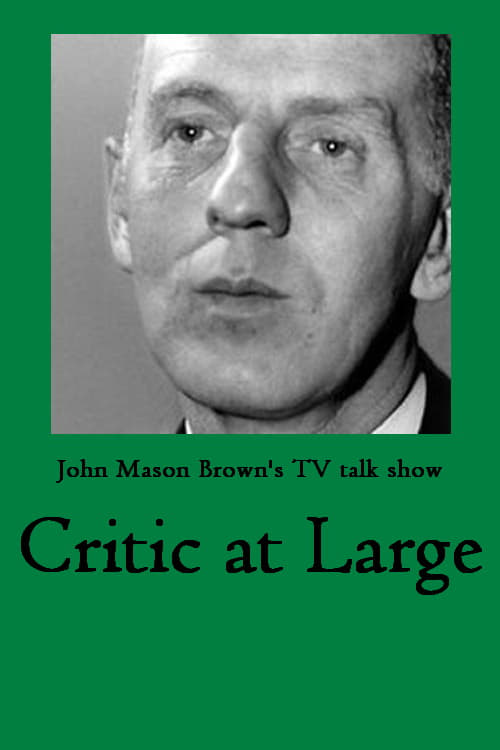
Author and critic John Mason Brown, who once commented that "some television programs are so much chewing gum for the eyes," offered this intellectual alternative in 1948-1949. It consisted of an informal living-room discussion on the arts with two or three guests, of the caliber of author James Michener, producer Billy Rose, publishrer Bennet Cerf, and critic Bosley Crowther. The subjects ranged from modern art to new novels, films, the theater and fashions.
Critic at Large
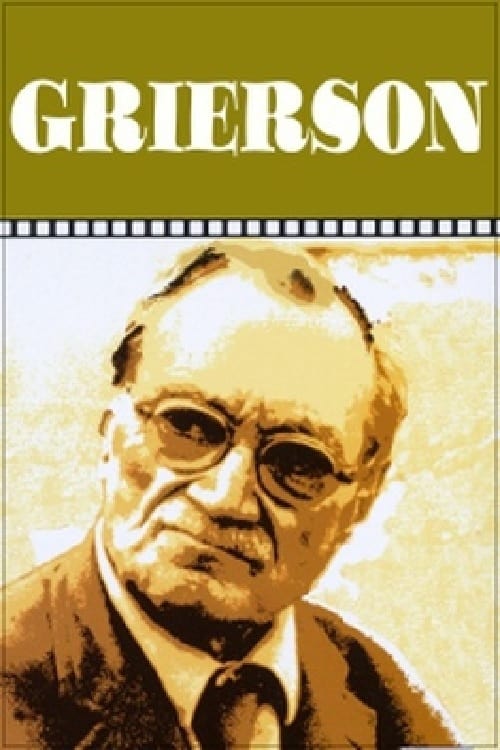
A portrait of John Grierson, the first Canadian Government Film Commissioner and founder of the National Film Board in 1939. Interweaving archival footage, interviews with people who knew him and footage of Grierson himself, this film is a sensitive and informative portrait of a dynamic man of vision. Grierson believed that the filmmaker had a social responsibility, and that film could help a society realize democratic ideals. His absolute faith in the value of capturing the drama of everyday life was to influence generations of filmmakers all over the world. In fact, he coined the term 'documentary film'.
Grierson
CBS News correspondent Howard K. Smith hosts this year end look at 1958, specifically in the area of the sciences, arts, and humanities.