FEEL IT.STREAM
Charles Eames

Charles Eames

Directing

Biography

Charles Eames was an American designer, architect and film maker. In creative partnership with his spouse, Ray Kaiser Eames, he was responsible for groundbreaking contributions in the field of architecture, furniture design, industrial design, manufacturing and the photographic arts.
Known For

The Fabulous Fifties
6.0

The Fabulous Fifties, CBS, combines style, humor, and imagination. It was rich in touches of quality showmanship and equally rich in the memories of a decade which it revived. In recognition, the Peabody Television Award for entertainment is presented to The Fabulous Fifties, with a special word of praise for producer Leland Hayward and the top talent which appeared in this memorable entertainment special*. *The two-hour special featured comic takes and commentary about the previous decade by, among others, Rex Harrison and Julie Andrews, Mike Nichols and Elaine May, Dick Van Dyke, Shelley Berman, Betty Comden and Adolph Green, Jackie Gleason, Eric Severeid and Henry Fonda.

The Fabulous Fifties

1960
Powers of Ten
7.7

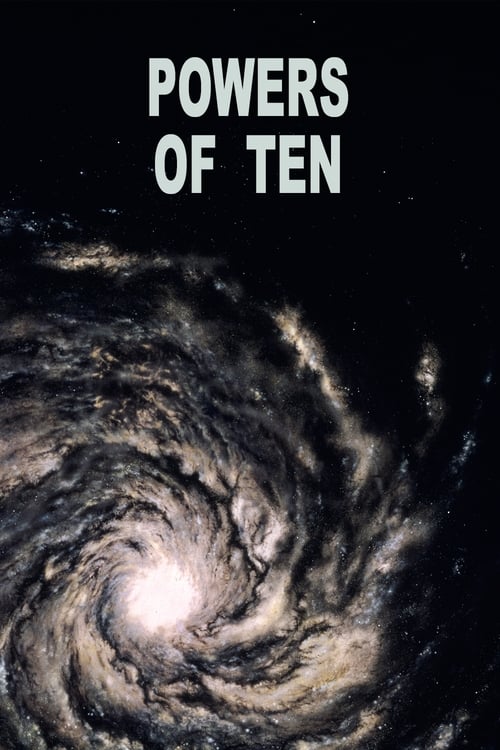
A scientific film essay, narrated by Phil Morrison. A set of pictures of two picnickers in a park, with the area of each frame one-tenth the size of the one before. Starting from a view of the entire known universe, the camera gradually zooms in until we are viewing the subatomic particles on a man's hand.

Powers of Ten

1977
Eames: The Architect and the Painter
7.1

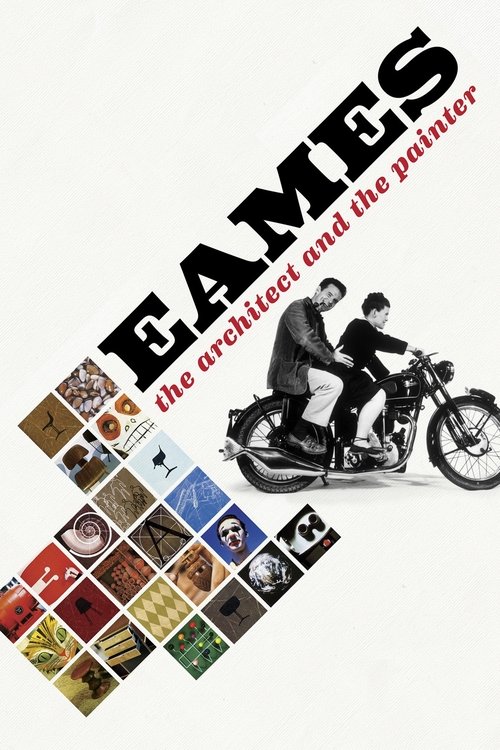
Interviews with the junior designers swept into the 24-7 world of "The Eamery" are the heart of this complex picture of a husband-and-wife creative team that define the era of Mid-Century Modernism. Narrated by James Franco, the film draws from a trove of archival material, primarily the stunning films and photographs produced in mind-boggling volume by Charles, Ray, and their staff during the hyper-creative forty years of the Eames Office.

Eames: The Architect and the Painter

2011
Atlas: A Sketch of the Rise and Fall of the Roman Empire
N/A

Atlas gives the viewer an overview of the rise and fall of the Roman Empire. Beginning in 500 BC, a time clock at the bottom of the screen marks off the years – eight to a second – as the boundaries on the animated map change, showing both the growth including the conquests of Alexander the Great, as well as the decrease as the power of the Romans declined. The film concludes with the invasion of the Huns and the sack of Rome in 476 AD. Music by David Spears.

Atlas: A Sketch of the Rise and Fall of the Roman Empire

1976
Topology: Jordan's Curve Theorem
6.7

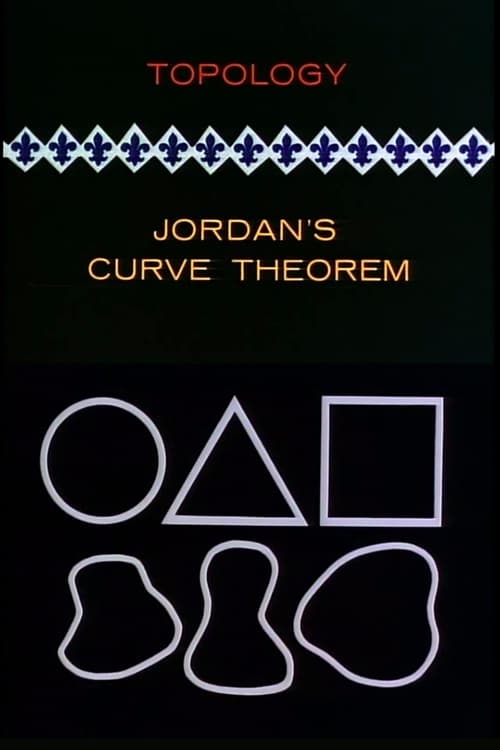
Short animated film commissioned by IBM - to illustrate Camille Jordan's concept of topology - the fact that a simple closed curve divides a plane into an inside and an outside.

Topology: Jordan's Curve Theorem

1961
Day of the Dead
5.8

A portrayal of the Mexican Day of the Dead consisting of still shots and narration. Deals with the special objects and events surrounding the annual Mexican celebration of “All Souls Day”. It is not only a rich flood of folk art, but a view of the way that the Mexicans have come to terms with death. Searched out with the help of Alexander Girard and a moving guitar score by Laurindo Almeida.

Day of the Dead

1957
A Communications Primer
5.0

An early attempt to present communications theory, made to encourage the breaking down of barriers of thinking between disciplines and to discourage thinking of communications in a limited way. Music composed by Elmer Bernstein.

A Communications Primer

1953
No image
N/A

Using live-action footage, animation, and still photography of a scale model, this film presents the Eames unique multimedia concept for making the museum’s resources more accessible via a central information center and guide to the myriad collections and galleries of the Metropolitan Museum of Art.


Metropolitan Overview

1975
No image
6.0

Created as a demonstration of multi-disciplinary thinking, this film was produced in association with UCLA Mathematics professor, Ray Redheffer. With the exclusive use of storytelling through animation this lively and exuberant presentation of the “architecture of algebra,” the film explains the behavior of specific exponents and concludes with the general laws that all exponential expressions obey – all achieved without the use of narration. Council on International Non-Theatrical Events (C.I.N.E.) Gold Eagle Award, 1975. Columbus International Film Festival Bronze Chris Plaque Award-C, 1975. New York International Animation Festival Bronze Praexinoscope Award, 1975. Melbourne Film Festival Selected for Participation, 1976.

Exponents: A Study in Generalization

1973
No image
6.0

Charles and Ray produced this film for IBM’s pavilion at the 1958 Brussels World’s Fair. The Information Machine was the first completely animated project produced by the Eames Office. Intended as an introduction to the electronic computer, the film depicts the computer as the culmination of the tools and systems we have created over the centuries to process information. It also explores how humans solved problems both before and after this technology was invented. The Information Machine is ultimately the story of our continual need to process and communicate larger and more complex amounts of data, and how we learn to manipulate abstractions with increasing sophistication and skill.

The Information Machine

1957
Clown Face!
N/A

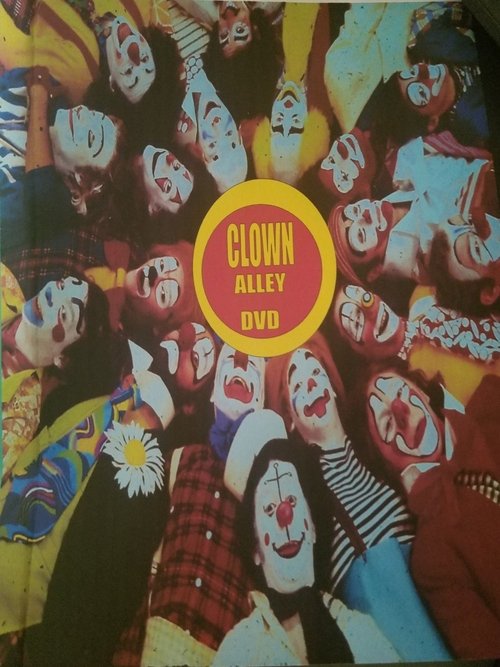
The movie "Clown Face" offers a very rare glimpse into the backstage private world of Circus Clowns. Here, you can look behind the curtain. You will see the clowns in their backstage habitat, Clown Alley, preparing for a circus performance

Clown Face!

1971
2ⁿ: A Story of the Power of Numbers
6.7

2ⁿ is a story about the exponential growth of numbers raised to powers. Part of the Mathematica Peep Shows, one of five films made to accompany the Mathematica: A World of Numbers and Beyond exhibition at the California Museum of Science and Industry and the Museum of Science and Industry in Chicago.

2ⁿ: A Story of the Power of Numbers

1961
Parade, or Here They Come Down Our Street
7.0

A live action pageant of mechanical toys, animals, puppets, cars, lead soldiers, and dolls—all set in motion. Toy buildings and photographic or painted images of city streets serve as backdrops. Festive elements from circuses, carnivals, and holiday parades are combined into an exuberant procession set to the music of John Philip Sousa. As the film ends, and the last puppet looks up at the sky, a red balloon drifts upward and the music fades out. 
Edinburgh International Film Festival award winner, 1954.

Parade, or Here They Come Down Our Street

1952
Nicholas Copernicus
8.0

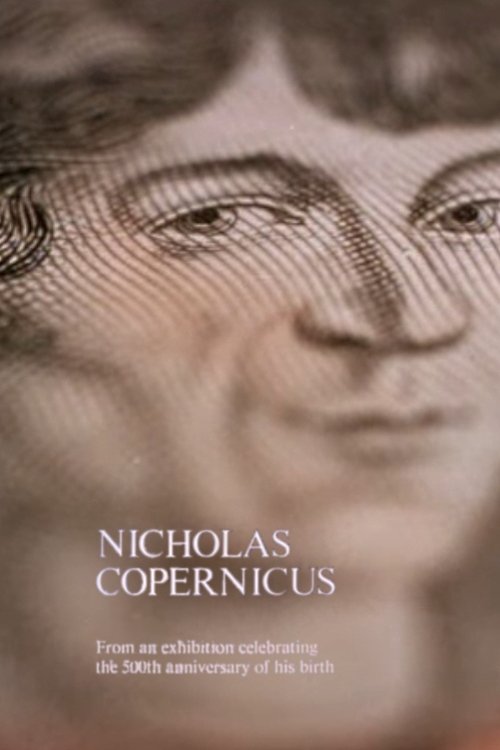
The life and work of the astronomer Nicolas Copernicus are shown by means of images of his writings and drawings and places he was associated with.

Nicholas Copernicus

1973
Symmetry
7.5

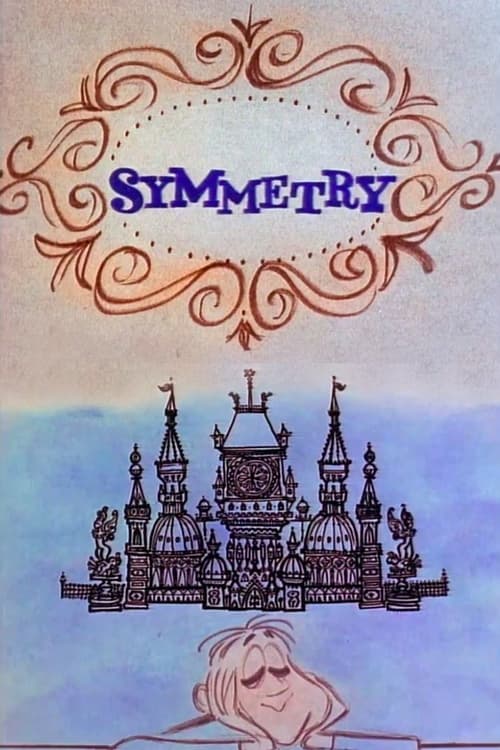
Symmetry is one of five shorts featured in the film "Mathematical Peep Shows." The collection was made by Charles and Ray Eames for the IBM Mathematica Exhibit which opened in 1961. The degree to which an object is symmetrical is illustrated by the number of different positions in which it can fit into a box of its shape.

Symmetry

1961
No image
8.0

A film by Charles and Ray Eames

Textiles and Ornamental Arts of India

1955
No image
9.0

Featuring narration by Walter Cronkite.

The Smithsonian Institution

1965
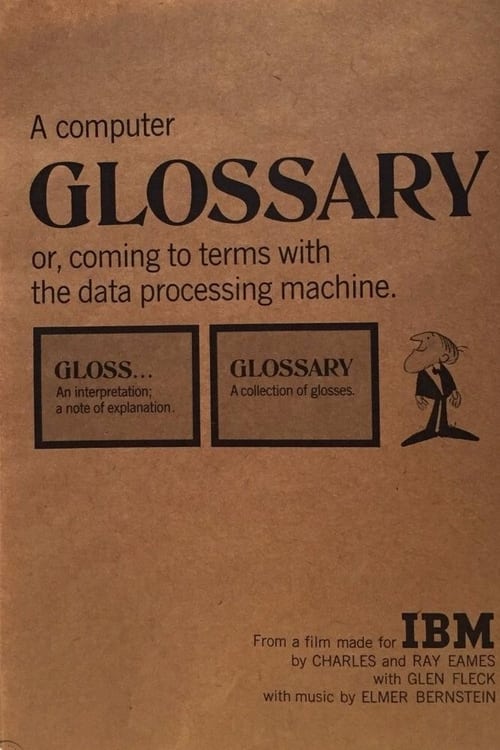
A Computer Glossary
7.5

From hardware to software, the basics of then-current computing technology is explained.

A Computer Glossary

1968
Solar Do-Nothing Machine
N/A

In 1957, Charles and Ray designed the Solar Do-Nothing Machine for Alcoa, the Aluminum Company of America. True to the Eameses’ belief that toys are not as innocent as they appear, the machine was one of the first uses of solar power to produce electricity. In the 1990s, Eames Demetrios discovered unedited footage of the wonderful machine. He cut it together to produce a new film that shares a bit of its flavor for future generations to enjoy.

Solar Do-Nothing Machine

1990
No image
8.0

Documentary short

IBM Mathematics Peep Show

1961