FEEL IT.STREAM
Yuri Norstein

Yuri Norstein

Directing

Biography

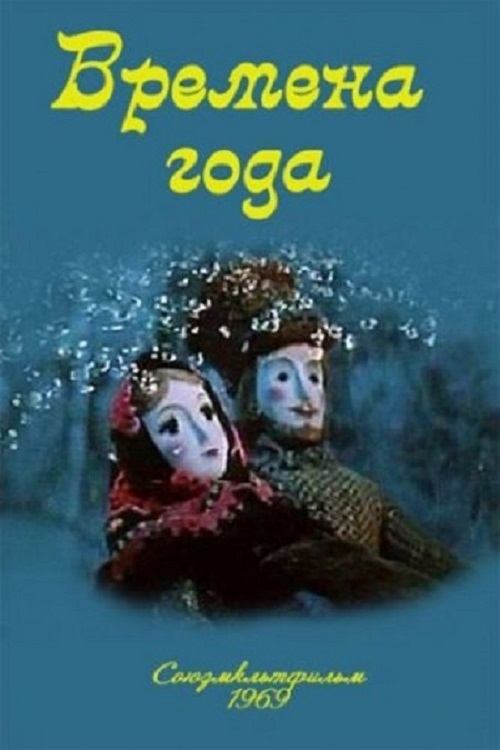
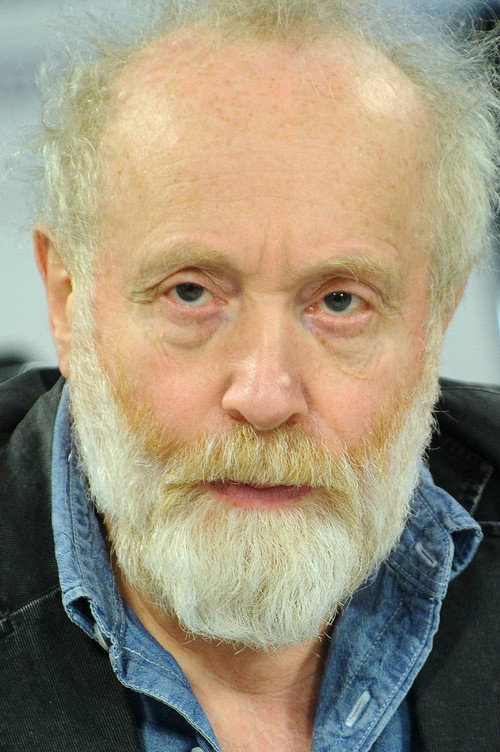
PAR Yuri Norstein (Russian: Ю́рий Бори́сович Норште́йн, Yuriy Borisovich Norshteyn; born 15 September 1941), is a Soviet and Russian animator best known for his animated shorts, Hedgehog in the Fog and Tale of Tales. Since 1981 he has been working on a feature film called The Overcoat, based on the short story by Nikolai Gogol of the same name. According to the Washington Post, "He is considered by many to be not just the best animator of his era, but the best of all time". Yuri Norstein was born to a Jewish family in the village of Andreyevka, Penza Oblast, during his parents' World War II evacuation. He grew up in the Maryina Roshcha suburb of Moscow. After studying at an art school, Norstein initially found work at a furniture factory. Then he finished a two-year animation course and found employment at studio Soyuzmultfilm in 1961. The first film that he participated in as an animator was Who Said "Meow"? (1962). After working as an animation artist in some fifty films, Norstein got the chance to direct his own. In 1968 he debuted with 25th October, the First Day, sharing directorial credit with Arkadiy Tyurin. The film used the artwork of 1920s-era Soviet artists Nathan Altman and Kuzma Petrov-Vodkin. The next film in which he had a major role was The Battle of Kerzhenets (1971), a co-production with Russian animation director Ivan Ivanov-Vano under whose direction Norstein had earlier worked on 1969's Times of the Year. Throughout the 1970s Norstein continued to work as an animator in many films, and also directed several. As the decade progressed his animation style became ever more sophisticated, looking less like flat cut-outs and more like smoothly-moving paintings or sophisticated pencil sketches. His most famous film is Tale of Tales, a non-linear, autobiographical film about growing up in the postwar Soviet world. Norstein uses a special technique in his animation, involving multiple glass planes to give his animation a three-dimensional look. The camera is placed at the top looking down on a series of glass planes about a meter deep (one every 25–30 cm). The individual glass planes can move horizontally as well as toward and away from the camera (to give the effect of a character moving closer or further away). For many years he has collaborated with his wife, the artist Francheska Yarbusova, and the cinematographer Aleksandr Zhukovskiy. Source: Wikipedia
Known For

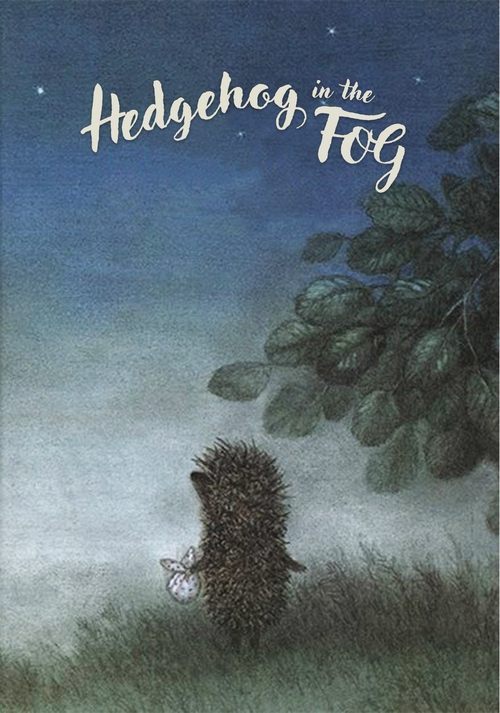
Hedgehog in the Fog
7.4

A little hedgehog, on the way to visit his friend the bear, gets lost in thick fog, where horses, dogs and even falling leaves take on a terrifying new aspect...

Hedgehog in the Fog

1975
Cheburashka
7.2

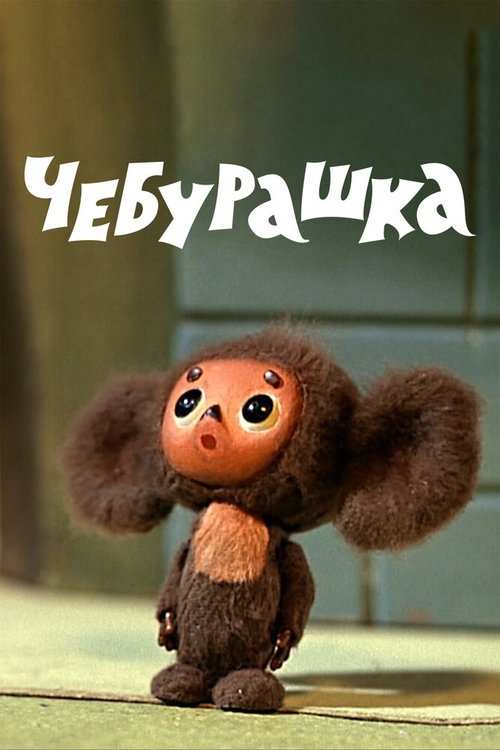
Second animation about Gena and Cheburashka. Cheburashka wishes Gena the Crocodile a happy birthday and gives him a toy helicopter as a gift. After meeting some pioneers, they decide to be pioneers themselves. They build a playground for the local children and collect scrap metal, after which they become pioneers.

Cheburashka

1971
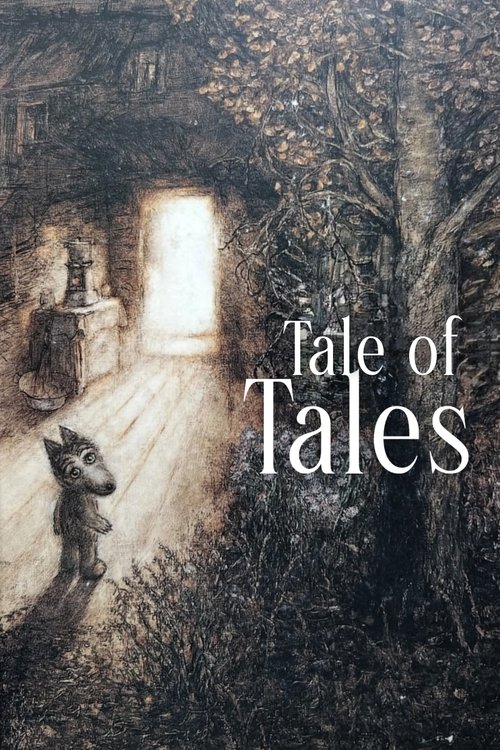
Tale of Tales
7.3

Distant, well-worn memories of childhood are inhabited by a little gray wolf. Through astonishing imagery, the memory of all of Russia is depicted.

Tale of Tales

1979
Hayao Miyazaki and the Ghibli Museum
8.0

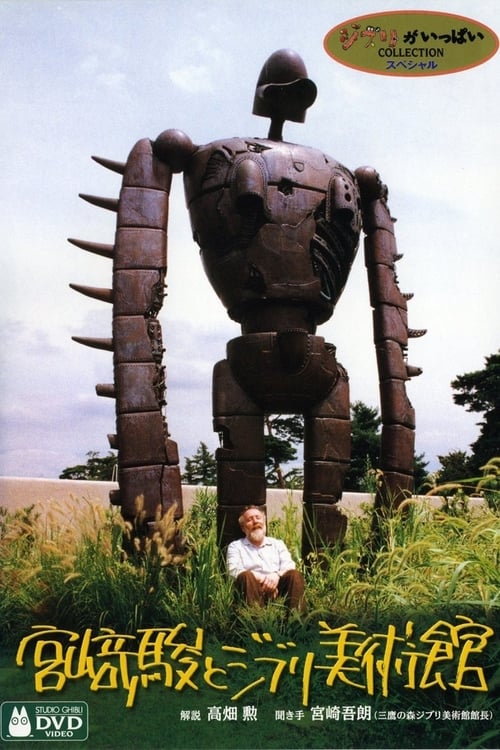
A documentary about the Ghibli Museum. It features Goro Miyazaki speaking with Isao Takahata about the "charm" of the museum and its various influences. Goro tours the viewer around the museum, explaining the intricate details that his father, Hayao Miyazaki made during its construction. The documentary highlights the strong European influences in the museum's architecture, featuring footage of the medieval mountainous city of Calcata in Italy and the historic port city of Genoa, which Miyazaki had visited in the past. These trips would go on to influencing the imagery seen in Castle in the Sky, Kiki's Delivery Service, Porco Rosso, and Spirited Away.

Hayao Miyazaki and the Ghibli Museum

2005
Winter Days
6.0

An animated film based on one of the renku (collaborative linked poems) in the 1684 collection of the same name by the 17th-century Japanese poet Bashō. The creation of the film followed the traditional collaborative nature of the source material – the visuals for each of the 36 stanzas were independently created by 35 different animators. As well as many Japanese animators, Kawamoto assembled leading names in animation from across the world. Each animator was asked to contribute at least 30 seconds to illustrate their stanza, and most of the sequences are under a minute (Yuriy Norshteyn's, though, is nearly two minutes long).

Winter Days

2003
A Hedgehog Came Out of the Fog
N/A

Norstein conquered the world 36 years ago with the creation of the legendary Hedgehog in the Fog. It was recognized as the best cartoon of all times and peoples according to a survey of film critics and animators from different countries.

A Hedgehog Came Out of the Fog

2011
Oleg: The Oleg Vidov Story
5.0

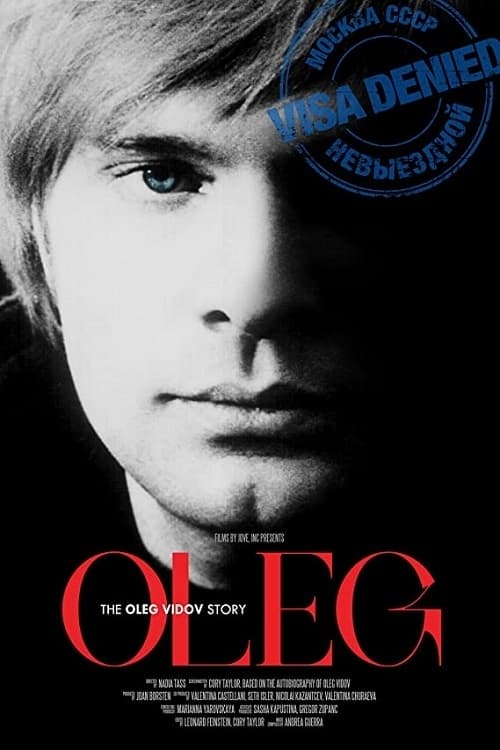
Oleg Vidov — one of the Soviet Union's most beloved actors — was persecuted, blacklisted and pushed to the breaking point before escaping to the West and achieving the American dream.

Oleg: The Oleg Vidov Story

2021
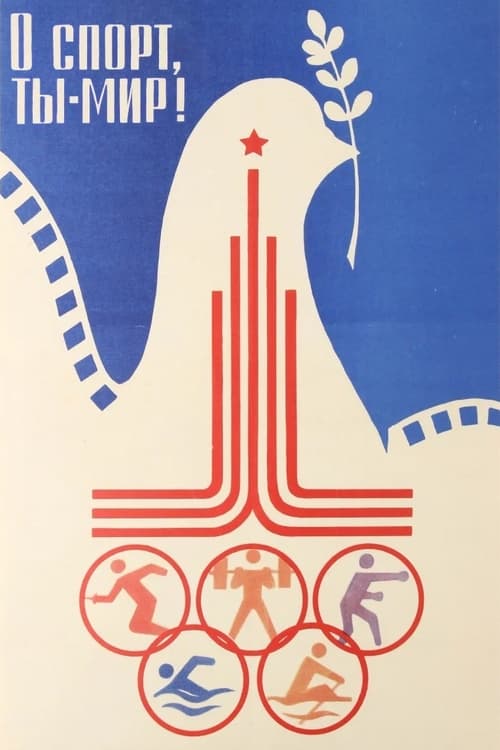
O Sport, You Are Peace!
6.5

A 1981 documentary film directed by Yuri Ozerov. It showed the opening and closing ceremonies of the 1980 Summer Olympics held in Moscow. The director was awarded the State Prize of the USSR in 1982. The film was selected as the Soviet entry for the Best Foreign Language Film at the 54th Academy Awards, but was not accepted as a nominee.

O Sport, You Are Peace!

1981
Left-Hander
6.2

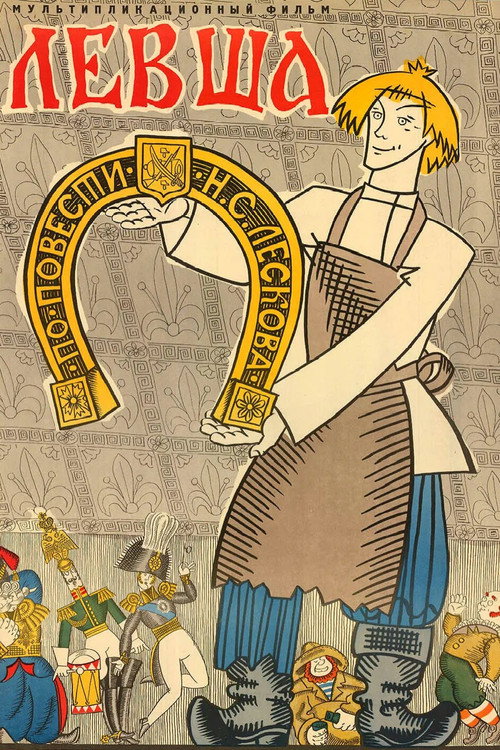
Surprising master Lefty, who grounded a steel flea. This feature-length cutout-animated film from the Soviet Union is based on the story of the same name by the 19th century Russian novelist Nikolai Leskov. It was directed by the "Patriarch of Soviet animation", Ivan Ivanov-Vano, at the Soyuzmult film studio.

Left-Hander

1964
I Am Flying to You as a Memory...
6.5

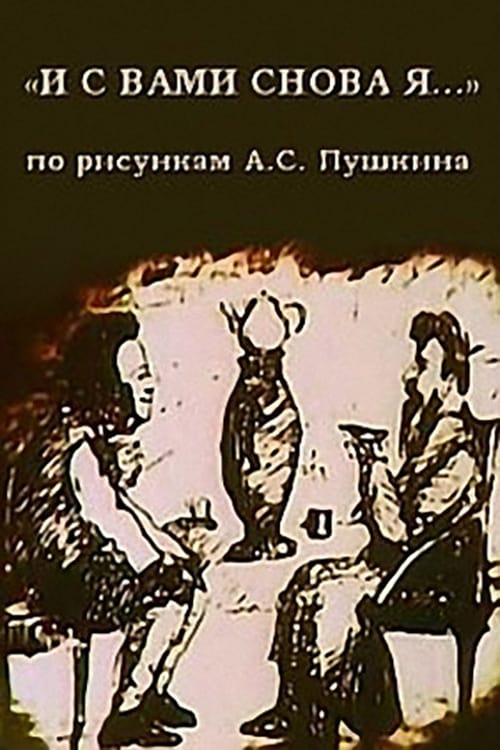
The film is based on the drawings and manuscripts of A.S.Pushkin.

I Am Flying to You as a Memory...

1977
School of Fine Arts. Juniper Landscape
6.0

Blending drawings, paintings, filmed interviews, and recorded testimony, this animation-documentary hybrid tells of the tragic fate of the Estonian artist Ülo Sooster.

School of Fine Arts. Juniper Landscape

1987
No image
N/A

An animated film in two parts, about the tragic fate of Estonian artist Ülo Sooster and about his work.

School of Fine Arts

1990
Children and Matches
6.5

A cut-out animation warning for children about the danger of fire and playing with matches, far from the grim warning of your typical PSA and anticipating the complicated human psychology of Norshteyn's subsequent work. And, no doubt, there is a metaphor aimed at the power structure. 1968-69 was a crucial period of transition for the animator, breaking out of the pack at Soyuzmultfilm and beginning to script and co-direct films. Not listed on imdb, this is one - if not the first - of his first solo works as director.

Children and Matches

1969
Islands: Georgy Rerberg
5.3

A short documentary about the life and career of cinematographer Georgy Rerberg.

Islands: Georgy Rerberg

2007
No image
N/A

The second part of the duology on the famous Estonian artist Ülo Sooster continues his life story, paying homage to many other great artists who were spiritually consonant with his work.

School of Fine Arts. Return

1990
Cherished Dream
7.5

No description available.

Cherished Dream

1972
Miracle Factory. Animation Director
N/A

The history of Russian animated films.

Miracle Factory. Animation Director

2005
Gennady Shpalikov. Life Of A Charming Man
N/A

Gennady Shpalikov. He was 25 when he offered George Danelia a script for the future film “I walk through Moscow”. At this time, Shpalikov was already finishing the script for Ilyich's Outpost for Marlen Khutsiyev! Both of these films will be called the manifesto of the generation of the sixties, the symbols of the era called "thaw". All his life he had dreamed of “The Quay” ... This script was his favorite work. But “Berth” was never staged "..." "There is no choice in the USSR. Or you drink, or you freak out, or you are not printed. The fourth is not given.

Gennady Shpalikov. Life Of A Charming Man

2017
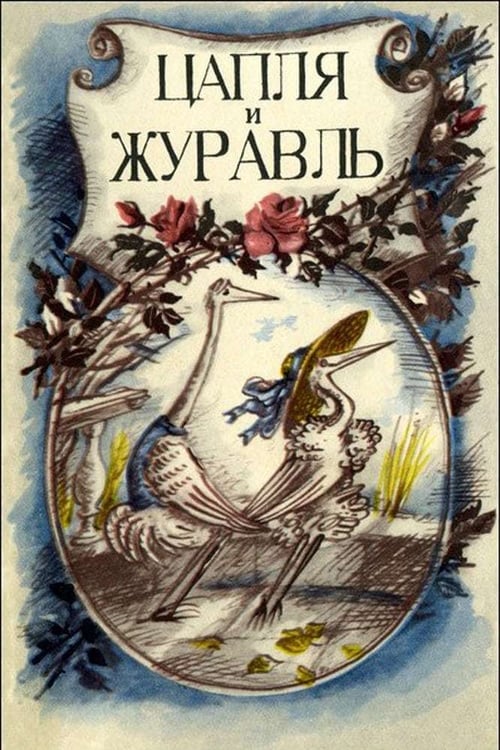
The Heron and the Crane
6.9

Animated short about a love between a heron and a crane.

The Heron and the Crane

1974
Watch Out, Pike!
N/A

About how the pike settled next to the beaver dam and lay in wait for the beaver cubs. In response, the beavers built an underwater vehicle to drive away the pike and its assistant crayfish, but adult beavers also had to be called in for help.

Watch Out, Pike!

1968