Philip Haas
Directing
Biography
From Wikipedia, the free encyclopedia Philip Haas is an American artist and filmmaker. His exhibition of film installations at the Kimbell Art Museum, "Butchers, Dragons, Gods and Skeletons," was listed by TIME magazine as one of the top ten museum shows of 2009 Retrospectives of his art films have been held at the Tate Gallery in London, the Centre Georges Pompidou in Paris, Lincoln Center in New York, the Museum of Fine Arts, Boston, and the National Gallery of Art in Washington, D.C. He received a Guggenheim Fellowship for this body of work. His feature film Angels and Insects, set in Victorian England, was nominated for an Academy Award. Other feature films include the highly regarded The Music of Chance (1993), and Up at the Villa, starring Sean Penn, Anne Bancroft and Kristin Scott Thomas. In 2008 and 2010, he had one-man shows of paintings and film installations at the Sonnabend Gallery. in New York City. Haas's 15 feet (4.6 m), fiberglass sculpture Winter (after Arcimboldo) was unveiled in the National Gallery of Art in Washington, D.C. in September, 2010. Description above from the Wikipedia article Philip Haas, licensed under CC-BY-SA, full list of contributors on Wikipedia.

Known For

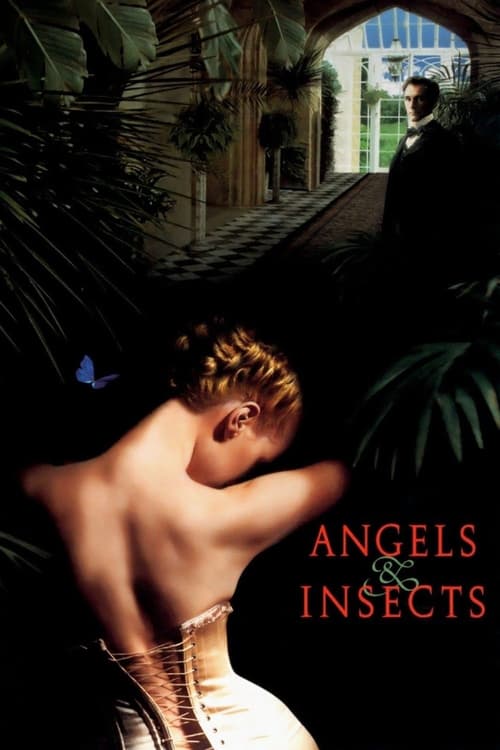
In Victorian England, wealthy patriarch Sir Harald Alabaster invites an impoverished biologist, William Adamson, into his home. There, William tries to continue his work, but is distracted by Alabaster's seductive daughter, Eugenia. William and Eugenia begin a torrid romance, but as the couple become closer, the young scientist begins to realize that dark, disturbing things are happening behind the closed doors of the Alabaster manor.
Angels and Insects

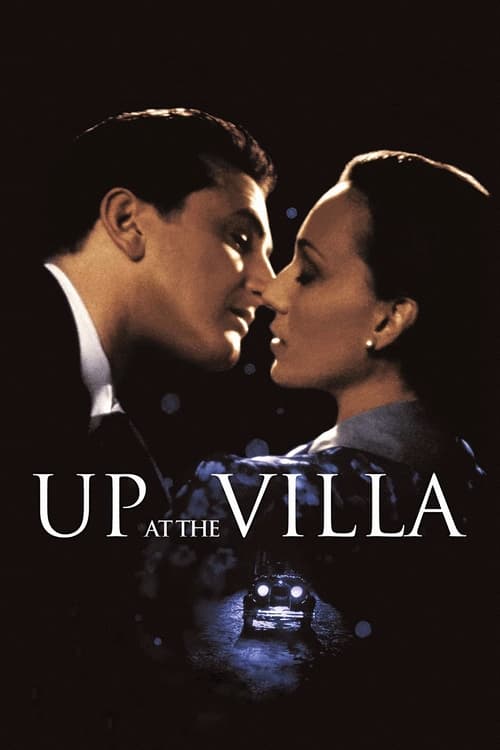
Superficial people are revealed and drastically changed by circumstance or luck in this a tale of death, seduction, blackmail and theft among British and Americans in Florence in the turbulent days just before World War II.
Up at the Villa

Cyril and Fiona, a free-wheeling married couple, travel to a tropical coastal town to follow their sexual fantasies. Cyril is a manipulator. There, they meet another couple, Catherine and Hugh, and their three children. Hugh is a one-armed photographer who specializes in nude photographs of peasant women. Soon, they decide to live together and an erotic atmosphere develops between them.
The Blood Oranges

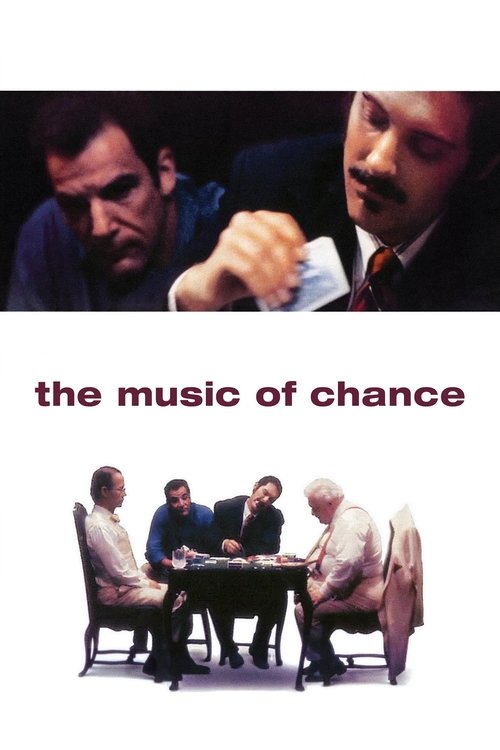
Two men face the consequences of gambling after playing with men beyond their league.
The Music of Chance

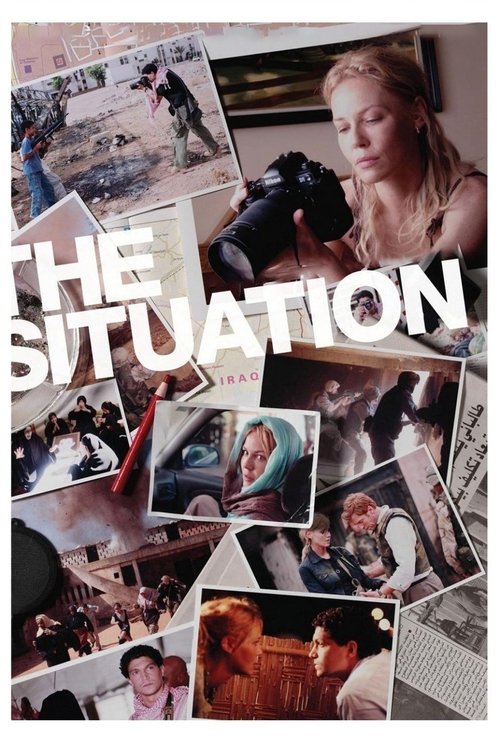
The first U.S.-made film drama set during the Iraq war, THE SITUATION chronicles the tragic death of an Iraqi teenager at the hands of U.S. soldiers. The incident sets off an "investigation," a cover-up, and complications involving Iraqi mayor Sheikh Tahsin (Saïd Amadis), who has a complex relationship with the Americans.
The Situation

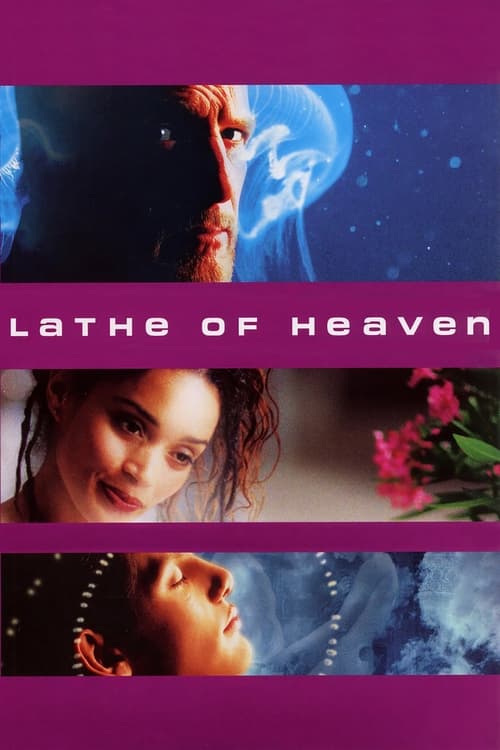
In a near future society a man claims that his dreams physically change reality. His therapist is confused at first but soon decides to use him for his own gain.
Lathe of Heaven

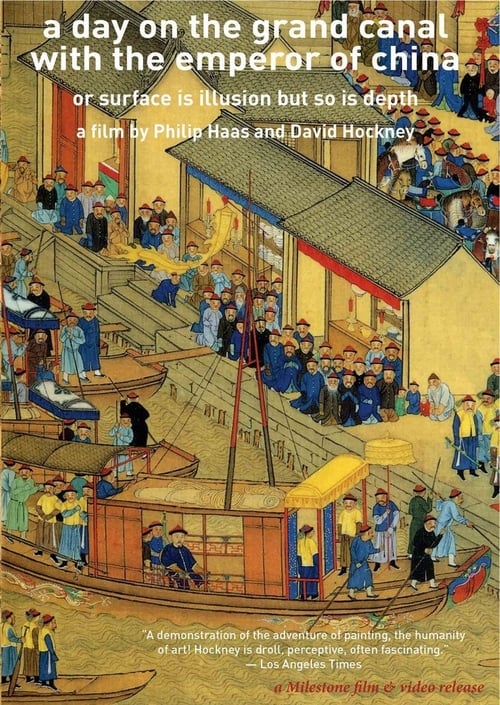
Director Philip Haas and artist David Hockney invite you to join them on a magical journey through China via a marvelous 72-foot long 17th-century Chinese scroll entitled The Kangxi Emperor's Southern Inspection Tour (1691-1698), scroll seven . As Hockney unrolls the beautiful and minutely detailed work of art, he traces the Emperor Kangxi’s second tour of his southern empire in 1689.
A Day on the Grand Canal with the Emperor of China or: Surface Is Illusion But So Is Depth

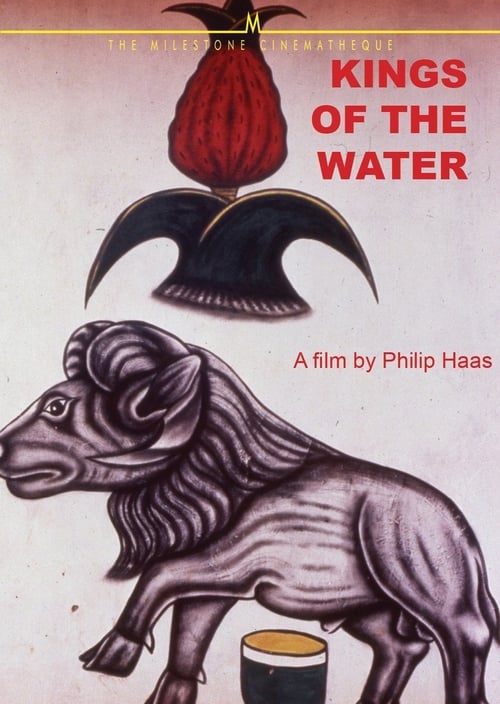
Cyprien Tokoudagba is from the city of Abomey in the Benin Republic of West Africa, where he paints the religious houses of the vodun. Haas and his film crew follow Cyprien as he first paints and then takes part in the ceremony to open a new temple. The paintings include three vodun figures and several emblems, including a pipe and a duck. Cyprien explains his work in the context of the religion and takes the crew to film two other local ceremonies, one where the dead are believed to come back to instruct the living through wild dancing and, another, where women warriors perform their war dances.
Magicians of the Earth: Kings of the Water

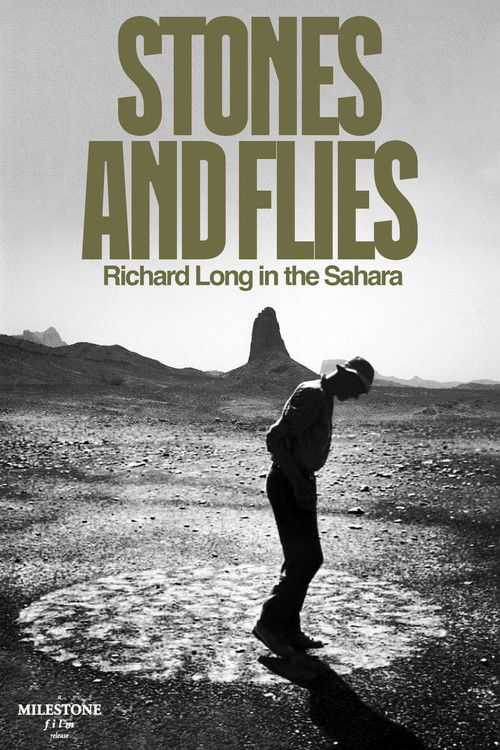
In the fall of 1987, Philippe Haas accompanied the sculptor Richard Long to the Algerian Sahara and filmed him tracing with his feet, or constructing with desert stones, simple geometric figures (straight lines, circles, spirals). In counterpoint to the images, Richard Long explains his approach. Since 1967, Richard Long (1945, Bristol), who belongs to the land art movement, has traveled the world on foot and installed, in places often inaccessible to the public, stones, sticks and driftwood found in situ. His ephemeral works are reproduced through photography. He thus made walking an art, and land art an aspiration of modern man for solitude in nature.
Stones and Flies: Richard Long in the Sahara

"Gilbert & George first presented the ‘Singing Sculpture’ in 1969, then repeated it over the next years in the UK, Europe and Australia, as well as New York for the opening of the Sonnabend Gallery in 1971. Standing on a table and with their faces and hands covered in metallic paint, Gilbert and George sing along to a recording of Flanagan and Allen’s old-time music-hall hit ‘Underneath the Arches’, all the while moving mechanically. An anthem to down-and-outs, the song became a mantra for the artists. Always happy to elaborate, they have said, ‘We think of ourselves as two funny tramps, rather than artists according to the popular idea.’
Gilbert and George The Singing Sculpture

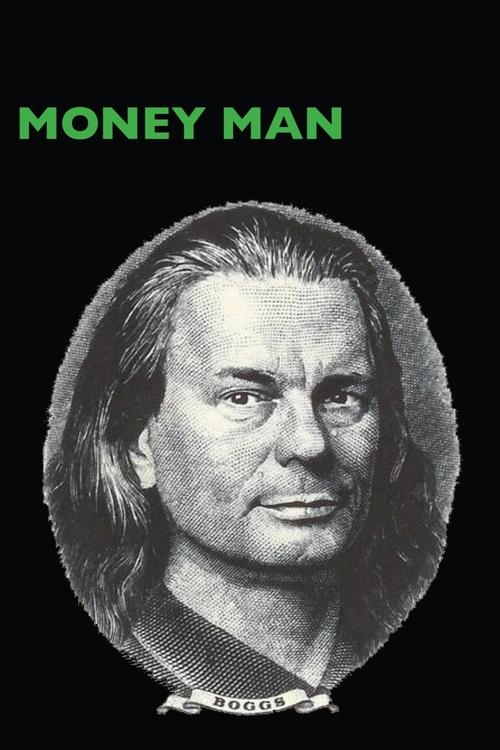
MONEY MAN is a documentary film about an artist, J. S. G. Boggs, who draws money. Boggs draws his "notes" (as he calls them) with the same face as regular U.S. currency with his thumbprint on the back. He goes around trying to sell his notes to people in exchange for goods and services.
Money Man

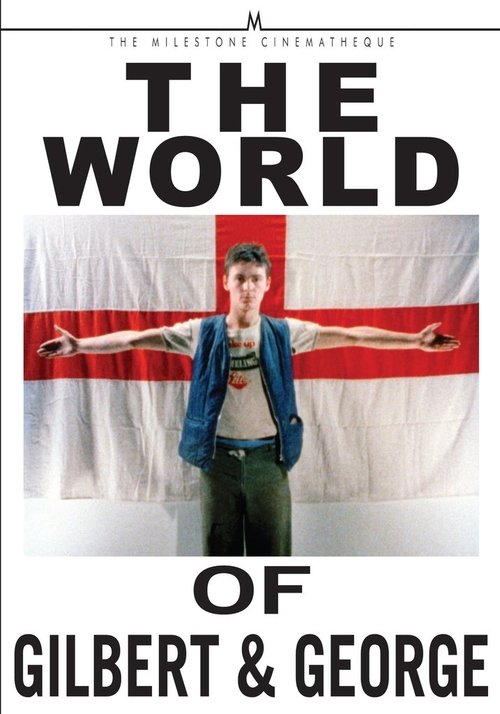
Gilbert & George are renowned for presenting themselves as ‘living sculptures,’ fusing their art and identity with the external world. Their exploration of the bleak urban surrounds of 1980’s London, powerfully evoke the desires and tensions of its disillusioned youth alongside their own eccentricities. Poetic narration combines with vivid imagery that moves between the startlingly beautiful, the humorous, and the absurd. Church spires and city streets, youth and drunks, dancing and tea-drinking all take on an affecting symbolism when viewed from the unique perspective of Gilbert & George.
The World of Gilbert & George

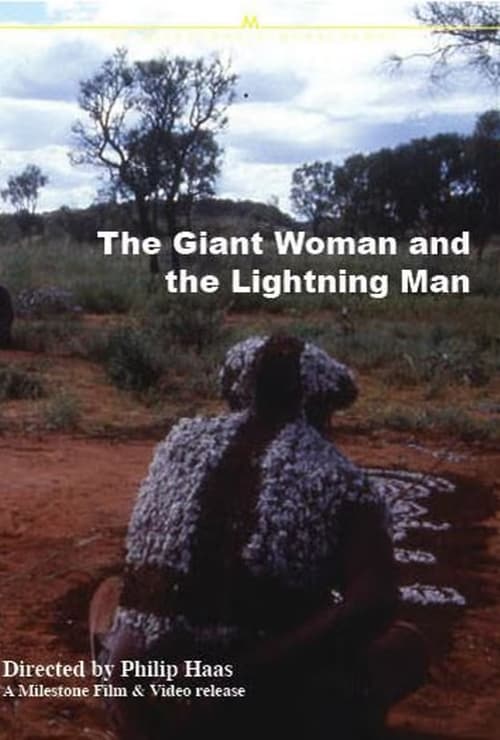
A documentary on Australian Aboriginal art. The fist part is about a group of desert tribesmen who retell their legends by creating three large and elaborate ground paintings. In the second part the Aborigines of the northern coast depict the story of their ancestors in bark paintings.
Magicians of the Earth: The Giant Woman and the Lightning Man

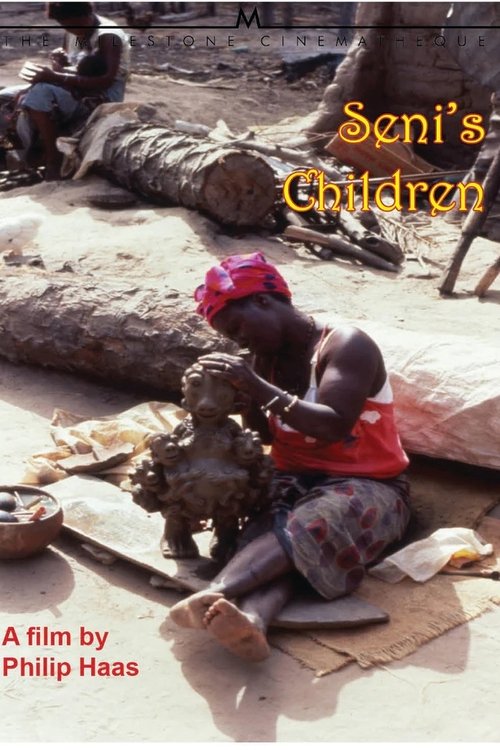
Seni Camara lives with her husband and family in the village of Bigona, in the Casamance region in southern Senegal. Working outside the local tradition of making pots and “useful” objects out of clay, Seni claims that through a “gift of God” she has been able to create thousands of bizarre, magnificent creatures — clay sculptures of astonishing originality. Although the villagers don’t know quite what to make of Seni and her art, she continues to work to support her family and to satisfy her own creative urge. The film follows Seni and her husband as they prepare the materials of her art. Together they dig up the hard dirt of the land and slowly mix it with water and sand until the clay is ready to be molded (she tells by taste). While Seni does the intense work of shaping the wet clay into her truly original forms, her husband prepares the final dye bath by harvesting and soaking wild nuts in water. Finally they fire the sculptures and dye them.
Seni's Children

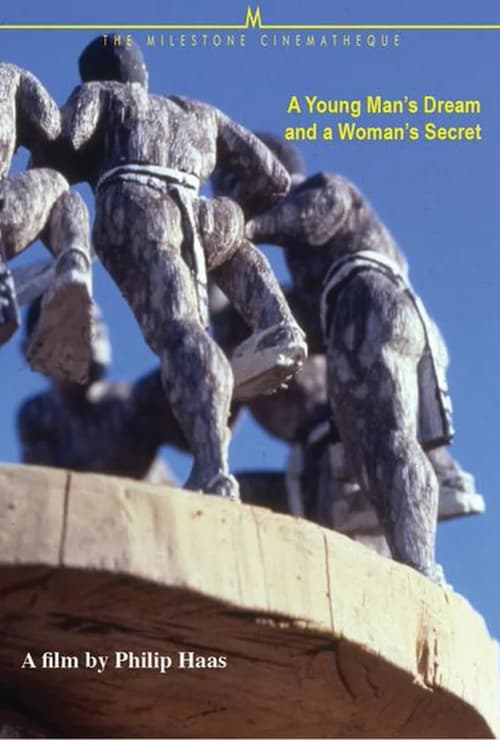
Filmmaker Philip Haas traveled to the southernmost tip of Madagascar to meet Efiaimbelo, a man in his mid-sixties who works as a funerary sculptor. The film follows Efiaimbelo as he travels to an isolated area in the countryside to cut down a special tree for sculpting. He makes it into a pole of geometric shapes, which he then tops with a finely honed sculpture of a cow. This beautiful sculpture is funerary piece, designed to ornament a grave. The film features remarkable footage of huge tombs covered with cow antlers and poles like the one we see Efiaimbelo sculpt. The tops of these poles are decorated with all sorts of animals, people and tableaux associated with the dead person. Very little has been known or seen of this funereal and artistic tradition outside the region and the film provides an extraordinarily rich visual experience.