Acting
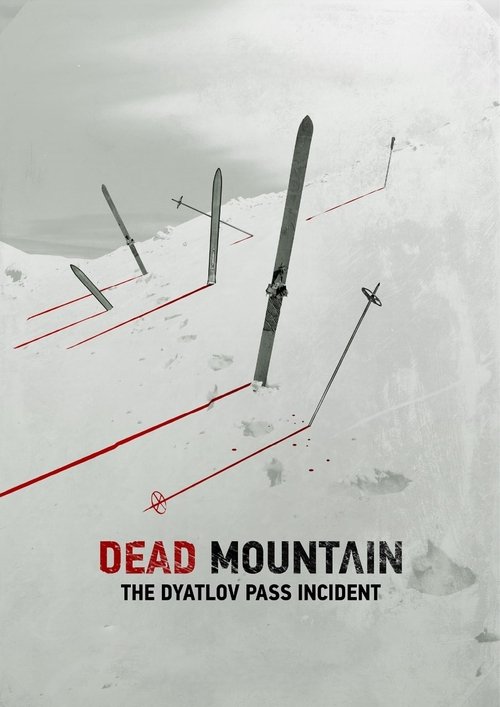
Russia, 1959. A KGB major investigates the mysterious deaths of a group of nine student hikers in the Ural Mountains. Troubled by his past as a WWII veteran, he has a sixth sense and death seems to follow him around as he digs deeper into the mysterious incident. The more he learns, the more it becomes clear: the reason the students died will never see the light of day.
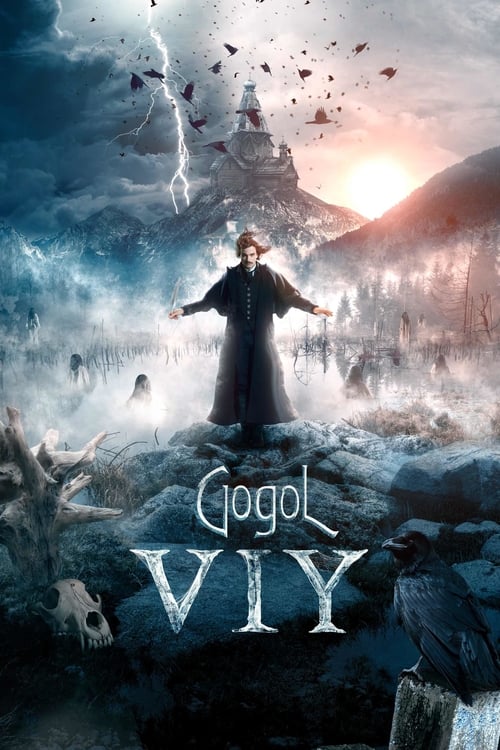
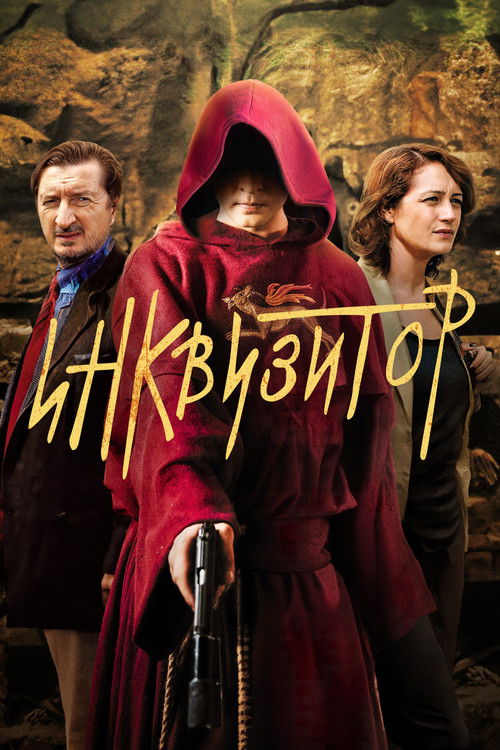
A mysterious Dark Horseman slays young girls near the village of Dikanka, and he has already butchered 11 ladies. Nikolai Gogol, a scribe from Saint Petersburg has to take charge of the investigation, but the closer he gets to solving the case, the more fits he has, causing macabre visions. When he learns the next victim is his beloved, Liza, he doubts that he can protect her and resist the murderer. Fortunately, he meets somebody who can help him: Khoma Brut, the witch hunter, martial artist and philosopher. Together they spend three dreadful nights in an old chapel reading the funeral service for Ulyana, the witch, and calling upon the ghastly evil spirit Viy.
No description available.
In the fall of 2014, a young Russian journalist Alexei Suvorov, who dreams of money and fame, travels to Donbass as part of a humanitarian mission to interview the famous battalion commander Lesentsov, who is fighting on the side of the militia. He intends to sell the collected material to a German publication, with which he cooperates in parallel and where he plans to get a permanent job. During the journey, Suvorov encounters numerous obstacles that always distance him from his intended goal. As a result, he is forced to act rashly, risk his life and make mistakes. His fellow travelers are people with different destinies and attitudes to what is happening.
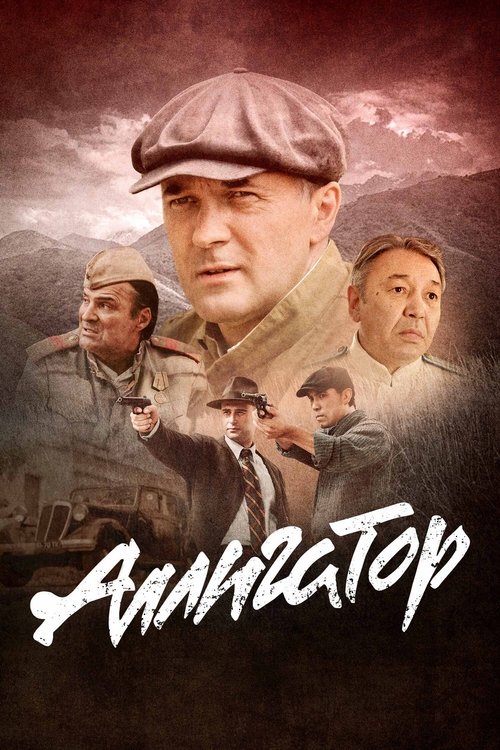
A Russian military propaganda film about the tank commander Kalashnikov, severely injured in battle in 1941. The accident leaves him incapacitated and unable to return to the front line. While recovering in the hospital, he begins creating the initial sketches of what will become one of the world’s most legendary weapons. A self-taught inventor is only 29 when he develops the now iconic assault riffle — the AK-47. Shot in occupied Crimea.
In the summer of 1943, the Soviet leadership became aware of the achievements of German physicists in creating the atomic bomb. The task of obtaining secret information about the creation of a new type of weapon that can change the course of the war is given to a Soviet agent acting undercover, Frans Hartmann. A complex multi-way operation begins. Hartman involves the chief of German intelligence, Walter Schellenberg, in whose field of vision is the German scientific genius Werner Heisenberg. The Gestapo also steps in and assigns an "employee of the German Foreign Ministry" Dori to Hartman. At the same time, in Moscow, under the leadership of the talented physicist Igor Kurchatov, work on the Soviet atomic project was intensifying.
Four directors, twenty fascinating stories, a kaleidoscope of genres from thriller to comedy. Each episode is an hour of real time that the viewer will live together with the characters of the series. An hour that will be a turning point in the fate of the characters, an hour after which nothing will be the same as before.…
A story of a legendary battle, where seventeen fearless warriors defend their land against an army of thousands well-trained soldiers. In 13th-century Mongol warrior hordes and their leader, Batu Khan, control most of the known world. As the Mongols move towards Europe they invade the last Russian principality standing in their way. Little do they know, their plans are about to be ruined by a small detachment of heroic strong men led by a mysterious brave warrior. This is a story about courage, endurance and self-sacrifice for the sake of one's country. This is the story of Evpaty the Furious.
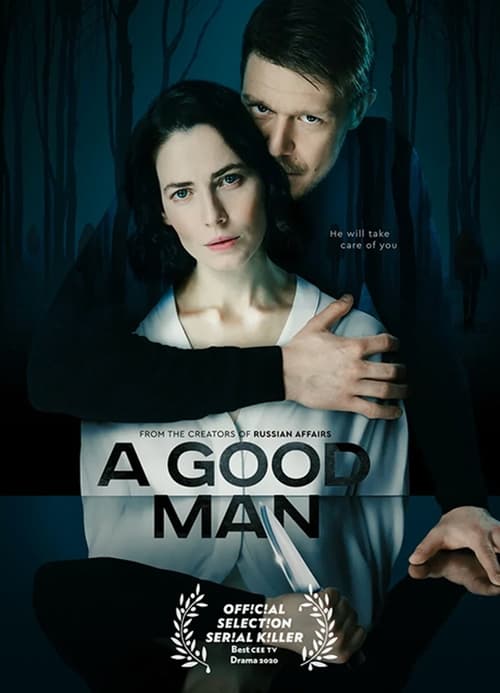
Who and What is “A Good Man”? This is the central question in this original drama series from Konstantin Bogomolov, agent provocateur of Russian cinema. Based on a true story, inspired by the capture of Russia’s most prolific and brutal serial killer “the maniac of Angarsk”. "A Good Man" looks at everyday violence in quiet suburbia. The protagonist is a police officer and a security guard, keen to uphold the law, protect people and his town. His methods are deadly. It takes almost a decade to reveal him as a mass murderer, who preyed on over 80 young women in and around Angarsk.
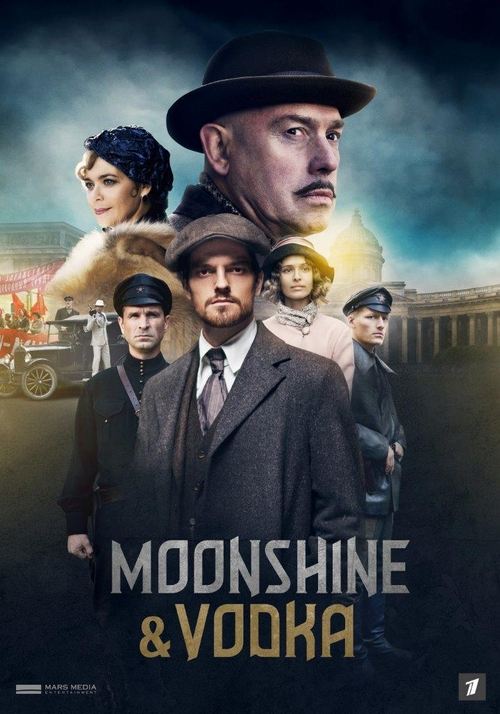
Spring of 1921. NEP (New Economic Policy) initiation rapidly changes Petrograd which was lifeless after wars and revolution. Marches and hymns are mixed with foxtrot and chanson. Well-dressed people appear on river quays, as well as thugs who are ready to rob them of money. So the chaos starts and it is invincible for police: shops are robed five times per day. Then the criminal world of Petrograd headed by Uncle Kolya comes to defend NEPmen and starts to run a protection racket on them. But not all the NEPmen are ready to pay for these services what makes Uncle Kolya to send his combat groups to these people. The most famous and productive of these groups is the Rodya’s gang. Rodya is former anarchist, sharp thug, fancy pants and ladykiller.
The misanthrope Alexander Christoforov, nicknamed "Alec", is a hopeless loser. The actor, who was celebrated in the Soviet era as the hero of "Eugene Onegin", is carving out a depressing existence as a bad paid figure of a ridicule historical show. Despised by his ex-wife, alienated from his son, Alec has totally screwed up his life. But when diagnosed with a mortal illness, he sets off on a ludicrous tour de force at the end of which a piece of eternity surprisingly awaits him - A comedy with a happy end.
WWII, 1945. After barely surviving a battle with a mysterious, ghostly-white German Tiger tank, Red Army Sergeant Ivan Naydenov becomes obsessed with its destruction.
1980 year. Pre-Olympic Moscow. The MUR people were tasked with preventing a single crime in the capital, clearing the city of all unreliable elements. Even the slaughter department is involved in the execution. Cherkasov and his team are entrusted with the fight against prostitution and "bad luck." But, instead, Ivan Petrovich is forced to investigate one murder after another. In the center of events is a bandit named Skull who recently left the prison. Almost all of the murders committed take place under the Skull, but there is no direct evidence of his involvement in the crimes. It is impossible to prove his guilt, but at the same time his innocence is under great doubt: as if someone invisible constantly saves the Skull from death, clearing the way for him. But who might be interested in this?
A wannabe model from a small Russian town robs a local bank to fund her modeling career.
Eleven comedic vignettes featuring conversations – some important, some less so – held in restaurants over coffee and cigarettes (how quickly time flies – cigarettes are banned in Russia’s restaurants now). The conversations are candid, and even veer into the territory of murder. In the final credits, the director apologizes to Jim Jarmusch, whose work (in the anthology Coffee and Cigarettes, which Jarmusch shot in pieces over many years) Oldenburg-Svintsov is clearly indebted to. Sex, Coffee, Cigarettes’s kinship with Jarmusch’s film extends to the fact that superstars play tiny roles in almost all of the vignettes.
The final part of Mikhalkov's trilogy about Divisional Commander Kotov finds him returning home during World War II having been betrayed, narrowly escaped execution for treason and nearly reduced to dust in a prison camp. Only to discover that everything has changed and he will have to fight again for his name, for his honor, and for his love.