Directing
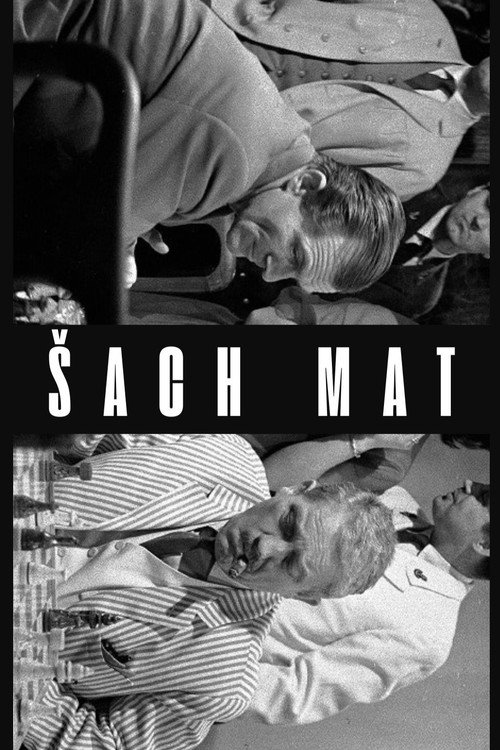
A live, semi-documentary TV broadcast investigates why former prisoner Dr. Benet collapsed after defeating world chess champion Mirko Čentovič aboard the ship Victoria. The crew stages a detailed reconstruction of the fateful game on deck, interviews witnesses to piece together events, and deliberately blurs fact and fiction to draw viewers into Benet’s psychological unraveling and the deeper mysteries behind his victory.
Prague, during World War II. Hana Kaufmann, a Jewish ophthalmologist, marries Dr. Antonín Bureš, a Christian man. When her family is sent to the Theresienstadt concentration camp, their romance turns into a struggle for survival.
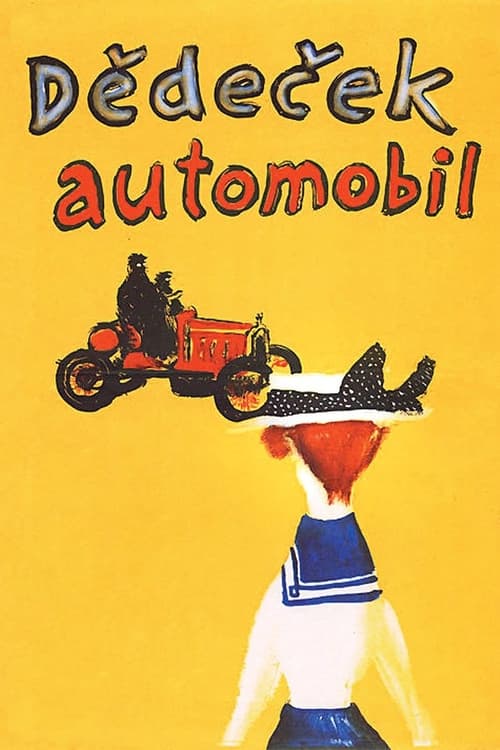
The history of motoring in Bohemia begins when Laurin and Klement founded a factory for the production of motorcycles. In 1904, the first motorcycle races were held in Dourdan, France, in which Czechs also participated. Czech mechanic František and Nanette, daughter of French mechanic Frontenac, met and fell in love there. Czech racer Vondřich finished second due to a breakdown. In 1905, the race was held again, Vondřich insured himself with a suitcase of spare parts and won. Nanette and František, who had been writing to each other all year, met again. After motorcycles, cars began to be produced everywhere, and in 1909 their first race was organized in Gaillon, France. The Czech racer Count Kolovrat won. His mechanic František married his beloved Nanette in the local church.
Oldřich Nový was and will forever remain the embodiment of charm, elegance and personal charm for Czech cinema, to which all women, regardless of age, were subject. In his unforgettable lover roles, he was not only a romantic who was able to fall in love with a girl from an ancient painting, succumb to the chocolate-brown eyes of the minister's girlfriend, but also a seducer for whom infidelity was a regularly practiced sport, or, conversely, a newlywed obsessed with jealousy. This was exactly Viktorin, the main character of a crazy Art Nouveau comedy, where everything revolves around a massive deer antler. Its involuntary owner becomes the jealous Viktorin, and it is certainly not difficult to guess what such a "right" gift can cause.
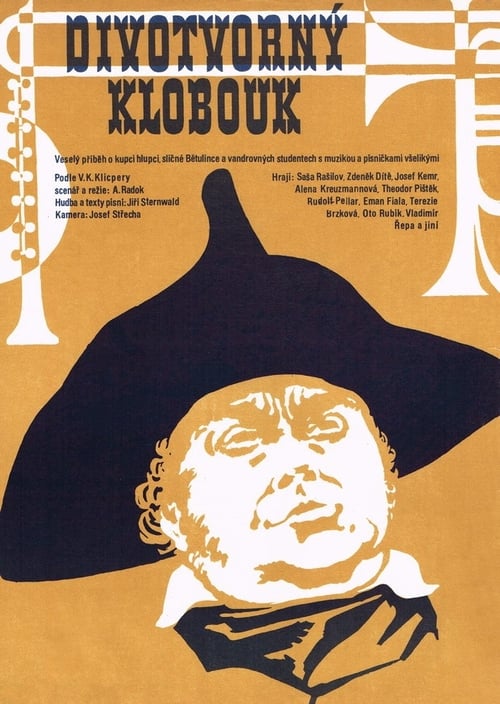
Two poor students, Strnad and Křepelka, console themselves with the fact that Křepelka is to inherit, but it later turns out that the inheritance is only an old hat. The young man seeks help from his relative, the merchant Koliáš, who is the guardian of the beautiful Bětuška. Křepelka immediately falls in love with the girl, but the old miser does not want to hear about his poor nephew. Strnad finally comes up with an idea to use the hat to trick the greedy merchant...
No description available.
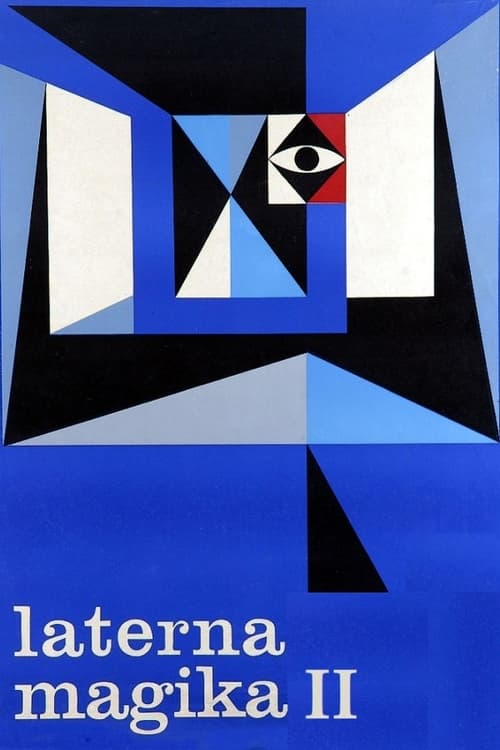
The Opening of the Wells with music by the Czech composer, Bohuslav Martinu was supposed to be part of Laterna Magika II.: Tour programme in 1960. However, it was banned by the communist committee tasked with judging the performance from “a politically correct” point of view. The committee claimed that Radok’s manners and morals were behind the times, and that the director did not show the ultra-modern techniques of Czechoslovakian agriculture. The premiere was postponed and Radok was fired from the Laterna Magika Theatre. His young colleagues (including Milos Forman) were officially asked to finish the rehearsals without the controversial part, and to make other minor changes in other scenes (these changes were made). Alfred Radok considered this to an unforgivable betrayal, as he expected them to leave the theatre to support him.
A film of the Czech multimedia theatre production, Magician's Lantern. Eight Czechoslovak directors filmed a choreographic performance conceived and directed by director Alfred Radok and artist Josef Svoboda. This performance consists of twelve scenes: "Introduction", "Airport", "Rhythms", "Cymbal Concert", "Inspiration", "Hoop Dancer", "Spartakiade", "Dvořák's Slavonic Dance", "Prague Spring", "Love is a Fatal Game", "SL'UK", and "Finale".