Acting
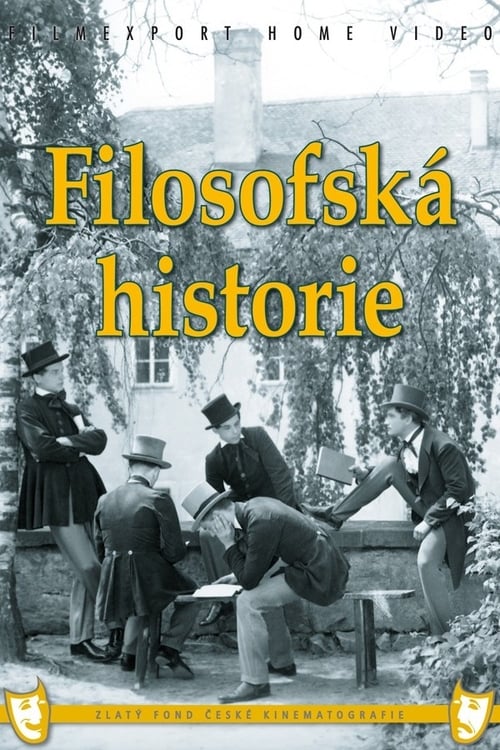
A student rebellion precedes revolutionary events in Prague.
No description available.
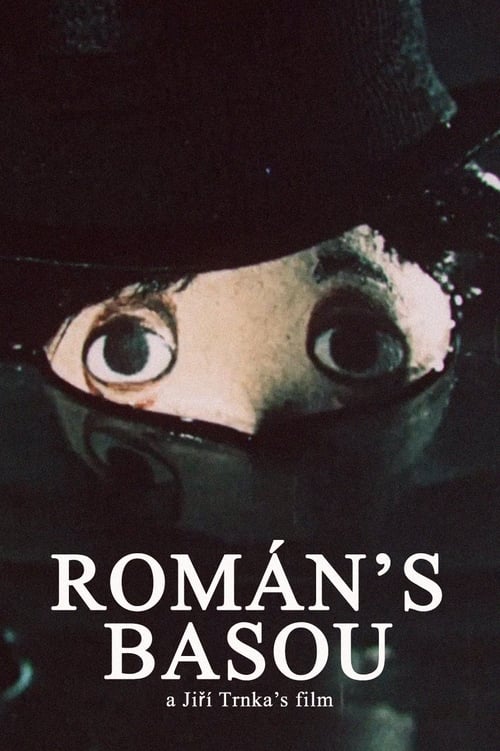
"Román s basou" is another short by master a stop-motion puppet-animator Jiri Trnka. The story is based on Anton Chekhovs story "Roman s Kontrabasom". Princess Bibulova decides to go fishing along the river while not far away a bass player leaves his two companions to go for a swim.
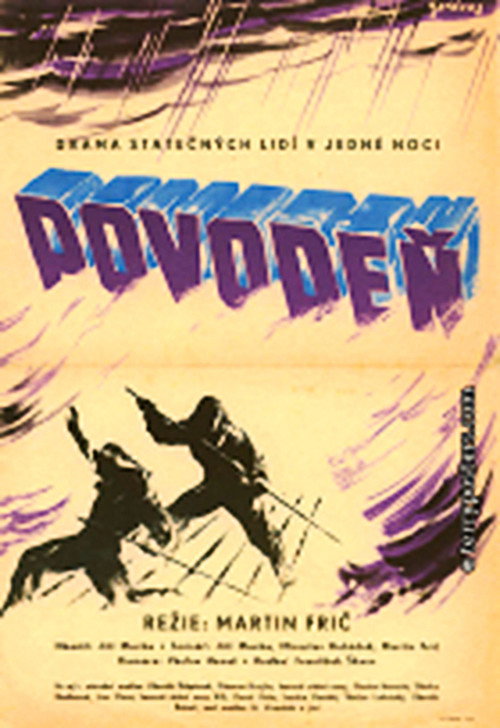
The construction of the new dam deprived the ferryman Ryba of his trade. The new dam replaced the ferry. However, Ryba's ancestors were ferrymen and the old man would have liked his two sons to take up the same profession. But Joseph is an indecisive weakling and Karel found work on the dam. That's why old Ryba drove him out of the house. The persistent rain brings Ryba miserable joy. The man knows well that a sudden flood can endanger the unfinished dam. In his fanatical hatred, he forgets that the water from a broken dam would sweep away his house and his daughter-in-law and sick grandchild in the first place...
A young farmer, Jan Aleš, is drafted from his native Pošumaví to join the army. Since he likes his new environment, he stays with the army as a long-term serviceman. He even successfully passes the exams for the military academy. There he becomes friends with his Slovak colleague Milan Jurčík. He studies diligently, but thanks to Milan he sometimes finds time to go out into the city. That is how he meets the factory owner's daughter, Zdenka, with whom he falls in love. However, her father is not very happy about the promising relationship.
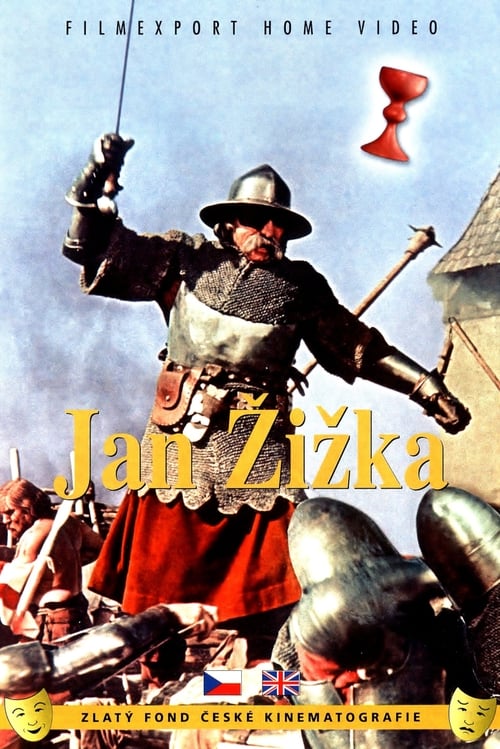
The second part of the revolutionary Hussite trilogy takes place in the years 1419-1420.
Mirko, bored with his extravagant life, decides to spend his vacation alone, far from the company of his Prague friends. He even makes a bet with a friend that he will go a month without any funds, luxuries, a car and...without a kiss.
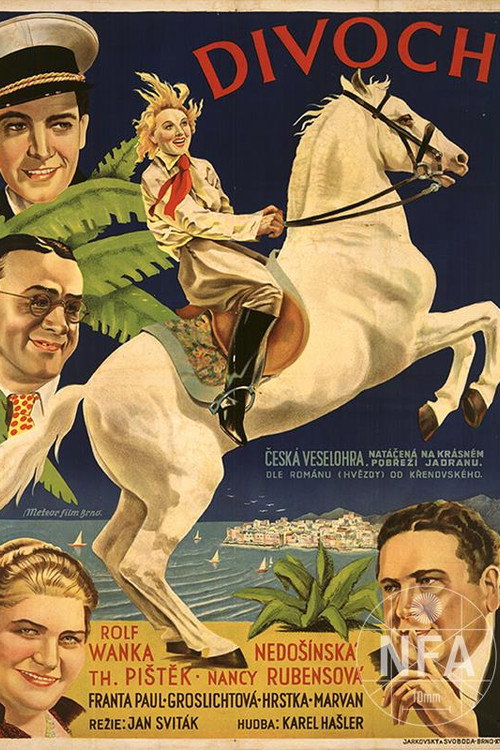
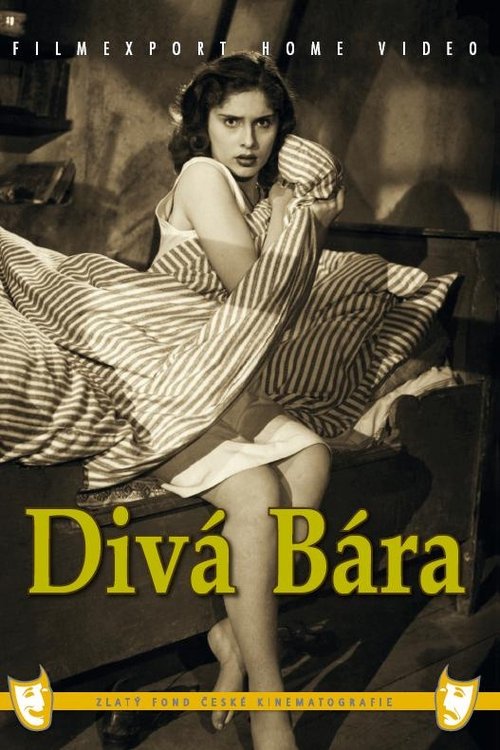
This is a romantic story about a brave, self-made girl, despised daughter of a shepherd. She is not afraid of anything - neither night nor swimming. But the superstitious villagers are telling weird stories about her and about all sorts of strange things, even her conjunction with the powers of hell.
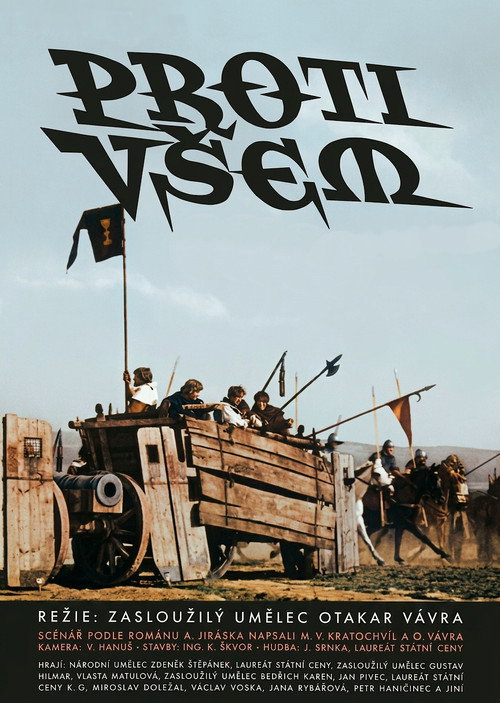
After the battle of Sudoměř the Hussite teaching spreads through the whole country and people start leaving their homes to help build the fortification of Tábor. Prague citizens request help against the army of Zikmund. The Hussite army with Jan Žižka in the lead make their way towards Prague. They fortify themselves on the mountain Vítkov and engage in a bloody battle with Zikmund’s huge army.
A story about the conditions in Bohemia in the second half of the nineteenth century, when small-town officials, such as Hrdlička, succumbed to the predators of the emerging large financial and industrial bourgeoisie, represented by Jestřáb.
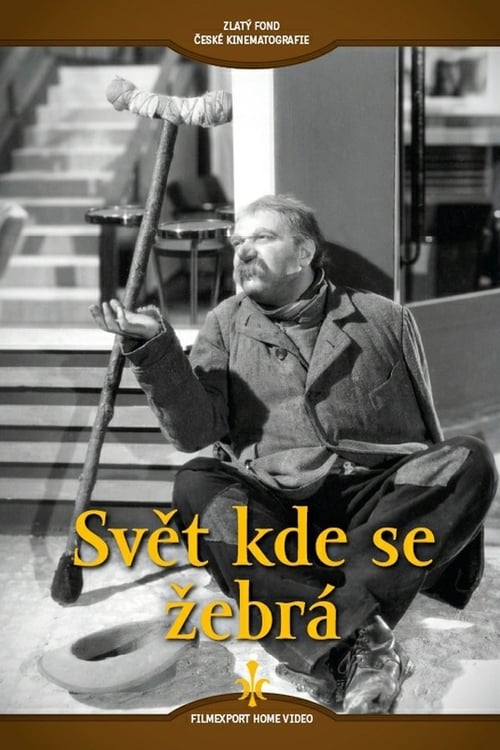
The smooth narration, corresponding to the requirements of a light comedy, develops the smiling and optimistic story of the "one-armed" beggar Dostál, who earned enough money with his excellent begging skills to buy a nice house, become a respectable master of the house, and save the impoverished lawyer Neprosil from poverty, who he contributed regularly to him when he was still well off. He also wanted to get him together with his pretty ward Zorka, for whom he said he would be an ideal husband, but the young people were able to do that by themselves and without his clumsy help, or rather despite his rather ineffective help... The film was shown at the VI. IFF in Venice in 1938.
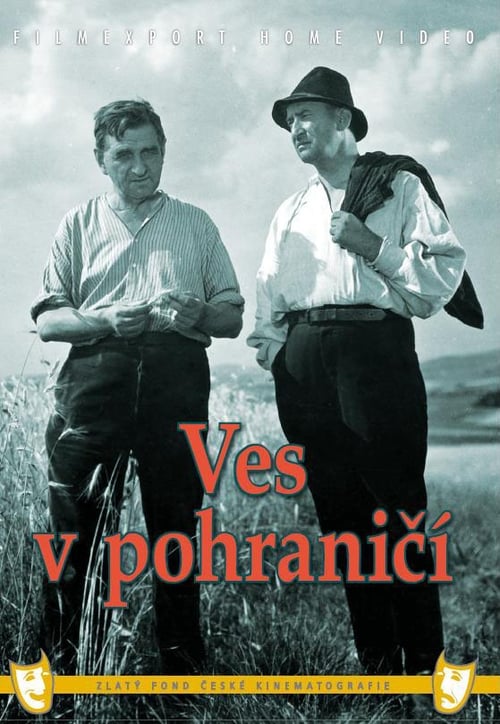
The family of Prague greengrocer Pavlas was among the first immigrants to settle in the border village of Severov. Together, the new residents manage to harvest their first harvest on time and successfully - but they will have to uncover a German saboteur posing as the manager of a sawmill...
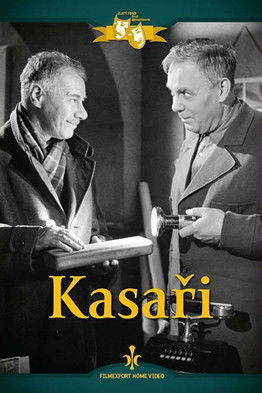
A detective comedy about ex-cashiers who - except for one - have improved and lead a proper and peaceful life and mostly desperately resist the slightest reminder of their past. However, one of them, Josef Fiala, formerly known as Procházka, is one day asked to open a safe in the Sitex factory that has been slammed open with keys inside by careless employees. The operation goes well, but in time Fiala finds himself suspected of theft...
A Czech satirical comedy, filmed according to a script by the State Prize laureate Jiří Marek based on several of his satirical short stories. The film contains three stories, the first of which mocks careerism, the second takes aim at the inadequate attitude of some of our literary critics, and the final story is a satirical picture of how irresponsible construction work is still done in some parts of our country.
The growing conflict between the unruly owner of the villa and his lodger ends up in court. The cohabitation ends in bodily harm - and the film actually translates two versions of the same events, as seen by each of the parties involved. However, the attempt at morality, which proclaimed the necessity of removing the old survivals in people's thinking, did not quite work, and the testimony presented is at times a bit stiff.
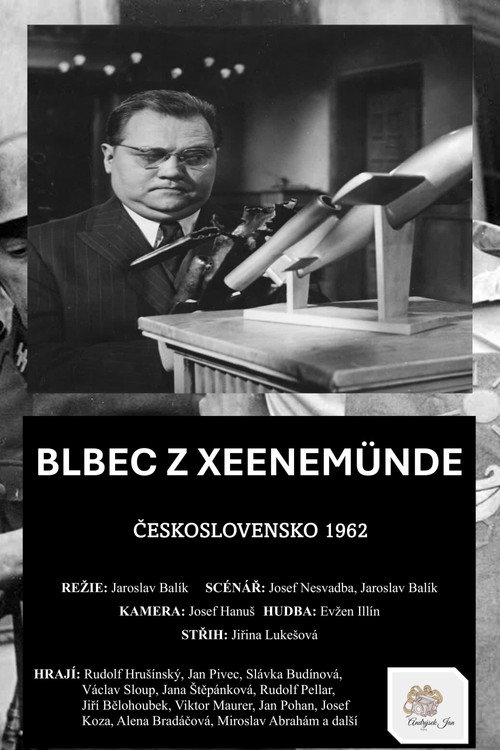
A tragicomedy set in wartime Germany. The protagonist is 16-year-old Bruno, who is considered by everyone to be an uneducated goofus. But he hates the people who mock him so much that he starts to eliminate them with precisely aimed missiles. What the Third Reich's most respected scientists can't decipher, he has intuitively cracked...