Acting
No description available.
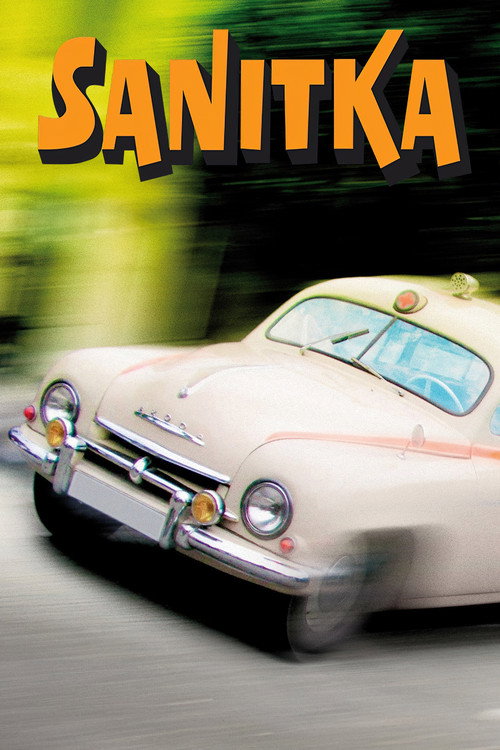
Sanitka was a Czech television, drama series, first broadcast in 1984 and eleven episodes were made. It starred Jaromír Hanzlík, Tomáš Juricka and Zlata Adamovská among others.
Muž na radnici was a Czechoslovak television program which was broadcast in 1976. The program was directed by Evžen Sokolovský. In 2011, it was announced that the program, along with 17 others, would be released on DVD within three years.
This documentary-style story tells the story of an aspiring documentary filmmaker who is preparing a film about the history of glassmaking. He is honestly gathering information, slowly getting closer to an unknown and not always accessible environment, to people, whose actions he often doesn't understand because he misses their motivations... Shards for Eva is certainly not a skillfully wrought work, but it certainly impresses with its sense of at least partial capture of everyday reality.
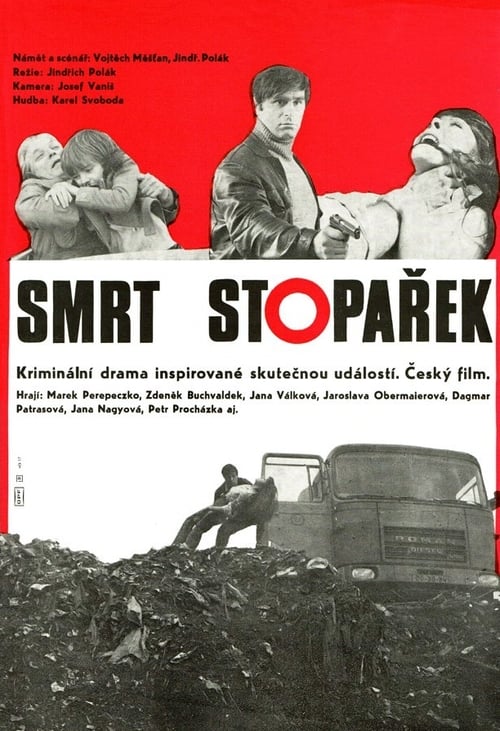
Maniac, a driver, sits on the track women, which then rape and kill. For loved ones, he is an ordinary person who has a wife and child. When exposed, he does not stop before killing his wife and takes his son hostage, under the guise of which he is trying to escape abroad.
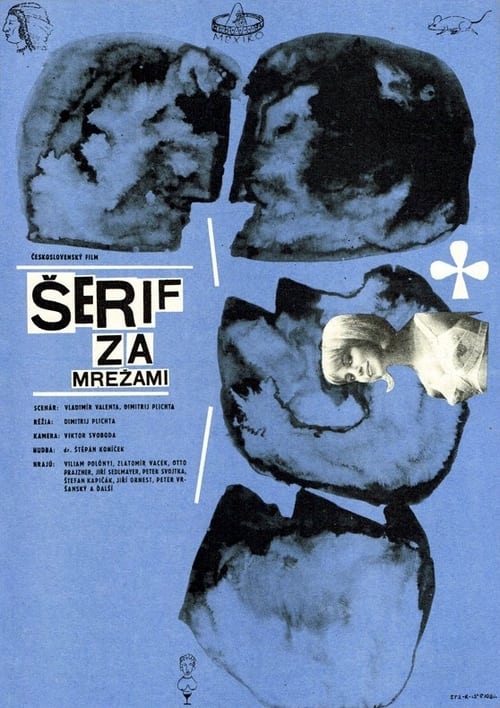
A dramatic story from the setting of a youth de tention center. Youngster Jakub, out of delusory solidarity, gets convicted of theft and goes to prison in place ofthe "sheriff" of his gang. He naively hopes that the sheriff will appreciate his gesture and leaves the stolen goods in a safe hideaway to later divide them fairly among the gang members. This conviction gives Jakub the strength to endure the unbearable conditions in the center. But reality is often much harsher than naive ideals and hollow relations in the gang.
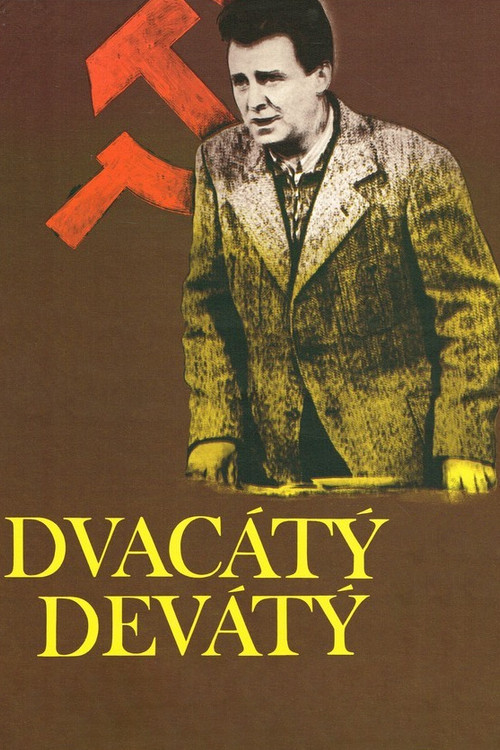
In the era of normalisation, a number of (pseudo)historical films were made, even described as reconstructions, which glorified the world-building mission of the Communist Party and attributed to it exclusively humanitarian intentions ("Days of Betrayal", "Sokolovo", "Liberation of Prague", "The Victorious People"). In 1929, when its fifth congress met, Klement Gottwald, who had taken the line of the Russian Bolsheviks, took over the leadership of the Communists...
The television production captures the last decade of the life of the now world-renowned painter Karel Purkyně (1834 - 1868) and his struggle for the possibility of creative expression. After studying in Paris, he returns to Prague. He is not recognized, has no success and actually lives on the support of his father, the famous physiologist Jan Evangelista Purkyně. The only understanding he finds is in his admirer Maria, whom he marries. But he loses her too due to his emotional involvement with another woman. He dies too young and leaves behind a work whose artistic value will only be appreciated much later, at the beginning of the twentieth century.
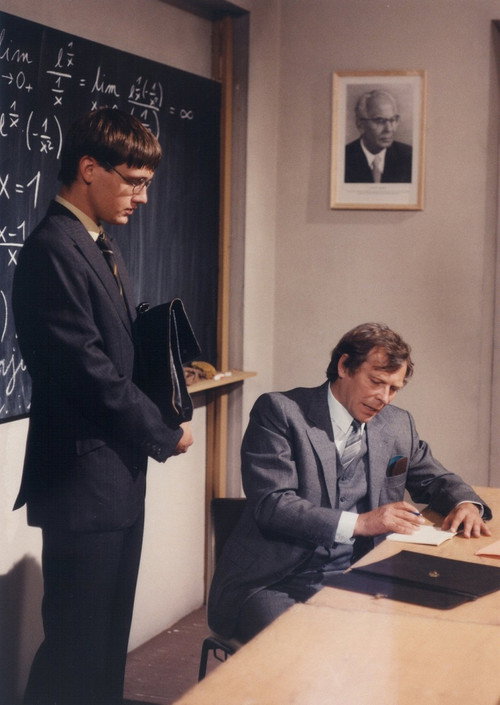
The short story film follows the fate of three young men who will soon have to decide what to do with their lives. The first "Poet", an aspiring author, publishes his first poem, while the sporting career of the second "Rep", a national table tennis player, is disrupted by a maths repartee. The last "Beaver Grizzly" is a tramp more used to solitude, yet he starts a pioneer troop...
In the second half of the 1980s, so-called critical films began to emerge, but they were afraid to make a sharper statement, moving on the basis of an engaged morality that wanted to improve the existing conditions cosmetically at best. The theme of the search for a new anchor in life becomes a central element: the protagonist, after returning from the war, does not want to devote himself to the constraints of elite sports, he rejects the dubious business of a friend. Most of all, he would be attracted to a perfectly ordinary job in a bakery. The dance clip inserts, however, make it difficult to navigate the already rather confusing narrative.
If you think shopping malls are crowded, you probably haven’t experienced a Prague canteen in the late 1940s. Two thousand hot dogs sold every day, two thousand human faces and destinies. This film essay presents Prague’s vending machines, snack bars, and cheap cafeterias as a mini-zoo crowded with human specimens. They fight for space, food, or a loving embrace under the microscope of a comically touching director, searching for a theme.
A pair of criminals, an escaped prisoner and a young thief, are about to make a joint, obviously illegal, escape across the border. They escape for a long time, even managing to infiltrate Polish territory. They head for the coast, from where they intend to transport themselves to Sweden. But the Polish security authorities are vigilant.
Approaches to important life values can vary: while the top athlete who has made it in cycling tries to monetise his talent, his brother cannot devote himself to his beloved sculpture because of his disabled arm and seeks alternative self-fulfilment. Moreover, the two are united - and at the same time divided - by a love affair with the same woman.
A section of the life of George of Poděbrady from his coronation to his death (1458–1471), creating a portrait of a remarkable monarch whose name shone as a symbol of Czech statehood, as a symbol of a victorious military leader and a prudent statesman; a powerful, complex and contradictory personality in the midst of a very dramatic fifteenth century. During thirteen years of independent rule, he wanted to defend with all his might what had been won by the Hussites; he wanted to defend it even in a time and environment that, on the contrary, wanted to settle accounts with the Hussites. It was during this tense time that Poděbrady's idea of creating an association of monarchs who would resolve conflicts through agreements and treaties, and not through war, arose. Even as a father, he made a sacrifice for his beloved country when he did not hand over the crown of the Czech king to his son, but to the Polish king Vladislav, the "Prince of Peace".
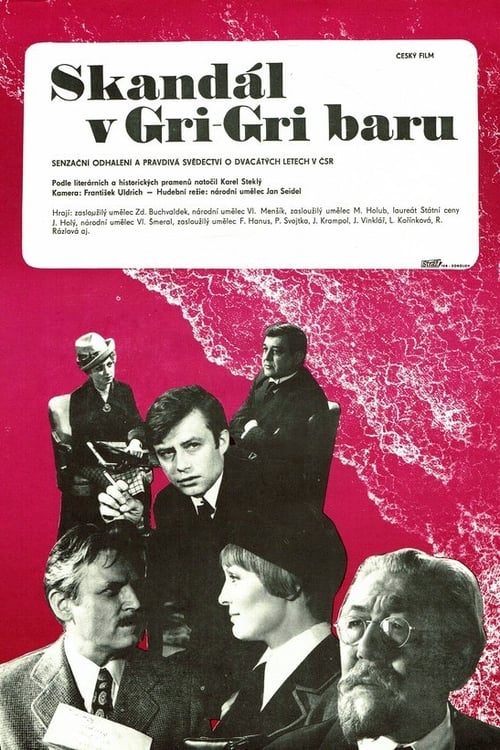
Two young returnees from the First World War face a difficult future because they cannot find work. One eventually finds a job as an electrician, the other breaks into the Social Democratic press, where he gets the chance to watch up close how the Social Democratic leadership deceives its members and enters the service of the ruling classes. And a newly-trained journalist solves the problem of whether he should also adapt to the corrupt environment...