Acting
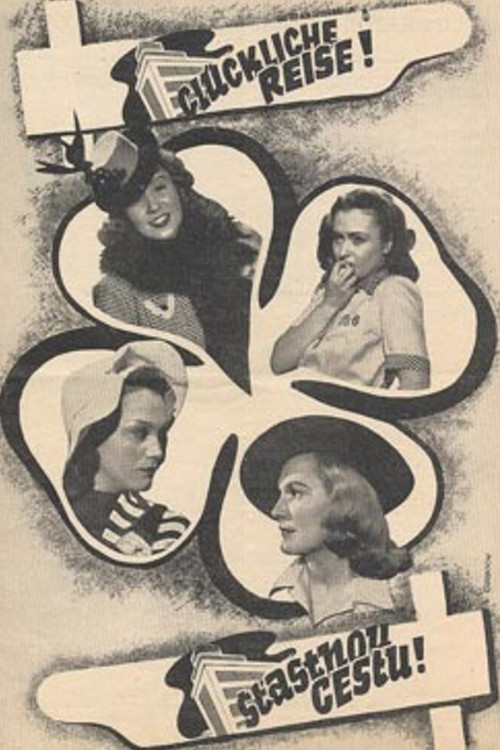
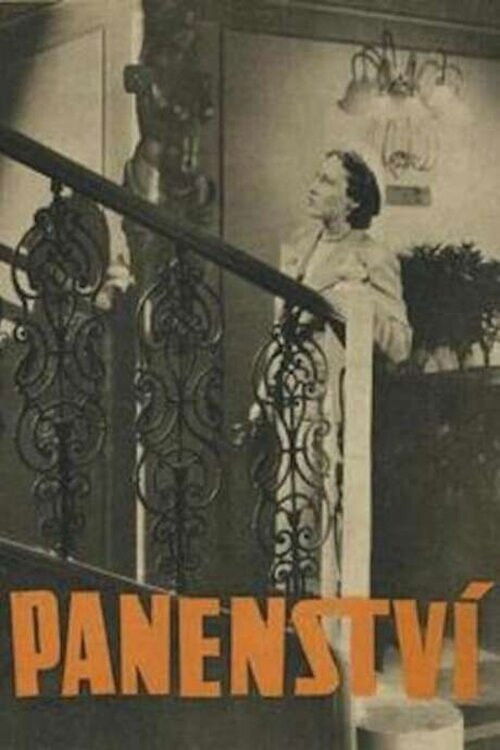
Filmed during the Nazi occupation, this panoramic drama set in a Prague department store follows the divergent destinies of four female coworkers, each of whom seeks happiness in a different way.
A student rebellion precedes revolutionary events in Prague.
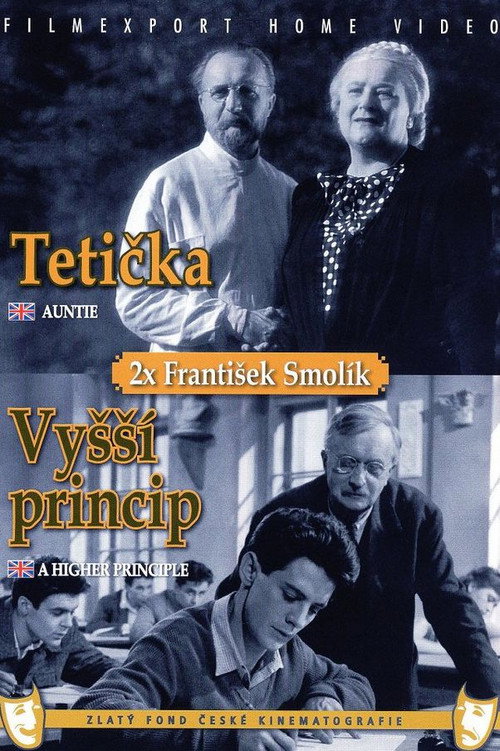
Rich spinster Berta celebrates her sixtieth birthday. Her faithful admirer Dr. Jelinek proposes. But Berta can not forget Edward, the great love of her life, and refuses the offer…
No description available.
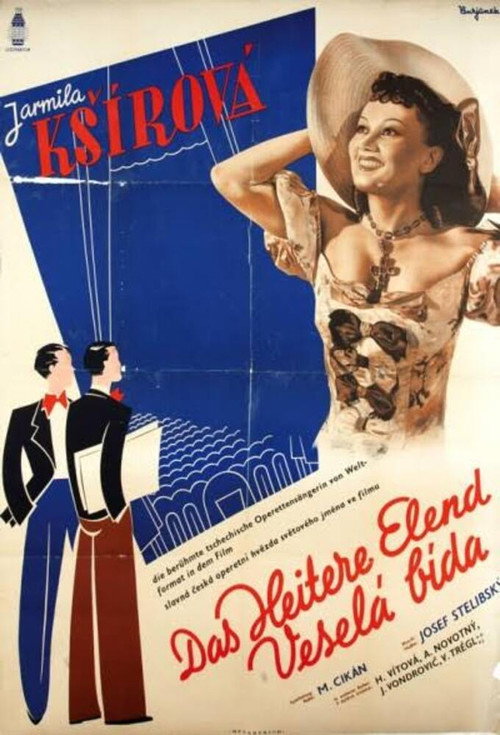
Two young composers offer their operetta in vain - it is rejected before anyone reads it. By a coincidence, when its text ends up in the wrong briefcase, it ends up with a popular singer who, on the contrary, likes it very much, but has no idea who wrote the play... The search for the authors, personality confusion and budding love become the main plot elements of this pleasantly naive film, where there is constant singing.
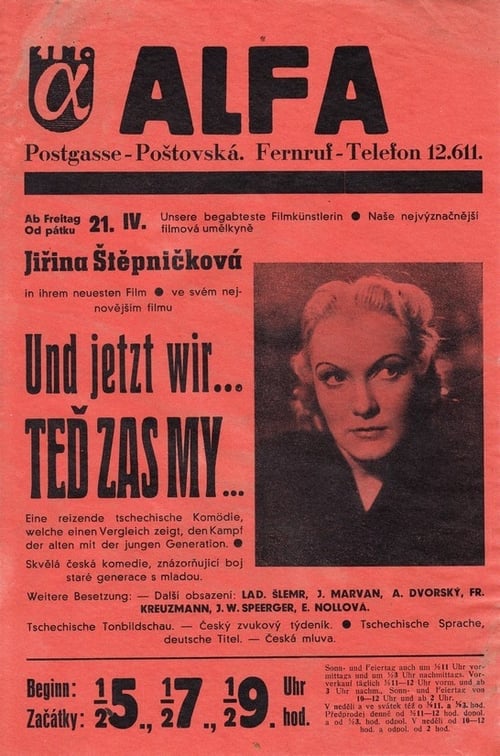
The factory owner Hložek is in a constant dispute with his son Jiří. Jiří wants to modernize the factory, but his father is afraid that the new machines will deprive the workers of their jobs. News of the factory modernization divides the employees into two hostile camps. To prevent unrest, Hložek offers his son money from his mother's inheritance in exchange for his departure. Jiří's biggest opponents include two older employees of the company - the correspondent Málek and the accountant Mazara...
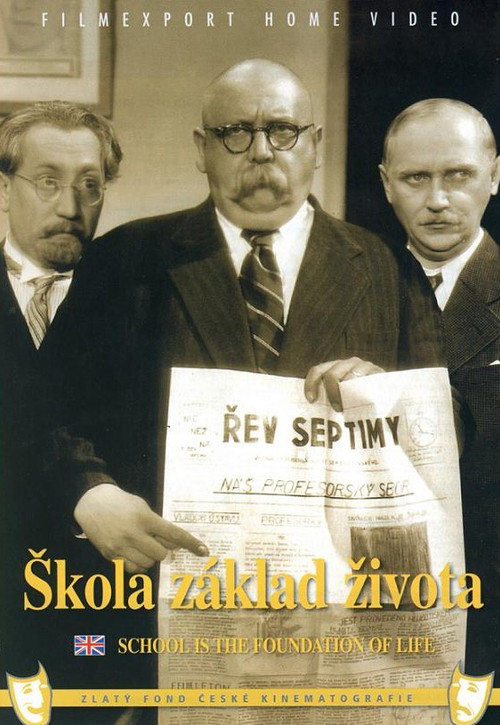
Seventh form pupils at a grammar school in Přívlaky are preparing for a secondary school sports competition. Class creep Krhounek gives the class teacher Lejsal a copy of the seventh form’s magazine Roar. Most of the teachers insist on severe punishing the culprit. The author does not own up and consequently the whole class is punished by being banned from taking part in the schools competition. The most gifted pupil, Benetka, rather sharply criticises the school in a homework essay on a subject of his choice. The strict Czech language teacher is convinced Benetka is the author of the school magazine. Benetka denies the charge but his expulsion from school is proposed anyway on account the views he expounded in his essay. Eventually, Boukal, the author of the school magazine comes forward and admits to writing it. The pupils are allowed to take part in the contest and thanks to Benetka they win. In the meantime however the teachers vote to expell him.
The likeable and charming Vanda Karhanová has problems in every job because of her appearance. So when she is about to start a new job, she decides to decisively prevent similar problems. She adjusts and dresses in a way that men do not notice her and do not pay attention to her. She has no idea that she will cause even more problems for herself, and not only because she now bears an uncanny resemblance to the millionaire Czech-American Ruth Baretová, who ran away from home to avoid getting married. First, Vanda is mistakenly arrested and ends up in the police station, so she cannot return to work. At the factory, they suspect her of having disappeared with a large sum of money that they had entrusted to her to deposit in the bank. Then the whole situation is complicated by the arrival of the real Miss Baretová.
A young farmer, Jan Aleš, is drafted from his native Pošumaví to join the army. Since he likes his new environment, he stays with the army as a long-term serviceman. He even successfully passes the exams for the military academy. There he becomes friends with his Slovak colleague Milan Jurčík. He studies diligently, but thanks to Milan he sometimes finds time to go out into the city. That is how he meets the factory owner's daughter, Zdenka, with whom he falls in love. However, her father is not very happy about the promising relationship.
Innovator Ludvík Zach is in love with his technical data and improvement proposals and does not believe that women could be able to understand these problems. However, on his way back from a conference, he meets Jarmila, an electromechanic, and arranges a meeting with her. He would prefer to talk to her about technology, but he discovers that Jarmila is more interested in poetry and music...
Prague, during World War II. Hana Kaufmann, a Jewish ophthalmologist, marries Dr. Antonín Bureš, a Christian man. When her family is sent to the Theresienstadt concentration camp, their romance turns into a struggle for survival.
A lost lady's glove that connects several human destinies. The focus here is not on the lost part of the wardrobe, but on piano virtuoso Arne Brant, a man armed with a charming smile and surrounded by women, two of whom have particularly influenced his life. The first is the daughter of a famous can-can star, dancer Pavlína Doré-Zejdová, the second is Mařenka Berková, the main character of the film and a kind of Kristián in skirts. An orderly and well-bred daughter from an honorable family who lives her second life as a lady of high society. The lost glove complicates the situation for all of them considerably, but in the end she finds her rightful place, just like the heroes of the film...
Dvořák's well-known composition reappears again and again in the serious moments of the lives of the father and son Hupeks - talented non-professional musicians for whom music gives them the opportunity to rise above difficulties and problems...
The doomed love of a city girl caught in the vise of poverty is detailed in Vavra’s fluid, romantic work, one of the most elegant creations of the Czech Modernist era... The film lingers over its characters’ habitats and haunts, finding psychological truths in what each owns or desires, and countering every Hollywood-ready scene of gleaming restaurants and dazzling penthouses with realist moments of employment lines and crammed flats. Vavra’s classical camerawork and aura of romantic defeatism give Virginity a force comparable to the master of this genre, Hollywood’s Frank Borzage. (BAM/PFA)
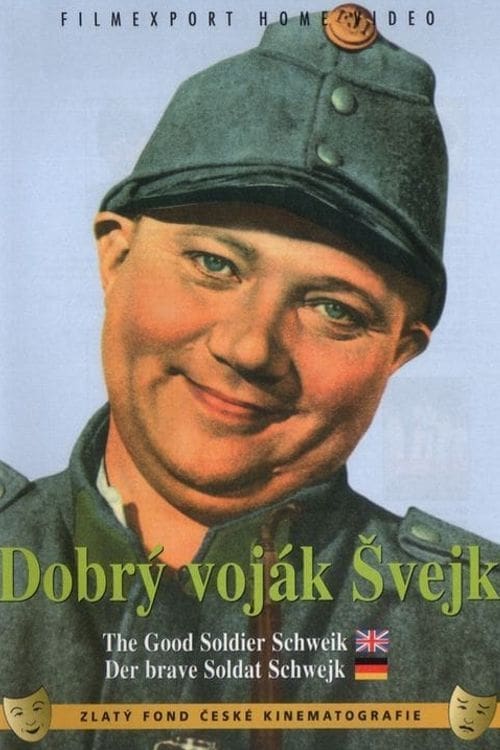
Good-natured and garrulous, Schweik becomes the Austrian army's most loyal Czech soldier when he is called up on the outbreak of World War I -- although his bumbling attempts to get to the front serve only to prevent him from reaching it. Playing cards and getting drunk, he uses all his cunning and genial subterfuge to deal with the police, clergy, and officers who chivy him toward battle.
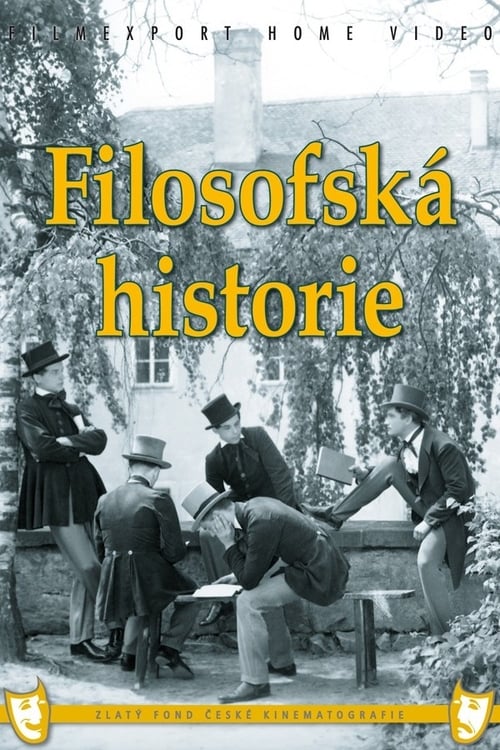
The Czech revival movement is divided at the end of the first half of the 19th century. While the older generation, such as František Palacký, urges restraint, students lean towards radical positions. A report on the revolutionary events in Paris prompts Czech Prague residents to write down the demands of the Czech nation for self-determination and the proclamation of a constitution. Tensions peak during the All-Slavic Congress in Prague's Žofín. Vienna rejects the Czech demands and the congress is brutally dispersed by the Austrian police. Prague begins to build barricades...
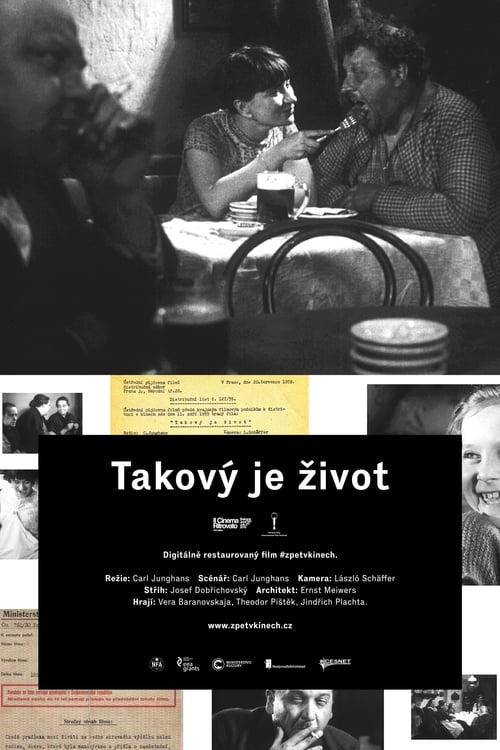
A story about domestic life in a typical working-class environment. Life and trials and how little situations have big consequences.
An old peasant from Chodský, Záhor, claims to the young Podestát that he returned three hundred gold pieces to his father before the old Podestát died. Out of greed, Záhor even decides to perjure himself in court. The indignant creditor warns him of God's wrath. Záhor's sons, Matěj and Vondra, are vying for the same girl - the daughter of a blacksmith, Nana.