Acting
No description available.
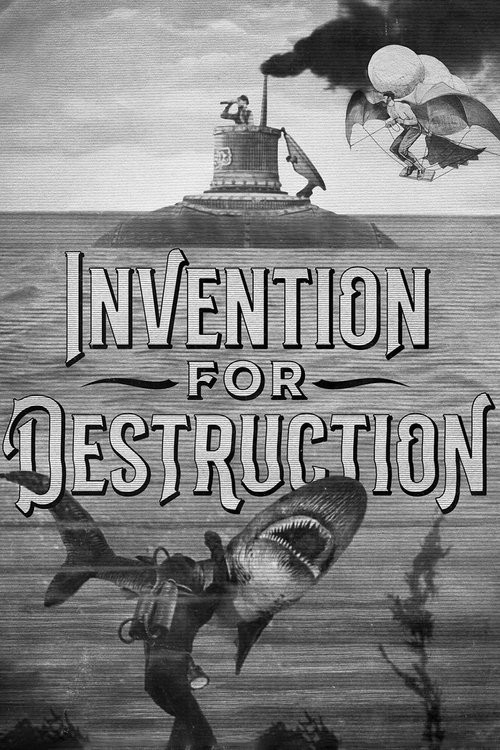
As the world progresses into the industrial age, a professor studying the "nature of pure matter" is spirited away by a would-be dictator and connived into building a super-bomb, as a young reporter and a girl rescued from the sea attempt to warn him of their mutual kidnapper's intentions to dominate the world with a new and more-deadly-yet weapon.
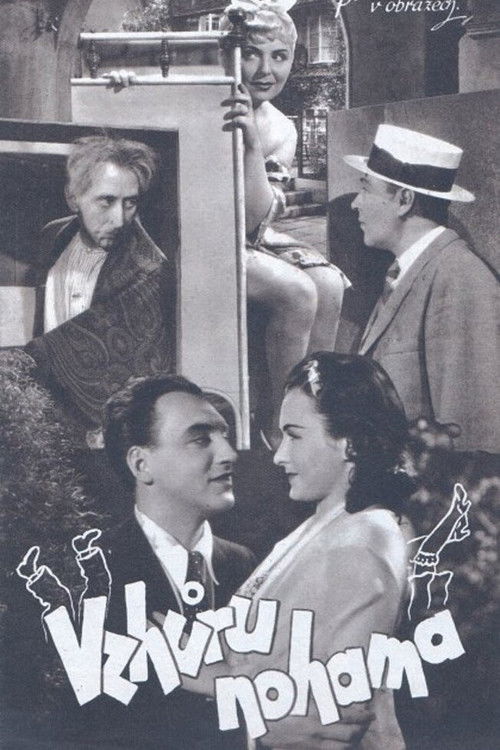
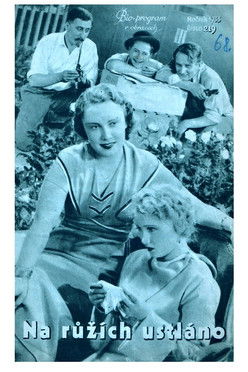
The likeable and charming Vanda Karhanová has problems in every job because of her appearance. So when she is about to start a new job, she decides to decisively prevent similar problems. She adjusts and dresses in a way that men do not notice her and do not pay attention to her. She has no idea that she will cause even more problems for herself, and not only because she now bears an uncanny resemblance to the millionaire Czech-American Ruth Baretová, who ran away from home to avoid getting married. First, Vanda is mistakenly arrested and ends up in the police station, so she cannot return to work. At the factory, they suspect her of having disappeared with a large sum of money that they had entrusted to her to deposit in the bank. Then the whole situation is complicated by the arrival of the real Miss Baretová.
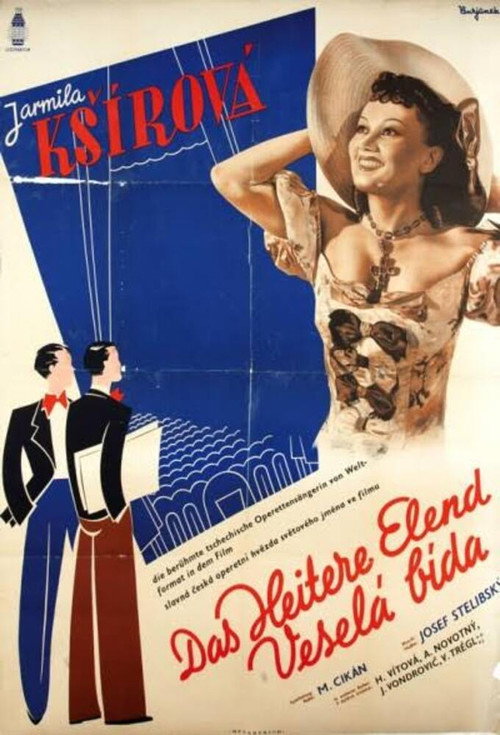
Two young composers offer their operetta in vain - it is rejected before anyone reads it. By a coincidence, when its text ends up in the wrong briefcase, it ends up with a popular singer who, on the contrary, likes it very much, but has no idea who wrote the play... The search for the authors, personality confusion and budding love become the main plot elements of this pleasantly naive film, where there is constant singing.
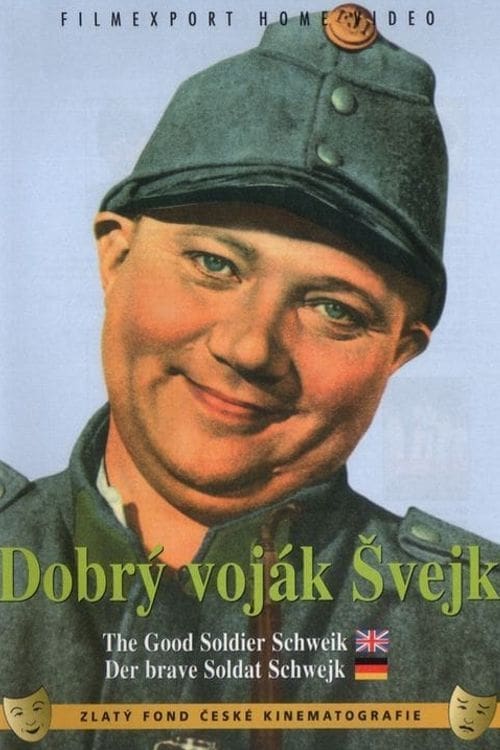
Good-natured and garrulous, Schweik becomes the Austrian army's most loyal Czech soldier when he is called up on the outbreak of World War I -- although his bumbling attempts to get to the front serve only to prevent him from reaching it. Playing cards and getting drunk, he uses all his cunning and genial subterfuge to deal with the police, clergy, and officers who chivy him toward battle.
Factory owner Pardon, meets Olga, daughter of clairvoyant Stefanie Lesczynska at a ball. Their brief acquaintance is interrupted when Olga and her mother have to leave. Fifi Hrazánková has her sights set on the elligible Pardon. Pardon asks his Uncle Cyril Ponděliček if the girl could take over his position at work so that she may be dissuaded of her amorous intentions. Fifi seduces Pondělíček. In the meantime, Pardon meets Olga and Stefanie again by chance and offers them a place to stay at Ponděliček’s while Pondělíček passes himself off as Pardon.
The Emperor's mismanagement of his country is provoking some in his court to plot to overthrow him. He feels successful, at least, when he discovers the legendary Golem, which he believes can protect him and even cure his imaginary illnesses but, when he disappears while on a bender, his kindly baker, who looks just like him, is mistaken for him, and begins to put things in order. However, the conspirators, not to be outdone, determine to bring the Golem back to life to do their bidding.
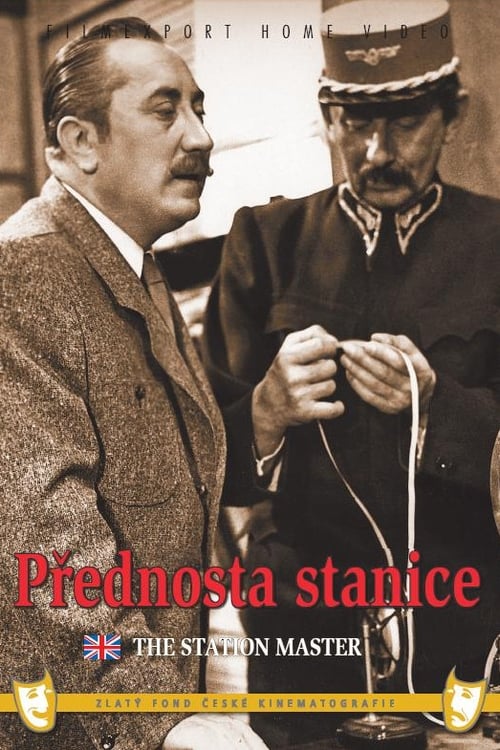
Vlasta Burian, as a stowaway, disrupts the disciplined operation of a railway station. Mr. Ťopka gives the impression of a gentleman, somewhat Chaplin-like. He makes a living by doing odd jobs, for which he exclusively rides the train as a stowaway. During one of his trips, he meets the feared railway inspector general Kokrhel. At a small station, he manages to get out and change into the stationmaster's uniform. However, he cannot avoid meeting Inspector Kokrhel...
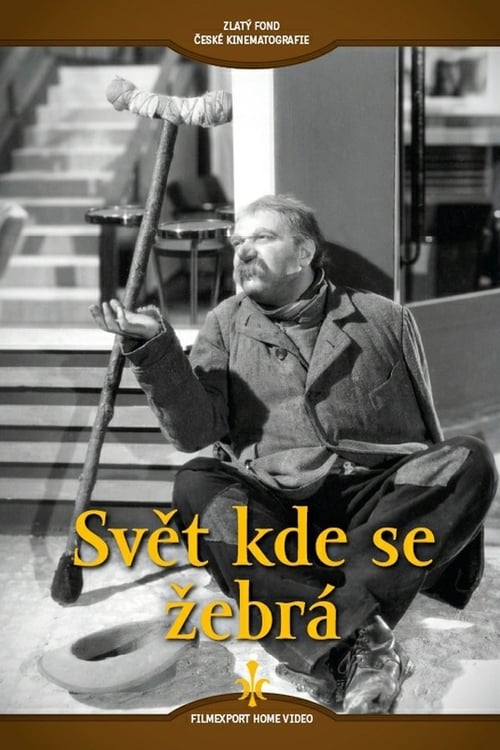
The smooth narration, corresponding to the requirements of a light comedy, develops the smiling and optimistic story of the "one-armed" beggar Dostál, who earned enough money with his excellent begging skills to buy a nice house, become a respectable master of the house, and save the impoverished lawyer Neprosil from poverty, who he contributed regularly to him when he was still well off. He also wanted to get him together with his pretty ward Zorka, for whom he said he would be an ideal husband, but the young people were able to do that by themselves and without his clumsy help, or rather despite his rather ineffective help... The film was shown at the VI. IFF in Venice in 1938.
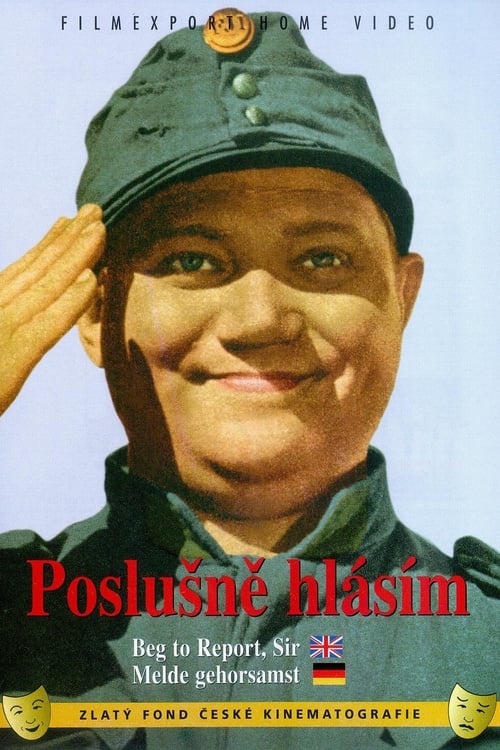
A comedy based on the novel of Jaroslav Hašek's The Good Soldier Svejk happens during the World War I. I Dutifully Report: In the introduction to the second part of the film adaptation of Hašek's novel The Good Soldier Švějk presents his main character Josef Švejk. With the distinctive traditional Czech cartoon character of a soldier Svejk, this time you meet on the way to the front and eventually right in the firing line. You can look at his famous train events, and also probably the most famous episode of the novel, Švejk's Budějovice anabasis. Don't miss the scene with the secretly bought cognac, the episode with Svejk as a fake Russian prisoner of war, including the court scene, and the scene in which lieutenant Dub is caught in a brothel. Despite the criticism, Steklý's adaptation is undoubtedly the most famous and memorable at present.
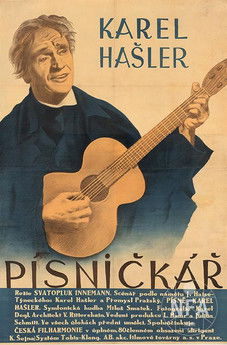
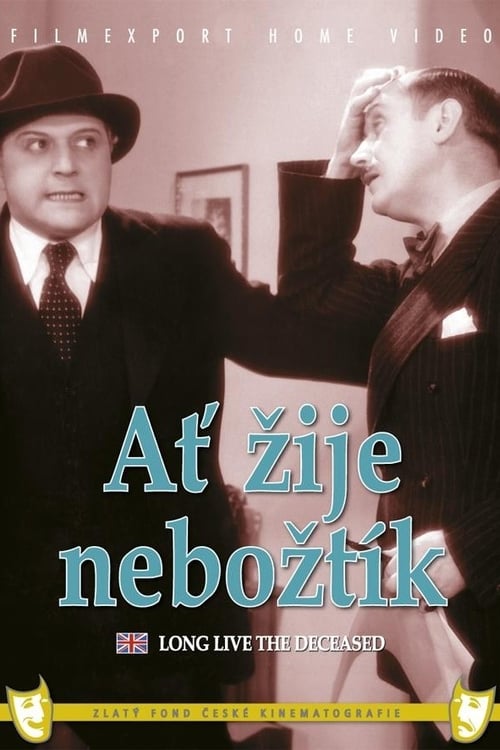
Wealthy and ill Petr Kornel (Karel Hasler) is not pleased with the carousing lifestyle of his nephew. He stops supporting him financially and demands that he change his name. Out of gratitude Kornel bequeaths a substantial sum of money to his nurse Alice (Adina Mandlová) with the condition that she marries. Petr Suk (Hugo Haas), as the nephew is now named, visits the doctor. In the waiting room his X-ray is mistakenly switched with one of another patient's. On the basis of this he presently learns that he is seriously ill and has only one day of life left to him.
Folk song collector Dr. Šerk arrives in the remote village of Lesov. He is enchanted by the singing of sixteen-year-old Madla Satranová and he records her songs for radio broadcast. Šerk's friend, composer Jaroslav Klán, takes care of a group of orphans, from whom he has formed a choir. Šerk brings the orphaned Madla to him. The teenage girl begins to help the housewife Nána with the care of the children.
Eva, a saleswoman in a record shop, is pestered by a rude customer. Councilor Švarc comes to her defense and immediately asks her to help him get rid of his temperamental mistress, Rita. According to Švarc’s plan, Eva is to play the role of his ex-mistress, who is determined to win him back. Meanwhile, Rita leaves Švarc on her own initiative; she has met the famous aviator Jiří Vydra, who arranged to meet her at a fishermen's tavern.
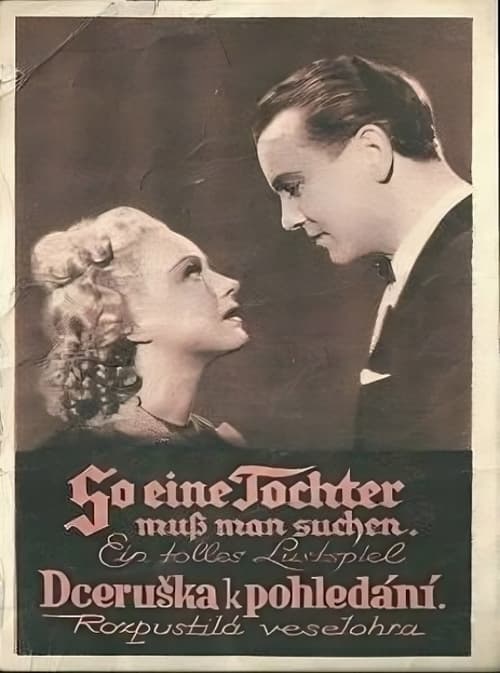
Czech-American professor Johny Novák takes over his father's inheritance. The estate reveals that Johny is the father of a girl who lives with her mother Helena Strnadová in Prague, where Johny had stayed eighteen years earlier. Johny's father did not approve of his love and so he withheld Helen's letters, but he sent money to Helen's aunt for the child. Johny intends to visit Helen and her daughter with his friend Jimmy Sládek and informs his aunt about it by telegraph...
A selfish self-centered widowed ruler, barely tolerated by his subjects and called appropriately enough, 'King Myself, First' asks his three daughters to name the measure of their love for him. When one of them says, "more than salt", he banishes her from the kingdom. Not understanding what she meant the King assumes love can only be measured by precious metals or one's own talent, the 'correct' answers from his other two daughters. The arrogance of the King leads him to gather all the salt in the kingdom and destroy it. Of course, this backfires as he slowly learns the universal value of the substance, and of course, the essence of his daughter's reply. With the help of the wise and magical old 'herb woman', the King also learns what it means to be a true and wise ruler.