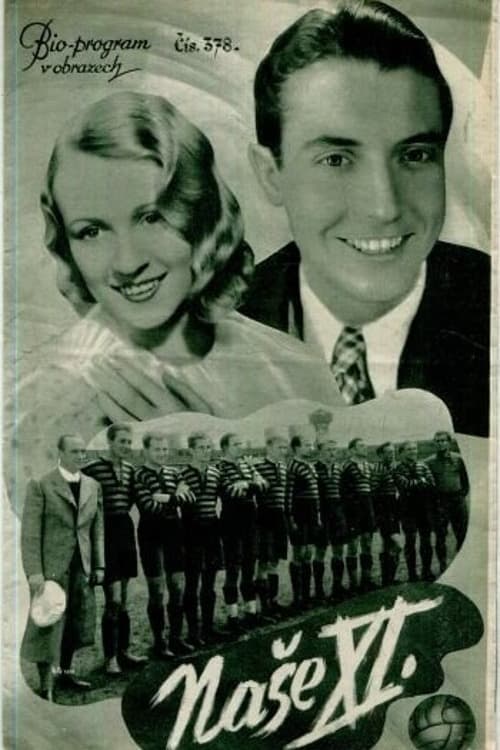
Darja Hajská
Acting
Known For

No description available.
Bakaláři

Thirty Cases of Major Zeman is a Czechoslovak action-drama television show intended as a political propaganda to support the official attitude of the communist party. The series were filmed in the 1970s. Each episode encompasses one year, and investigations are stylized to that year. Most are inspired by real cases. The series follows the life of police investigator Jan Zeman during his career from 1945 to 1975.
Thirty Cases of Major Zema

Hospital at the End of the City is a popular television series first released in Czechoslovakia in 1977, it featured an ensemble cast and received much viewer praise in central Europe. The series ran from 1977 to 1981 for a total of twenty episodes. The success of the series inspired the German television series The Black Forest Clinic.
Nemocnice na kraji města
No description available.
Dnes v jednom domě
No description available.
Bližní na tapetě

No description available.
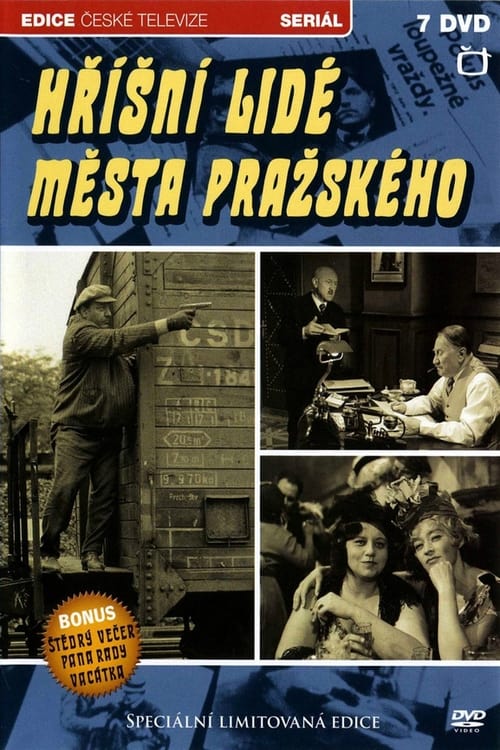
Hříšní lidé města pražského

No description available.
Kamarádi

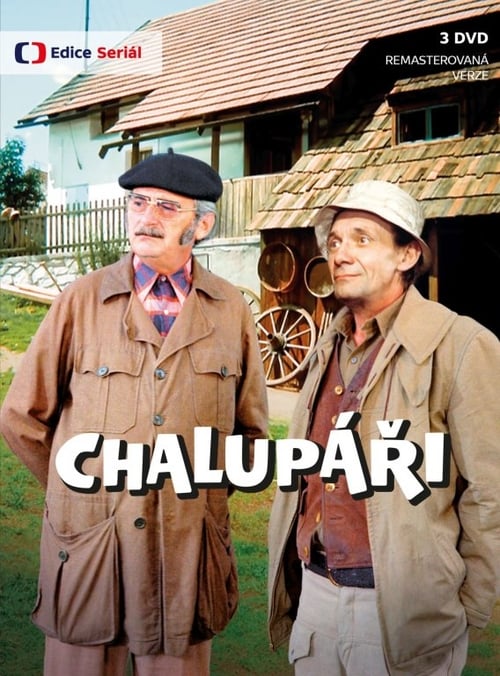
Chalupáři is a Czechoslovak comedy TV series filmed in 1974 and 1975 by František Filip.
Chalupáři

No description available.
Byli jednou dva písaři...

Honza and Zuzana are very young husband and wife. They have a little daughter of whom willingly occasionally take care the grandparents and Honza's fifteen-year-old brother Martin. Zuzana continues studying and Honza devotes all weekends as an amateur competitor to the motor-cycles at the speedway. Zuzana is not interested in motor-cycles. Martin holds responsible for his brother's marriage and at the advice of his friend Magda, who is of the same age, invites her sister-in-law to the club of Hucul horses so that she does not feel bored. But by misfortunes and unexplained quarrels both young husband and wife start being jealous of one another.
Brother for All the Money

No description available.
Fantom operety

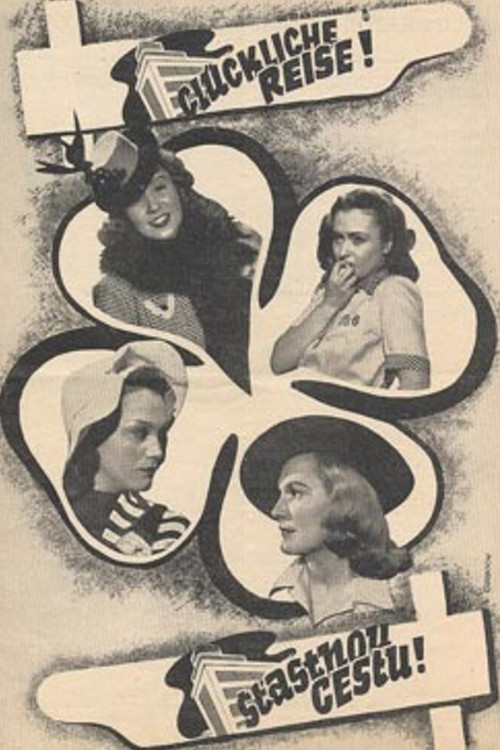
Filmed during the Nazi occupation, this panoramic drama set in a Prague department store follows the divergent destinies of four female coworkers, each of whom seeks happiness in a different way.
Happy Journey

The suffocating conditions in a bourgeois family were depicted in several films in the second half of the 1950s - this one is one of the lesser known, although it achieves great emotional impact, free from the first ideological pressures. The title character, the owner of the tenement house Mrs. Dulská, controls her relatives and tenants with a firm and despotic hand. To achieve her goals, she masterfully combines tears, blackmail and insidious intrigues, or does not hesitate to abuse the trusting and handsome maid Hanka when she wants her son not to fool around. Everything suddenly turns around when Hank gets pregnant... But the appearance of a good reputation is more important to her than anything.
Morálka paní Dulské

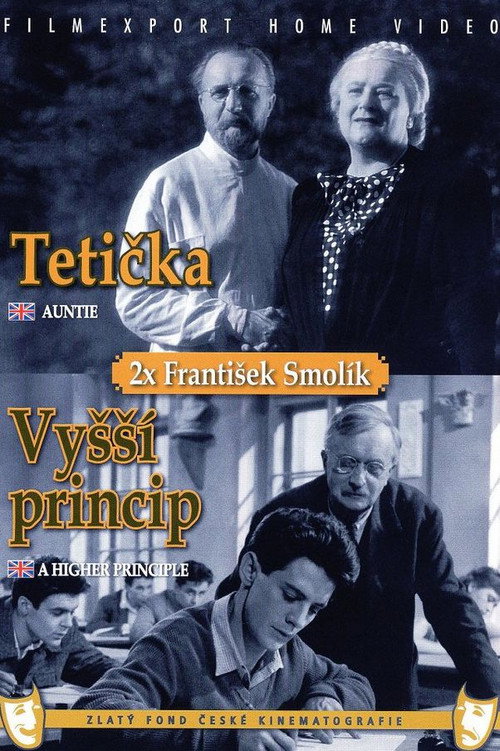
This comedy is about one average family. The father works as master in the factory and his son is studying on high school. One day father must start to visit the evening school. It's the same school as his son visiting. The lives both students are connecting together. The son must teach the math and physics his own father. The father getting to know, that the life of the students is not simple as he supposed.
Marecek, Pass Me the Pen!

A Czech satirical comedy set around 1900. The inhabitants of the small town of Pětice are excited by a mysterious package that is to be delivered to the best person in the village. Of course, all members of the town council claim the title of best person. In the end, it turns out that it was a cleverly thought-out prank intended to reveal the true character of the "better people" of the town.
The Best Man of All

An anthology of three absurd, ironic tales inspired by Čapek’s “Tales from One Pocket” and “Fables and Side Stories,” each showing uncanny forces disrupting ordinary lives: in Krejčík’s “Glorie,” a gentle clerk is haunted by a sudden halo; the other two segments by Mach and Makovec similarly blend everyday routines with ironic, supernatural twists.
Of Things Supernatural

This Czechoslovakian children’s film takes place during the last days of the Austro-Hungarian empire. The young son of a horse trainer loves nothing more than riding his horse, until he is stricken by polio…
Jumping Over Puddles

The future communist journalist Julius Fučík had a stimulating childhood and youth in a working-class environment, when his moral maturity was already showing. The authors of the film recall that the young Julek was a star of the suburban operetta scene, and in three episodes they depict him both in his early childhood and already at the gymnasium, when the outbreak of the World War shaped his determination.
Julek

Jánošík has been topic of many Slovak and Polish legends, books and films. According to the legend, he robbed nobles and gave the loot to the poor. The legend were also known in neighboring Silesia, the Margraviate of Moravia and later spread to the Kingdom of Bohemia. The actual robber had little to do with the modern legend, whose content partly reflects the ubiquitous folk myths of a hero taking from the rich and giving to the poor. However, the legend was also shaped in important ways by the activists and writers in the 19th century when Jánošík became the key highwayman character in stories that spread in the north counties of the Kingdom of Hungary (present Slovakia) and among the local Gorals and Polish tourists in the Podhale region north of the Tatras.
Jánošík
Three nine-year-old boys are ridden with guilt after chasing their classmate into a busy street, causing him to get hit by a truck.