Acting
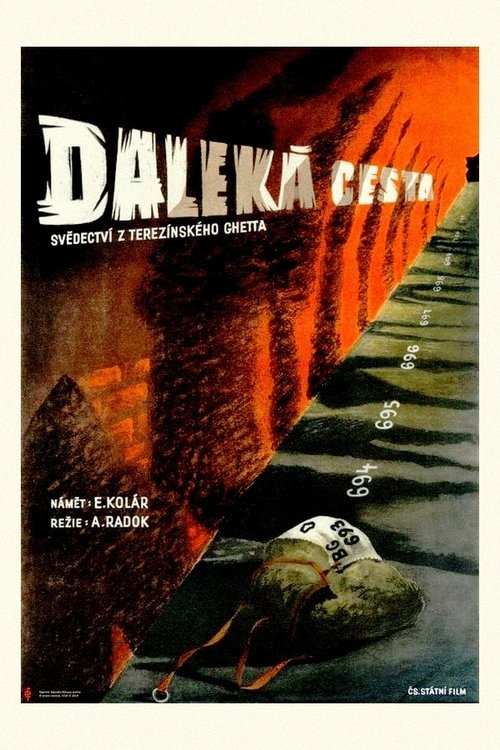
Prague, during World War II. Hana Kaufmann, a Jewish ophthalmologist, marries Dr. Antonín Bureš, a Christian man. When her family is sent to the Theresienstadt concentration camp, their romance turns into a struggle for survival.
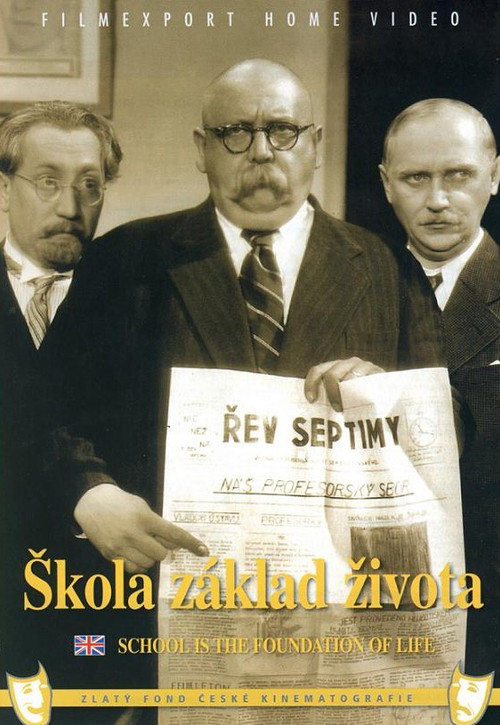
Seventh form pupils at a grammar school in Přívlaky are preparing for a secondary school sports competition. Class creep Krhounek gives the class teacher Lejsal a copy of the seventh form’s magazine Roar. Most of the teachers insist on severe punishing the culprit. The author does not own up and consequently the whole class is punished by being banned from taking part in the schools competition. The most gifted pupil, Benetka, rather sharply criticises the school in a homework essay on a subject of his choice. The strict Czech language teacher is convinced Benetka is the author of the school magazine. Benetka denies the charge but his expulsion from school is proposed anyway on account the views he expounded in his essay. Eventually, Boukal, the author of the school magazine comes forward and admits to writing it. The pupils are allowed to take part in the contest and thanks to Benetka they win. In the meantime however the teachers vote to expell him.
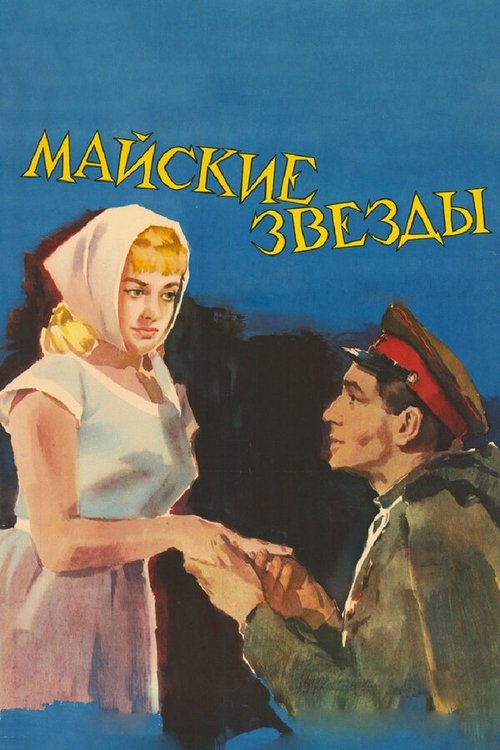
May 1945. On the outskirts of Prague, ordinary people meet Soviet soldiers-liberators with tears of joy in their eyes. In the early days of the lull, someone sadly recalls a pre-war life; someone unexpectedly meets his love; someone is returning from enemy dungeons looking hopefully into the future; and someone, having moved from a tank into a Czech tram, warmly recalls his craft as a car driver... These days, all those who survived the Great War fire swear an oath to keep peace on Earth forever, honoring the memory of those who gave their lives for simple human happiness.
The illegitimate child, Marie Růžová, grows up in the family of the Bořický miller. Childhood and youth spend with the son of Bořice, Klement. Klement asserts the rights, becomes a lawyer, and marries Jirina. In order not to cause further contradictions, Mary will go to Prague secretly at night. There he is living heavily as a waitress. He resists the insults of architect Jansky until he ultimately decides to commit suicide in despair.
No description available.
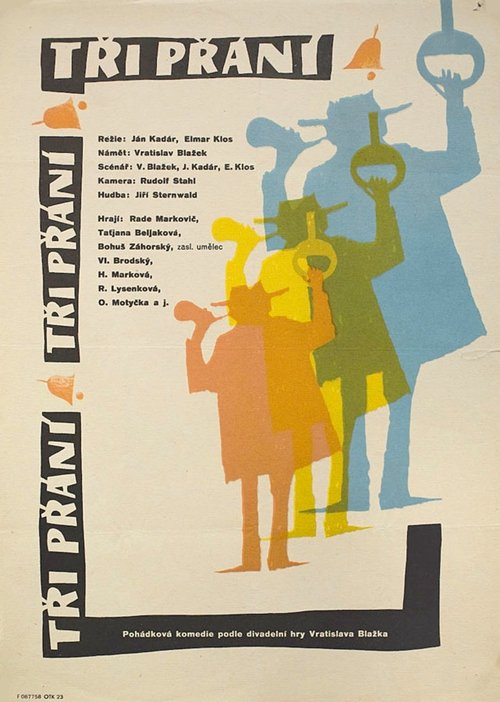
The sad hero of the story, Petr, an ordinary lawyer in a construction company, is crowded into a small apartment in Žižkov with his wife and grandparents, desperately struggling with the lack of money. One day he offers an old man a seat on a crowded trolley bus and is generously rewarded for his good deed, for the unknown old man is a fabulous grandfather. He gives Peter a magic bell and the opportunity to make three wishes, but the first two slip through his fingers. For the third, the astonished man must take time to think...
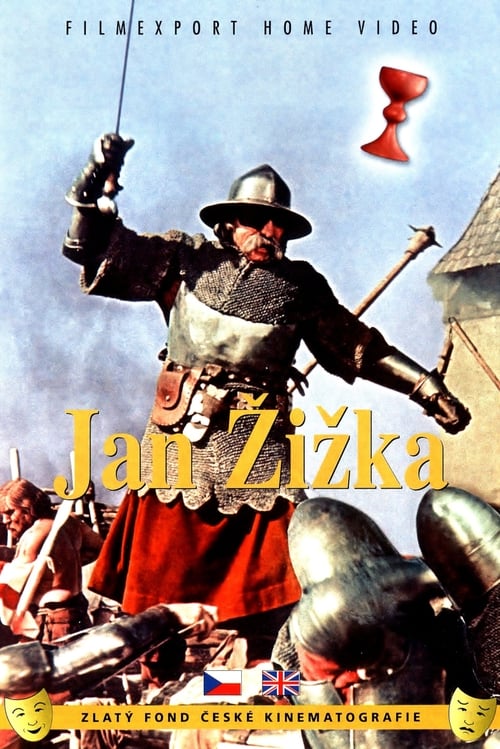
The second part of the revolutionary Hussite trilogy takes place in the years 1419-1420.
Based on a novel by Maria Majerova, this well-photographed but routine romantic drama is directed and co-scripted by Vaclav Krska. Set in a more old-fashioned time, the story centers around Lenka (Suzana Fisarskova), a young woman with a domineering, psychologically abusive father. When Lenka falls in love she suffers the ultimate injustice when her father and her family forbid her to marry the man. They see no advantage in such a union and want her to marry a wealthy local landowner instead, for obvious reasons. But Lenka is not as submissive as they think and she runs away to the city to look for the man she loves -- only to find a serious problem, though a surmountable one, is waiting for her.
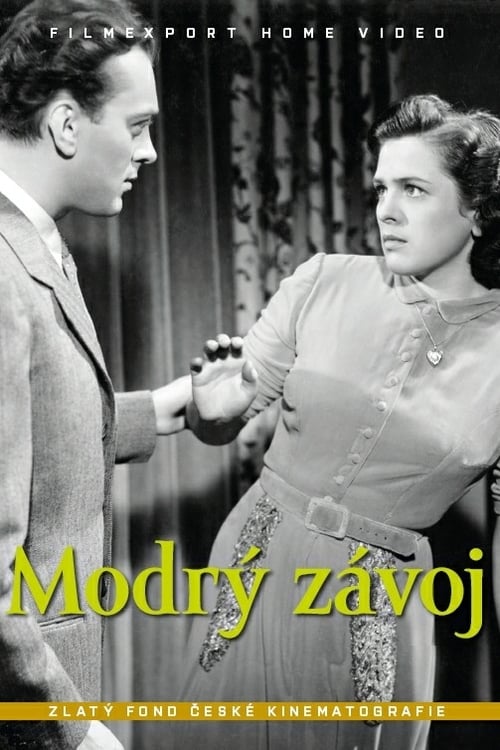
Marta Hornová, a blind soloist of the radio orchestra, becomes acquainted with the actor of the state drama Robert Holan. He also meets her sister Helena, a talented sculptor, whom he mistakes for Marta. However, when he returns her blue veil, which she supposedly lost during their meeting in the radio building, Helena realizes that Holan actually loves her sister...
A village drama about the tragic culmination of a forced marriage. The film was financed by a Brno company, which required interventions in the generally known original. The reason for moving the location of the action and rewriting the dialogues into the appropriate dialect was the idea of making the spectacular Vlčnov costumes more spectacular. Their distinctive color led the producers to the idea of filming several crowd costumed scenes (the wedding) on color material. However, the parts of the color copy processed abroad were not used in regular distribution. Another requirement was to emphasize the positive influence of the Catholic Church and have a more conciliatory conclusion.
In a South Bohemian village in 1951, the local rich organize acts of sabotage and try to stop the establishment of an agricultural cooperative with threatening letters and arson. A kulak's son even secretly returns from the West to terrorize the village with his brother. However, the ordinary villagers stand up to them.
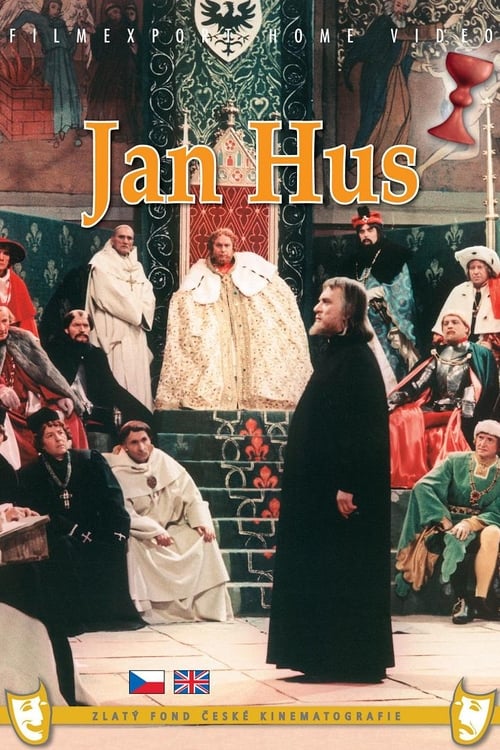
The first part of the "Hussite Revolutionary Trilogy", completed with Jan Žižka (1955) and Proti všem (Against All Odds, 1957). The film captures the period from May 1412 to the summer of 1415, a turbulent time in the Czech Kingdom, during which there were protests in Prague against the sale of "omnipotent indulgences" whose sale throughout the kingdom was announced by Pope John XXIII. The ideological leader of this movement is the preacher Master Jan Hus, whose words, calling for the elimination of church abuses, are listened to in the Bethlehem Chapel by thousands of ordinary Praguers, Czech lords and Queen Sophie, wife of the Czech King Wenceslas IV.
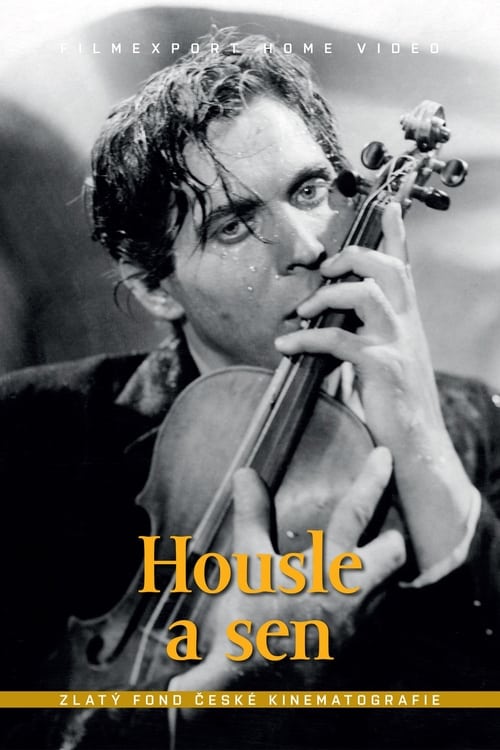
The biographical film about the prematurely deceased violin virtuoso Josef Slavík takes place entirely like a haunting dream, in the mind of a feverish artist who remembers how he amazed Paganini himself with his playing.
People are afraid of the usurer Chazaj and are convinced that he is the bearer of evil. One day Chazaj pays a visit to the poor artist Simon Jordán and asks him to paint his portrait. Simon agrees but as he progresses with the work his mind conjures up terrible thoughts and in the end he commits suicide. The portrait looks lifelike and Chazaj is content with the results. After Chazaj's death the picture changes hands and brings misfortune to all who own it. The last victim is the young painter Roman who buys Chazaj's portrait in a bazaar. He finds a treasure in the frame and begins to live well off it. The comfortable life suits him so well that he rejects his original artistic aims and becomes a painter of fashionable kitsch.
The Czech revival movement is divided at the end of the first half of the 19th century. While the older generation, such as František Palacký, urges restraint, students lean towards radical positions. A report on the revolutionary events in Paris prompts Czech Prague residents to write down the demands of the Czech nation for self-determination and the proclamation of a constitution. Tensions peak during the All-Slavic Congress in Prague's Žofín. Vienna rejects the Czech demands and the congress is brutally dispersed by the Austrian police. Prague begins to build barricades...
The year is 1941 and the German Nazis rule Bohemia with a free hand. Engineer Otakar Racek is an extremely cautious man who tries to avoid problems at all costs. While some of his colleagues are being arrested by the Gestapo, he receives an offer to become the director of a new department. When he refuses to help the wife of an arrested resistance fighter, his wife Vlasta is shaken. However, she loves him, to the point of even resigning herself to the hatred of Otakar's wealthy mother. One day, Vlasta lets her old acquaintance Ondřej Rýdl, who is on the run from the Gestapo, stay at her house for a few days. The wife passes him off to her husband as a distant relative. However, Otakar succumbs to jealousy and, on his mother's advice, hires a private detective to follow Vlasta. However, the detective is also a Gestapo informant and receives a hefty reward for every arrested resistance fighter...
In an unsightly tenement house, the walls of which are as peeling as the souls of the tenants, an old woman waits for her son to return from prison. However, her neighbors believe that she is hiding a large fortune in her tattered suitcase, which she protects like the apple of her eye, and they want to get hold of it at any cost.
A biographical story about significant Czech dramatist, writer and actor Josef Kajetán Tyl.