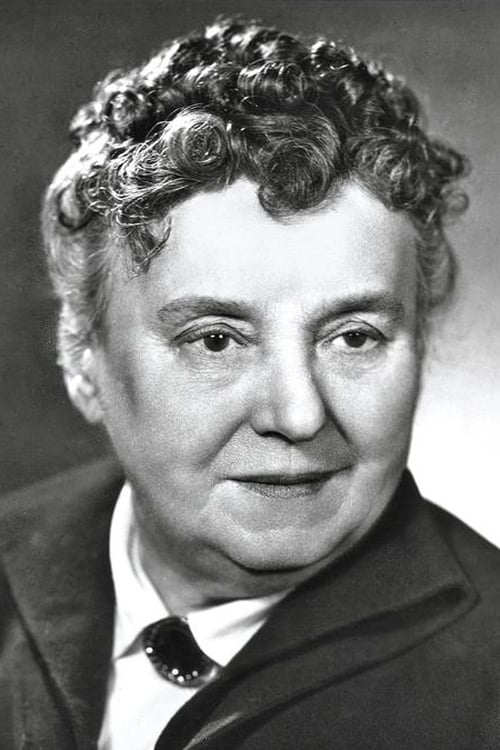
Zdeňka Baldová
Acting
Known For
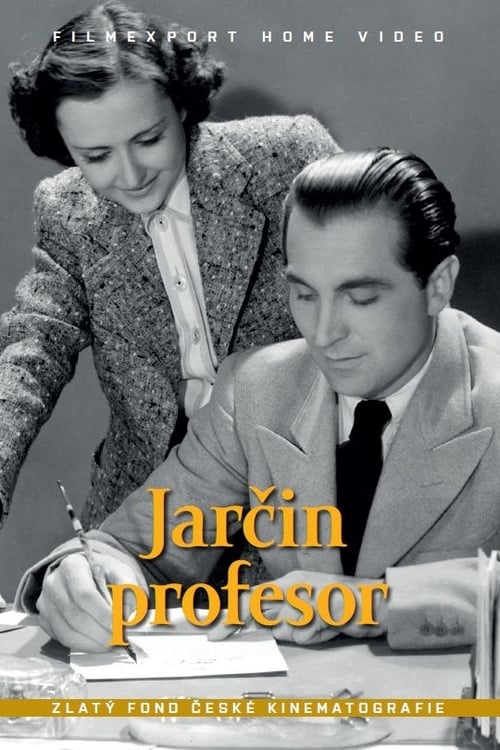
A graduate of the Faculty of Philosophy, Karel Stržický earns extra money in the summer as a day laborer for the landowner Drahan. Jarča, the Drahans' daughter, spends the holidays with her parents, and her father has a lot of worries about her. The unsuccessful student is failing her German. However, an easy solution is offered - Karel will prepare her for remedial work. The mischievous Jarča considers him an ordinary coachman, and so she initially turns her nose up at him. However, the cultured young man manages to win her trust and heart. This does not go down well with his rival in the fight for the girl's favor, and he immediately comes up with a nasty slander: Karel is supposedly a former convict! A rift is not long in coming...
Jarčin profesor
Prague, during World War II. Hana Kaufmann, a Jewish ophthalmologist, marries Dr. Antonín Bureš, a Christian man. When her family is sent to the Theresienstadt concentration camp, their romance turns into a struggle for survival.
Distant Journey
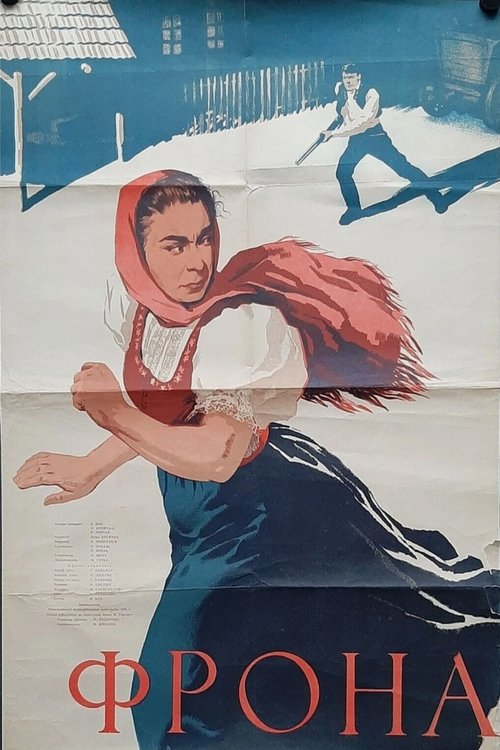
Frona Filípková, out of a desire for a better life, married Floriš Zobač on the land. However, the ownership of the land has affected both her husband and her father-in-law, who, out of hatred, intrigue against the emerging agricultural cooperative and against each other, so Frona looks for a way to free herself.
Frona
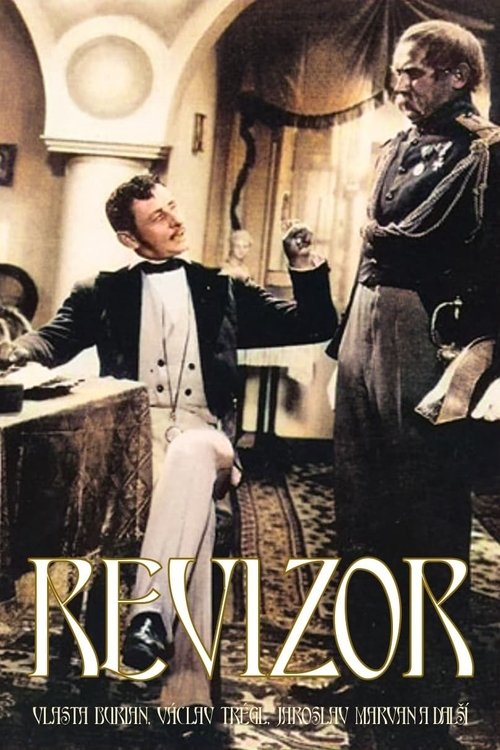
Vlasta Burian appears in a town of Czarist Russia impersonating an Inspector General, and he is entertained lavishly by the local political-hacks and peasants seeking his favor for whatever they are advocating or need fixed. Burain is involved in a series of comical situations as he takes everything he can gets his hands on while the peasants, who must plead for the betterment of their conditions, are left on the outside-looking-in. He makes his escape just as the real Inspector General is set to appear, but those-in-need will be no better off when the real McCoy shows up then they were with Burian.
The Inspector-General
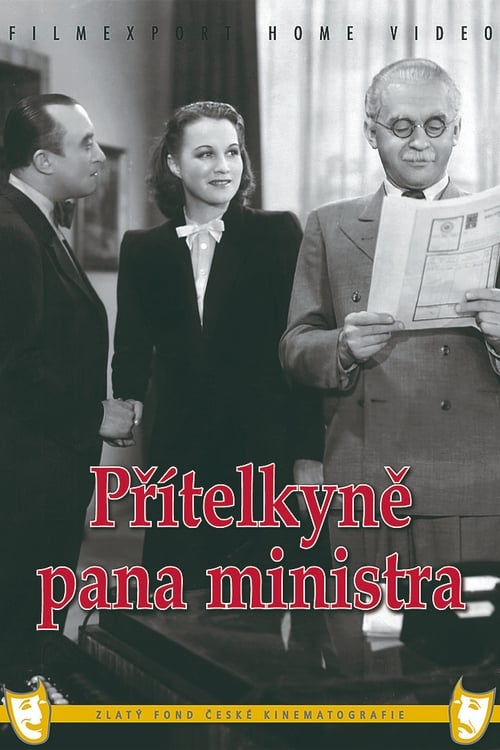
The main character of the funny story is an ordinary typist Julinka Svobodová, who works for the established business firm Hrubý a syn and lives in a sublet with the seamstress Mrs. Pokorná. Although she is poor and sometimes manages to be late, she is still cheerful and pleasant. However, a small coincidence is enough and everything changes. That is when she takes an elevator ride with the Minister of Trade, Dr. Horák, who coincidentally lives in the same building. Mrs. Pokorná, in good faith, hints to the inquisitive landlady that Julinka is the Minister's girlfriend. From the talkative woman, an innocent rumor spreads like wildfire and, surprisingly, it helps the girl in every way...
Přítelkyně pana ministra
Oldřich Nový was and will forever remain the embodiment of charm, elegance and personal charm for Czech cinema, to which all women, regardless of age, were subject. In his unforgettable lover roles, he was not only a romantic who was able to fall in love with a girl from an ancient painting, succumb to the chocolate-brown eyes of the minister's girlfriend, but also a seducer for whom infidelity was a regularly practiced sport, or, conversely, a newlywed obsessed with jealousy. This was exactly Viktorin, the main character of a crazy Art Nouveau comedy, where everything revolves around a massive deer antler. Its involuntary owner becomes the jealous Viktorin, and it is certainly not difficult to guess what such a "right" gift can cause.
Parohy
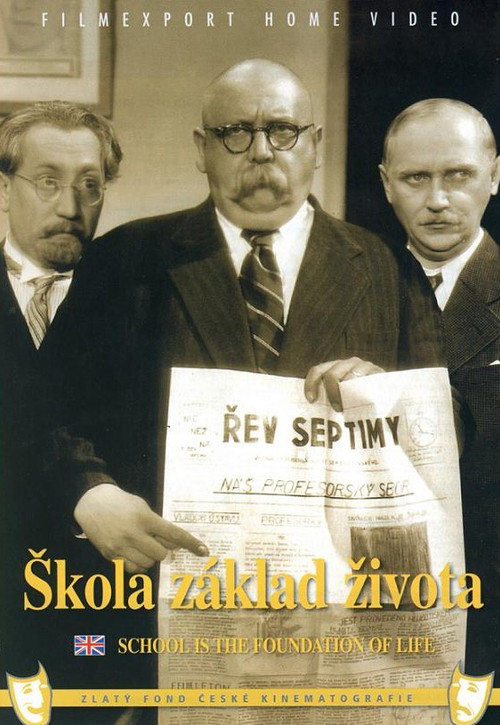
Seventh form pupils at a grammar school in Přívlaky are preparing for a secondary school sports competition. Class creep Krhounek gives the class teacher Lejsal a copy of the seventh form’s magazine Roar. Most of the teachers insist on severe punishing the culprit. The author does not own up and consequently the whole class is punished by being banned from taking part in the schools competition. The most gifted pupil, Benetka, rather sharply criticises the school in a homework essay on a subject of his choice. The strict Czech language teacher is convinced Benetka is the author of the school magazine. Benetka denies the charge but his expulsion from school is proposed anyway on account the views he expounded in his essay. Eventually, Boukal, the author of the school magazine comes forward and admits to writing it. The pupils are allowed to take part in the contest and thanks to Benetka they win. In the meantime however the teachers vote to expell him.
School Is the Foundation of Life
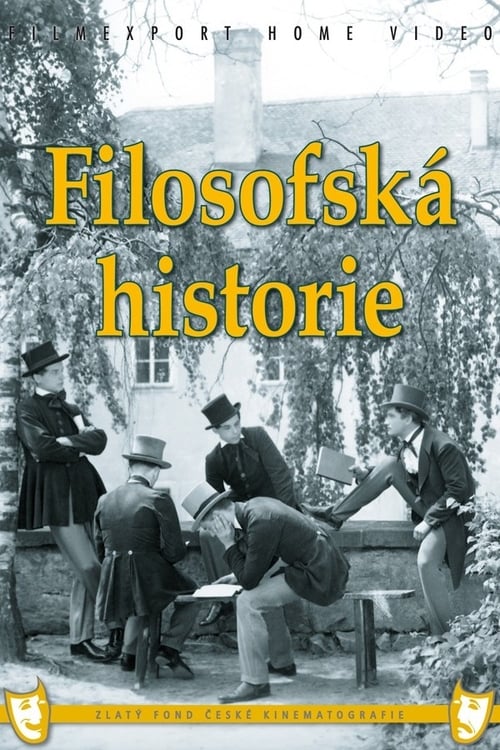
A student rebellion precedes revolutionary events in Prague.
History of Philosophy
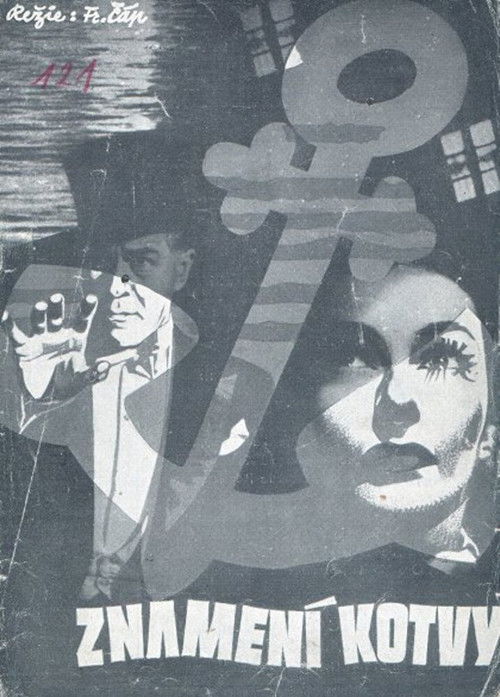
The mysterious story of a young girl Pavla, who mysteriously disappeared from her mother five years ago, takes place in the dark corners of the Bratislava port. The girl was kidnapped by the hypnotist Lascani, who performs in a variety show and has just arrived in Pavla's hometown on his travels. He completely controls his victim and Pavla doesn't remember anything. She has to act as his "medium" with Lascani and even has to be his lover. However, a young boatman, Franta, falls in love with the girl and tries to free her...
Sign of the Anchor
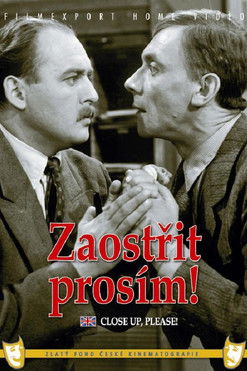
A Czech satirical comedy, filmed according to a script by the State Prize laureate Jiří Marek based on several of his satirical short stories. The film contains three stories, the first of which mocks careerism, the second takes aim at the inadequate attitude of some of our literary critics, and the final story is a satirical picture of how irresponsible construction work is still done in some parts of our country.
Zaostřit prosím!
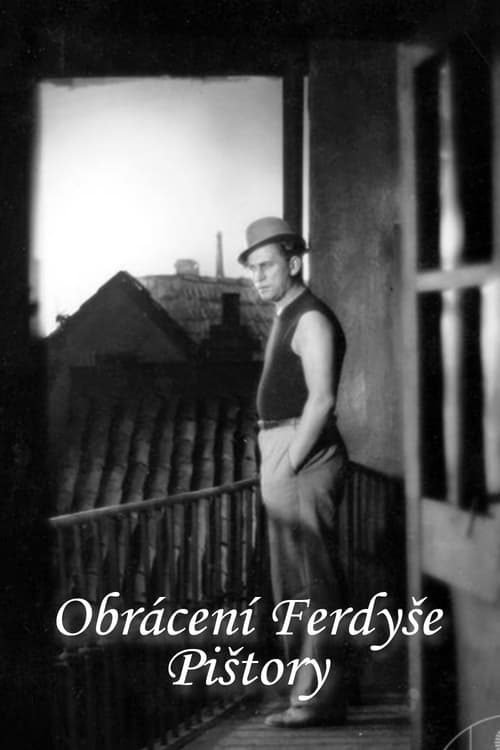
Cashier Ferdyš Pištora goes to rob the villa of banker Rosenštok. At that moment, a fire breaks out and Ferdyš saves the banker's two young children. He is hailed as a hero by everyone and Rosenštok makes him a messenger in the bank. This changes Ferdyš's entire life. He becomes a moralist and bullies the whole neighborhood with his sermons. He falls in love with Terezka, a member of the Salvation Army. Ferdyš's former lover Irma is jealous of Terezka. The two women argue and Terezka, in anger, claims that she killed her child and buried it in the cellar. Ferdyš believes this fabrication. In order to save her, he wants to give her the money that he was supposed to hand over to the bank. Out of jealousy, Irma tells the police that Ferdyš wanted to rob the banker's villa, and Ferdyš is arrested. However, Rosenštok intercedes for him and Ferdyš is acquitted. Terezka confesses that she made up the child's murder and celebrates her wedding with Ferdyš.
Conversion of Ferdys Pistora

The main hero of the story is the editor Viktor Bláha, who likes to invent crazy mystifications, during which he has a good time at the expense of those around him. Not only friends pay for his jokes, especially his roommate Jan Valtera, but also completely unknown people who "get involved in his wound" and have no idea that the slightest mistake on their part will trigger an avalanche of Bláh's eloquence. But as they say, everything takes time... The film was shown for the first time at the Film Festival in Zlín on July 30, 1941.
A Charming Man
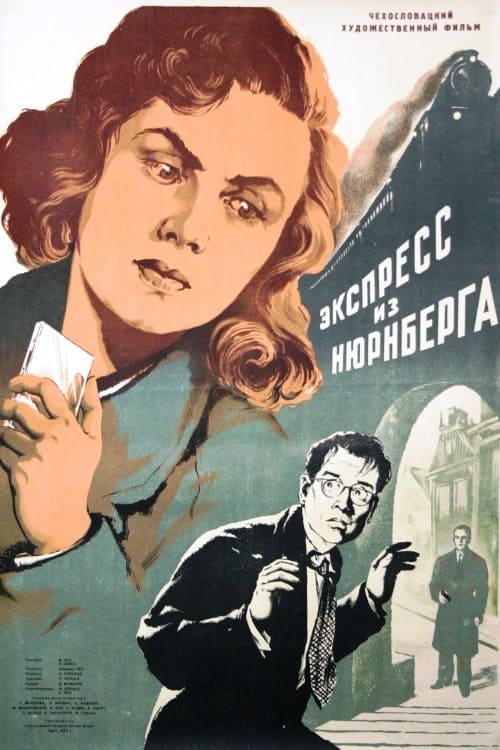
An adventure film about the struggle of the Czechoslovak security authorities against Western agents. In an express train departing from Nuremberg station, a cigarette box with plans and instructions for the destruction of one of the Czechoslovak dams is stuck under the seat. The State Security is informed about the whole operation and tries to catch the foreign agents.
Expres z Norimberka
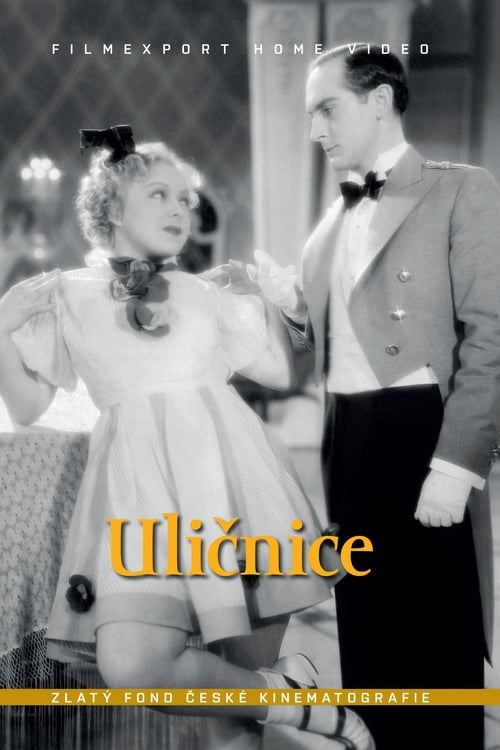
Eighteen-year-old factory worker's daughter Věra Janáková is head over heels in love with the famous pilot Jiří Málek. She only knows him from a photograph, but that's enough for her to run away from the boarding house and set out to find him. There, she discovers that the old Málek family are expecting the arrival of a girl from the orphanage, from whom they intend to raise Jiří's future wife. Enterprising Věra doesn't hesitate and quickly disguises herself as a thirteen-year-old frog...
Uličnice
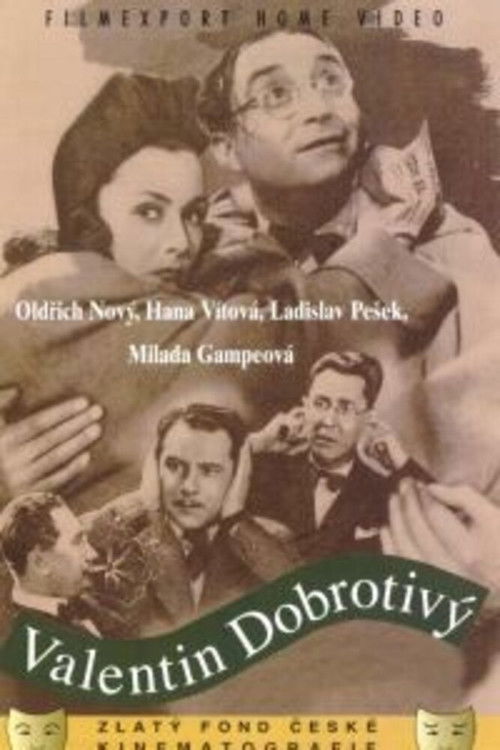
A very hardworking but also very naive insurance company clerk, Valentin Plavec, becomes the target of endless pranks, jokes and recessions from his colleagues Bejšovec and Voborník. However, their last successful trick somewhat gets out of hand. They add a one to the winning number 8456 and convince Valentin that he has won a million in the lottery. However, since Valentin cannot collect his winnings immediately, he withdraws twenty thousand, which is all the savings he has saved together with his fiancée Helena, and starts shopping for a deposit. However, the truth soon comes out and when his colleagues reveal to him that it was just a joke, they all leave him, only the faithful Helena stays and even helps the unfortunate fiancé cancel all the deposits and agreed deals. When the newspaper reports that there has been a mistake and the winning ticket is number 18456, Valentin decides to take revenge on the two pranksters...
Valentin Dobrotivý
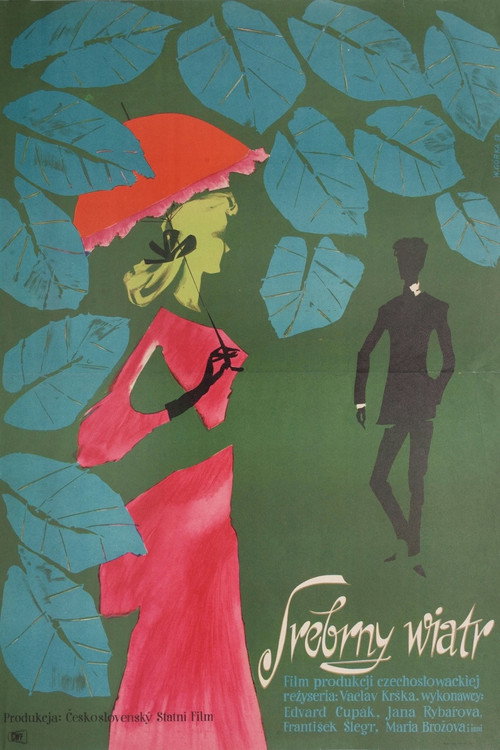
Second half of the 19th century. In a small town in South Bohemia, fifth-former Jan Ratkin is living through the confusions of first love together with his classmates.
Silvery Wind
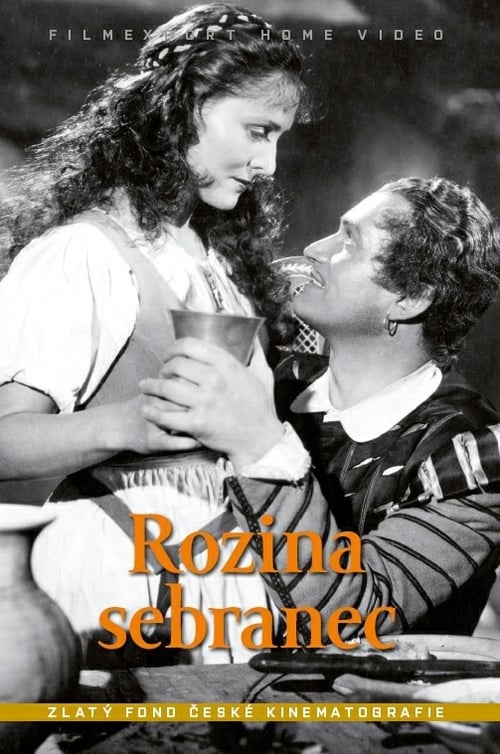
Prague, the beginning of the 17th century. Rozina falls in love with Italian glass worker Nikolo, but after returning home, she gets a message that will never come to Prague. She falls for the promise of an older man to marry her, but when Nikolo does return, the tragic fate of Rozina is sealed.
Rozina the Love Child
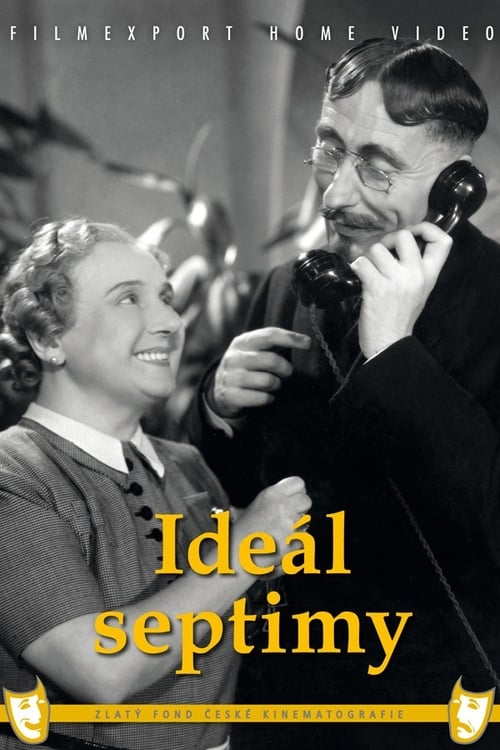
Jindřich Tůma, a partner in the gas mask shop "Asana", has a very energetic wife who promotes a vegetarian diet. The real soul of the company is Ing. Ivan Kareš, who also leads civil defense exercises. On the street, during a practice air raid warning, he sternly reprimands a girl who did not go to shelter. It is Věrka, the Tůma's niece, who comes from the countryside to finish her studies in Prague. Věrka enters the seventh grade and soon shares the enthusiasm of her classmates for an unknown composer whose pseudonym is Michal Marhan. Ing. Kareš gives a lecture on civil defense in the seventh grade and so meets Věrka again. Kareš tries to convince the girls of the necessity of more concrete life ideals. At the premiere of Marhan's operetta "Píseň o štěstí" it turns out that Kareš is the composer. The girls give him a standing ovation. Ivan ignores Věrka, with whom he has recently had a falling out. The stubborn girl therefore leaves for home...
Ideál septimy
No description available.
Kdybych byl tátou
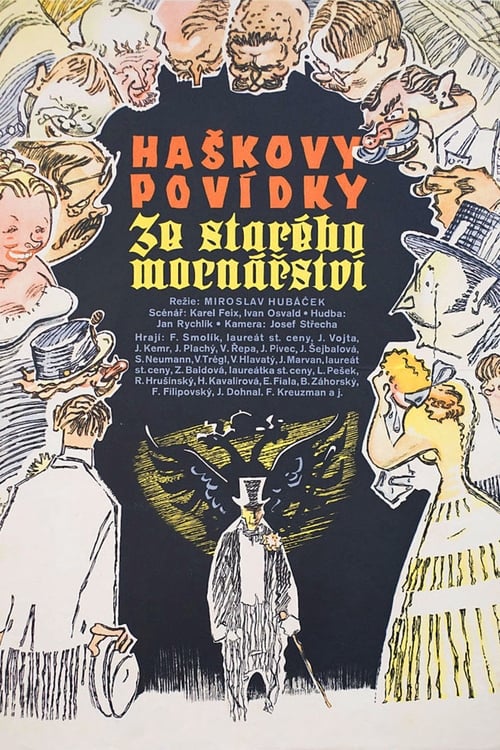
Four short stories by the greatest Czech satirist Jaroslav Hašek. "Soup for Poor Children" tells the story of how Prince Robert himself cooked soup for poor children, "Meeting of the Municipal Council in Mejdlovary" is the history of filling the position of municipal policeman, "Trampotes of Mr. Tenkrát" shows how strange events lead to marriage and promotion, "Revolt of the Convict Šejba" depicts the victorious fight of the convict Šejba for a dumpling for ministering at mass.