Acting
A long-running German television series about a two-man team of highway police, originally set in Berlin and later in North Rhine-Westphalia.
Polizeiruf 110 is a long-running German language detective television series. The first episode was broadcast 27 June 1971 in the German Democratic Republic, and after the dissolution of Fernsehen der DDR the series was picked up by ARD. It was originally created as a counterpart to the West German series Tatort, and quickly became a public favorite.
No description available.
Shows the interaction between Hamburg police officers and paramedics.
Pastewka is a German television sitcom that began airing on German TV channel Sat.1 in 2005. The series, currently in its sixth season, is set in Cologne, with German actor Bastian Pastewka starring as a fictionalized version of himself. It has been compared to Seinfeld and Larry David's Curb Your Enthusiasm. The series was awarded, among others, the Rose d'Or and the German Television Prize. Series was directed by Joseph Orr and Jan Markus Linhof.
After the fall of the Berlin Wall, a former East German spy resolves to find out who betrayed her and why — and use her lethal skills to exact revenge.
The series begins with a story from 1717: At the court of Augustus the Strong in Dresden, the French organ virtuoso Louis Marchand was said to have passed away. Convinced of his “unique” abilities, he announced a music competition. Bach was the only competitor to enter.
17-year-old Guido suffers since his early childhood from neurodermatitis. After being taken to the hospital due to a heavy attack, he starts to question his personal and familiar environment and discovers that his parents’ relationship – which he assumed to be happy and sound – is built on lies. Unable to deal with this disappointment, he flees from it and moves in with his older brother and his roommates...
1942. The members of the Voß family, mother, two daughters, a daughter-in-law, and a son-in-law, are living in a house at the river. A fellow soldier of son Paul, who fights at the eastern front, delivers his greetings and an embroidered Russian blouse for Emmi, Paul′s wife. Daughter Agnes, whose husband is also fighting in the war, receives a fur vest from the junior partner who is stalking her. Obviously, the vest is also loot from the eastern front. When the family receives news that Emmi′s husband has been killed in action, the war finally enters the house at the river. Emmi commits suicide while Agnes′s husband returns as a cripple from the war front. At home, he has to learn what a price his wife had to pay for the "Russian fur".
Eva Jensen is a female carpenter form Hamburg who wants to make a new start on the Baltic Sea coast in eastern Germany. She tries to buy a workshop with a view of the sea offered for sale by Heide, who rents out beach chairs. Unfortunately, Heide’s ex-husband vetoes the sale. In trying to understand his reasons, Eva comes across a painful family secret from the days of the GDR. And in other respects too, the newcomer from the West faces prejudice in the village, although her skills are urgently needed. Fish-seller Christian is also interested in the workshop, which Eva just sees as fair competition. Then they discover a common passion, kite-surfing, and unexpectedly grow closer.
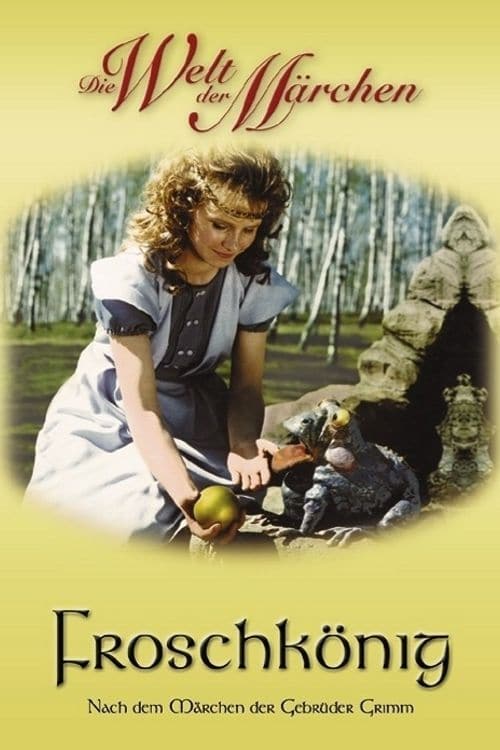
Henriette is a princess; she is playing with her ball, but drops it into a well. A talking frog replaces it with a golden ball, on condition that he can eat and drink with her, and rest in her bed. She accepts, but then is repelled at the thought of the frog eating and drinking with her, etc., but her Father makes her do so. In her bedroom, the frog turns into a handsome prince, and she falls in love with him, but he leaves immediately because of her broken promises. She pines and eventually seeks him out, braving various tests of her truthfulness in the process.
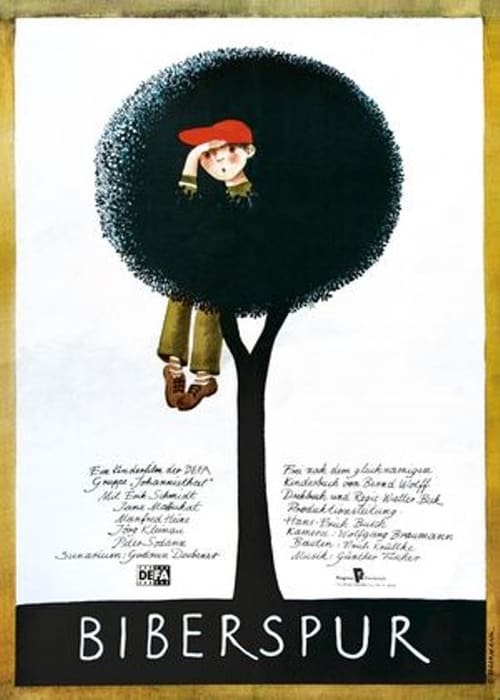
Twelve-year-old Joochen lives in a village on the Elbe. He finds a shot beaver and takes it to school with him. The animals are a protected species and he wants the culprit to be found. He also wants to impress the others a little, especially the girl Corina. However, his discovery is met with disinterest and he goes off on his own in search of the culprit. In the process, he makes friends with the hunter "Eule", his future brother-in-law. Joochen finds out that "Eule" has shot the beaver, turns away from him in disgust and reports him to the police. His stubborn behavior does not meet with the approval of the others, because "Owl" did not kill the beaver on purpose. Despite his dislike, Joochen suggests "Owl" as a chaperone for the school trip, but doesn't want to go himself. At the last minute, he decides to go after all and reconcile with "Owl".
Melanie is in her mid-thirties and works for the Brandenburg police. Her precinct is the province north of Berlin. Melanie likes it when anybody likes her. If it gets political, she keeps herself out. But that's no longer so easy when her best friend Lydia, an ex-daily soap star, makes herself important as a populist influencer with right-wing slogans in her home village and a street disappears overnight. Its bumpy cobblestones were the last evidence of a dark time when building material for the Wehrmacht was mined at the Kiessee, today a bathing area. Forced laborers and concentration camp prisoners toiled here. Elementary school teacher Anja considers it a thoughtless mess that this stone memorial to history should simply be asphalted. With brown homeland paroles, Lydia heats up the mood in the village and earns good money through clicks on the Internet. When the violence escalates, law enforcement officer Melanie, who is addicted to harmony, has to decide which side she is on.
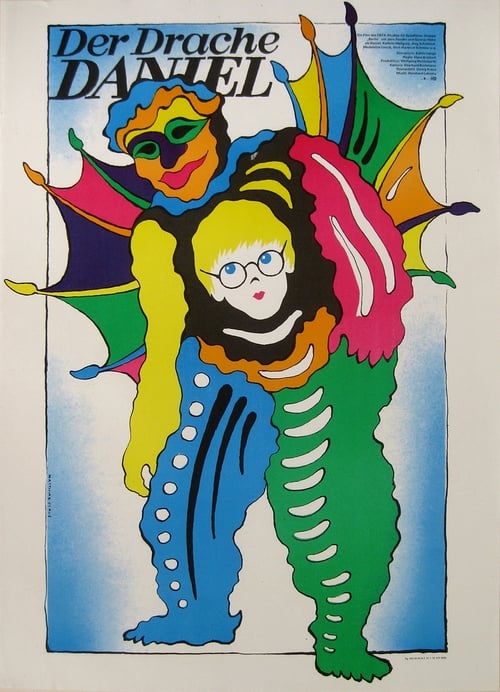
On a school trip, Daniel discovers a cave that sparks his vivid imagination: he wonders if there are dragons that live in caves like this?