Jacques Dufilho
Acting
Biography
Jacques Dufilho is a French comedian, born February 19, 1914 in Bègles (Gironde, France) and died August 28, 2005 in Ponsampère (Gers, France). Originally from the south-west of France, Jacques Jacques-Gabriel Dufilho studied agriculture then went to Paris to live his passion for painting and sculpture. It was there that he met Charles Dullin, a great man from the theater world who passed on his passion for the stage to him and made his cabaret-theatre debut in 1951 with Agnès Capri. Jacques Dufilho then begins by playing sketches before turning to the big screen. In 1939, he participated in Marc Allégret's project in the film "Le Corsaire" but the film remained unfinished. Jacques Dufilho is not worried about it as two years later, he plays the role of a lumberjack in André Zwobada's feature film "Croisières Sidérales". Subsequently, the actor chained the roles in the cinema but it was in 1949 that he was noticed by the general public in "La Ferme des Sept Péchés" by Jean-Devaivre. Jacques Dufilho also went to the theater and went on stage for the first time in Dostoyevsky's play, "The Brothers Karamazov" directed by André Barsacq. When the Second World War broke out, Jacques Dufilho was part of the 2nd Hussard Regiment, particularly in the 29th infantry division reconnaissance group as he received the Legion of Honor in 1998. In 1953, he played in the play by Molière "The Doctor Despite Him" under the direction of Jean-Pierre Darras. The following year, he returned with André Barsacq to the Théâtre de l'Atelier in "Colombe" by Jean Anouilh. He still plays in the cinema as in "Marie-Antoinette, Reine De France" by Jean Delannoy in 1956. Same year, same director, he plays in "Notre-Dame De Paris". In 1961 and 1962, Jacques Dufilho returned to the stage with André Barsacq in "Les Maxibules" by Marcel Aymé and "L'Avare" by Molière. The actor made an impression in "The Guardian", adapted from the English play "The Caretaker" by Harold Pinter. The year 1978 marks a new turning point in the career of Jacques Dufilho, with the film "Le Crabe-Tambour" by Pierre Schoendoerffer, thanks to his interpretation of the role of the chief mechanic in the film, he will be rewarded with a César in the Best Supporting Actor category. In 1980, he played Adrien Dussart in "A bad son" by Claude Sautet, which earned him a second César award, still in the same category. At the theater, in 1988 the actor was awarded the Molière du Comédien for his role in Herb Gardner's play "Je Ne Suis Pas Rappaport" directed by Georges Wilson. Over the years, Jacques Dufilho will play under the direction of Louis Malle, Claude Chabrol, André Hunebelle, Yves Robert and many others. In 1999, he played in "C'est Quoi La Vie?" by François Dupeyron, which earned him a new nomination for the Césars. On television, he received the Seven d'Or for best actor after his role in the film "Une Femme Innocente". In 2003 he released his autobiography "Les Sirènes Du Bateau-Loup" published by Fayard. The actor died on August 28, 2005 in Ponsampère at the age of 91 after playing his last role in "Up There, A King Above The Clouds" by Pierre Schoendoerffer.

Known For

No description available.
Champs-Elysées

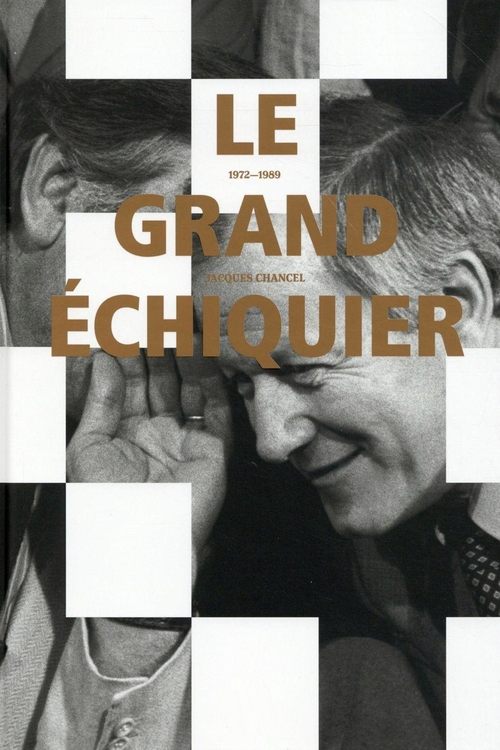
Le Grand Échiquier is a French variety television program created and presented by Jacques Chancel. It aired at 8:30 pm on the first channel of the ORTF from January 12, 1972 to July 12, 1972, then on the second color channel of the ORTF from September 1972 to December 1974, and finally on Antenne 2 from January 1975 to December 21, 1989. The program returned to France 2 on December 20, 2018 and is hosted by Anne-Sophie Lapix.
Le Grand Échiquier
No description available.
Midi trente

No description available.
Discorama

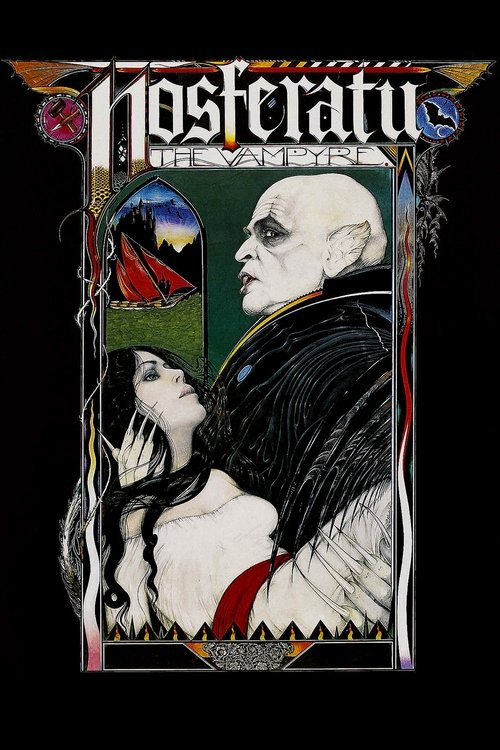
A real estate agent leaves behind his beautiful wife to go to Transylvania to visit the mysterious Count Dracula and formalize the purchase of a property in Wismar.
Nosferatu the Vampyre

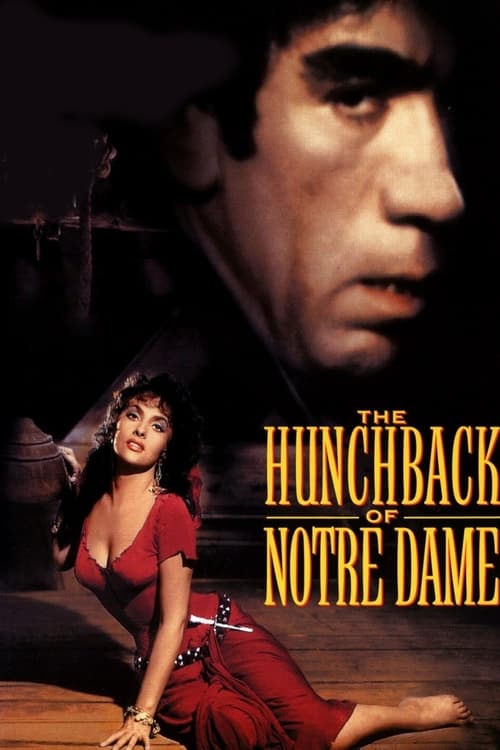
Paris, 1482. Today is the festival of the fools, taking place like each year in the square outside Cathedral Notre Dame. Among jugglers and other entertainers, Esmeralda, a sensuous gypsy, performs a bewitching dance in front of delighted spectators. From up in a tower of the cathedral, Frollo, an alchemist, gazes at her lustfully. Later in the night, Frollo orders Quasimodo, the deformed bell ringer and his faithful servant, to kidnap Esmeralda. But when the ugly freak comes close to her is touched by the young woman's beauty...
The Hunchback of Notre Dame

Carla Zachanassian had a child by Serge Miller as a teenager. When Serge refused to marry her, she was driven out of town. By her own wit and cunning, she has returned as a multi-millionaire for a visit. The town lays out the red carpet expecting big things from Carla, only to learn that her sole purpose is to see Serge Miller killed...
The Visit

No description available.
Plaisir du théâtre

Robert Wallace travels to Hong Kong to bust a gang of drug trafficker's. There he finds help from Tang and Suzy, as well as his fellow Supermen Max & Jerry.
Supermen Against the Orient

Lagardère is a French miniseries consisting of six 50-minute episodes, created by Marcel Jullian based on Paul Féval's novel Le Bossu (the eighth film adaptation outside of theater, out of 10 known adaptations), and some of the sequels imagined by Paul Féval Jr.1, directed by Jean-Pierre Decourt, and broadcast from September 20 to October 25, 1967, on the first channel of ORTF.
Lagardère

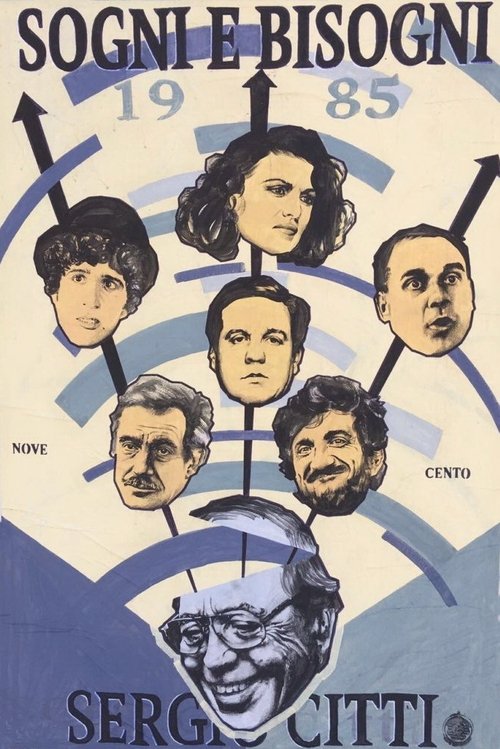
A TV series composed of eleven episodes and a conclusion, it aired in six one-hour programs starting on October 6, 1985. Lasting about half an hour each, the episodes are separated by intermissions starring three characters: Good, Evil, and Destiny. LA MORTE PORTA CONSIGLIO: At her father's deathbed, a daughter asks the man to tell her the winning Lotto numbers once he makes it to the after-life. But the man is offended by the modest funeral he receives and has fun playing pranks on his daughter. IL FATTACCIO: a doorman is paid to show an apartment in which something gruesome happened. Determined to keep the extra work, he invents increasingly grisly stories to keep interested buyers away. LADRI: two thieves in a working-class neighborhood have tragicomic adventures. L’IMBIANCONE: a very shy man enters a shoe store to buy a pair of shoes and seduce the female shop owner.
Sogni e bisogni

During second world war,Philippe Pétain gets absolute powers.The war ends with the arrival of allied forces by Petainism has not been put on trial.
Pétain

Master criminal Fantomas kills an ambassador, has an affair with the dead man's wife, sneaks into a rich woman's house handing out vanishing-ink business cards, is arrested and sentenced to death but switches with an actor, who goes to the guillotine.
Fantômas

Mr. Pezzella owns and operates a well-established luxury-clothing store. He does not like and does not consider it right to pay taxes and therefore uses a tax consultant to be able to evade more taxes.
The Overtaxed

Saadia is a wild, strange Arab girl whose life has been dominated by a local sorceress, a vengeful outcast in the community, who has convinced her she has the "evil eye" and brings disaster to all who love her. French doctor Henrik takes her to his clinic, for rehabilitation purposes, and falls in love with her as does his friend, Si Lahssen, the reigning prince of this small Moroccan state. When a plague falls on the town, Saadia is convinced she is responsible, and rides alone into the mountain country to retrieve the plague serum being held for ransom by bandits. The love triangle dominates most of the rest of the film.
Saadia

A small saver discovers the scam that threatens all subscribers to the "Caution foncière". He embarks on an incredible adventure to recover the funds paid in by his friends, and succeeds in exposing the scandal.
Chut !

Set in 18th century France, a naive 17-year-old orphan named Benjamin is taken in by his wealthy aunt, the Countess de Valandry. There, he is seduced by a variety of women, including a few flirtatious maidservants and neighboring countesses who all want to be Benjamin's "first".
The Diary of an Innocent Boy

For generations, two rival French villages, Longueverne and Velrans, have been at war. But this is no ordinary conflict, for the on-going hostilities are between two armies of young schoolboys. When he is beaten by his father for having lost his buttons, the leader of the Longueverne army, Lebrac, has an idea which will give his side the advantage: next time, he and his brave soldiers will go in battle without their clothes...
War of the Buttons

No description available.
Comiques de toujours (Vol. 1 à 4)

A group of policemen look over three murder cases including a cutthroat that prays on young women, a madman that hid his deformed landlord's corpse in the floor, and a wine aficionado who buries his friend alive.