Directing
In 1671, with war brewing with Holland, a penniless prince invites Louis XIV to three days of festivities at a chateau in Chantilly. The prince wants a commission as a general, so the extravagances are to impress the king. In charge of all is the steward, Vatel, a man of honor, talent, and low birth. The prince is craven in his longing for stature: no task is too menial or dishonorable for him to give Vatel. While Vatel tries to sustain dignity, he finds himself attracted to Anne de Montausier, the king's newest mistress. In Vatel, she finds someone who's authentic, living out his principles within the casual cruelties of court politics. Can the two of them escape unscathed?
A young girl picks up a hitchhiker and takes him to an abandoned hotel where she remembers the traumatic childhood she spent there.
Drawing some intriguing parallels between the work of the prostitute and that of the psychiatrist-both have clients, both charge for sessions, both take on roles that serve the needs, psychological or otherwise, of those they serve, Jeanne Labrune's drama stars Isabelle Huppert and Bouli Lanners as, respectively, Alice, a disaffected call girl and Xavier, a shrink with a crumbling domestic situation.
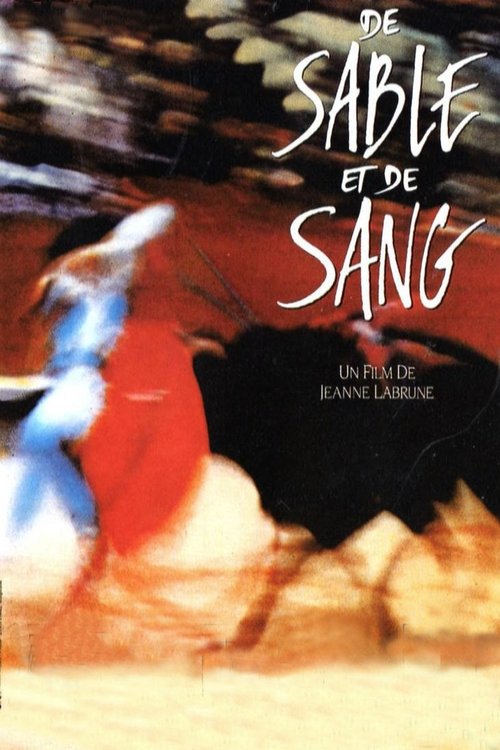
Bullfighting, music, medicine, change, and homoerotic possibilities mix in this study of friendship. Francisco is a bullfighter on his way up, so focused even sex doesn't hold his interest. After a minor road accident, he meets a doctor, Manuel, who attends a bullfight, leaving early, retching. His wife, who is also his partner in a string quartet, worries about him: Manuel has a history of breakdown. Manuel, for his part, hates bullfighting and the memories it brings of Franco's Spain. His harsh views undermine Francisco's focus. He accompanies the young fighter to Spain for an important corrida. Will Francisco succeed? And what becomes of this friendship?
The film consists largely of a series of interviews with female filmmakers from several different countries and filmmaking eras. Some, such as Agnès Varda and Catherine Breillat (both from France), have been making films for decades in a conscious effort to provide an alternative to the male filmmaking model; others, such as Moufida Tlatli (Tunisia) and Carine Adler (England), are relative newcomers to directing, and their approaches seem more personal and less political. The film as a whole manages to cover some important topics in the feminist debate about film -- how does one construct a female gaze, how can one film nude bodies without objectifying the actors (of either sex), what constitutes a strong female role -- while also making it clear that “women’s film” comprises as many different approaches to filmmaking as there are female filmmakers.
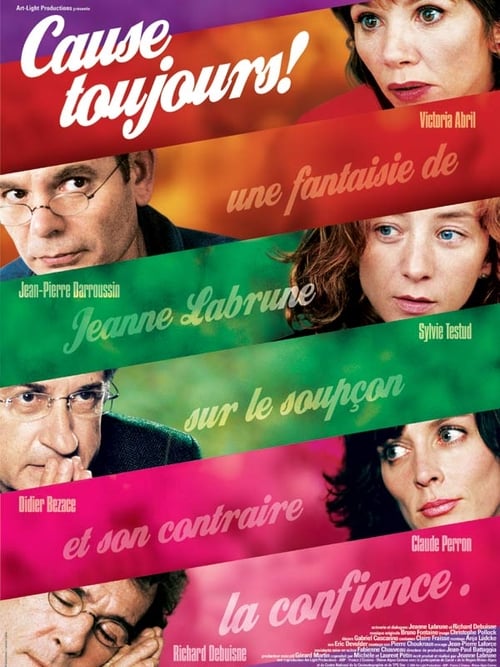
A group of Parisians frets over the minutiae of life in the course of one week.
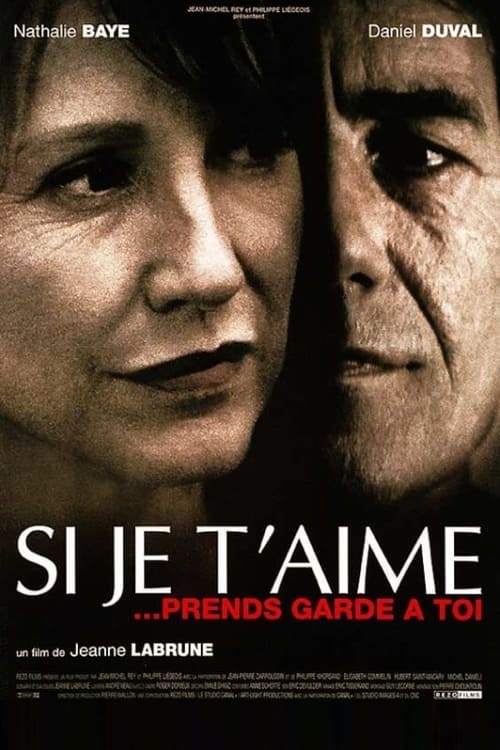
Muriel, a writer nearing 50 whose older lover won't live with her in Paris, meets a man on a train - Samuel, an Arab. He's attracted to her and pursues her, dropping in, asserting himself. She's willing to connect. He's passionate, then boorish, then jealous and possessive. He seems fixed on "Who's the strongest?," while she wants respect and trust. She's self-possessed as well as sexually charged, willing to laugh, and alternately firm and forgiving. He has little money, no immigration papers, few prospects, and a gambling jag. What does each want, and why does she stick with it? Is this colonial strife, war between the sexes, or a love story?
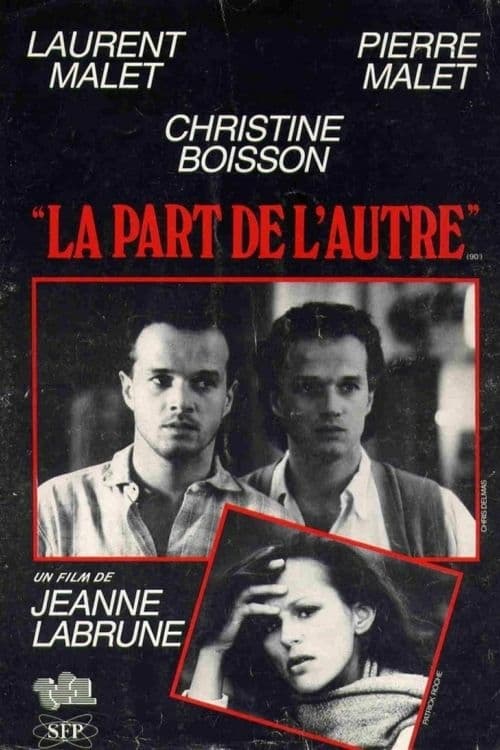
Pierre and his wife Anne had a good thing going together, until their son Nicolas was born. Anne traveled with him on all his long truck journeys, and they had frequent and passionate sex. For quite a few years now, Anne has stayed at home to take care of their boy, who is a sickly, weedy little fellow. Pierre is frustrated. Anne is frustrated too but has her almost incestuous feeling for her son to torment her. Even little Nicolas is frustrated, in part due to the knowledge that his father feels that the sacrifice he and his mother made in raising him hasn't been worth the effort. He too has some release in the form of a good relationship with his gigantic dog. When the seething passions of these four discontented mammals reach a crisis point, the result (in this film) is exceedingly ironic.
Jeanne Labrune's first film, with Maurice Garrel and the inhabitants of the Saint-Leu neighbourhood of Amiens.
An unexpected phone call from a certain Kirsch sets off a crisis between Catherine and Raphaël that will affect all those around them, be they close friends or casual acquaintances.
This way-offbeat comedy from Gallic director Jeanne Labrune concerns two young French women, best friends Léa and Jacinthe. While Jacinthe develops a fixation with the moths that begin to cluster in frightening quantities throughout her apartment, Léa finds herself drawn to a dim-witted fellow employed by a local supermarket, then impulsively decides to follow him home via train. When Léa mysteriously disappears during the days that follow, Jacinthe naturally grows concerned about her friend and decides to investigate.
Two twin brothers, Romain and Sylvain, live together in an isolated house by the ocean. Between them, violent relationships that oscillate between love and hate. The guardians of the house watch, fascinated and powerless, their dangerous games. Until the day when Hélène, who has already lived with them, returns to look for Sylvain, with whom she has chosen to live.
Camille, a young lady who has joined a Catholic mission in Cambodia and is ready to take her vows, crosses paths along a river and the Angkor ruins with a Cambodian man, Sambath, on a regular basis.
This film takes place on the island of Sein and reflects an experience that happened to the director, Jeanne Labrune. Before her, film crews on the trail of the sailors who, in 1940, joined De Gaulle in England, had bored the islanders. The filmmaker found herself in a position of incrustee, in a state of non-communication bordering on exclusion. Unable to obtain anything from the inhabitants, but nevertheless involved in the environment of granite and mutism of the people, she filmed herself as a "wanderer not integrated" in an island, whose tendency to fossilization she thus reveals.
I started from the assumption that the discourse about the hospital could be the objective pretext for communication between two people, the link that allows them to continue writing to each other, the intermediary between two desires.