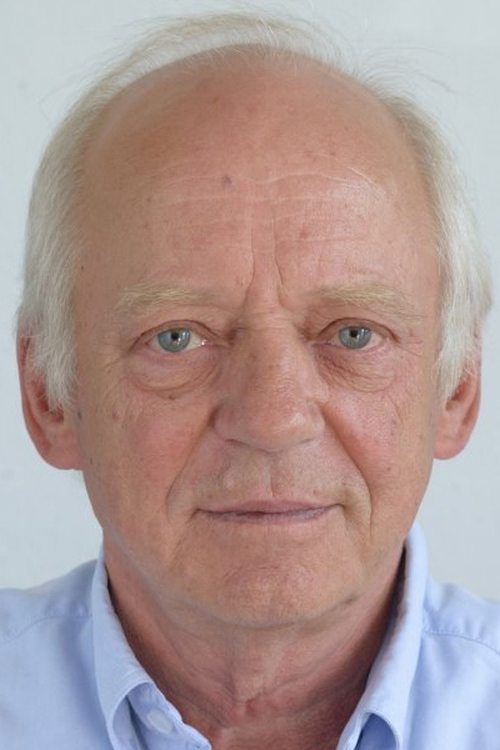
Thomas Neumann
Acting
Known For
Polizeiruf 110 is a long-running German language detective television series. The first episode was broadcast 27 June 1971 in the German Democratic Republic, and after the dissolution of Fernsehen der DDR the series was picked up by ARD. It was originally created as a counterpart to the West German series Tatort, and quickly became a public favorite.
Polizeiruf 110
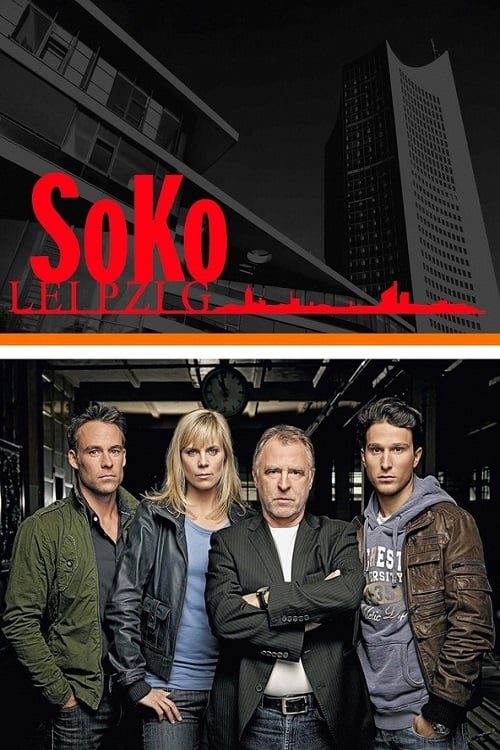
SOKO Leipzig is a German police procedural television programme, a spin-off of the earlier German police programme SOKO 5113. It was first broadcast on 31 January 2001, on German television channel ZDF. On 12 November 2008, the first part of a two-part crossover between SOKO Leipzig and British police procedural The Bill was aired, with the same version being shown on both ZDF and British television channel ITV1.
SOKO Leipzig
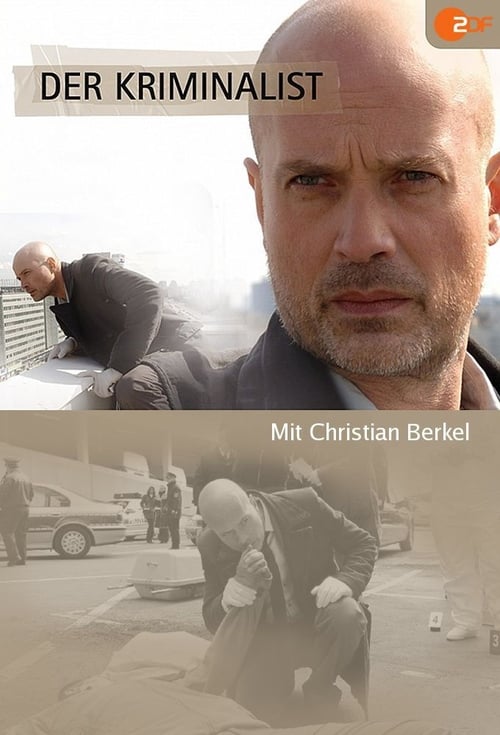
Der Kriminalist is a German television series produced by Monaco Film Hamburg, subsidiary of Odeon Film. Directors during the first season were Sherry Hormann and Torsten C. Fischer, during the second: Thomas Jahn, Jobst Oetzmann and Torsten C. Fischer.
Der Kriminalist
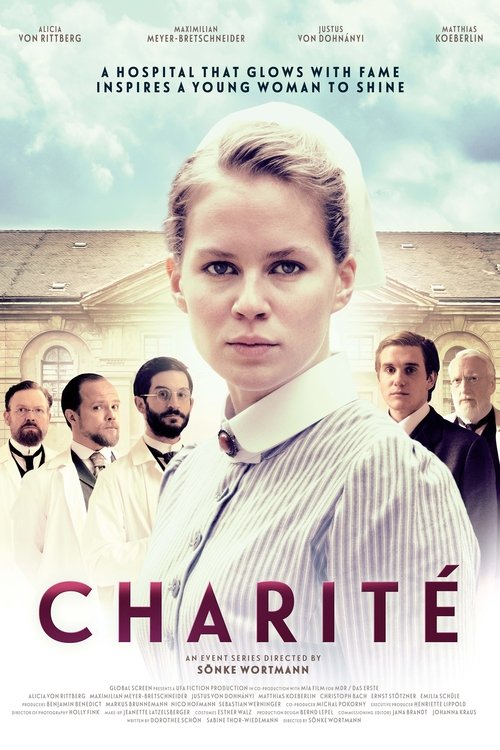
Berlin, 1888. After penniless Ida’s life is saved at the Charité Hospital she must work off the treatment costs. While she becomes acquainted with the most brilliant physicians of this era at the world-famous hospital, the self-determined young woman discovers her passion for medicine.
Charité
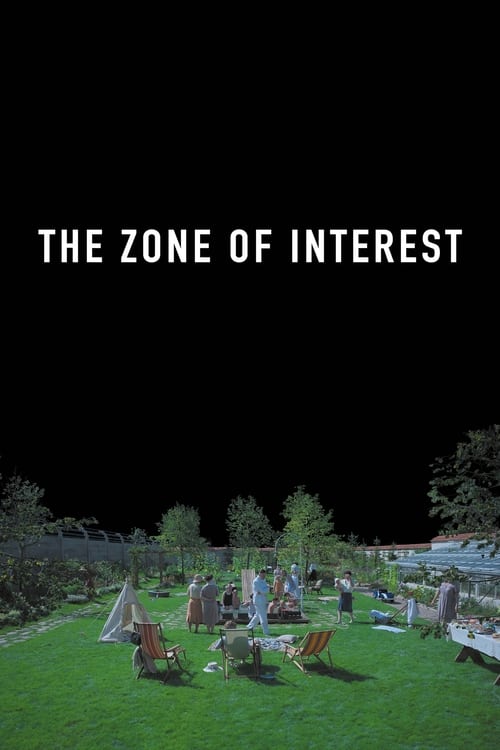
The commandant of Auschwitz, Rudolf Höss, and his wife Hedwig, strive to build a dream life for their family in a house and garden next to the camp.
The Zone of Interest

Mord mit Aussicht is a German satirical crime comedy television series, produced by ARD, following the adventures of Sophie Haas, a detective from the city that takes a job in the fictional country village of Hengasch. Much of the humour of the series derives from the clichés of both city and provincial lives, in a similar manner to the English comedy crime series Midsomer Murders.
Homicide Hills
No description available.
Heiter bis tödlich - Hauptstadtrevier
No description available.
Der Elefant: Mord verjährt nie

In 1980s East Germany, Berlin doctor Barbara is banished to a country medical clinic for applying for an exit visa. Deeply unhappy with her reassignment and fearful of her co-workers as possible Stasi informants, Barbara stays aloof, especially from the good-natured clinic head, Andre.
Barbara
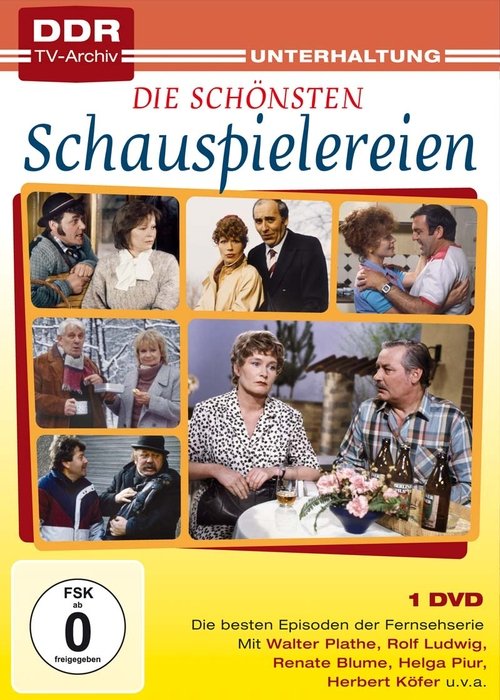
The film is set in the 1930s in Germany. Maria Rheine and Mark Löwenthal, two young actors working in a small theater, are in love with each other. Their love affair is interrupted by Nazi racial policies; Mark is no longer allowed to perform in German theaters because he is a Jew. In order to continue acting, he joins the newly formed Jewish Theater in Berlin. Maria, who is not Jewish, faces no restrictions on her career, and she becomes a successful actress at a big theater in Munich. But her love for Mark eventually leads her to decide to sacrifice both career and security to remain close to him. She fakes a suicide, assumes a Jewish identity and, as Manja Löwenthal, joins the Jewish Theater.
Schauspielereien

No description available.
Ein Fall von Liebe
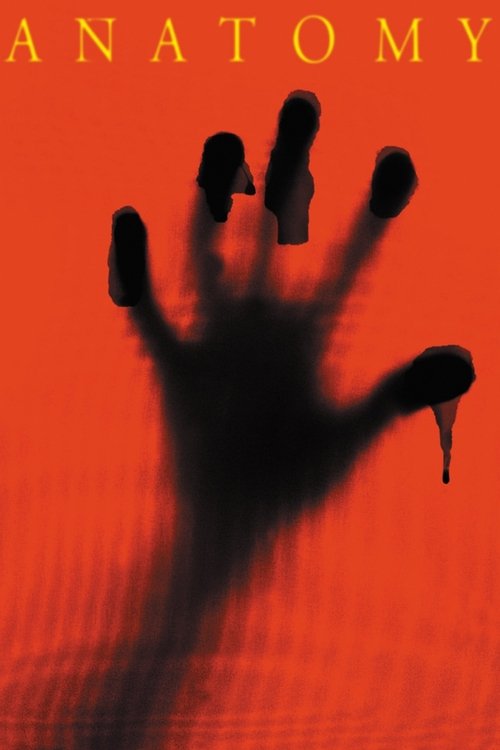
Medical student Paula wins a place at an exclusive Heidelberg medical school. When the body of a young man she met on the train turns up on her dissection table, she begins to investigate the mysterious circumstances surrounding his death.
Anatomy
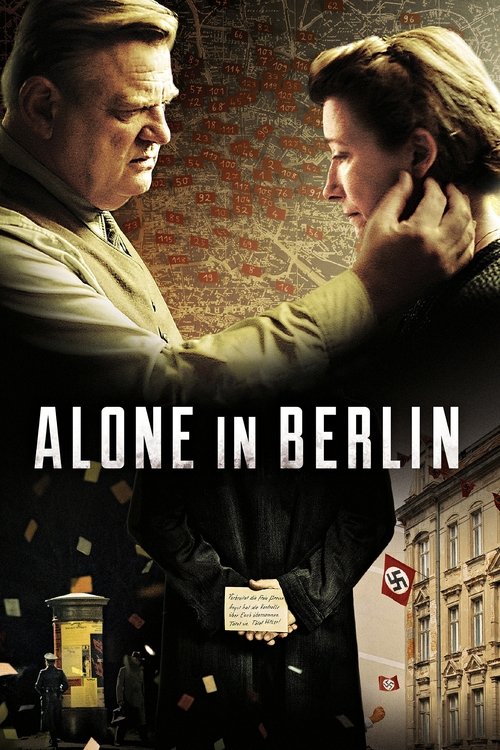
Berlin in June of 1940. While Nazi propaganda celebrates the regime’s victory over France, a kitchen-cum-living room in Prenzlauer Berg is filled with grief. Anna and Otto Quangel’s son has been killed at the front. This working class couple had long believed in the ‘Führer’ and followed him willingly, but now they realise that his promises are nothing but lies and deceit. They begin writing postcards as a form of resistance and in a bid to raise awareness: Stop the war machine! Kill Hitler! Putting their lives at risk, they distribute these cards in the entrances of tenement buildings and in stairwells. But the SS and the Gestapo are soon onto them, and even their neighbours pose a threat.
Alone in Berlin
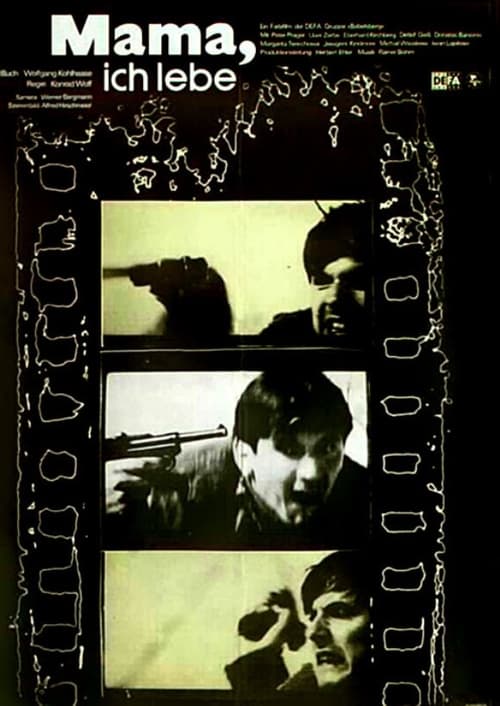
In a Russian POW camp, four Germans determined to end WWII agree to pose as Red Army soldiers. Are they patriots or traitors, heroes or opportunists? Although they go to the frontlines, their new Russian comrades are initially unsure whether to trust them. Three of them then accept a mission behind German lines, but they are unprepared to fire upon their countrymen and it ends up costing the life of a Russian soldier. In the meantime, the fourth man has fallen in love with Russian radio operator Svetlana. After being criticized by the other Russians, he too agrees to participate in the mission..
Mama, I’m Alive
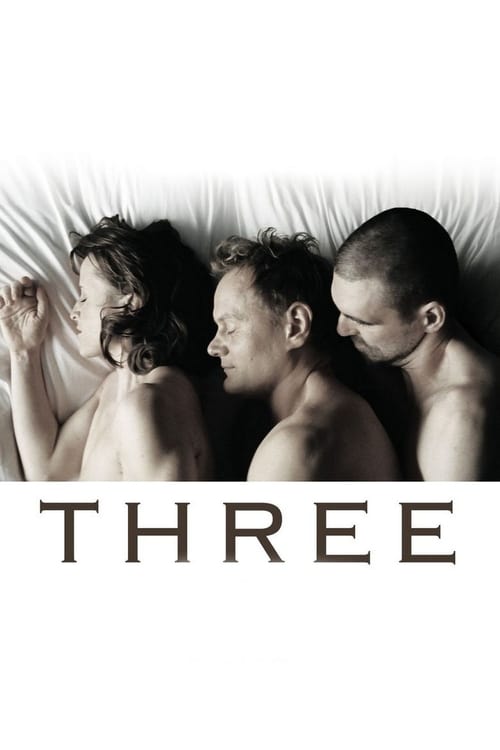
Hanna and Simon are in a 20 year marriage with an unexciting relationship. By chance, they both meet and start separate affairs with Adam. Adam has no idea that his two lovers are married, until they are all found out when Hanna becomes pregnant, with the natural doubts stemming from their situation.
Three
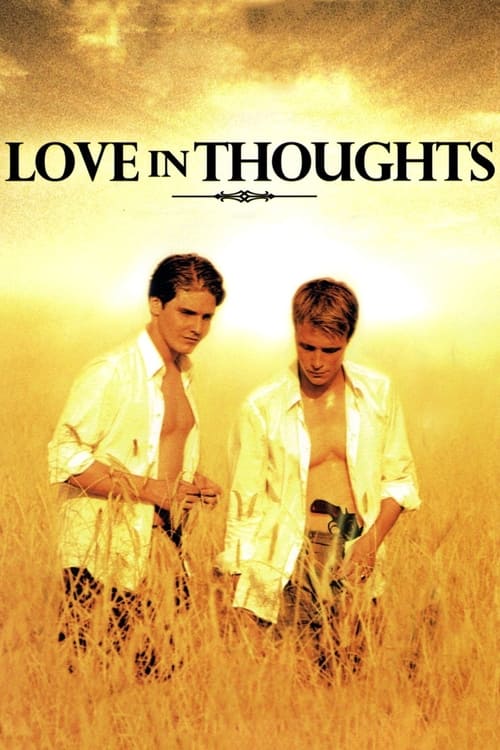
A posthumous look at the last days of Guenther's life as he, his best friend, and his sister let loose on a four-day binge of alcohol, drugs, and sex.
Love in Thoughts
No description available.
Jenseits der Liebe
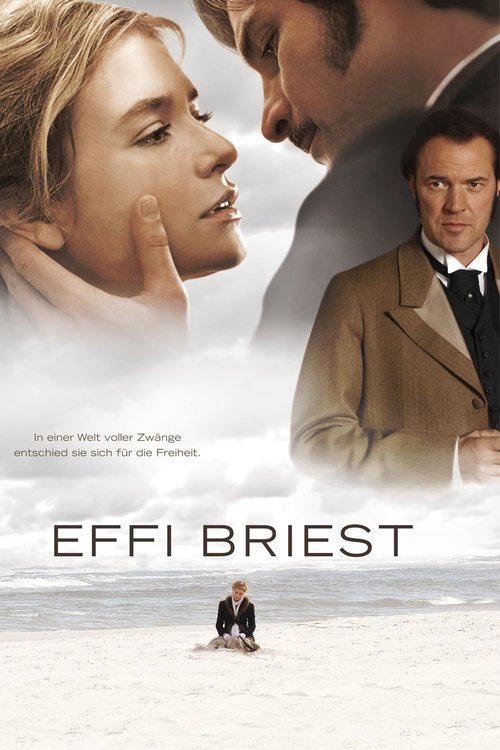
Following her parents' wishes, spirited seventeen-year-old Effi Briest marries Baron von Innstetten – a former admirer of her mother – who is twenty years Effi's senior. This marriage of prudence heralds the beginning of a humdrum life, far from home, for Effi. Innstetten devotes himself entirely to his political career, and the sleepy small town of Kessin has very little to offer in terms of variety. But then, one day, Innstetten's old regimental comrade, Major Crampas – a charming womanizer – arrives on the scene.
Effi Briest
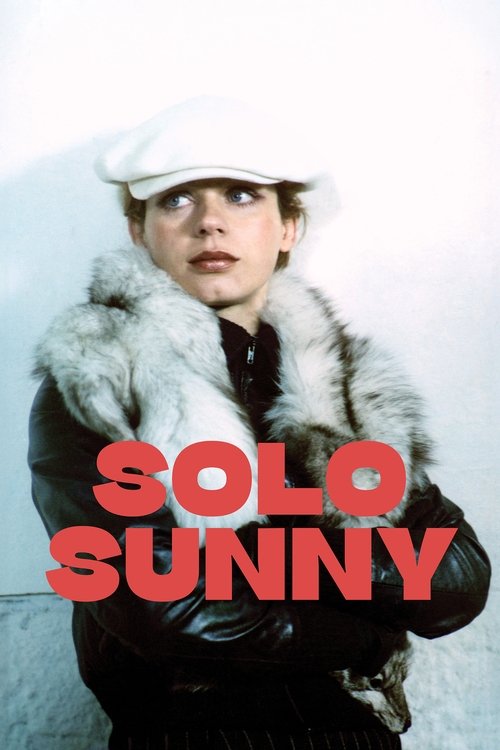
Sunny is the singer of band trying to establish itself in the music-scene of East-Berlin. They play regular gigs in small towns, but Sunny feels out of touch with the audience and her life as a whole. She begins a relationship with the amateur saxophonist and studied philosopher Ralph who writes her a very personal song - but his obsession with death and unfaithful lifestyle is not for her. After getting into a quarrel with a band member who harasses her and telling off a show-host she is thrown out of the band. Abandoned, she struggles to regain control over her life.
Solo Sunny
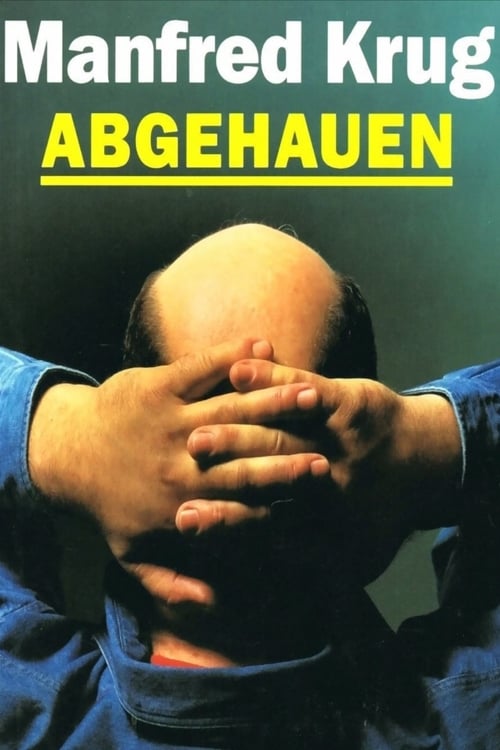
The movie tells a true story in the life of well-known German actor Manfred Krug. Living in the German Democratic Republic he is forced to leave the country after protesting against the expatriation of singer/songwriter Wolf Biermann in 1976.