R. V. Ramani
Crew
Known For

Films Division, decides to make a documentary film on the renowned filmmaker Mrinal Sen. Officials from the Films Division go to Mrinal Sen’s house in Kolkata to officially propose the making of the documentary film on him.
A Documentary Proposal
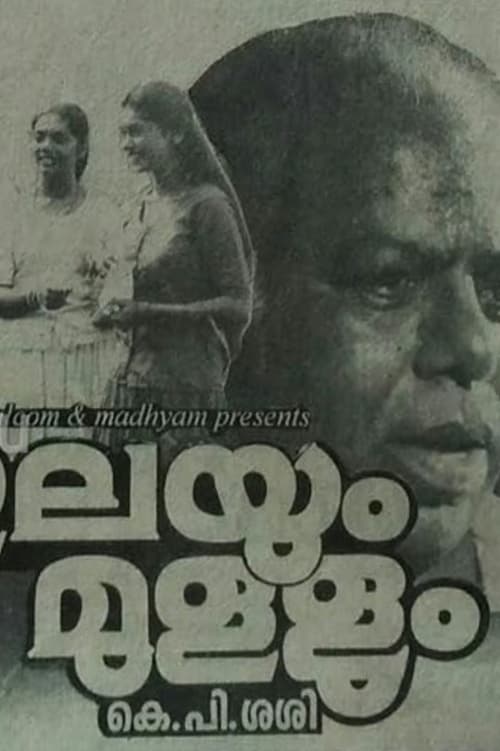
This is a film on moral policing. When this film was produced, the term `moral policing' was not in the public use by the activist circles or intellectual circles. It was produced in 1993. Perhaps, the film was a bit ahead of its time . More and more cases of moral policing were discussed decades later.. The victims and survivors of moral policing in India include women, religious minorities, sexuality minorities, Dalits, Adivasis, marginalized nationalities, marginalized linguistic cultures, marginalized regions and marginalized skin colours in India. Ilayum Mullum is based on certain real incidents that took place in Kerala.
Ilayum Mullum
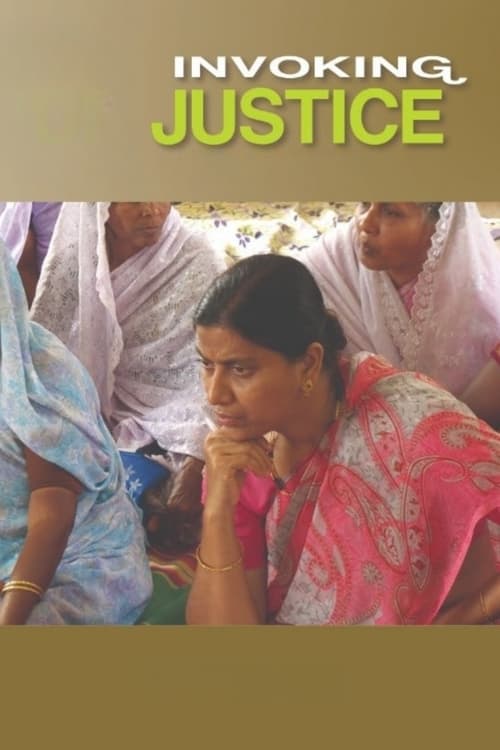
In Southern India, family disputes are settled by Jamaats—all male bodies which apply Islamic Sharia law to cases without allowing women to be present, even to defend themselves. Recognizing this fundamental inequity, a group of women in 2004 established a women’s Jamaat, which soon became a network of 12,000 members spread over 12 districts. Despite enormous resistance, they have been able to settle more than 8,000 cases to date, ranging from divorce to wife beating to brutal murders and more. Deepa Dhanraj follows several cases, shining a light on how the women’s Jamaat has acquired power through both communal education and the leaders’ persistent, tenacious and compassionate investigation of the crimes. In astonishing scenes we watch the Jamaat meetings, where women often shout over each other about the most difficult facets of their personal lives.
Invoking Justice

The story of a camera that perished in a Tsunami. The Film shares special moments that the Filmmaker experienced with his camera, a special bonding over a period of four years, creating cinematic imagery, relating, exploring, seeking and interpreting notions of his reality. It is a memory of a camera which perished in the tsunami, along with its last filmed footage – elusive images, evoking multiple possibilities, seeking parallels and new perspectives.
My Camera and Tsunami

More than a century ago, large scale gold mining was begun at Kolar Gold Field, Mysore. At its peak, the mines employed 36,000 workers who braved the dangerous labour and built a new life in the mining camp. Today, many third and fourth generation gold miners face the threat of not just unemployment but displacement from the area they have made their own. This film is a tribute to the "labouring lions" of Kolar Gold Field, a historical reconstruction of their work, culture and rich political traditions.
After the Gold
An exploratory journey seeking one's own rhythm, through the magnetic flux of rural and urban rhythms.
Saa

Bhanumathi Rao, in her younger days, was a dancer and a theatre actor. Today in her mid-nineties, she lives with her two daughters – Maya Krishna Rao, a contemporary solo theatre practitioner based in Delhi and Tara Rao, who works as human rights campaigner in Bengaluru. Bhanumathi, an elegant and witty woman, whose hearing and memory doesn’t usually stand up, has led an enigmatic, passionate, yet a simple and pragmatic life. Filming Bhanumathi in Delhi and Bengaluru, with her daughters nudging her, the filmmaker takes the audience on a journey of life and performance, through the spasms of memory, complexities of relationships, love and a reflection of what could constitute a beautiful mind.
Oh that's bhanu

Dear Chalam can be read as an eulogy for a dear friend, a journey through the landscape of cinema, and of making and sharing films. A poetic assemblage, the film dips into Chalam’s powerful documentary practice, his involvement with the Odessa Collective and commitment to cinema as a people’s movement—all of which come alive as potent strands in a letter that forms the central thread of the film. The film moves beyond a personal remembering of a singular life to think more widely about cinema.
Dear Chalam
The filmmaker persuades his Japanese sculptor friend, Toshikazu Kanai, to work with sand as the medium, near the waterfront on a beach. The waves lash. Children jump around. Fish gets caught. A balloon girl passes. A film happens, revealing the process of creation, sustenance and destruction, all happening at the same time.
Brahma Vishnu Shiva
A quizzical journey through colors, forms, space, movement and gestures at artist Achyuthan Kudallur’s new exhibition.