Kyulim Kim
Directing
Known For

Digital file transferred to 16mm film, projection, installation, 6 min. During filming, the drone fell into the water, causing the footage to be lost. The remaining cache files were then printed onto 16mm film, physically translating the loss and residual traces of the digital image. The movement of the emitted material was subsequently recreated with a digital camera and printed onto 16mm film.
White Hole (Part 2)

16mm film, projection, installation, 2 min 7 sec. Simultaneously, the filming location—an abandoned mine—was captured in 16mm from a different perspective. The work highlights the interplay between various technical mediums and recording methods, while examining the materiality of space, technical constraints, and the interconnectedness of images.
White Hole (Part 3)

Particulate matter scatters light and obstructs our vision, limiting what we can see whilst being invisible to the naked eye. Shot during days of high particulate matter levels, 'Dust' (2023) traces the flow of imperceptible matter through the time-lapse function of a camera. In conjunction with the sound of an almost silent field recording, stretched and amplified, ‘Dust’(2023) reveals the unheard sound of near-stillness layer by layer.
Dust
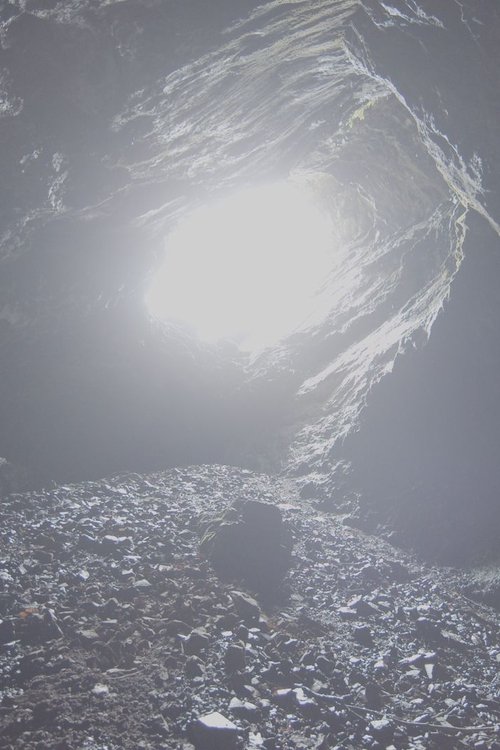
White Hole, composed of three 16mm projectors, explores the theme of disappearance, revealing through the choreographed movement of the camera the trajectories of disappearance and emission of matter in the contexts of black and white holes. During filming, the drone fell into the water, causing the footage to be lost. The remaining cache files were then printed onto 16mm film, physically translating the loss and residual traces of the digital image.
White Hole (Part 1)

This film was part of Kyulim Kim’s time-based installation 600 Minutes (2025), based on the restoration of Rembrandt's The Night Watch. The painting darkened over time due to pigment discoloration. Similarly, 1950s–70s film footage often fades to magenta as yellow and cyan dyes deteriorate. This color loss reflects both the material fragility of film and the fading of social infrastructures once captured in it.