Edgar G. Ulmer
Directing
Biography
From Wikipedia, the free encyclopedia. Edgar Georg Ulmer (September 17, 1904 – September 30, 1972) was an Austrian-American film director. He is best remembered for the movies The Black Cat (1934) and Detour (1945). These stylish and eccentric works have achieved cult status, whereas Ulmer's other films remain relatively unknown. The first feature he directed in North America, Damaged Lives (1933), was a low-budget exploitation film exposing the horrors of venereal disease. His next film, The Black Cat (1934), starring Béla Lugosi and Boris Karloff, was made for a major studio, Universal Pictures. Demonstrating the striking visual style that would be Ulmer's hallmark, the film was Universal's biggest hit of the season. Ulmer, however, had begun an affair with Shirley Beatrice Kassler, who had been married since 1933 to independent producer Max Alexander, nephew of Universal studio head Carl Laemmle. Kassler's divorce in 1936 and her marriage to Ulmer later the same year led to his being exiled from the major Hollywood studios. Ulmer was relegated to making B movies at Poverty Row production houses. His wife, now Shirley Ulmer, acted as script supervisor on nearly all of these films, and she wrote the screenplays for several. Their daughter, Arianne, appeared as an extra in several of his films. Consigned to the fringes of the U.S. motion picture industry, Ulmer specialized first in "ethnic films," notably in Ukrainian—Natalka Poltavka (1937), Cossacks in Exile (1939)—and Yiddish—The Light Ahead (1939), Americaner Shadchen (1940). The best-known of these ethnic films is the Yiddish Green Fields (1937), co-directed with Jacob Ben-Ami. Ulmer eventually found a niche making melodramas on tiny budgets and with often unpromising scripts and actors for Producers Releasing Corporation (PRC), with Ulmer describing himself as "the Frank Capra of PRC". His PRC thriller Detour (1945) has won considerable acclaim as a prime example of low-budget film noir, and it was selected by the Library of Congress among the first group of 100 American films worthy of special preservation efforts. In 1947, Ulmer made Carnegie Hall with the help of conductor Fritz Reiner, godfather of the Ulmers' daughter, Arianné. The film features performances by many leading figures in classical music, including Reiner, Jascha Heifetz, Artur Rubinstein, Gregor Piatigorsky and Lily Pons. Ulmer did get a chance to direct two films with substantial budgets, The Strange Woman (1946) and Ruthless (1948). The former, featuring a strong performance by Hedy Lamarr, is regarded by critics as one of Ulmer's best. In 1951 he directed a low-budget science-fiction film with a noirish tone, The Man from Planet X. In 1964 he directed his last film, The Cavern, in Italy. Description above from the Wikipedia article Edgar G. Ulmer, licensed under CC-BY-SA, full list of contributors on Wikipedia.

Known For

In a futuristic city sharply divided between the rich and the poor, the son of the city's mastermind meets a prophet who predicts the coming of a savior to mediate their differences.
Metropolis

A married farmer falls under the spell of a slatternly woman from the city, who tries to convince him to drown his wife.
Sunrise: A Song of Two Humans

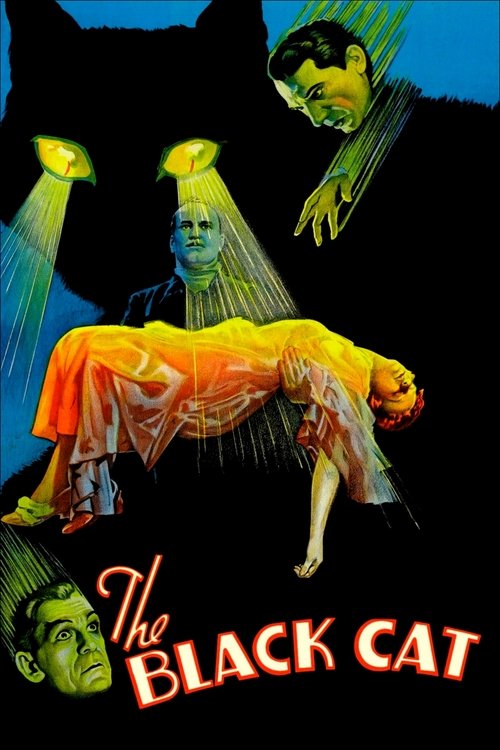
After a road accident in Hungary, the American honeymooners Joan and Peter and the enigmatic Dr. Werdegast find refuge in the house of the famed architect Hjalmar Poelzig, who shares a dark past with the doctor.
The Black Cat

On the South Pacific island of Bora Bora, a young couple's love is threatened when the tribal chief declares the girl a sacred virgin.
Tabu: A Story of the South Seas

An aging doorman, after being fired from his prestigious job at a luxurious hotel, is forced to face the scorn of his friends, neighbours and society.
The Last Laugh

In 16th-century Prague, a rabbi creates the Golem - a giant creature made of clay. Using sorcery, he brings the creature to life in order to protect the Jews of Prague from persecution.
The Golem: How He Came Into the World

Siegfried, son of King Siegmund of Xanten, travels to Worms, capital of the Burgundian kingdom, to ask King Gunther for the hand of his sister, the beautiful Kriemhild.
Die Nibelungen: Siegfried

Popular monarch Queen Christina of Sweden must choose between love and loyalty to her nation when she unexpectedly falls for a Spanish envoy.
Queen Christina

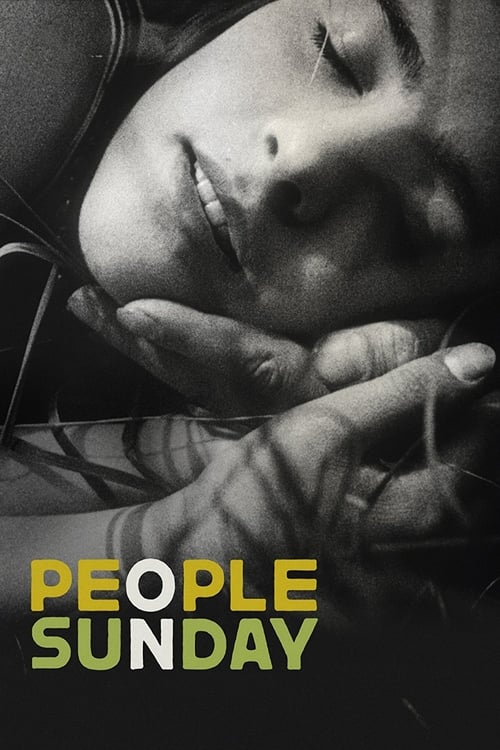
A semi-documentary experimental 1930 German silent film created by amateurs with a small budget. With authentic scenes of the metropolis city of Berlin, it's the first film from the later famous screenwriters/directors Billy Wilder and Fred Zinnemann.
People on Sunday

A helicopter crashes in the desert, and the crew winds up in the underground city of Atlantis and get mixed up in a slave revolt.
Journey Beneath the Desert

When Kriemhild, thirsty for revenge, marries to Etzel, king of the Huns, she invites King Gunther and his court to visit them, intending to finally take the life of the man responsible of her disgrace.
Die Nibelungen: Kriemhild's Revenge

The life of Al Roberts, a pianist in a New York nightclub, turns into a nightmare when he decides to hitchhike to Los Angeles to visit his girlfriend.
Detour

A Carthaginian general attempts to cross the Alps with an army of elephants in order to conquer Rome.
Hannibal

In early 19th century New England, an unscrupulous woman uses her beauty and wits to seduce, deceive and control the men around her.
The Strange Woman

In 1921, we follow two women - Marie and Grete - from the same poor Viennese neighborhood, as they try to better the lives of themselves and their families during the period of Austrian postwar hyperinflation.
Joyless Street

Exposed to bad influences since childhood, Mary, a young girl is pushed by her mother to approach an elderly banker by the name of Harber. After almost driving her fiancee to suicide and seducing his mentally-ill son, she realizes through a metaphorical dream the scope of her negligence. Sentenced to prison for incitement to murder Harber, she sees herself as a parallel figure to Lea, Lot's wife in Sodom, where the Angel of the Lord warns the sinful citizens of the city of their impending doom. Lea oppresses the angel and eventually turns it over to the pagan priests when her sexual advances to it are rejected. In another dream sequence, Mary becomes the Queen of Syria, whose oppressed people turn against her and who, in turn, condemns a young man who loves her to death. Finally, her dream returns to the present time and when she awakens, she runs back to her former lover.
Sodom and Gomorrah

Santiago, a jolly modern bandito, has just lost his partner when he happens on the isolated farm of young Manuel and Maria Lopez...
The Naked Dawn

The likeable and carefree Grand Duke of Abacco is in dire straits. There is no money left to service the State's debt; the main creditor is looking forward to expropriating the entire Duchy. The marriage with Olga, Grand Duchess of Russia, would solve everything, but a crucial letter of hers about the engagement has been stolen. Besides, a bunch of revolutionaries and a dubious businessman have other plans regarding the Grand Duke. With the intrusion of adventurer Philipp Collins into the Grand Duke's affairs, a series of frantic chases, plots and counter-plots begins.
The Finances of the Grand Duke

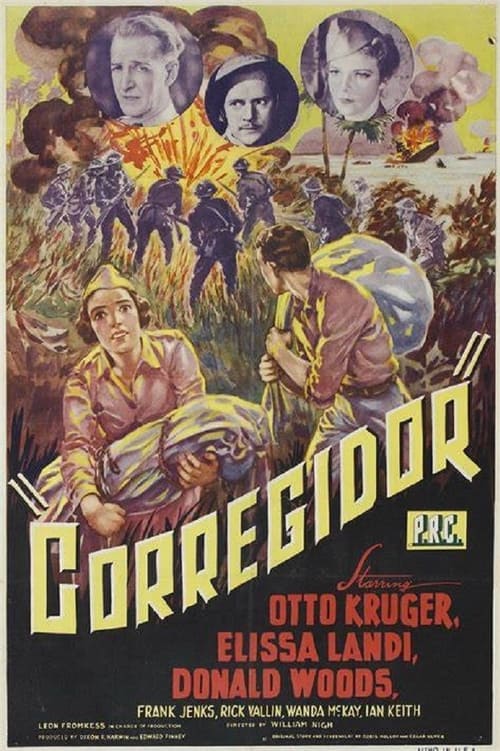
A doctor and his staff in a hospital on the Philippine island of Corregidor shortly after the Japanese attack on Pearl Harbor try to treat the sick, injured and wounded as American and Filipino troops desperately try to beat back a ferocious Japanese attack.
Corregidor

In 1960, a pilot testing an experimental rocket powered aircraft accidentally flies into the future and finds himself in a sealed city whose people suspect he is a spy from outside their walls, but who want to keep him to procreate with the ruler's daughter because the majority of the inhabitants are sterile.