Acting
Cette série policière met en scène les enquêtes de l'inspecteur Stefan Derrick et de son adjoint Harry Klein dans la ville de Munich. Divers types d'enquêtes y sont entrepris, notamment des cas de mort par assassinat ou encore de complot. Chaque épisode est construit sur un scénario qui s'intéresse à la psychologie des personnes appartenant à l'entourage de la victime. Très souvent, la réponse à l'intrigue posée par le scénario est obtenue à la fin de l'épisode. C'est donc à chaque fois un travail minutieux d'accumulation de déductions et d'étude approfondie de la psychologie des personnages qui est réalisé.
Aucune description disponible.
En plein été, dans une maison de campagne perdue au milieu des champs de maïs et des bois, des jumeaux de dix ans attendent le retour de leur mère. Lorsqu’elle revient à la maison, le visage entièrement bandé suite à une opération de chirurgie esthétique, les enfants mettent en doute son identité…
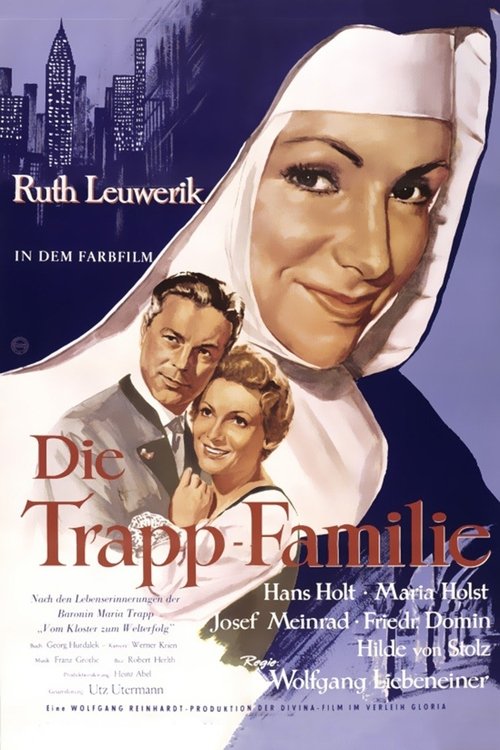
Le baron Trapp, ex-officier de marine, père de sept enfants, fait régner chez lui une discipline de fer. Comme il est veuf, ce sont des gouvernantes qui sont chargées d'élever ses enfants... selon ses instructions. Mais aucune des femmes ne reste dans la place car nulle ne peut tenir le rythme de vie ni se plier aux exigences du baron qui fait marcher son inonde au sifflet, exactement comme il le ferait sur un navire. Un jour le baron fait appel à la supérieure d'un couvent de Salzbourg qui lui envoie une jeune novice...