Amir Youssef
Directing
Biography
Amir Youssef lives and works between Paris and Alexandria, Egypte. As an artist and filmmaker, Youssef’s practice explores the intersections of pre-cinema, media archaeology, and storytelling through sculpture, installation, film, and video. His work is rooted in a fascination with the transformation of objects—their meaning, function, and history—and how they can embody the dynamics of movement and narrative. Youssef coined the term Kinemania to describe his ongoing inquiry into humanity’s obsession with visual motion, materialized through his creation of mobile, dynamic objects. Drawing from his background in fine arts and filmmaking, Youssef critically examines themes of history, colonialism, and spirituality. His work challenges the static nature of historical narratives often found in museums, instead offering a reflective and poetic reimagining of the past. He grapples with the absurdity of war and post-colonial histories while simultaneously transforming sacred texts into transcendental, poetic forms. These explorations invite viewers to embark on a cosmic and contemplative journey, merging historical critique with metaphysical exploration. Youssef has exhibited and screened his work internationally, including at Visions du Réel, Switzerland; Ars Electronica, Linz, Austria; the Vasarely Foundation, Aix-en-Provence, France; Panorama at Le Fresnoy, Tourcoing, France; the BJCM Biennale, Milan, Italy; the Industry Textile Museum, Augsburg, Germany; the Youth Salon at the Cairo Opera House, Egypt; and the Agenda exhibition at the Bibliotheca Alexandrina, Egypt. Youssef’s awards include the Studio Art Collector for his film EMAN and the La Scam Emergence Prize for his film Apoleon.
Known For
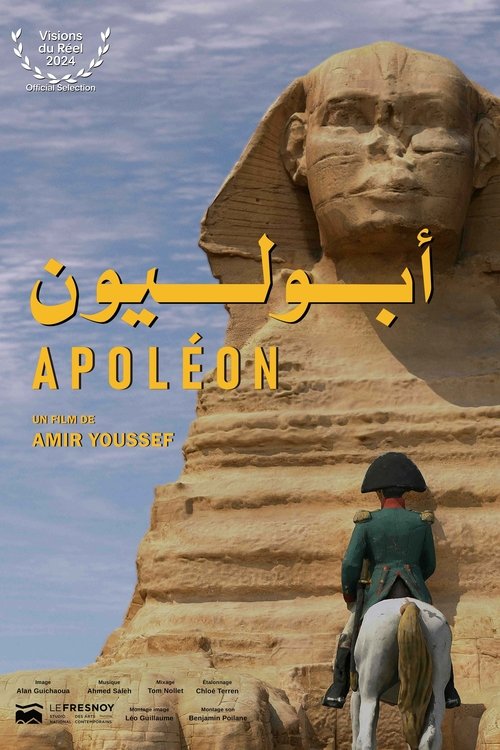
A group of figurines from the Musée de l’Armée in Paris join Napoleon during his expedition in Egypt. The film explores political issues related to militarism and colonization, challenging traditional historical narratives.
Apoléon

Hoping for a miracle to find his missing mother, a young Egyptian Copt goes to the Basilica of Saint-Quentin. There, he explores the existential questions of his faith in the labyrinth of his memories.