FEEL IT.STREAM
Camilla Horn

Camilla Horn

Acting

Biography

The daughter of a railroad official, Camilla Horn was educated in Germany and Switzerland. She initially trained as a dressmaker and received her first job experience in a fashion salon in Erfurt. This was merely a stepping stone for a performing career which began with dance lessons in Berlin and subsequent acting studies under Lucie Höflich. The lithe, blond and strikingly beautiful Camilla soon appeared in cabaret revues staged by Rudolf Nelson. By 1926, she was employed as an extra at Ufa, where she was spotted by the director F.W. Murnau, who found in her the ideal representation of Gretchen for his seminal production of Fausto (1926) . The role catapulted Camilla to instant stardom. Within a year, she was signed by United Artists in Hollywood, befriending Charles Chaplin and, more importantly, studio chairman Joseph M. Schenck. The friendship with Schenck may, or may not, have led to an affair -- depending on which story one is to believe -- but it did result in two high profile starring roles opposite John Barrymore in the torrid melodramas Tempestad (1928) and Amor eterno (1929), both produced by Schenck. Neither film was a commercial success. With the coming of sound, Camilla returned to Europe, briefly appearing on stage in London and Paris, before resuming her screen career in Germany. As the 1930's went on, she rarely turned down a role, playing anything from baronesses and fashion models, to vamps and 'fallen women'. The quality of her films was variable, but there were several noteworthy standouts, such as Hans in allen Gassen (1930) (opposite Hans Albers), Fiesta en palacio (1934) and Payasos (1938) (as a circus artiste, again with Albers). During this tumultuous decade, Camilla conducted a lengthy affair with the singer Louis Graveure, fifteen years her senior. This came to an end in 1938, when Graveure was suspected of espionage by the Gestapo and fled to England, via the Cote d'Azure. After her luxury villa in Berlin was ransacked in search for non-existent clues, Camilla's outspoken criticism of the Nazi regime reached a point where it got her into serious trouble. She saw out the first half of her career with a trio of long forgotten films made in Italy. Having failed in an attempt to flee to Switzerland, she kept a low profile and even tried her hand at farming. After the war, she had a stint as an interpreter for the occupying U.S. forces in Germany. Camilla made a successful return to the stage in a 1948 Frankfurt production of Jean Cocteau's "L'Aigle a Deux Tetes" (aka 'The Eagle Has Two Heads'). She spent the latter half of her acting career playing grand dames, matriarchs and worldly ladies with colourful backgrounds, in both films and on television. In 1974, she was awarded the 'Filmband in Gold' (also known as 'Lola') for lifetime achievement in the German film industry. In her 1985 autobiography, "Verliebt in die Liebe" ('In Love with Love'), she happily recounted her marriages and liaisons.
Known For

No image
6.0

No description available.

German Film Award

1951
No image
N/A

No description available.

Bavarian Film Awards

1979
Die Schwarzwaldklinik
6.6

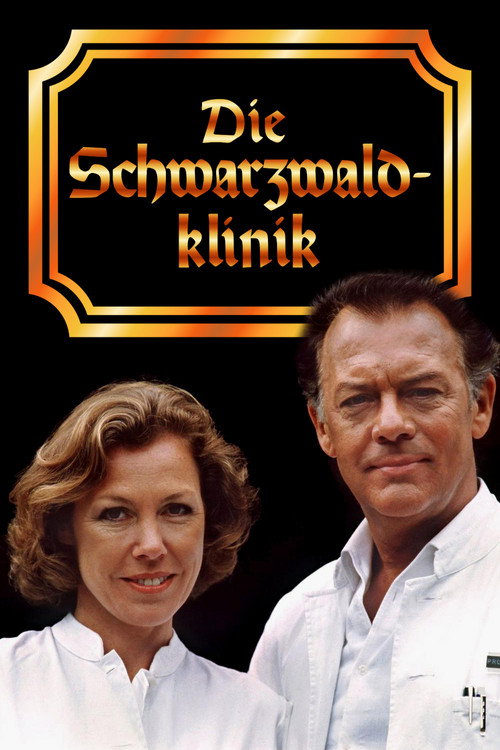
The Black Forest Clinic is a German language medical drama television series that was produced by and filmed in West Germany. The series was produced between 1984 and 1988 with the original airing being from October 2, 1985 to March 25, 1989 on West Germany's ZDF television channel. The series' storyline follows the inner workings of a small fictional hospital in the Black Forest region of Germany as well as the lives of the Brinkmann family of doctors who work at the hospital. Shortly after broadcasting had begun in 1985, The Black Forest Clinic became a highly popular television event, reaching audiences of over 20 million viewers. 25 years since its debut, it is still highly regarded in Germany. The series had been re-broadcast several times since 1985 and has spawned two television films released 20 years after its initial airing.

Die Schwarzwaldklinik

1985
No image
8.0

No description available.

Gestern gelesen

1969
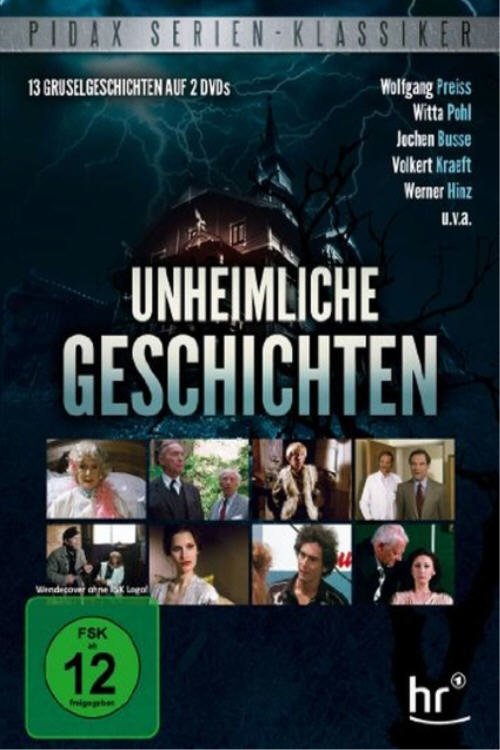
Unheimliche Geschichten
N/A

No description available.

Unheimliche Geschichten

1982
Faust
7.9

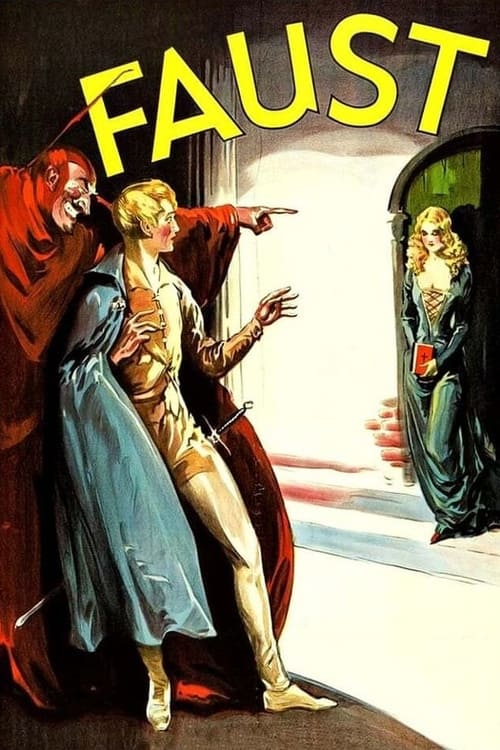
God and Satan wager on the soul of a learned and prayerful alchemist as part of their eternal war over Earth.

Faust

1926
No image
8.0

Rudi, who’s been quite the ladies’ man, finally wants to settle down and marry Hilde. So as to not get into a touchy situation with all his many women, he plans to bring them all together the night before his wedding. While sitting alone in his apartment and burning all his old photos and love letters, he notices a woman in the garden. She assets, that she’s hiding from a stubborn admirer and he stupidly offers her to come in … and then it all begins! First, his wife-to-be Hilde shows up, who wants to spend the night before their wedding together. While Rudi tries to hide the unknown woman in his bedroom, a hotel detective shows up and claims he’s following a thief.

Polterabend

1940
Appointment in Beirut
6.0

When an international casino crime ring is planning a big score at a fixed roulette game, the casino police enlists the help of Jeff Miller, an alcoholic croupier, to nab the bad guys. Jeff is attracted to Laura, a singer at the casino, but she prefers the company of the leader of the thieving casino ring.

Appointment in Beirut

1968
Dreizehn Briefe
9.0

No description available.

Dreizehn Briefe

1967
Eva and the Grasshopper
9.0

Mary and Eva are best friends, although they couldn't be more different. Armand, Mary's fiancee, falls in love with the seductive Eva, who is busy becoming a revue star. When Eva fails and loses her money, Armand tries to help her out.

Eva and the Grasshopper

1927
White Slaves
5.5

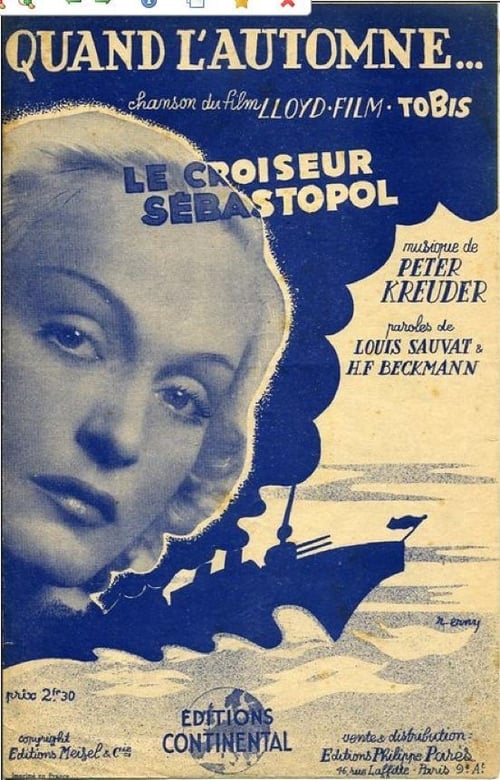
Russia, 1917. Revolution is in the air. The Sevastopol anchors In Saint Petersburg. The sailors are thirsty for women and celebration. The ship becomes a dancehall. Bloodbath, pillage and kidnapping follows. A Nazi/Germany propaganda film.

White Slaves

1937
Friedemann Bach
7.0

During a house concert, the Bach family gets a visit by their son Wilhelm Friedemann, who has just given up his position in Dresden because he no longer could endure the reprisals of his superiors.

Friedemann Bach

1941
A Waltz for You
7.0

Ruritanian power struggle with opera singing.

A Waltz for You

1934
Tartuffe
7.2

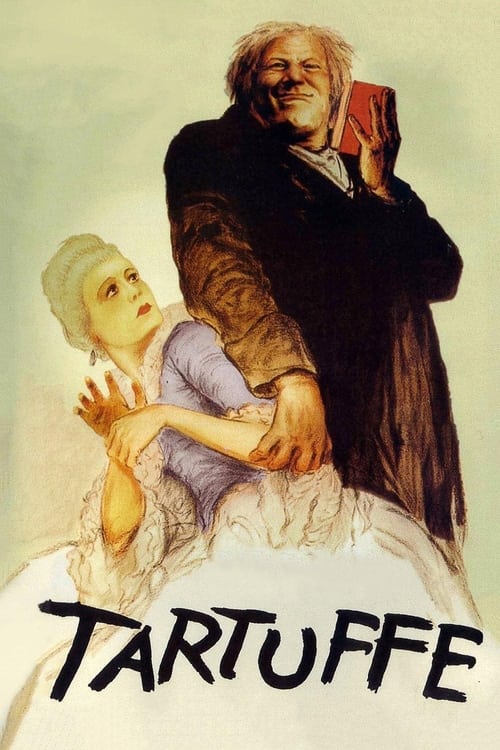
A young man shows his millionaire grandfather a film based on Molière's play "Tartuffe" in order to expose the old man's hypocritical governess who covets the young man's inheritance.

Tartuffe

1926
I Go Out and You Stay Here
8.0

Weimar era screwball comedy about a floor model who is required to go out evenings to escort VIPs while her boyfriend has to wait at home.

I Go Out and You Stay Here

1931
No image
6.0

In a made-up country somewhere in northern Europe: In the armaments factory F.N.G., an important drawing is copied and passed on to the enemy. Suspicion falls on the chief engineer Alexander Nica and his assistant Laurenz. Both are placed before the court; accused by the night watchman Bruns; and sentenced to death for industrial espionage. Before sentencing, however, Nica succeeds in getting away. Now he’s trying to find proof to convince the court of his and Laurenz’ innocence.

Red Orchids

1938
The Great Passion
7.7

This is a real curiosity; at best a reasonable film, but also a charming little gem. There is a story (in the line of "A Star is Born"), but this merely serves as an excuse, as it is more importantly a kind of moving encyclopedia of about 35 stars making their debut in a talkie (although some of them had already made one talkie), of the technical sound possibilities and of film making. Besides all that, it is entertaining and sometimes hilarious and it has fine one-liners that split my side. The film is also remarkable for making mock of typical German film genres (like the overly sweet romances involving the military), of too heavy acting and of film making in general. I have to mention this one: a short, hysterically funny parody of "Der blaue Engel". What this film in fact says is: do not take any film too seriously. (J. Steed)

The Great Passion

1930
Intimitäten
7.0

Peter Korff isn't a famous actor yet, but he is young, handsome, adventurous – and once again hopelessly in love. The object of his affection is named Erika and works as a model at the fashion salon "Yvette." Although the pretty young woman claims to be just as in love with Peter as he is with her, she's always up for a little fling behind his back.

Intimitäten

1948
The Five Accursed Gentlemen
7.0

European tourists on holiday in Morocco are threatened by a native sorcerer who predicts five of them will die, one by one, before the full moon.

The Five Accursed Gentlemen

1932
Sunday of Life
10.0

Ellen Hobart is a gold-digging manicurist who sights her sights on David Stone, a wealthy young man. After they marry, Hobart is persuaded to accept $50,000 to give her husband up. She willingly goes along with this arrangement, only to realize she's genuinely in love with the boy when he falls dangerously ill. German-language version of the American pre-code film The Devil's Holiday.

Sunday of Life

1931