Acting
Tatort is a long-running German/Austrian/Swiss crime television series set in various parts of these countries. The show is broadcast on the channels of ARD in Germany, ORF in Austria and SF1 in Switzerland.
Polizeiruf 110 is a long-running German language detective television series. The first episode was broadcast 27 June 1971 in the German Democratic Republic, and after the dissolution of Fernsehen der DDR the series was picked up by ARD. It was originally created as a counterpart to the West German series Tatort, and quickly became a public favorite.
Der Staatsanwalt hat das Wort was an East German television series.
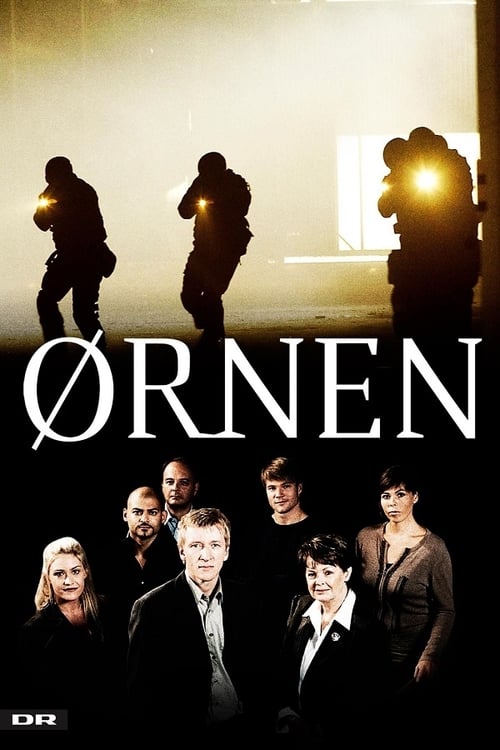
The Eagle: A Crime Odyssey is a Danish police procedural television series produced by Danmarks Radio, created and written by Peter Thorsboe and Mai Brostrøm. The series debuted on 10 October 2004 in Denmark. It won an International Emmy Award from the International Academy of Television Arts & Sciences for best non-American television drama series in 2005. There were three seasons; the second season premiered in Denmark on 9 October 2005 and the third on 8 October 2006. The last episode originally aired in Denmark on 26 November 2006. The series was filmed on location in various parts of northern Europe, from Berlin and Copenhagen to Oslo and other locations including Iceland. The series has enjoyed particular success in Australia, where it airs on SBS and is available on DVD with English subtitles.
No description available.
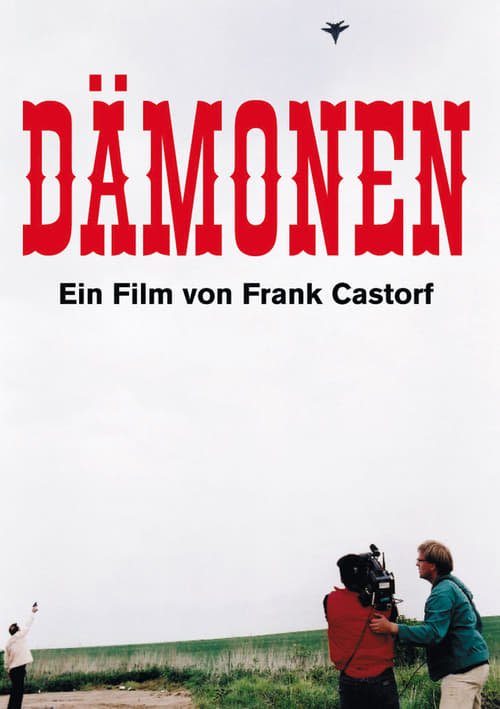
In the last house just behind the western borders of Russia, between Paris/Texas and Korleput/Mecklenburg-Vorpommern, Cindy Sherman, Dogma 95 and Duma 2000, Frank Castorf directs his virst video production "Dämonen" ("Demons") as a sort of post-Soviet-panslavistic panopticon in his own dramaturgy based on Dostojewski's "Demons" and Camus' "The Posessed". All that in set designer Bert Neumann's industrial-designed bungalow (with swimming pool) built onto forbidding landscape.
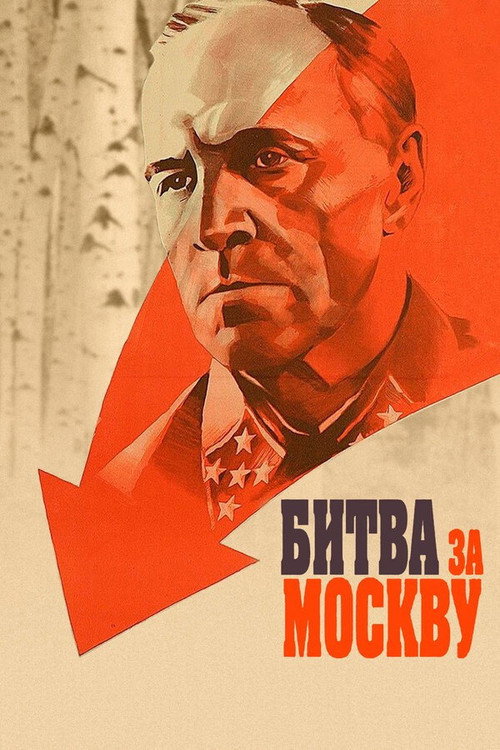
The Battle of Moscow is a 1985 Soviet multi-part war narrative, presenting a dramatized account of the 1941 Battle of Moscow and the events preceding it. The battle was the first major defeat of German Wehrmacht in the Second World War.
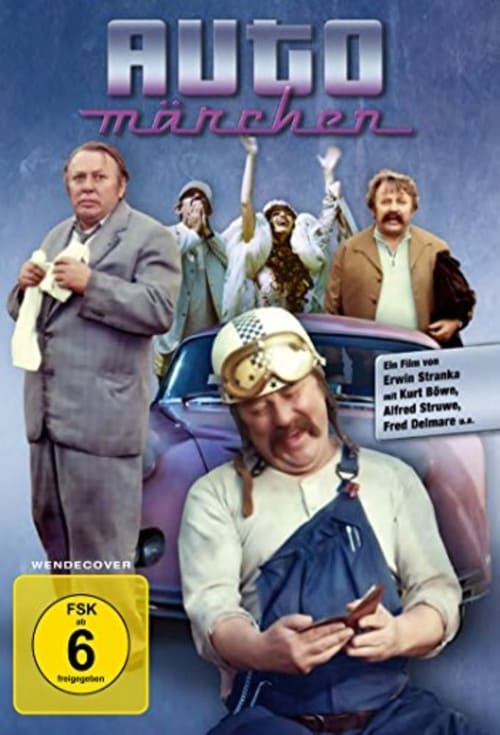
This quirky episodic comedy weaves together three plotlines centered around the employees of a car garage, with some unexpected fairytale elements to get things moving. A woodland fairy convinces shy bookkeeper Piel to suddenly start driving his Trabi far above the speed limit. Manager Neumann sells his soul to a black cat in order to purchase a more respectable vehicle. And a spirit named "Car Accident" offers to warn owner Sengebusch about upcoming traffic accidents so he can make money by always being the first on the scene.
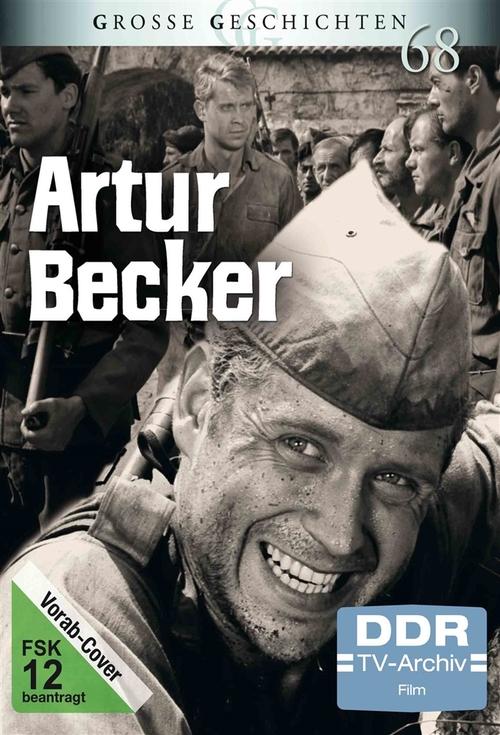
Artur Becker, who, as a young communist during the Weimar Republic, faced his first major test during the Kapp Putsch, fought against Franco’s coup plotters during the Spanish Civil War, was seriously wounded, and arrested. After a failed escape attempt and numerous interrogations by Spanish and German coup plotters, he was eventually shot.
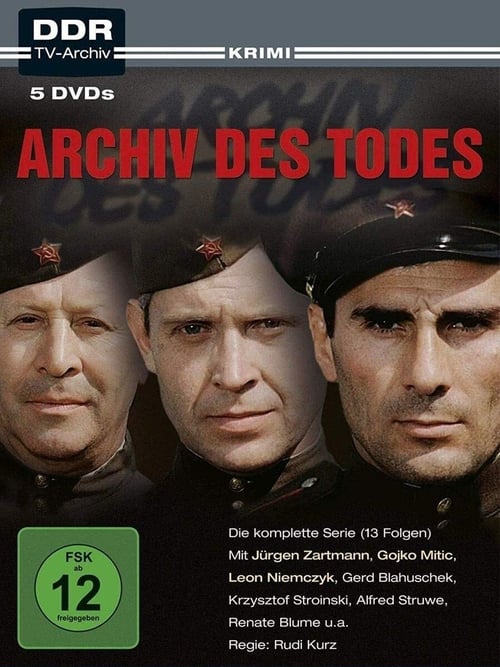
Archiv des Todes is a 1980 13-part television series German war television film series set during World War II.
Unites grotesque elements, tempo, quiet dream sequences, the thrill of a detective story, but above all, he manages to capture the temperature of an actor ensemble that throws itself into the world of Dostoyevsky with immense pleasure and passion.
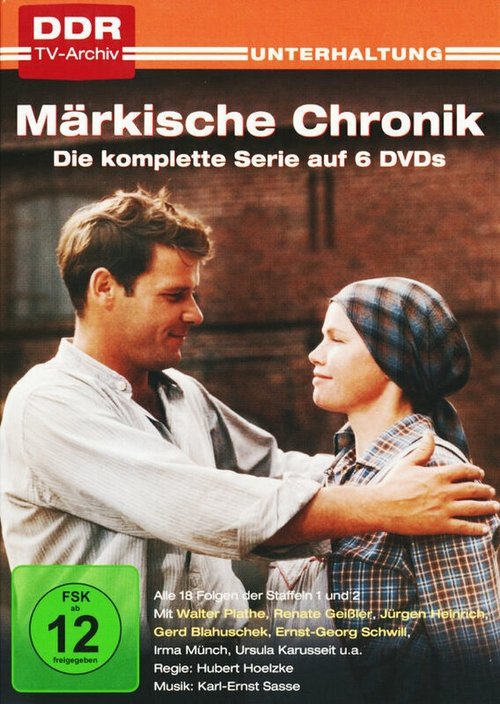
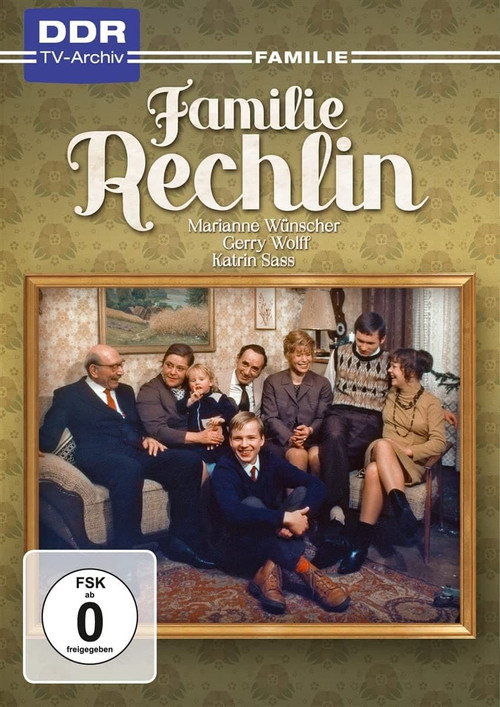
Berlin in the 60s. The construction of the Berlin Wall not only divides the city, but also separates the Rechlin family. While mother Ingelore lives with husband Hannes and the youngest son in the eastern part of the city, the young, married daughter Beate lives in West Berlin. Even when she gives birth to the first grandson, the newly baked grandma Ingelore cannot visit her. Travel permits are only issued one year later. But the formerly so tight family bond is burdened by the long separation. Son Bernd also avoids the rest of the family, as his new girlfriend has just been released from prison because of attempted "republic escape". And so Mother Ingelore almost has to watch her family shatter.
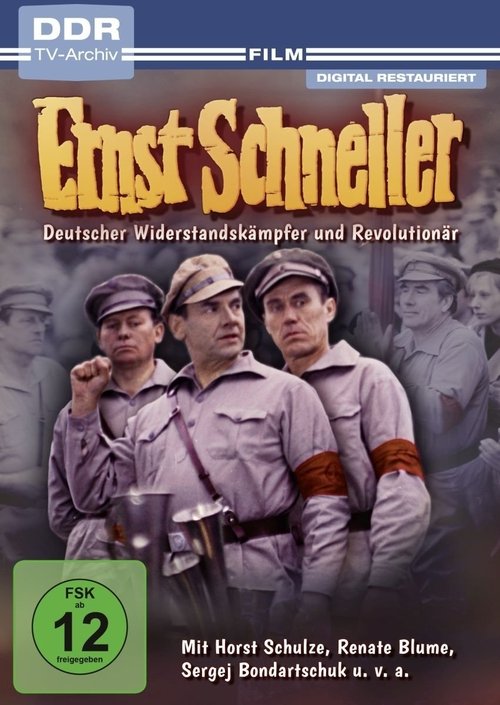
The movie begins by showing how Schneller takes up the profession of a teacher out of love for the children. When the First World War begins, he becomes a 'volunteer officer' and slowly the political situation begins to shape him. He develops into a revolutionary fighter.
In Africa - Land of the ever shining sun, German soldiers fulfill a UN mission. For homosexual General Brenner its a dream comes true: Here, where the people are still native and simple, the German can prove his abilities. But then the virgin wife of Brenner gives birth to her first child. Is it the new Messiah? But what is a Messiah good for, if the UN is already there?
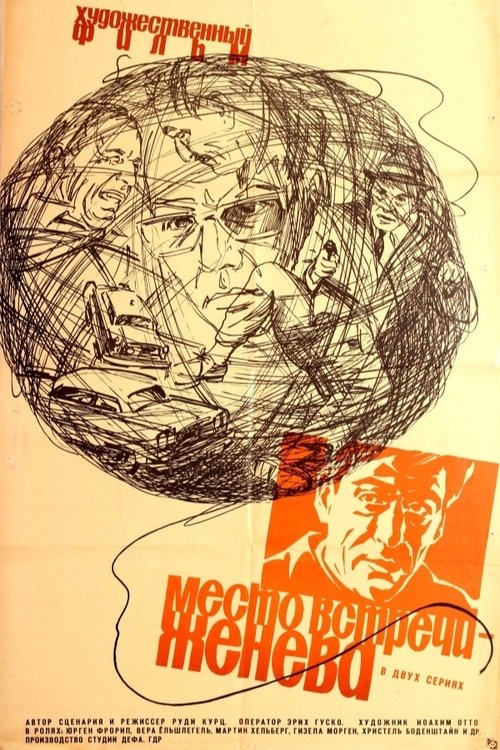
The East German scientist Professor Gerlach has made a significant discovery with his research into how a new, even stronger pesticide can be protected against ineffectiveness through hydrolysis. This fact has not gone unnoticed by other interested nations. At the International Congress of Chemists in Geneva, a power struggle broke out between agents of the BND and the CIA over a preparation that had been smuggled into Switzerland without the knowledge of Dr. Werner, Gerlach's GDR representative and assistant, and which the enemies hoped would shed light on the composition of the invention.
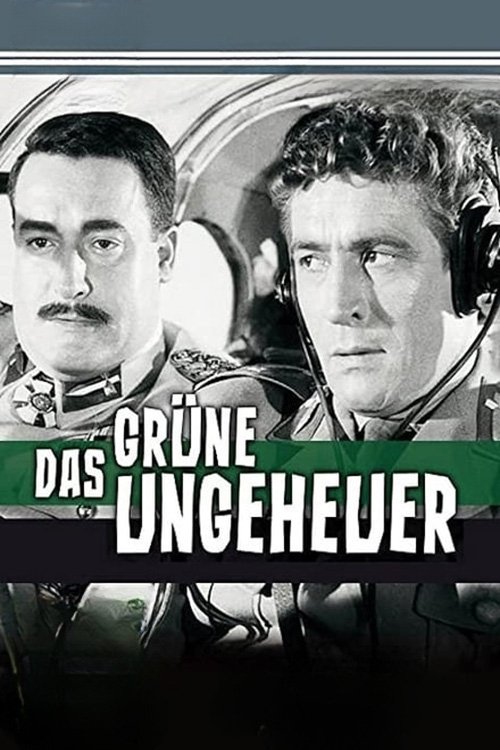
On the run from police in America, Antonio Morena, a former World War II aviator and black-marketeer, finds himself in South America working for the all-powerful United Fruit Company, known to the natives as "the Green Monster".
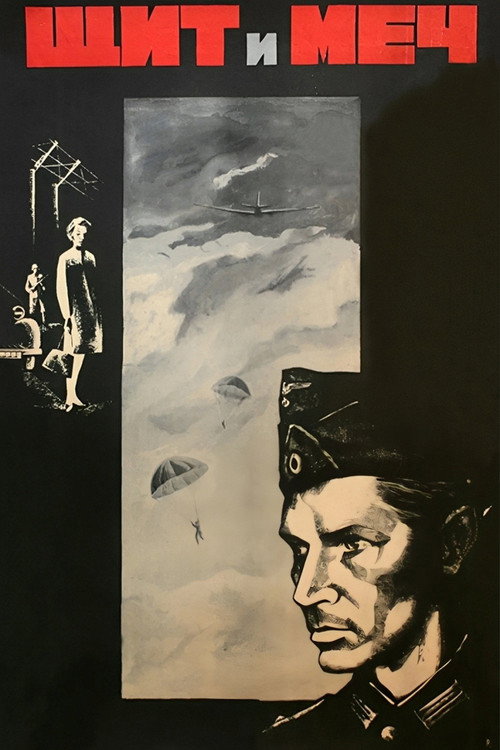
The year is 1940 and Nazi Germany is at the height of its military prowess, having captured most of Europe and eyeing the Soviet Union to the East. The Russian military command suspects hostile intent from Germany and so arranges for its spies to infiltrate ranks of the German military and the SS. Alexander Belov is a Russian spy, who travels from Soviet-held Latvia to Nazi Germany under an alias of Johann Weiss. His mastery of the German language, steel nerves and an ability to manipulate others help him to use his connections in the SS to ascend the ladder of the German intelligence. He uses his position to identify sympathetic Germans, who help him to procure vital intelligence, and to help local resistance movements in their collective fight against Nazism.