Crew
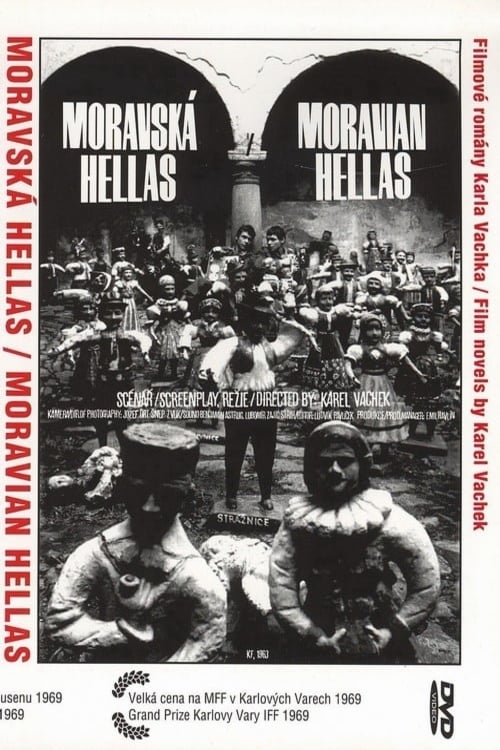
Karel Vachek’s graduate film offers us a documentary essay which is both a light-hearted and aggressive little piece and also a parody of investigative film journalism. The Strážnice folk festival, backed by the cultural Party apparatus of the time, for years had little to commend itself to authentic folklore. In the film the event assumes the form of a bizarre stage spectacle with almost surrealistic elements that Vachek reinforces with unconventional approaches (commentary appearing as titles on screen, singing, declamations into the camera, feature etudes, the fusion of news coverage and fiction). The result is a stirring film collage depicting various characters, from crowd-pleasers, Easter egg decorators, kitsch artists and peddlers, to museologists and local residents, all of whom come up against the eccentric "identical” twin reporters Karel and Jan Saudek and a bored actress who appears as an extra. Using their special blend of irony and wit, they present us with the sad truth.
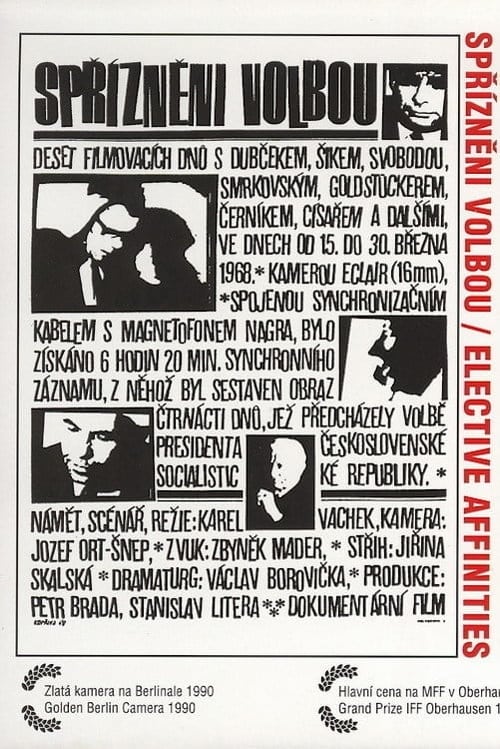
Documentary showing the Czechoslovakian political landscape in March 1968, when president Antonin Novotny, a hardline Stalinist, stepped down and moderate communist Ludvik Svoboda was elected. Five months later, in August 68, the Prague Spring would end with the military intervention of the Warsaw Pact.
No description available.
About the help of man to man, about the residence of people in need in the House of Mother Theresa.
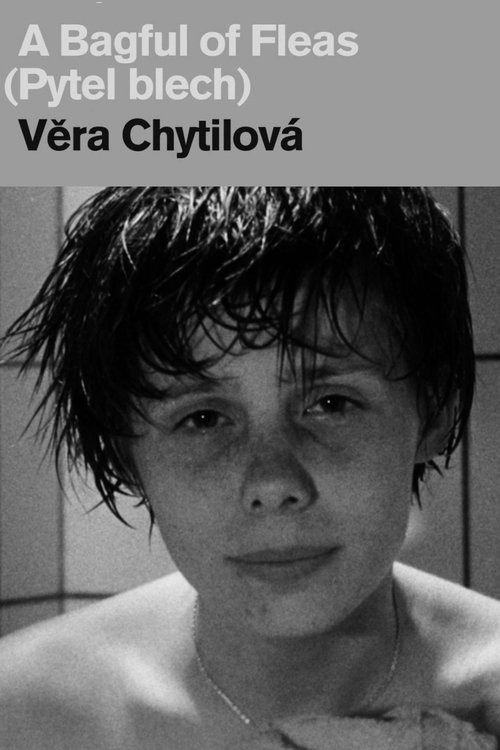
Eva is a new member of a girl's boarding school and textile factory. She looks up to the free-spirited Jana who struggles against conformity and discipline. Jana's conflicts with the staff and other girls have consequences for all.
A leading director of the Czech film renaissance provides a philosophical meditation on life and death, set amidst complex hospital apparatus and the sadness, hope, or resignation of the patients. Existentialist rather than optimist, the approach is one of humanistic atheism, accepting death as part of life. Interviews with doctors and nurses explore their outlook; all speak of death as a fact, without either sentimentality or religiosity. The studied objectivity of the film only imperfectly hides an intense emotionality.
"A refined film essay about the loneliness, wisdom and humility of old women. The film, most valued by Jan Špáta, was awarded the Grand Prize at the International Short Film Festival in Oberhausen, the Trilobit Award and Special Mention at the IFF in Karlovy Vary."
Frank visits his friend Josef, who introduces him to his pedigree rabbits and his wife Mary. Frank is more interested in the slightly unsettling fact that Josef and Mary's garden fence is entirely made up of living people holding hands.
The film acquaints us with the work of the senior consultant of pavilion 11 in the Bohnice mental house who endeavours to build up a complex rahabilitation and re-socialising programme for patients with chronic mental illness. One part of her treatment programme is a week's stay outside the institution for selected patients. It is this week which is captured on film
The story of an ethnic German living in the Czech border region of the Orlik mountains in Eastern Bohemia. His life story, recounted in film with humility, faith, and love, becomes a personal view of the history of the 20th century.
From the behavior, discourse, and appearance of individual actors, Vachek composes, in the form of a mosaic, a broad and many-layered film-argument about Czechoslovak democracy in the period of its rebirth, all administered with the director’s inimitable point of view.
This is funny or rather crazy adaptation of classical opera Carmen inspired by famous czech theatre Ypsilon play of the same name shot at various bizarre locations such as airport, botanical garden and winter forest.