Acting
Hamburg, Germany 1934: An executioner is needed. Teetjen makes the biggest mistake of his life. Because his butcher shop is facing bankruptcy, he agrees to execute a group of political prisoners for the Nazis. Once this becomes known, Teetjen’s life falls apart.
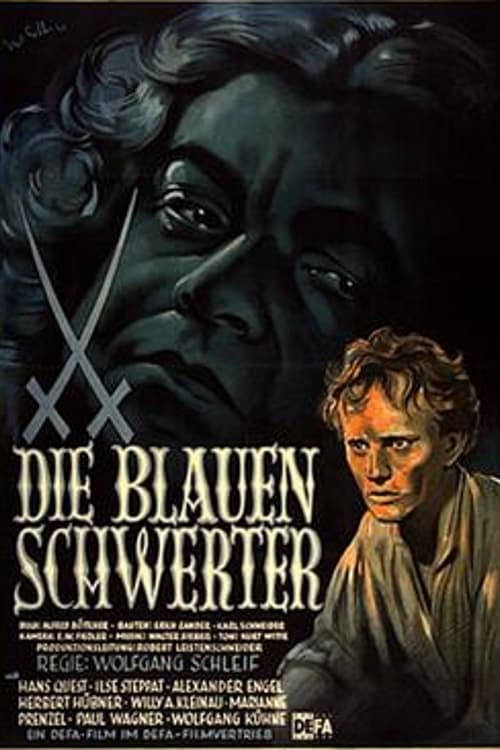
Mecklenburg, 19th century. For generations, the Brand family of farmers has worked a piece of land as tenants of the baron, who owns almost all of the village's land. The baron himself comes from a family of farmers who became rich through corruption and were ennobled. He is the absolute potentate, no one dares to contradict him, he takes what he wants and stops at nothing in his excesses. At the same time, he is the center of petty bourgeois, bigoted social life. Johann, the stable boy, wants to marry Mariken Brand and asks the baron for a piece of land so that he can build a life of his own. But the lord is harsh, not only refusing him the land, but also increasing the rent. Johann rebels, trying to rouse the farmers in the village from their lethargy—in vain. Only when Mariken dies does the mood change. A peasant uprising breaks out, and Johann kills the baron.
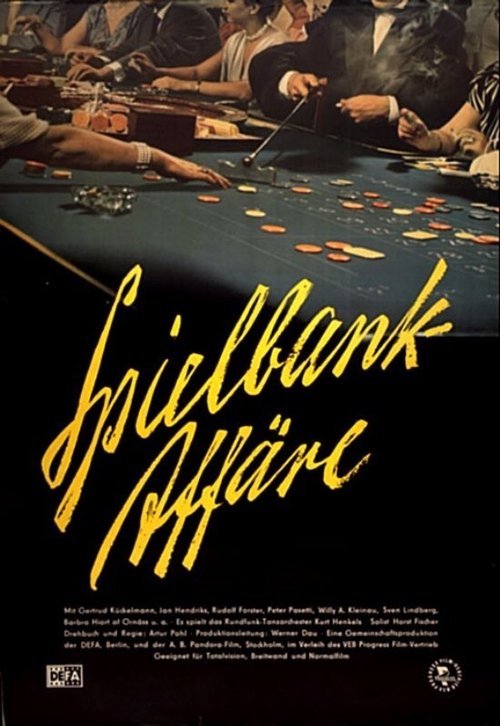
In a casino in a We'5t German health resort, one often sees Sybille - an attractive young student actress. With her winnings from the roulette table, she attempts to finance her studies. Despite a rather lucky streak, her winnings are a little on the lean side. She doesn't, however, gamble with her own money but with that of Dr. Busch, a lawyer, who likes to stay in the background with the argument that gambling houses are not the proper turf for a serious lawyer. From him, Sybille receives only a small share of her winnings later, and only through the intervention of Gerhard Fischer, a journalist, does Sybille come to realize her role in Dr. Busch's fraudulent scheme.
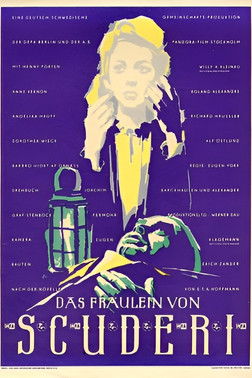
Several men have been murdered lately, mostly rich lovers on their way to meet their mistresses with gifts of fine jewelry. To fight this scourge, King Louis XIV decides to create a special court named "La chambre ardente", designed to find and punish the perpetrators of such heinous crimes. An unexpected person, Mademoiselle de Scudéry, the famous poetess, will find herself entangled in the web of a criminal intrigue linked with the jewel murders, along with a a goldsmith, his daughter and her fiancé...
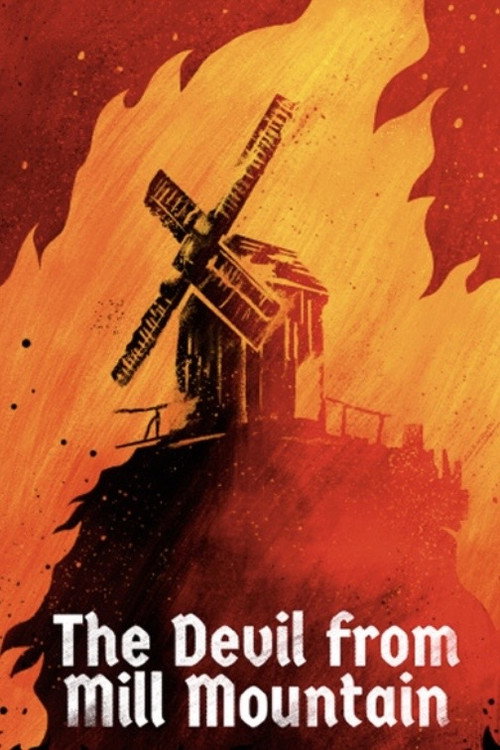
This film is set in a medieval mill town in the Harz mountains. The greedy and brutal millman and his accomplices, the castle steward and the mayor, set fire to a forest mill that the farmers used for processing their grain. Without their mill, the farmers must now rely on the millman's services. When the farmhand Anna uncovers the millman’s crimes, he swiftly detains her and a young miller, Jörg. The forest spirits have a different plan, however, and they free the young couple with the charge to rebuild the ruined forest mill and turn things around for the villagers.
A young shoemaker is arrested for stealing a small amount of money, and is jailed for fifteen years. Upon his release, he wants to get a permit to get a job and start anew, but finds that without a job he can't get a permit, and without a permit he can't get a job. Ensnared in the absurd net of Prussian bureaucracy, he can't see any way out. That is, until he enters a thrift shop and spots a Prussian officer's uniform that fits him like a second skin...
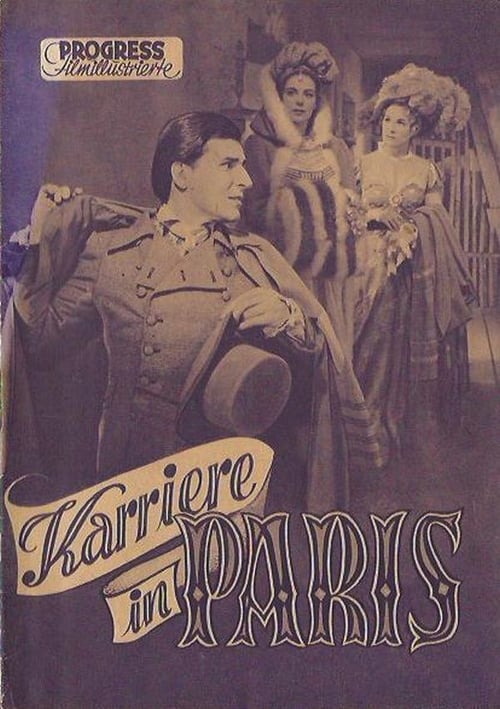
France at the time of the Restoration. The young country gentleman Rastignac comes to Paris to study. He takes up residence in a poor boarding house, where his father Goriot, who has been excluded by his daughters, also lives. The penniless Rastignac is anxious to gain a foothold in Parisian society. His cousin advises him to take the rich banker's wife Delphine, one of Goriot's daughters, as his mistress, which he does. At the same time, however, he falls in love with the laundress Yvette. He is unable to make up his mind when boarding house guest Vautrin suggests a third option: To marry Victorine, the disinherited daughter of a millionaire, and kill her brother in a duel in order to get his inheritance after all. Rastignac agrees. This is his downfall. Instead of high society, he ends up in the gutter.
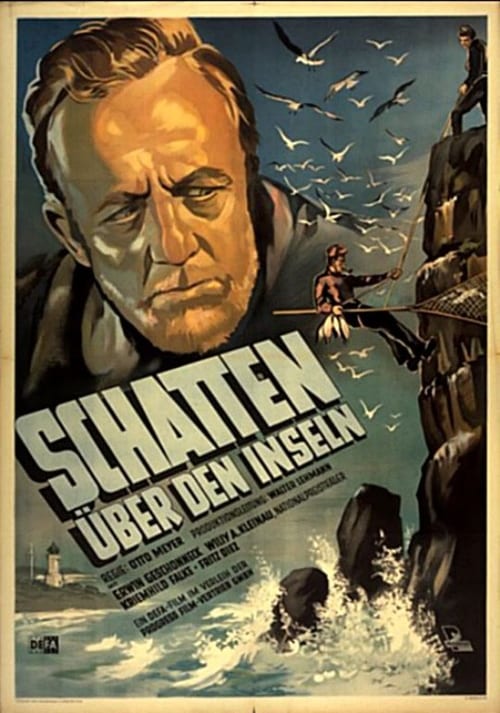
On the Faroe Islands, people eke out a meagre existence by catching birds. Merchant Brause pays them little and does a good business. This comes under threat when Dr. Sten Horn suspects that the dangerous annual plague, which kills dozens of inhabitants, is transmitted by birds. Brause forces the people to work anyway and conceals the telegram from the Copenhagen research institute that confirms Horn's suspicions. Horn, supported by his cousin Arne, enlightens the islanders and the greedy Brause can only flee.
The story of Johann Friedrich Böttger, an apothecary’s apprentice and alchemist’s assistant. Fleeing from the Prussian King, he goes to Saxony, where King Frederick August the Strong takes him to a fortress and demands that he create gold. Böttger is equipped with everything he would need for the task, but he has known for a while that actual gold production is a myth and instead experiments with porcelain—white porcelain, as the Chinese are said to possess. In 1709, he finally succeeds in surprising the King with the "white gold," the first white porcelain made in Europe, he hopes for freedom.
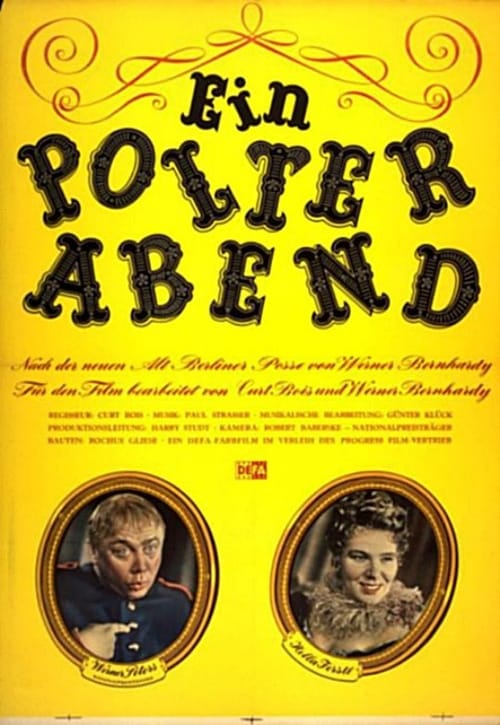
Berlin 1849: The democrat Adolf Glasbrenner, known as Brennglas, publishes the political satire magazine "Phosphor" on a shoestring budget. He plans to marry his lover, the actress Adele Peroni. But the plan comes to a standstill when Adele is to make a guest appearance at the reactionary Royal Prussian Playhouse. A democratic journalist marrying a court actress? Impossible! Together with his friend Pulecke, Brennglas tries to disrupt Adele's performance with a bachelor party...
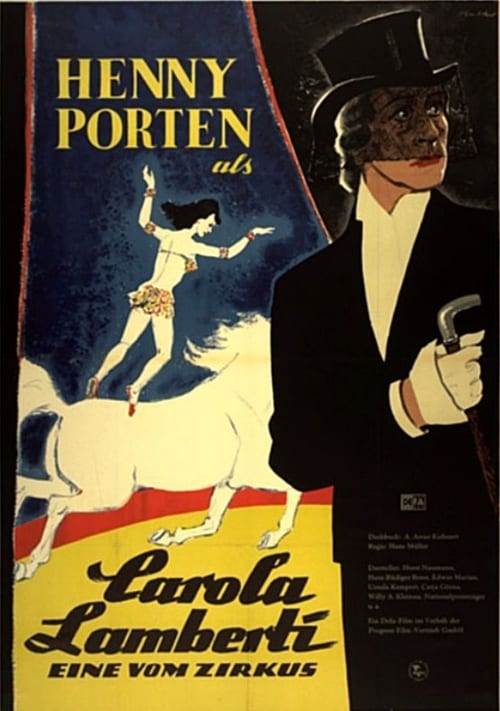
Carola has been running the family-owned circus alone since her husband’s death, but she suddenly finds herself at odds with her three adult sons who are also performance artists and want to have a say in how the business is run. The family discord leads Carola to turn her back on the circus, leaving the three inexperienced sons in charge. This turn of events forces the family to learn to work together or face bankruptcy.
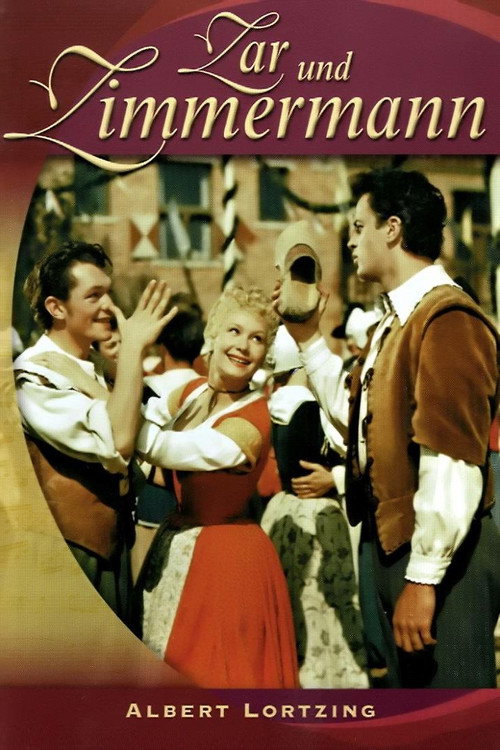
In the Dutch town of Saardam, Tsar Peter the Great has disguised himself in order to learn the art of ship-building. Another Russian named Peter also works at the wharf, causing a comical case of mistaken identities. Emissaries sent from France and England have difficulty locating the man they are looking for, and the lovely Marie is courted by both Peters. An adaptation of Albert Lortzing's eponymous comic opera (1837).
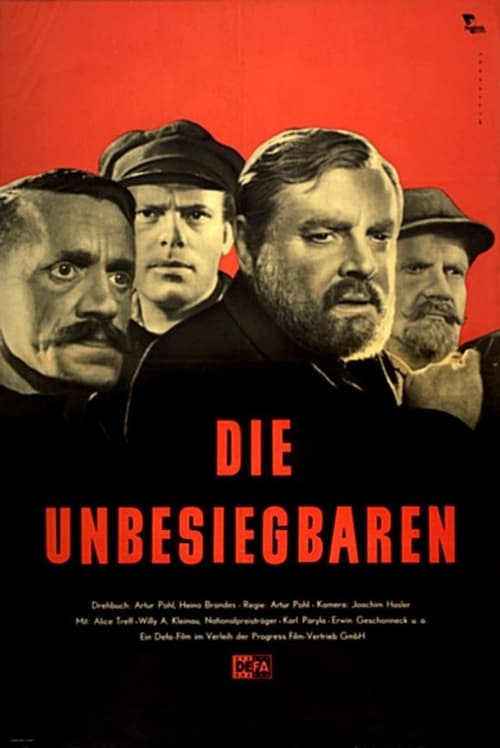
The film "Die Unbesiegbaren" covers an episode in German history, in which the Bismarck government tried to mitigate the rise of the social-democrat movement.
No description available.
Despised by her husband and son after an affair, Marianne moves in with her lover, an unsuccessful painter, until she is purified.
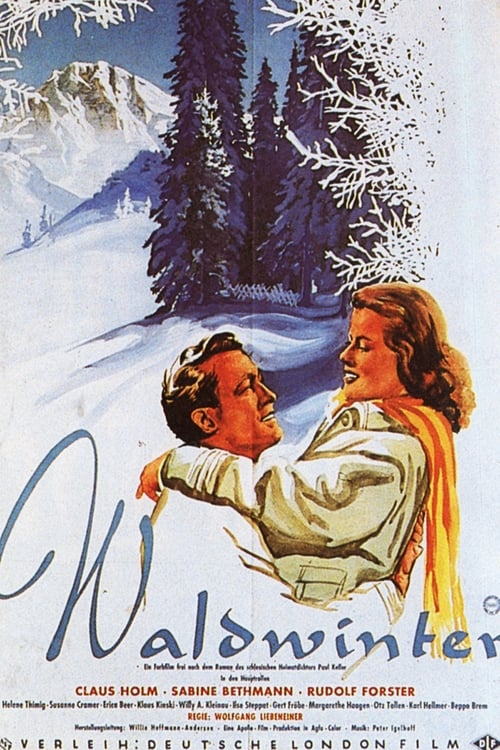
A noble family that fled Silesia during World War II sets out to build a new life in the Bavarian Forest, but their efforts are threatened by the heir’s worldly ambitions—until he comes to realize his true calling and finds his true love.
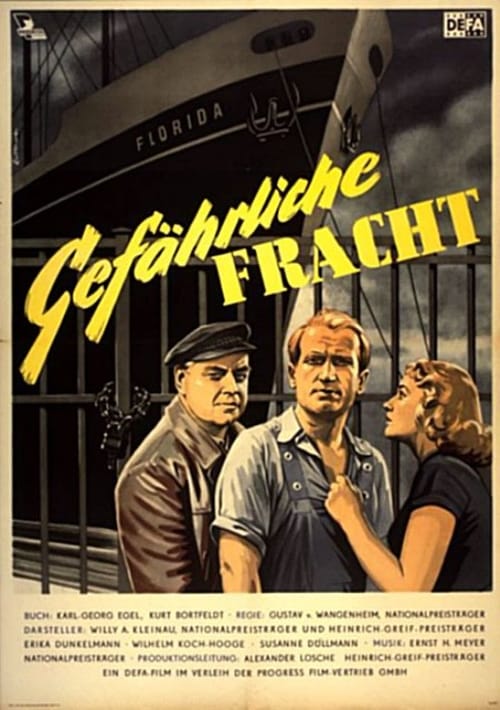
During the unloading of the freighter "Florida", West German dock workers discover napalm bombs instead of the specified precision machines - and a deceptive maneuver by the American occupying forces: the workers had already refused to unload the ship in France, where it was named "Chicago". It was refloated on the voyage to Germany. The German dockers also went on strike. Among them was Hein Jensen, who found it particularly difficult to take part. He had just found work again with difficulty. He needs the money because he wants to get married. His bride Helga has just given birth. When the Americans try to blackmail him into changing his colleagues' minds, he knows where his place is. The strike turns into a huge peace demonstration.
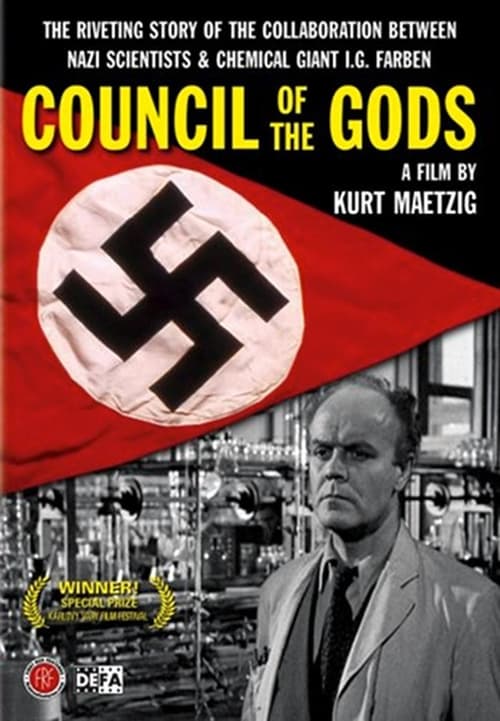
Based on the records of the Nuremberg trial of the chemical giant IG Farben; a story about the collaboration between international corporations and Nazi scientists, whose research contributed to the death of millions. The chemist Dr. Hans Scholz lives through a tortuous political transformation and maturation process. Eventually, he adopts political neutrality and closes his eyes to the fact that the poison being produced in his factory is being used in the extermination camps. Standing before the judges at the Nuremberg trials, he must face the fact that he is implicated in the deaths of millions in the gas chambers of the concentration camps.