Paola Ratti
Editing
Known For
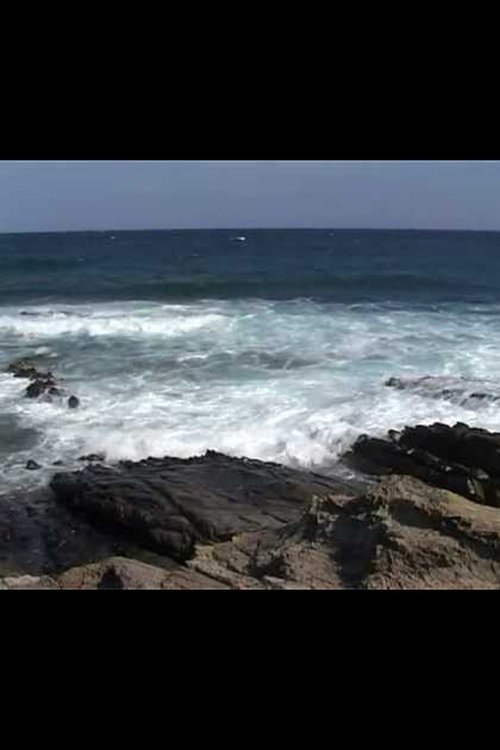
The wonder of being alive, here, now. The look at things. The sea, the rocks of Sardinia. The paradise of the fantastic spring flowering. The harshness of inhospitable rocks. The tangle of serpentine branches. The millennial olive tree that does not die. The traces of man. Footprints in the sand and abandoned remains of powerful factories. The dark history of mysterious nuraghi. A woman's old body, her cats and the blowfly. The fatigue and intelligence of beetles. The agony of the insect and the tenderness of fresh throbbing breasts. The days that pass in a terrible and fascinating wait.
ORA
A single wave pushes us towards a dimension of beauty and harmony.
Only Wave
A young employee in a large industry. Its identity breaks away from the harshness of a system determined by power and hypocrisy. It struggles in the quicksand of everyday banality, and even its private life crumbles under the steamroller with inexorable rules.
Distinti Saluti
Natural mountain environment, a free horse walks in the green, a cat, a rooster, in a cellar of an ancient farmhouse an old woman offers a cup of milk to a beautiful ceramist, the cry of an infant. Milk has always been life.
Il Latte è vita
The cut given to Mani, shot in the year 2000, is unusual: no voice over, a few superimposed words which supply the key for the interpretation. The Qohèlet of the Bible, time, the making, the daring, traces of self, vanity, giving, loving, ideas, fragility, words which make us understand that the jointer plane, the lathe, the carriage and all the objects of the Carpenter Museum talk to us about man, about his eternal questions, about his anxieties, his hopes.
Mani
A young university student desperately searching for meaning—in life, in society, in himself—striving to capture the secret messages radiating from a body, a gaze, a flower. Like Joyce's Bloom, he wanders through his city with wonder and irony; important things unfold in a few moments, followed by long hours spent on benches listening to himself.
L'isola
The old curator illustrates the itinerary of the museum in Castiglione delle Stiviere (Mantova). Amongst the grand buildings decorating the charming town of Castiglione delle Stiviere, there is a palace which recalls one of the most significant pages in the history of human solidarity and international human rights. It is the elghteenth-century palace Triulzi-Longhi, in which, in 1859 the International Museum of the Red Cross has been installed, to witness that one hundred years earlier, in Castiglione the idea of what today is the most important humanitarian organization in the worl found its origins thanks to the bright sensibility of a young businessman from Geneva, Henry Dunant.
Museo Croce Rossa
The storks occupy Salamanca, while Deborah explores the city with Alberto. Smiling together on the passage of time, nature and society. The wide-ranging, free, life as it comes, in the freshness and irony.
Il vecchio e la ragazza
The sweet and heartbreaking island in the Iseo Lake.
Montisola
Tréminis, Grenoble, France. Lucy emigrated with her husband Battista in 1952. Children of poverty in the postwar years. A small world, just two years of school, family, and church. Her four children are free and independent, but in the end, they are more alone and more fragile. Her eight grandchildren, French in every sense, have more money, free time, culture, and interests. They all find solace in Lucy, always. Lucy's garden is what Lucy has sown: her loves, fears, and sorrows.
Il giardino di Lucia
The river from the Garda Lake to the Po. The Burgo papermill, the power station, the mill, the town fete. The marsh reed gatherer, the old fisherwoman, who doing the washing down at the river, recalls her secret love affairs on the boat.
Monica del Mincio
Bortolo Belotti (1877-1944) Bergamascan historian author of “The History of Bergamo and of Bergamascans” a work conceived with an innovative scientific spirit. Illuminated liberal, he refuses to succumb to the new conformism imposed by the Fascist regime: “I believe in ideas, in the moral values of a life lived austerely working and repugnant of vulgarity, of all vulgarity…” He was a victim of forced residence and far from his “green valley of Zogno”, died in exile in Lugano.
Bortolo Belotti tra Storia e Lettere
On the architectonic changes Bergamo undergoes in the nineteenth century with a shift in its places of power from the antique Upper City to the modern Lower City.
Una città che cambia: Il volto di Bergamo nell'Ottocento
Cima goes back to dealing with mankind and nature… The twenty-three minute long video balances in the two times the Odolo people’s united, laborious humanity, home and breeding ground for survival instincts but also for love of work and things. (Alberto Pesce)
Il tempo del maglio
A “noble” story, an experienced “virile”, homage, without simulations, to the courage of being oneself, to the vitality, the human richness of people. Cima weaves a clear and refined narrative fabric… An appropriate and composite language, dry and sober, devoted to the non hagiographic observation of the people and of their life. The choice of the shot, the solutions of the editing respond to criteria of pursued effectiveness, which represent a vision of the concepts considered important by this people: the relationship between man and nature, the relationship between fellow men, concentrating their attention on their history and on their past. (Achille Frezzato)
La stanza delle rondini
Marengù is a portrait-film which stars an extraordinary entrepreneur as its main character. Tino Sana, left an orphan when he was still a child (his father emigrated to Germany and died on the job, his mother a worker in Switzerland) grew up at the school of the great educator don Bepo Vavassori. Fallen in love with wood, which he learnt to work in the Orphanage of don Bepo, he still defines himself marengù (carpenter) even if his business counts 130 workers and he furnishes the most prestigious hotels in Europe and the most luxurious transatlantic liners of the world.