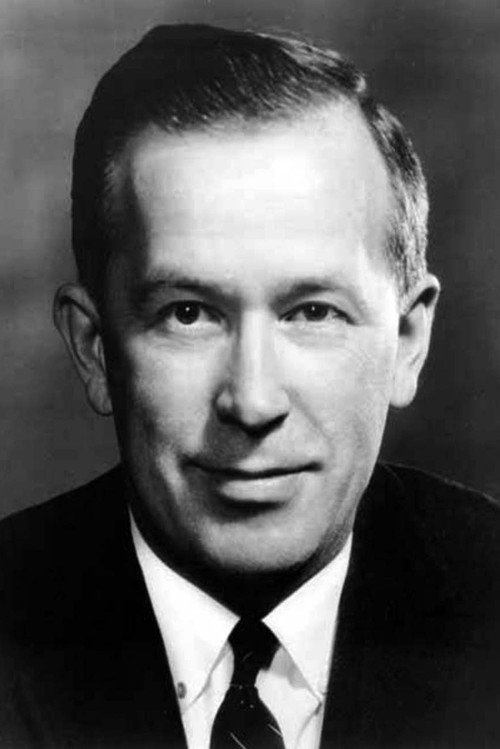
Scoop Jackson
Acting
Biography
Henry Martin "Scoop" Jackson (May 31, 1912 – September 1, 1983) was an American lawyer and politician who served as a U.S. representative (1941–1953) and U.S. senator (1953–1983) from the state of Washington. A Cold War liberal and anti-Communist member of the Democratic Party, Jackson supported higher military spending and a hard line against the Soviet Union, while also supporting social welfare programs, civil rights, and labor unions. Born in Everett, Washington, to Norwegian immigrants, Jackson practiced law in Everett, after graduating from the University of Washington School of Law. He won election to Congress in 1940, and joined the Senate in 1953 after defeating incumbent Republican Party senator Harry P. Cain. Jackson supported the civil rights movement of the 1960s, and authored the National Environmental Policy Act, which helped establish the principle of publicly analyzing environmental impacts. He co-sponsored the Jackson–Vanik amendment, which denied normal trade relations to non-capitalist countries with restrictive emigration policies. Jackson served as chairman of the United States Senate Committee on Energy and Natural Resources from 1963 to 1981. He was twice an unsuccessful candidate for the Democratic Party nomination, in both the 1972 and 1976 presidential elections. While still serving in the Senate, Jackson died in 1983.
Known For

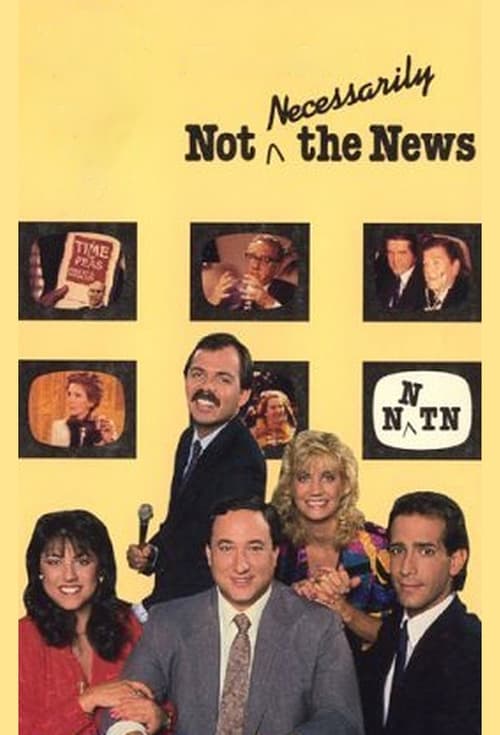
Not Necessarily the News is a satirical sketch comedy series that first aired on HBO in September 1982 as a comedy special, and then ran as a series from 1983 to 1990. It featured sketches, parody news items, commercial parodies, and humorous bits made from overdubbing or editing actual news footage. It was based on the British series, Not the Nine O'Clock News. Not Necessarily the News was also the birthplace of Rich Hall's sniglets.
Not Necessarily the News

Documenting the lives the most pivotal voices of the 20th century
In Their Own Words

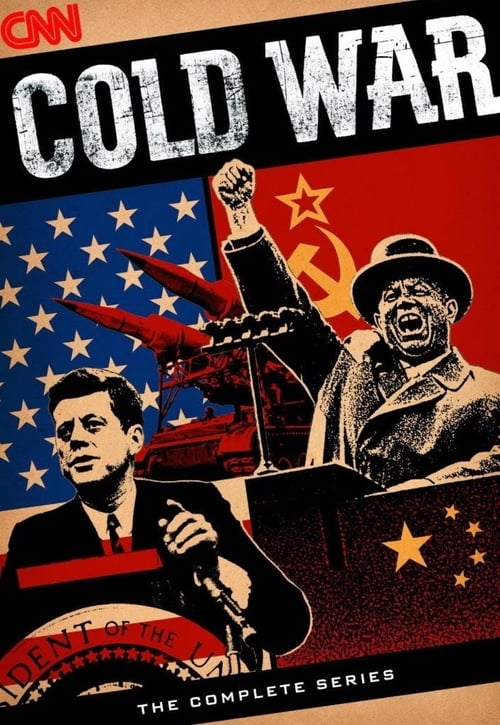
A 24-part series which deals with the relations between the United States, the Soviet Union and their respective allies between the end of World War II to the collapse of the Soviet Union in 1991.
Cold War

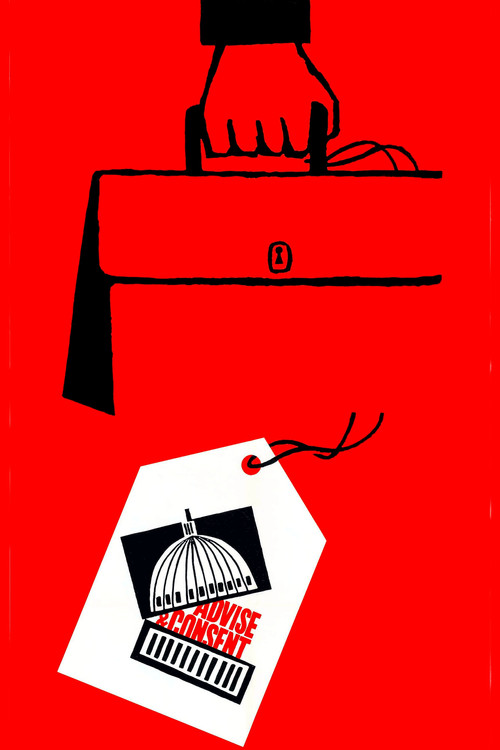
Proposed by the President of the United States to fill the post of Secretary of State, Robert Leffingwell appears before a Senate committee, chaired by the idealistic Senator Brig Anderson, which must decide whether he is the right person for the job.
Advise & Consent

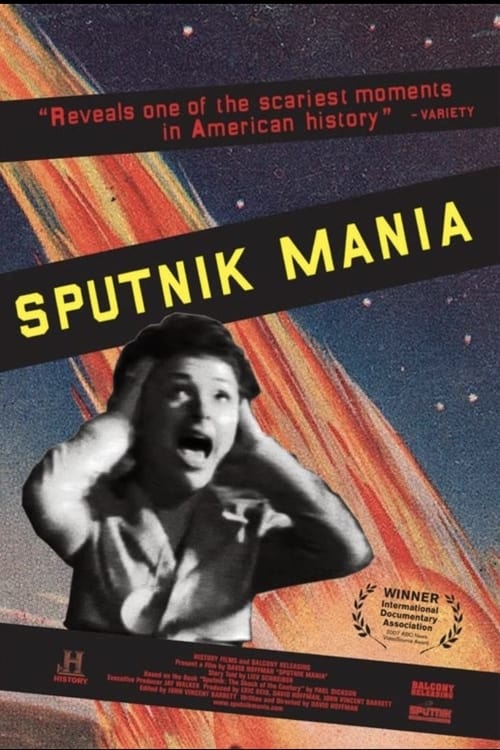
Fifty years ago, at the height of the Cold War, the USSR launched Sputnik, the first satellite to orbit the earth, bringing America to its knees in awe - then fear. Initially thrilling as a marvel of science, Sputnik was soon viewed by America a weapon of mass destruction.
Sputnik Mania

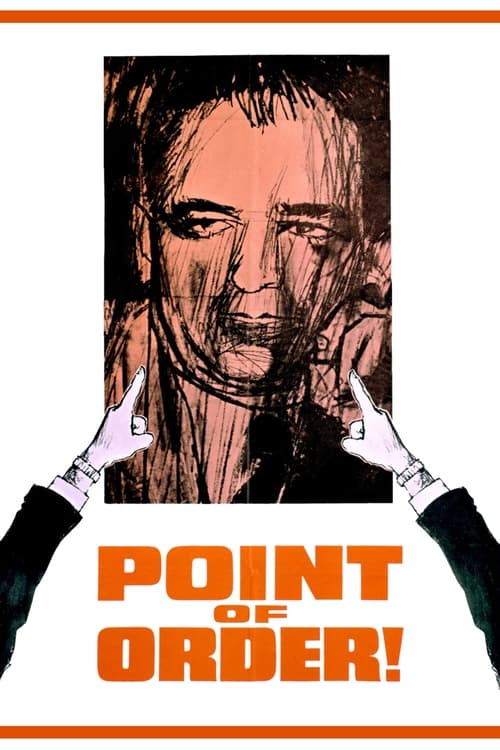
Point of Order is compiled from TV footage of the 1954 Army-McCarthy hearings, in which the Army accused Senator McCarthy of improperly pressuring the Army for special privileges for Private David Schine, formerly of McCarthy's investigative staff. McCarthy accused the Army of holding Schine hostage to keep him from searching for Communists in the Army. These hearings resulted in McCarthy's eventual censure for conduct unbecoming a senator.
Point of Order!

Examines the violence and civil disobedience leading up to the hallmark decision in U.S. v. Washington, with particular reference to the Nisqually Indians of Frank's Landing in Washington.