Ludo De Witte
Acting
Biography
Ludo De Witte (born 1956) is a Belgian sociologist and political activist renowned for his groundbreaking work on post-colonial Central African history and eco-socialism. He gained international recognition with his 1999 book De moord op Lumumba (The Assassination of Lumumba – the book is translated into English, French, German, Spanish, Portuguese and Arabic). In this work he exposes the Belgian government’s involvement in the murder of Patrice Lumumba, the first Prime Minister of the Democratic Republic of Congo. His research led to a parliamentary inquiry in Belgium, marking a significant moment in the country’s reckoning with its colonial past.
Known For
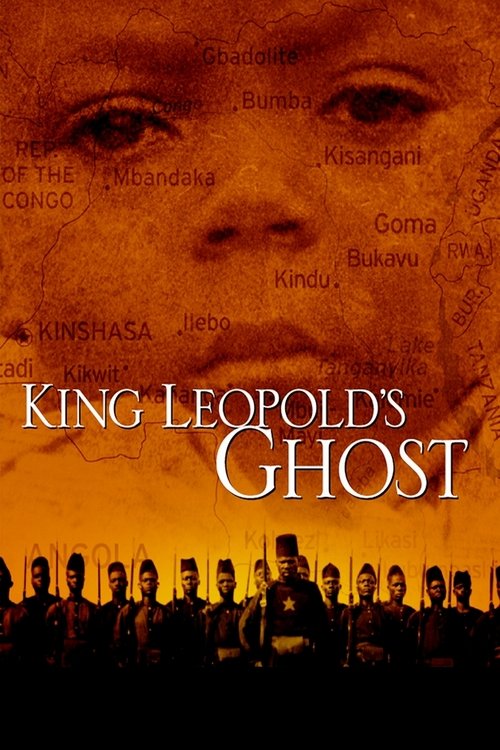
The modern history of the Congo, the heart of Africa, is a terrifying tale of appalling brutality: how the greedy and incredibly ruthless King Leopold II of Belgium (1935-1909) turned a vast country into his private estate (1885-1908) and how he plundered the land and raped the bodies and souls of its defenceless inhabitants, causing countless victims; and what exactly is the true impact of this often forgotten story of crime and horror today.
King Leopold's Ghost

61 years after his assassination, Patrice Lumumba returns to his country. "Congo returns to Congo" as one of his children said. Lumumba was a nationalist leader who intended to use his country's enormous wealth for the benefit of his people. He became the first Prime Minister in the history of Congo on June 30, 1960, when the country gained its independence after 80 years of Belgian colonial rule. Seven months later, he was assassinated in Katanga province with two of his best political allies: Joseph Okito and Maurice Mpolo. Their bodies were dissolved in sulfuric acid and only one of Patrice Lumumba's teeth remained. This "relic" was taken from Lumumba's corpse and kept in secret by a police commissioner until his death in 2000. The assassination of the nationalist and anti-colonialist leader was followed by the advent of the dictator Mobutu, who was able to remain in place until 1997, thanks to Western support.