Gracie Fields
Acting
Biography
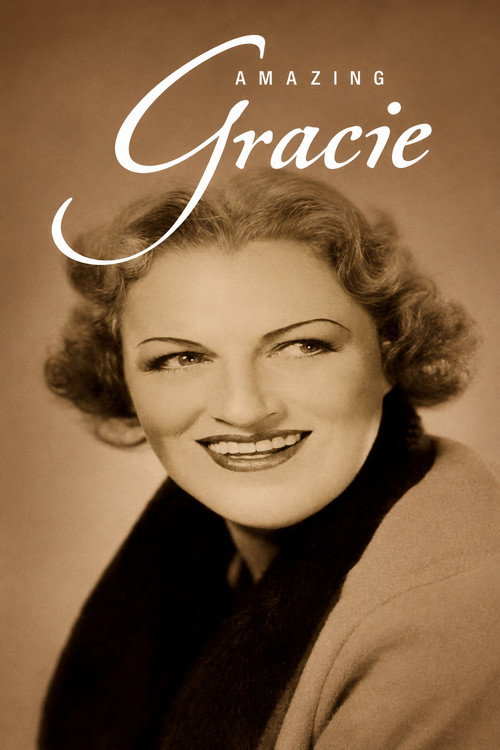
Gracie Fields (born Grace Stansfield) was an English actress, singer and comedian and appeared in music hall, film and television.
Known For

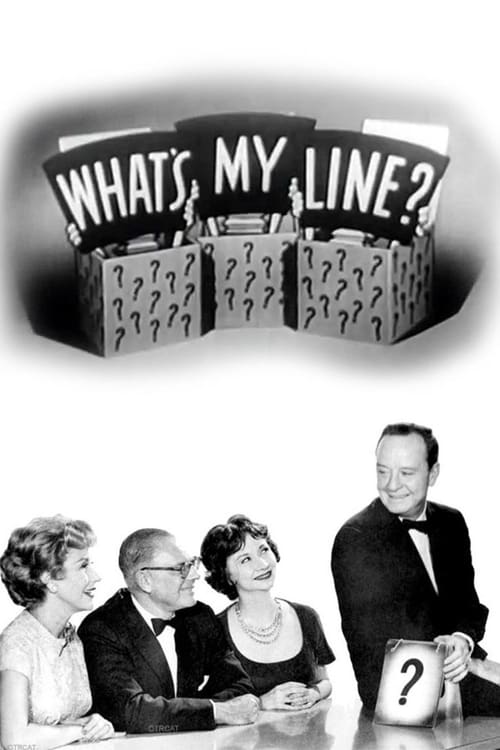
Four panelists must determine guests' occupations - and, in the case of famous guests, while blindfolded, their identity - by asking only "yes" or "no" questions.
What's My Line?

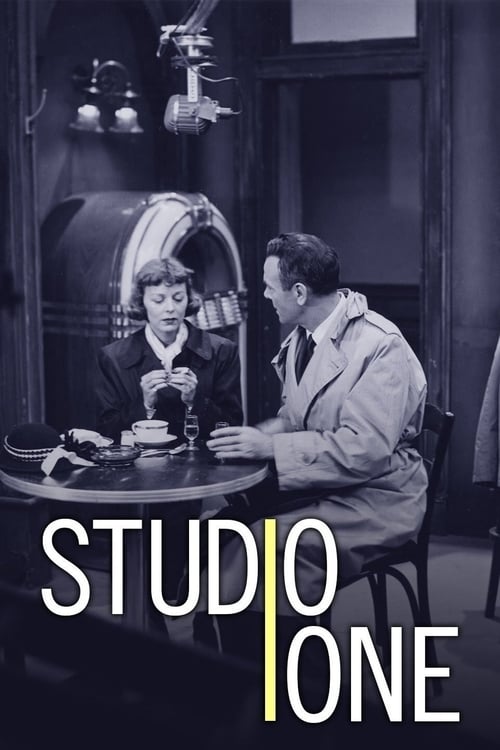
An American radio–television anthology series, created in 1947 by Canadian director Fletcher Markle, who came to CBS from the CBC. Studio One, presented by Westinghouse, was one of the first of the anthology TV programs. The episodes were often abridged remakes of movies from years gone by and many future well-known television and movie actors appeared in the productions.
Studio One

The Ed Sullivan Show is an American TV variety show that originally ran on CBS from Sunday June 20, 1948 to Sunday June 6, 1971, and was hosted by New York entertainment columnist Ed Sullivan. It was replaced in September 1971 by the CBS Sunday Night Movie, which ran only one season and was eventually replaced by other shows. In 2002, The Ed Sullivan Show was ranked #15 on TV Guide's 50 Greatest TV Shows of All Time.
The Ed Sullivan Show

“The Bell Telephone Hour” was a musical variety show that aired on “NBC” TV from 12 January 1959 to 14 June 1968 that showcased the best in Broadway, Classical, Concert, Jazz and Popular music each week. The series had its’ own house band appropriately named the “Bell Telephone Orchestra”. The show also had its’ own theme song being the “Bell Waltz” composed by “Donald Voorhees” who was also the show's Orchestra conductor. Some of the greatest violinists of the 1960’s performed on this show that aired in the old “Black & White” format. Some of these great violinists included “Erica Mornin”, “Isaac Stern", "Michael Rabin", "Ruggiero Ricci", "Yehudi Menuhin" and "Zino Francesacatti". From time to time some of the great singers and bandleaders of the 1960’s would perform on the show as well. Some of these were “Bing Crosby”, “Gordon MacRae”, “John Gary”, “Leslie Uggams”, “Mary Martin”, “Nelson Eddy”, “Patti Page” and “Roy Rogers”. The TV show followed on the heels of its’ predecessor with the same name on “NBC” radio that aired from 29 April 1940 to 1958 on Monday nights at 8 PM. The name of the show was derived from its’ Major sponsor “Bell Telephone Laboratories”. The TV version began airing on Friday nights at 8:30 PM once a month. It later was given it’s same time slot now airing every other week alternating with another show on the other weeks such as News shows and specials. The show time slot changed quite often over the years. In September 1960 it aired at 9 PM and in September 1961 it moved to 9:30 PM. In October 1963 it moved to Tuesday nights at 10 PM, September 1965 it moved to Sunday night at 6:30 PM and in September 1967 it made its' final move back to Friday night at 10 PM.
The Bell Telephone Hour

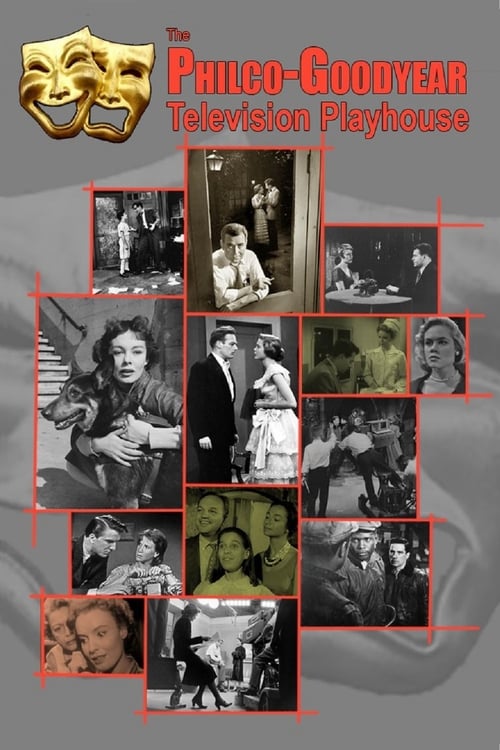
The Goodyear Television Playhouse is an American anthology series that was telecast live on NBC from 1951 to 1957 during the "Golden Age of Television". Sponsored by Goodyear, Goodyear alternated sponsorship with Philco, and the Philco Television Playhouse was seen on alternate weeks. In 1955, the title was shortened to The Goodyear Playhouse and it aired on alternate weeks with The Alcoa Hour. The three series were essentially the same, with the only real difference being the name of the sponsor. Producer Fred Coe nurtured and encouraged a group of young, mostly unknown writers that included Robert Alan Aurthur, George Baxt, Paddy Chayefsky, Horton Foote, Howard Richardson, Tad Mosel and Gore Vidal. Notable productions included Chayefsky's Marty starring Rod Steiger, Chayefsky's The Bachelor Party, Vidal's Visit to a Small Planet, Richardson's Ark of Safety and Foote's The Trip to Bountiful. From 1957 to 1960, it became a taped, half-hour series titled Goodyear Theater, seen on Mondays at 9:30pm.
Goodyear Television Playhouse

DuPont Show of the Month is an acclaimed 90-minute television anthology series that aired monthly on CBS from 1957 to 1961. The DuPont Company also sponsored a weekly half-hour anthology drama series hosted by June Allyson, The DuPont Show with June Allyson. During the Golden Age of Television, DuPont Show of the Month was one of numerous anthology series telecast between 1949 and 1962. Superficially, it resembled Playhouse 90 and other anthologies, but DuPont Show of the Month focused less on contemporary dramas and more on adaptations of literary classics, including Oliver Twist, The Prince and the Pauper, Billy Budd, The Prisoner of Zenda, A Tale of Two Cities and The Count of Monte Cristo.
DuPont Show of the Month

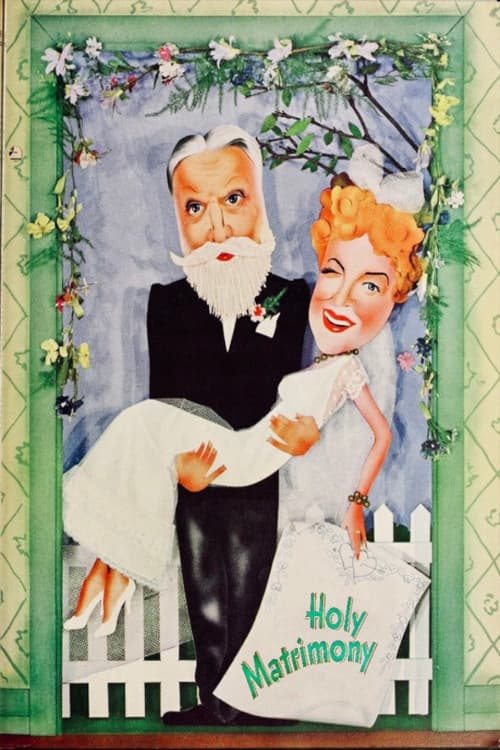
An artist returning from years abroad takes the identity of his dead valet and gets married, but then there are complications.
Holy Matrimony

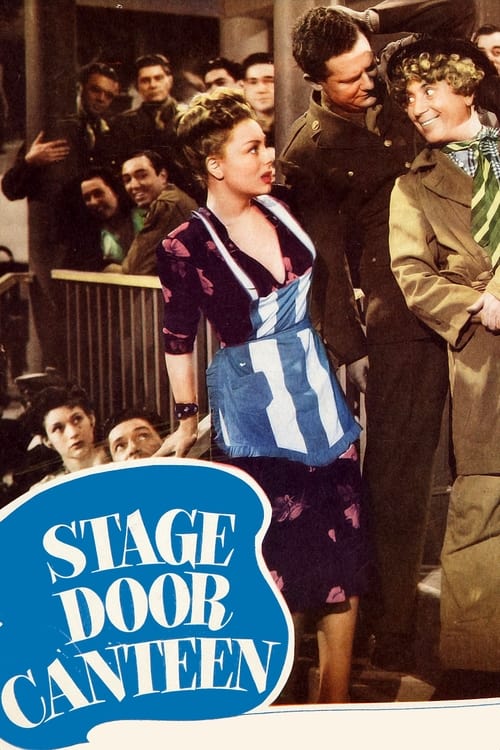
A young soldier on a pass in New York City visits the famed Stage Door Canteen, where famous stars of theatre and film appear and host a recreational center for servicemen during the war. The soldier meets a pretty young hostess and they enjoy the many entertainers and a growing romance.
Stage Door Canteen

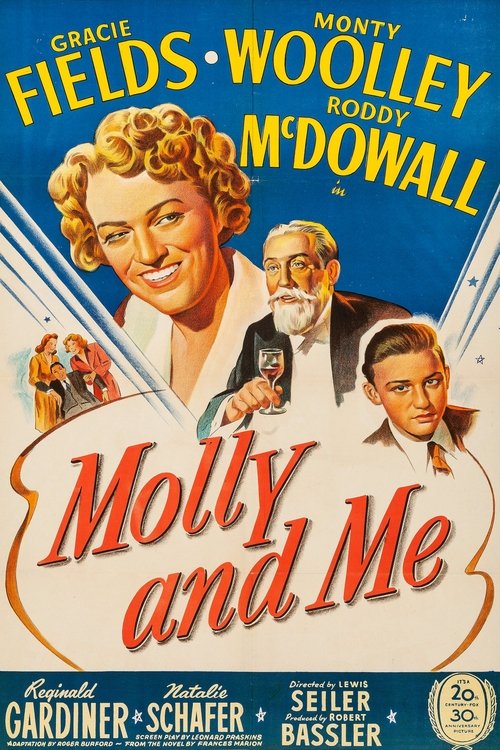
A vivacious actress needing work becomes a housekeeper for a crusty retired politician, and gives his life the shaking-up that it needs.
Molly and Me

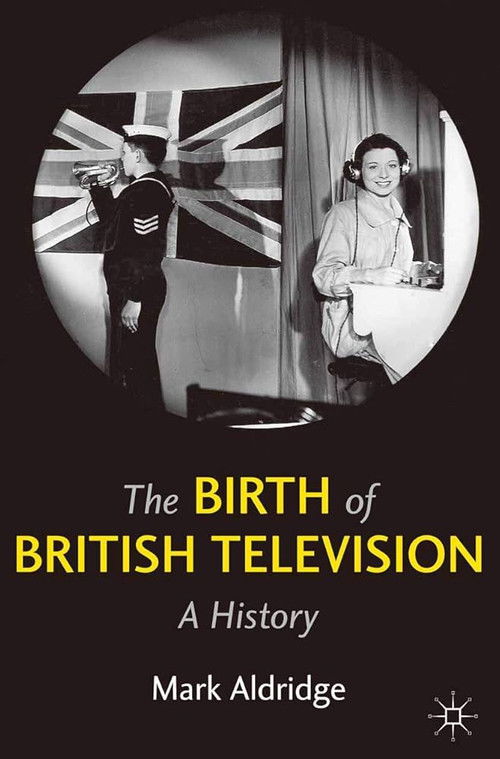
In this feature-length documentary from 1976, Leslie Mitchell and special guests recall the birth of BBC Television forty years before.
The Birth of Television

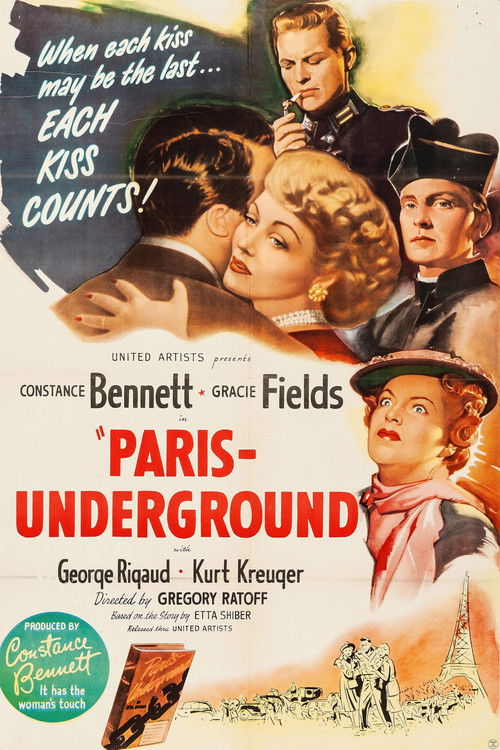
Constance Bennett both produced and starred in the espionager Paris Underground. Bennett and Gracie Fields play, respectively, an American and an English citizen trapped in Paris when the Nazis invade. The women team up to help Allied aviators escape from the occupied city into Free French territory. The screenplay was based on the true wartime activities of Etta Shiber, who engineered the escape of nearly 300 Allied pilots. British fans of comedienne Gracie Fields were put off by the scenes in which she is tortured by the Gestapo, while Constance Bennett's following had been rapidly dwindling since the 1930s; as a result, the heartfelt but tiresome Paris Underground failed to make a dent at the box-office. It would be Constance Bennett's last starring film--and Gracie Fields' last film, period.
Paris Underground

A perpetual dreamer talks his wife into moving with him from their home in Australia to South Africa, where he hopes to discover gold and finally become wealthy.
We're Going to Be Rich

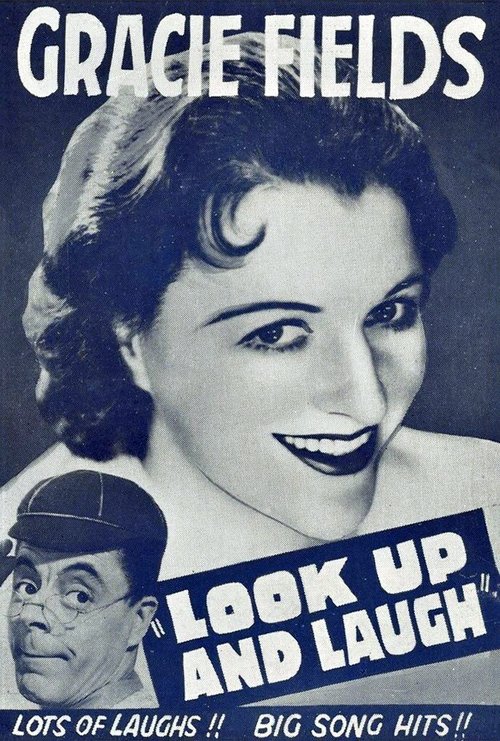
Gutsy lass Gracie rallies fellow stall-holders at Birkenhead Market to prevent its takeover and demolition by a department store chain. She invokes the Market's foundation by Royal Charter just before an inadvertent gas leak provides an explosive climax.
Look Up and Laugh

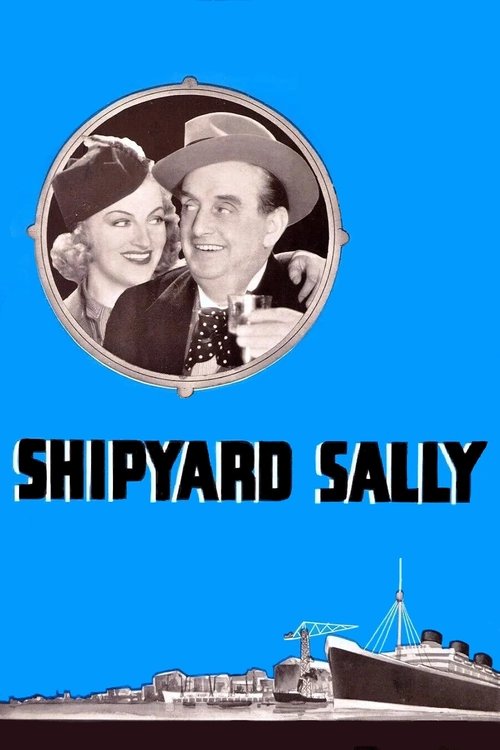
A lancashire singer buys a pub in Clydebank and hits money troubles when the shipbyards are closed. She takes a petition to London to try to get them reopened.
Shipyard Sally

A woman prevents a popular stage performer getting arrested for drunk driving, though has to pretend to be a rich benefactor when she next meets him.
Queen of Hearts

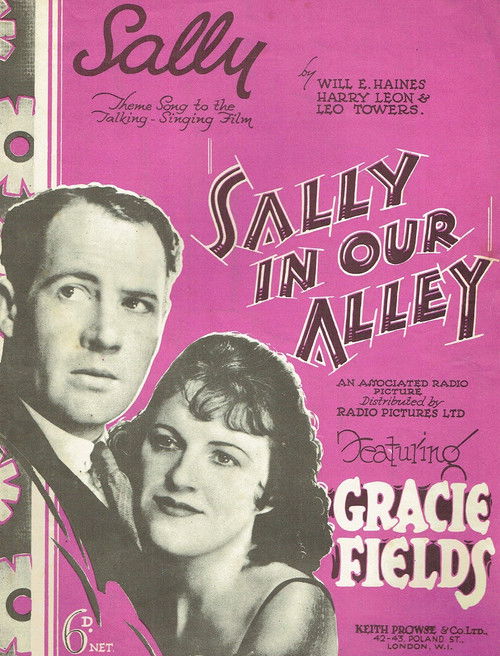
A woman believes her boyfriend died in the First World War, but he is now looking for her
Sally in Our Alley

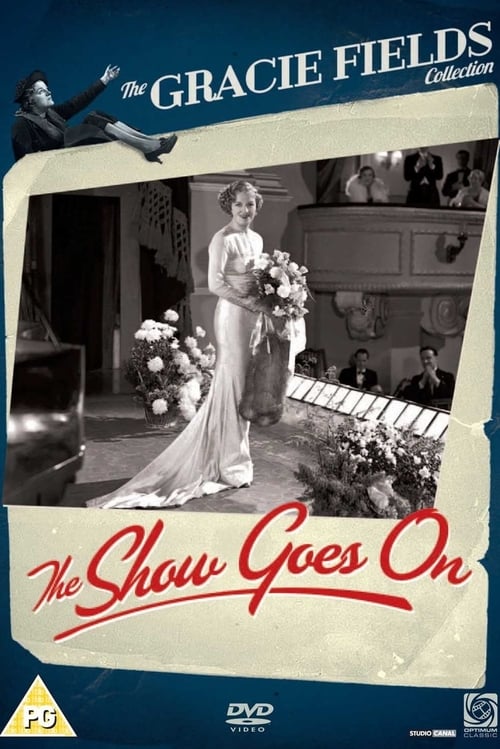
A mill worker with show biz dreams catches a big break when she's discovered by an ailing composer who's seeking the right singer for his songs.
The Show Goes On

Gracie plays a London publican's daughter named after Nell Gwynn, who much like the original, becomes romantically involved with a King(John Loder).
Love, Life and Laughter

Gracie Fields' second film Looking on the Bright Side was a smash hit film of 1932. It contains a lot of her biggest hit songs of the period.
Looking on the Bright Side

Grace Milroy loses her job working at a factory. However, through a strange set of circumstances, she is taken on as housekeeper at the nearby Swinford Castle the home of the eccentric Duchess of Swinford.