FEEL IT.STREAM
Alan Gibson

Alan Gibson

Directing

Biography

From Wikipedia, the free encyclopedia Alan Gibson (April 28, 1938, London, Ontario, Canada - July 5, 1987, London, UK) was a Canadian director active in British film and television. Particularly notable for his work in horror, cinematic films directed by him include the 1968 Journey to Midnight, the 1970 Crescendo, the 1974 The Satanic Rites of Dracula, the 1977 Checkered Flag or Crash and the 1982 Witness for the Prosecution, along with the 1974 television play Churchill and the Generals. Description above from the Wikipedia article Alan Gibson, licensed under CC-BY-SA, full list of contributors on Wikipedia.
Known For

Crown Court
5.7

Crown Court is an afternoon television courtroom drama produced by Granada Television for the ITV network that ran from 1972, when the Crown Court system replaced Assize courts and Quarter sessions in the legal system of England and Wales, to 1984.

Crown Court

1972
The Wednesday Play
5.2

An anthology series of television plays which aired on BBC1 from October 1964 to May 1970. The plays were usually written for television, although adaptations from other sources also featured.

The Wednesday Play

1964
Tales of the Unexpected
6.8

A British television anthology of stories, often with sinister and wryly comedic undertones, and a twist at the end. With early episodes written and presented by Roald Dahl, the series featured a plethora of big name guest stars.

Tales of the Unexpected

1979
BBC Play of the Month
5.3

A BBC television anthology series featuring productions of classic and contemporary stage plays usually broadcast on BBC1. Each production featured a different work, often using prominent British stage actors in the leading roles. The series was transmitted from October 1965 to September 1983.

BBC Play of the Month

1965
Theatre 625
7.2

Theatre 625 is a British television drama anthology series, produced by the BBC and transmitted on BBC2 from 1964 to 1968. It was one of the first regular programmes in the line-up of the channel, and the title referred to its production and transmission being in the higher-definition 625-line format, which only BBC2 used at the time.

Theatre 625

1964
Thriller
6.9

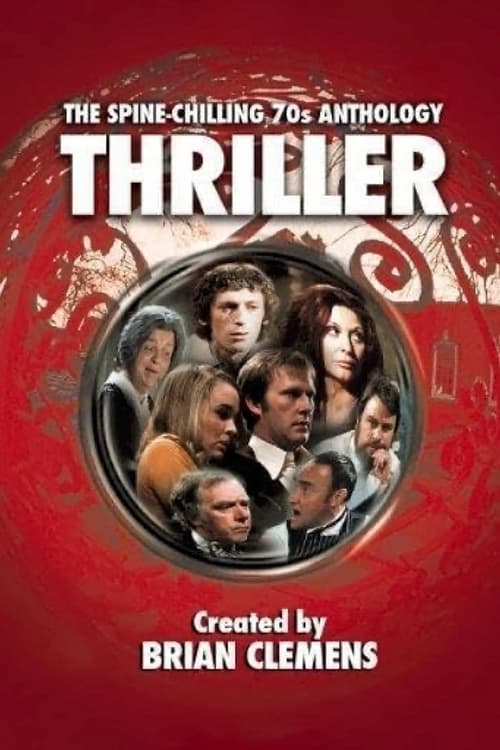
Thriller is a British television series, originally broadcast in the UK from 1973 to 1976. It is an anthology series: each episode has a self-contained story and its own cast. As the title suggests, each story is a thriller of some variety, from tales of the supernatural to down-to-earth whodunits.

Thriller

1973
ITV Saturday Night Theatre
7.0

Anthology series of dramatic works.

ITV Saturday Night Theatre

1969
Churchill's People
5.0

Churchill's People is a British anthology series based on A History of the English-Speaking Peoples, Winston Churchill's four-volume history of Britain and its former colonies. 26 episodes were produced by the BBC and initially broadcast from 30 December 1974 to 23 June 1975.

Churchill's People

1974
Budgie
7.2

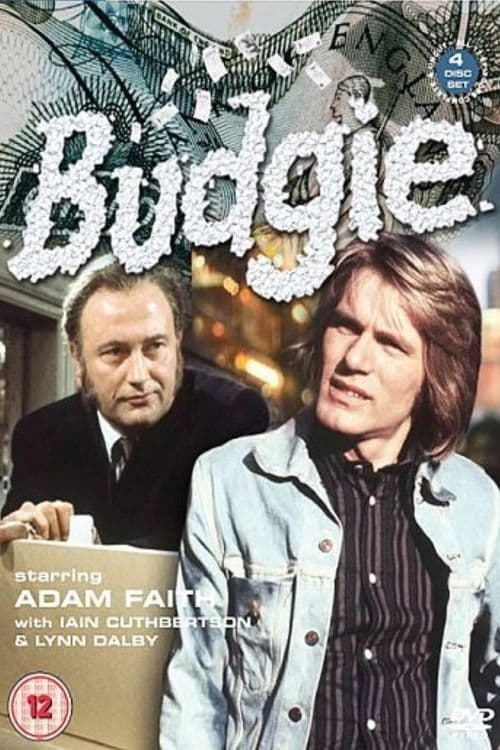
Budgie is a popular British television series starring former popstar Adam Faith which was produced by ITV company London Weekend Television and broadcast on the ITV network between 1971 and 1972. The series was created by Keith Waterhouse and Willis Hall . The show was produced by Verity Lambert, Rex Firkin was the Executive producer.

Budgie

1971
Journey to the Unknown
7.0

A British television anthology series with a fantasy, science fiction and supernatural theme, similar to the American television series The Twilight Zone, and deals with normal people whose everyday situations somehow become extraordinary.

Journey to the Unknown

1968
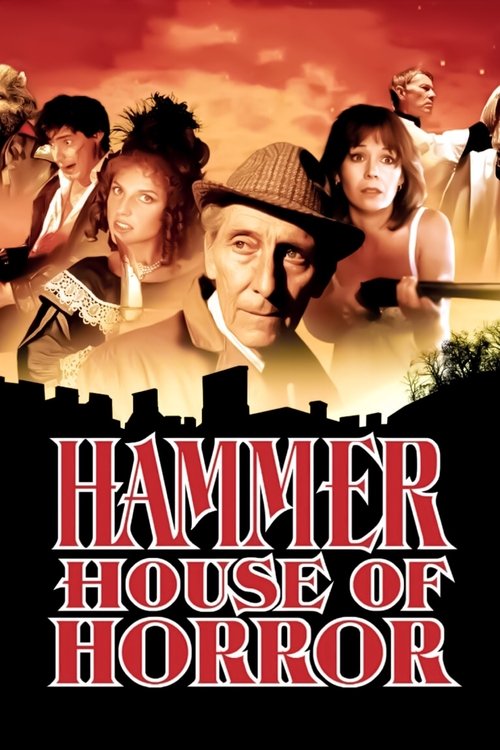
Hammer House of Horror
7.1

Each self-contained episode features a different kind of horror, varying from witches, werewolves, ghosts, devil worship and voodoo, but also includes non-supernatural themes such as cannibalism, confinement and serial killers.

Hammer House of Horror

1980
The Adventures of Black Beauty
6.2

The Adventures of Black Beauty is a British family adventure series broadcast on ITV1. Produced by London Weekend Television, the 52-episode series was inspired by Anna Sewell's novel but featured new characters, including Dr James Gordon and his children, who, in 19th century rural England, take in the horse Black Beauty.

The Adventures of Black Beauty

1972
Orson Welles' Great Mysteries
6.8

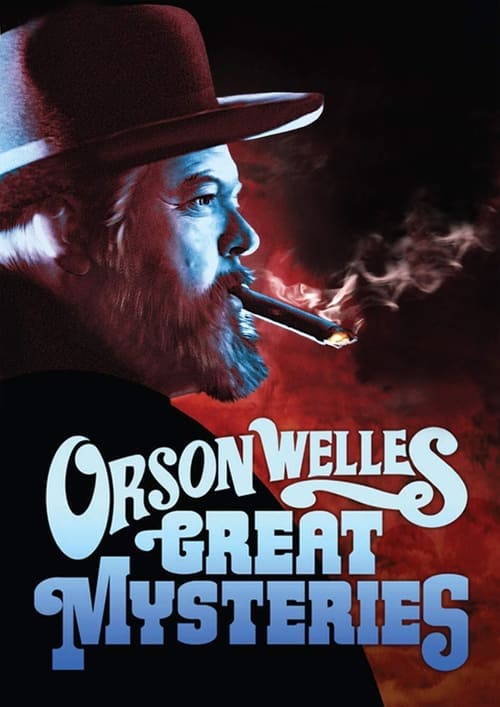
Orson Welles’ Great Mysteries is a British television anthology series produced by Anglia Television for the ITV network and broadcast between 1973 and 1974. The series presents standalone adaptations of classic mystery, crime, and supernatural stories drawn from literary sources including Dickens, Conan Doyle, Wilkie Collins, Balzac, Maugham, O. Henry, and others. Each episode is framed by original introductory and closing sequences performed by Orson Welles, who serves as the series’ host and sole recurring on-screen presence. These segments, written and directed by Welles (uncredited), function as stylized narrative framing devices rather than dramatic participation in the stories themselves. The dramatic content of each episode is performed by separate casts and directors, with no continuing characters or serialized narrative, establishing the series as a unified television anthology rather than a collection of standalone films.

Orson Welles' Great Mysteries

1973
No image
8.0

Story Parade specialized in adaptations of modern novels. It was broadcast on June 5, 1964 and repeated on August 28, 1964. The teleplay was by Terry Nation (who invented "Blake's 7" and the Daleks in Dr. Who), and Elijah Baley was played by the late Peter Cushing. It also starred John Carson John Carson as R. Daneel Olivaw and Kenneth J. Warren. The master tapes of the program were erased, however a few clips from the production have turned up in various documentaries about Isaac Asimov's work.

Story Parade

1964
Raffles
8.3

Raffles was a 1977 television adaptation of the A. J. Raffles stories by Ernest William Hornung. The series was produced by Yorkshire Television and written by Philip Mackie. The episodes were largely faithful adaptations of the stories in the books, though occasionally two stories would be merged to create one. In Victorian-era London, gentleman thief A. J. Raffles, a renowned cricketer, and his friend, the eager but naive Bunny Manders, test their skills in relieving the wealthy of their valuables whilst avoiding detection, especially from the persistent Inspector Mackenzie.

Raffles

1977
Witness for the Prosecution
6.5

An ailing barrister is thrust back into the courtroom in what becomes one of the most unusual and eventful murder cases of the lawyer's career when he finds himself defending a man being tried for the murder of a socialite.

Witness for the Prosecution

1982
The Satanic Rites of Dracula
5.6

The police and British security forces call in Professor Van Helsing to help them investigate Satanic ritual which has been occurring in a large country house, and which has been attended by a government minister, an eminent scientist and secret service chief. The owner of the house is a mysterious property tycoon who is found to be behind a sinister plot involving a deadly plague. It is in fact Dracula who, sick of his interminable existence, has decided that he must end it all in the only possible way- by destroying every last potential victim.

The Satanic Rites of Dracula

1973
Dracula A.D. 1972
5.9

Set in London in the early 1970's, supposedly for teen thrills, Johnny organises a black magic ceremony in a desolate churchyard. The culmination of the ritual, however, is the rejuvenation of Dracula from shrivelled remains. Johnny, Dracula' s disciple, lures victims to the deserted graveyard for his master's pleasure and one of the victims delivered is Jessica Van Helsing. Descended from the Van Helsing line of vampire hunters her grandfather, equipped with all the devices to snare and destroy the Count, confronts his arch enemy in the age-old battle between good and evil.

Dracula A.D. 1972

1972
A Woman Called Golda
7.7

The story of the Russian-born, Wisconsin-raised woman who rose to become Israel's prime minister in the late 1960s and early 1970s.

A Woman Called Golda

1982
The Charmer
4.0

The Charmer was a 1987 British television serial set in the 1930s, and starring Nigel Havers as Ralph Ernest Gorse, a seducing conman and murderer, Rosemary Leach as Joan Plumleigh-Bruce, the smitten victim widow and Bernard Hepton as Donald Stimpson, Plumleigh-Bruce's would-be beau, who vengefully pursues Gorse after he has conned her. It was made by London Weekend Television for ITV, and based on the 1953 novel Mr. Stimpson and Mr. Gorse by Patrick Hamilton, the second work in the Gorse Trilogy. The series was repeated in February and March 1990. ITV3 also repeated the series in full at 01:45am from 5 September 2009. Narrative repeats were on Mondays from 7 September 2009 at 10:05am.

The Charmer

1987