Acting
No description available.
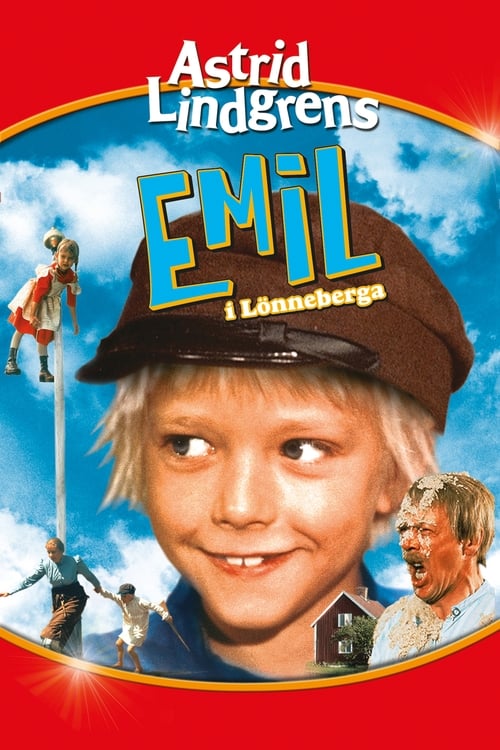
Emil i Lönneberga is a Swedish television adaptation of Astrid Lindgren's Emil i Lönneberga books
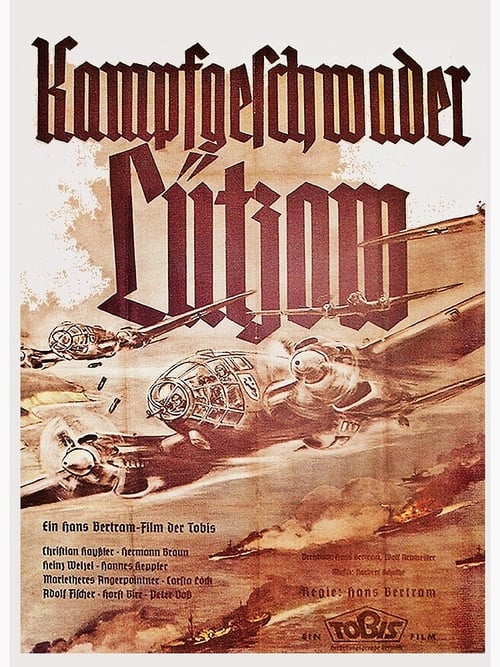
Propaganda film telling the story of a German bomber crew taking part in the invasion of Poland and attacks on British shipping.
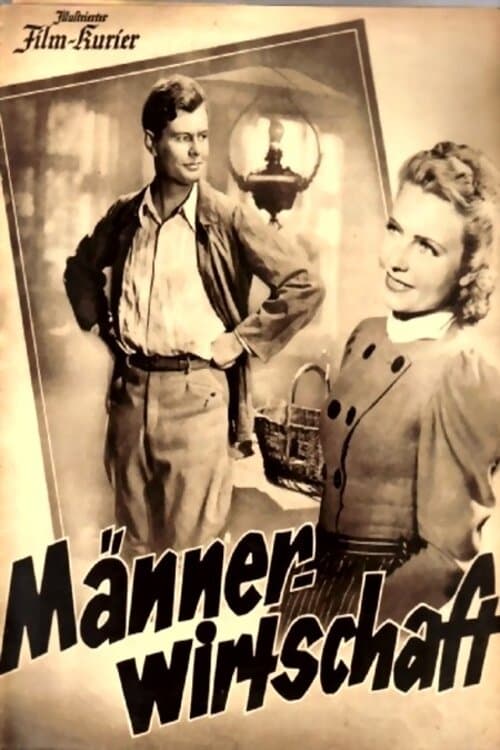
The young farmer Hinnerk has managed to make something of his estate thanks to the help of his servant Hannes; only his household budget is a mess. One day, Hinnerk notices a pretty young girl at the rail station and immediately recognizes that it’s his childhood friend, Ilske Roehling. But when he makes a play for her, she tells him to take a long walk off a very short pier. At a dance party at the Bakenhus Inn, he sees her again and manages to get into a fight with the innkeeper. Worse still, he kidnaps Ilske in his car; takes her to his farm; and tries to force her to consent to marriage.
Emil Svensson lives with his mother and father, little sister Ida, farmhand Alfred, and maid Lina on a picturesque farm in Småland. He is an unusually lively little boy, who just can't resist trying out every whim that enters into his white-haired head. Always with the best intentions in mind, because he is a good-hearted child, but often with catastrophic results, especially for his short-tempered father. As a result, Emil spends a lot of quality time in the wood shed carving wood figurines and waiting for Anton's temper to cool down. And the father's patience is certainly tried, as Emil gets his head stuck in the family's only soup bowl, hoists little Ida up the flag pole, and arranges a lavish Christmas party for the poor.
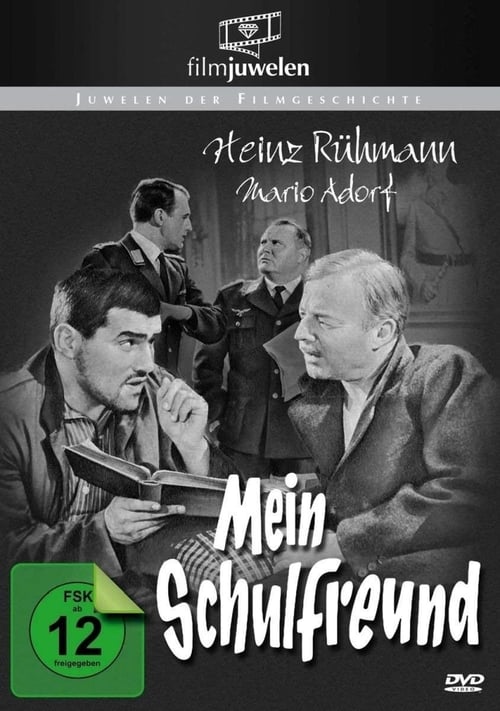
In the midst of World War II, postman Ludwig Fuchs writes a letter to his former school friend Field Marshal Hermann Göring, urging him to work for peace. He is declared mentally incompetent. After the war, he struggles to shake off the stigma of alleged mental illness. Göring is executed. Fuchs forces the court to examine him: he vandalizes the lobby of Post Office 122 in Munich and is rehabilitated (with full salary compensation for lost years).
Viktor Werneberg is a widowed swimming instructor with three children, who meets the sophisticated Irene Müller advice column in a newspaper. Although the two strike up a bond he is concerned that his chaotic household, including a lazy uncle Paul and an domineering housekeeper Grete, will put Irene off.
Emil's reputation for being a troublemaker makes the Svensson family's neighbours take up a collection for sending the boy off to America. But even if he among other unfortunate mishaps causes his father to get stuck in the outhouse window and get bitten by crawfish, all is forgotten when he skillfully wins the family a free horse. And when Alfred the farmhand gets seriously ill, Emil puts his own life on the line, venturing into a snow storm to get his best friend to a doctor before it is too late.
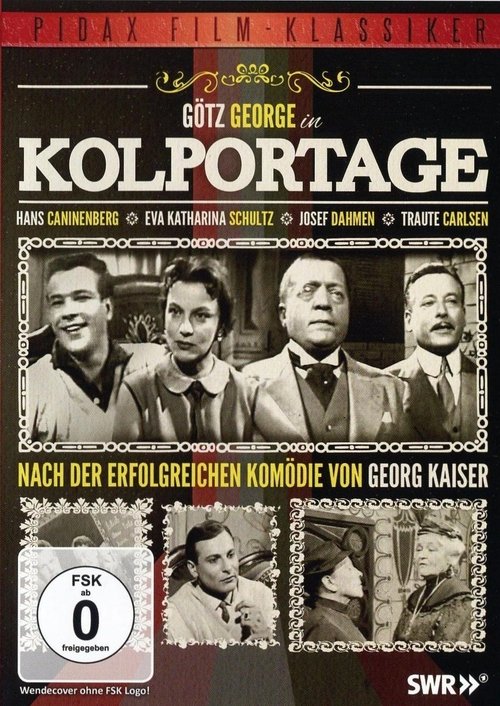
Relations between middle-aged businessman Arthur Dahlberg and his young wife Anja are not at their best. So it occurred to them to leave their Hamburg home and go on vacation to the Côte d'Azur to revitalize their relationship. But Arthur Dahlberg, even on vacation, is obsessed with running his business. Meanwhile, Anya meets the young writer Roy Benter.
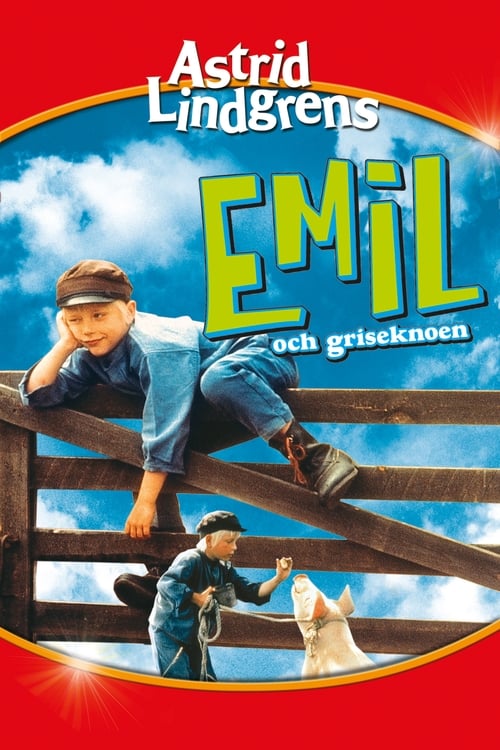
Nursing a piglet back to life because it's the runt of the litter earns Emil a friend for life.
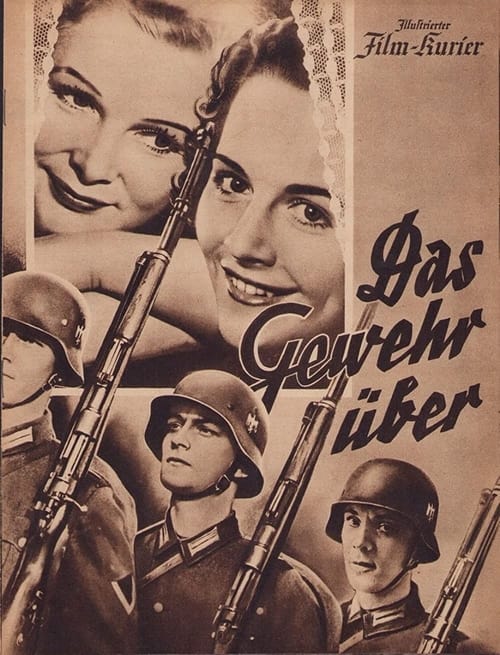
Three soldiers on very short home leave visit Berlin. One isn't from there and runs around with his guide book being perplexed by all the things that are different now. Another visits his wife and his baby. The third enters a romance due to a mistaken identity.
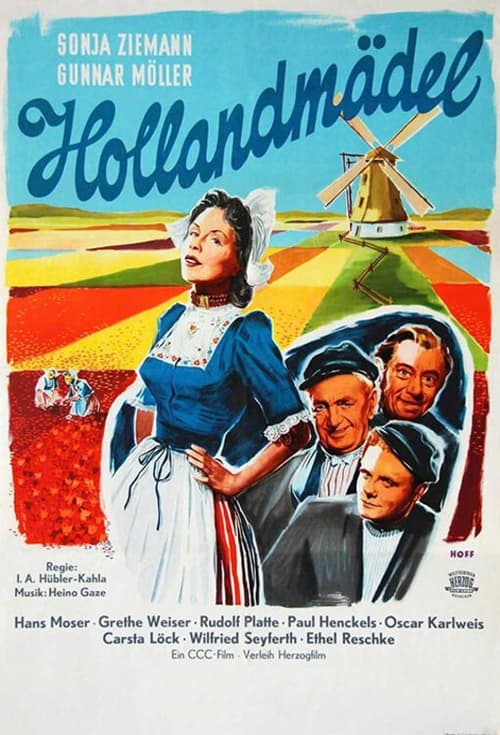
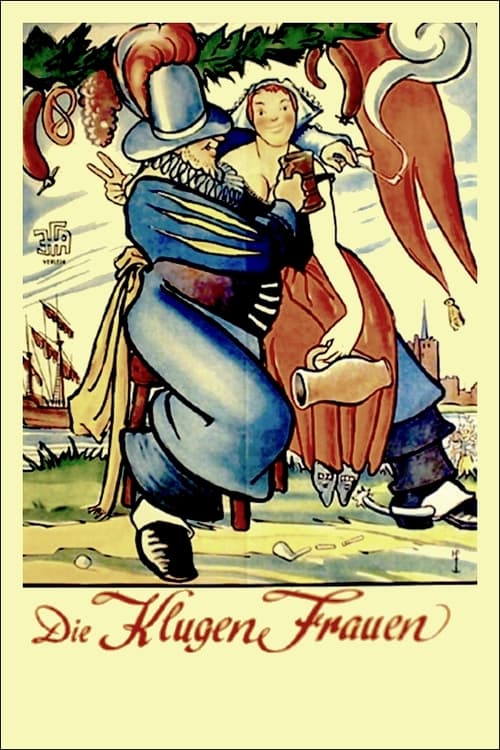
Flanders, Hispanic Monarchy, 1616. The inhabitants of the small town of Boom are busy organizing the annual local festivities when the arrival of the Duke of Olivares, who rules the country on behalf of the King Philip III of Spain, is announced. While the male citizens cowardly surrender to panic, the brave female citizens decide to become the best hosts the Spaniards can ever meet. (German version of the French film La Kermesse héroïque, 1935.)