Acting
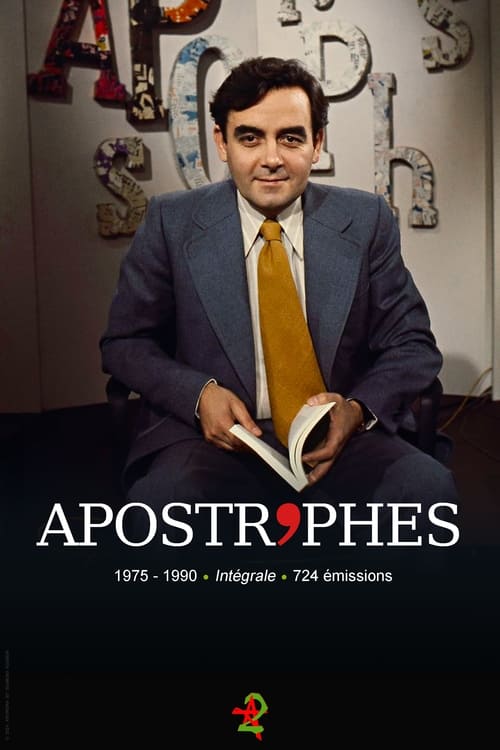
Apostrophes was a live, weekly, literary, prime-time, talk show on French television created and hosted by Bernard Pivot. It ran for fifteen years (724 episodes) from January 10, 1975, to June 22, 1990, and was one of the most watched shows on French television (around 6 million regular viewers). It was broadcast on Friday nights on the channel France 2 (which was called "Antenne 2" from 1975 to 1992). The hourlong show was devoted to books, authors and literature. The format varied between one-on-one interviews with a single author and open discussions between four or five authors.
Midi Première is a French variety show presented by Danièle Gilbert, directed by Jacques Pierre and broadcast from January 6, 1975 until January 1, 1982 on TF1. The program was generally broadcast between 12:15 p.m. and 12:55 p.m., then giving way to the 1:00 p.m. TV news. However, the broadcast schedule could change, depending on the guests, and the setting where the recording of the program was shot. Certain performances by artists who have become cult like the one where Ringo jostles with a demonstrator in interpretation (1977), that of Dalida with the title There is always a song with the soundtrack that does not start, twice, at the right speed (1978), Claude François and his Clodettes, who, in the provinces, are unable to join "the set" in order to interpret his song, the latter being taken by the crowd of delirious fans (summer 1977) . The group Supertramp performed there with the title "Dreamer" on March 8, 1975.
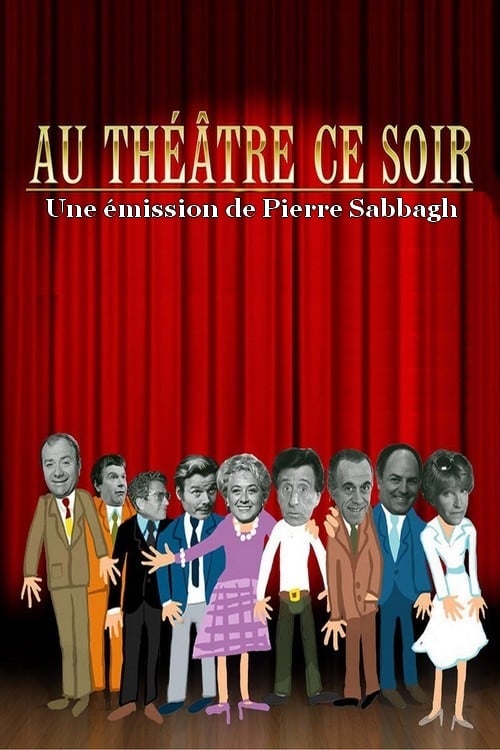
At Theater tonight is a TV show broadcasted from 25th August 1966 to 21st September 1985. The show is broadcast plays recorded in two or three days, during public performances at the Théâtre Marigny on the Champs-Élysées, or sometimes Edouard VII theater.
No description available.
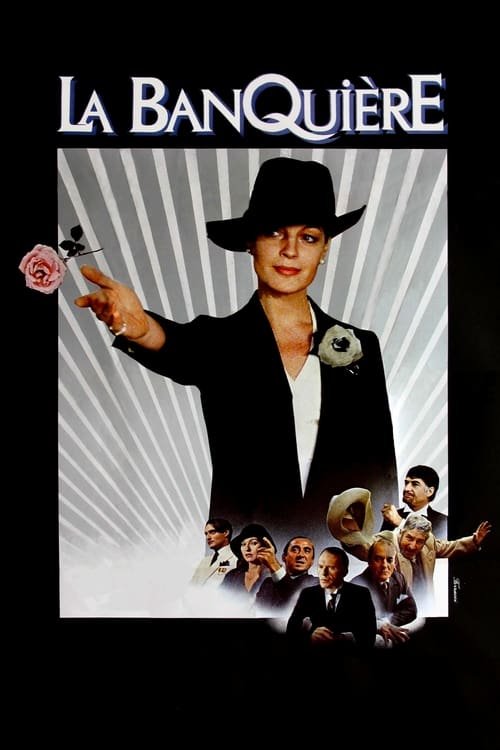
Ambitious Emma Eckhert successfully makes her way into a world previously reserved for men: that of high finance. She quickly becomes popular with small savers, but leads a scandalous life that will cost her.
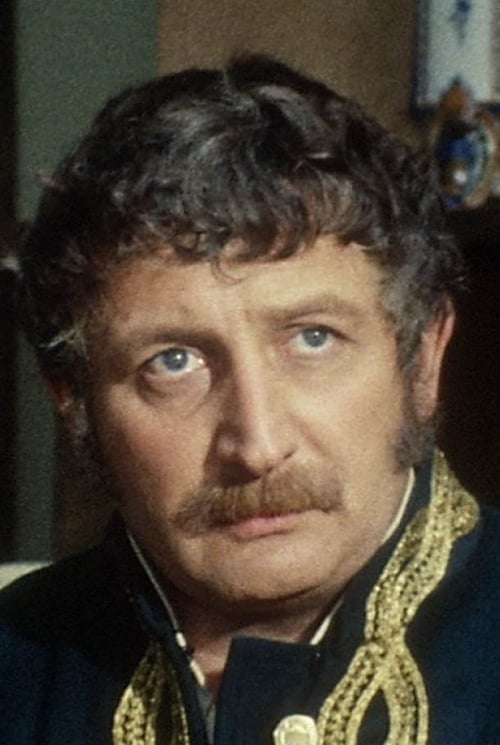
Schulmeister, l’espion de l’empereur (Schulmeister, the Emperor's Spy) is a French historical adventure television series consisting of 13 episodes (1971–1974), inspired by the real life of Charles Louis Schulmeister, a famous spy in the service of Napoleon I. It alternates between historical facts and fiction, offering a fictionalized portrait of a cunning spy, loyal to Napoleon, and always ready to turn a situation to his advantage.
Pierre Fresnay plays the title character in Le Defroque (The Defrocked One). Cast out by his church, former priest Maurice (Fresnay) delights in mocking the traditions and credos of Catholicism. Even so, young Gerard (Pierre Trabaud) becomes convinced that Maurice has never truly lost his calling. Becoming a priest himself, Gerard devotes his life to bringing Maurice back into the fold. Things don't turn out quite as Gerard hopes, however; he has not reckoned with the possibility that Maurice may have been driven into insanity by his raging self-hatred.
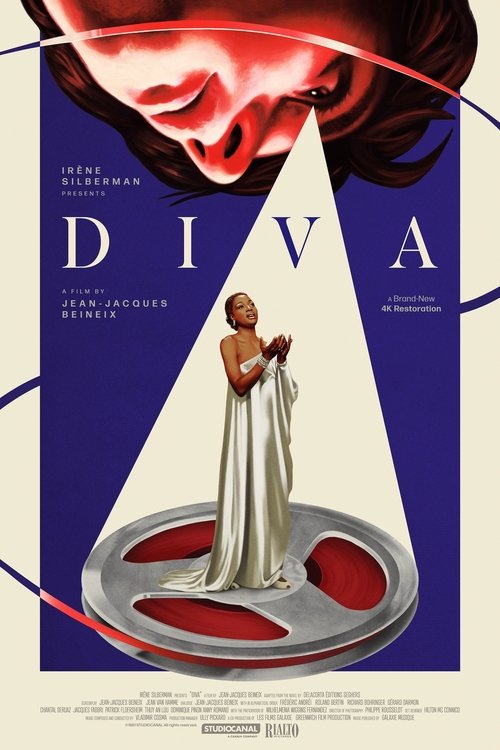
Jules, a young Parisian postman, secretly records a concert performance given by the opera singer Cynthia Hawkins, whom he idolises. The following day, Jules runs into a woman who is being pursued by armed thugs. Before she is killed, the woman slips an audio cassette into his mail bag...
Armand, a boastful womaniser, makes a bet that he can seduce any girl he wants. He soon crosses paths with a beautiful Parisian divorcee, who is nothing like anyone he has ever met before.
When the members of a caravan of pioneers find a daisy growing in the middle of the desert they decide to stop there and to build their town on this very spot. Houses soon spring up like mushrooms, immediately followed by a bank, a saloon, a prison, etc. Daisy Town is born. Unfortunately a city does not go without its bad boys and the peaceful place is soon turned into a lawless place. To restore law and order, a lawman is needed. Lucky Luke, the cowboy who shoots faster than his shadow, will be this man: all the villains had better watch out!
From Bonaparte to Casanova, history is cast in the light of famous escapes from various European countries.
An Italian troupe is busy in Paris filming an adaptation of La Traviata. The dressmaker Rosa, in love with the lead actor, identifies herself with Violetta: thanks to a bad joke and a fake séance, Rosa begins to believe she is her reincarnation. From that moment on, she tries to discover everything she can about her previous life, which slowly becomes closer and closer to her real one.
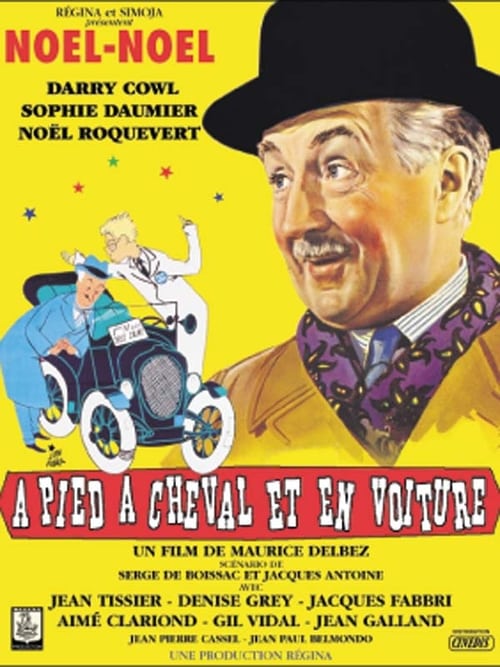
When he learns that his daughter is to be engaged to the son of a rich businessman, Leon Martin realizes that extreme measures are needed to create a good impression.
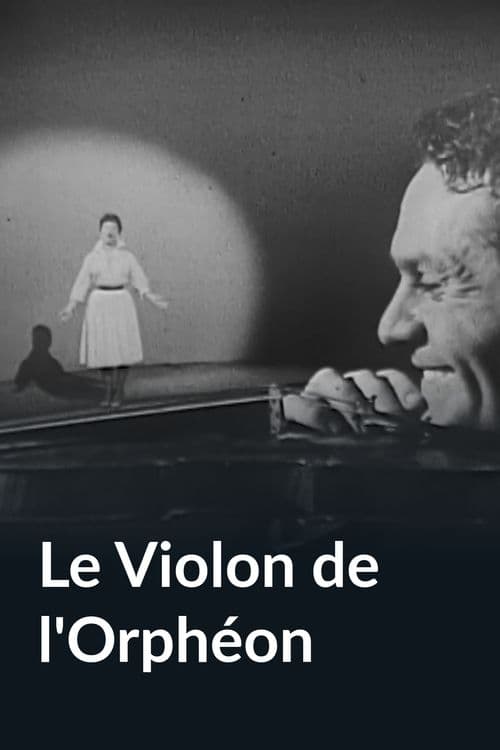
Antoine is a violinist in love with sweet Sophie. Problem: his sweetheart is the daughter of the master of the municipal harmony, a stubborn man who swears only by the brass. Never mind: Antoine decides to ask him for his daughter's hand and to win his place at the orpheon. Will the two men be able to get in tune?
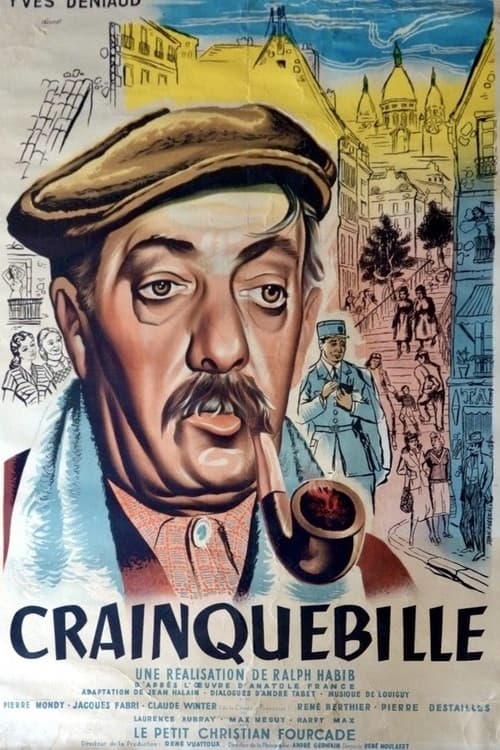
In the Mouffetard district of Paris, Jérôme Crainquebille, an affable four-season merchant, is stopped by a police officer and taken to the station, unjustly accused of shouting "Mort aux vaches!" ("Death to the cows!"). When he returns to work after a fortnight's detention, he is ostracized by his neighbors. Lonely, Crainquebille sank into despair and alcoholism. His life in prison seemed sweeter, and his attempts to return were in vain. He owes his salvation to the affection of a local kid.
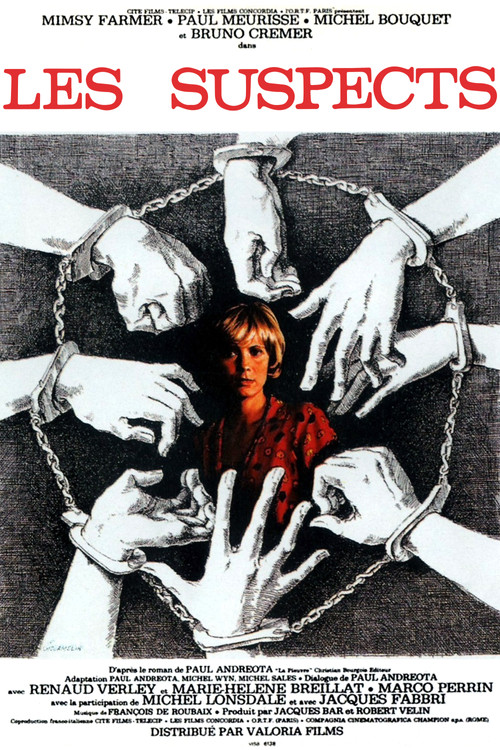
In the south of France, the body of a 22-year-old American tourist, Candice Strasberg, is discovered in the middle of the scrubland. Two days of rain prior to the discovery of the body made it difficult to collect evidence at the scene, as the rain had washed away the footprints. Using the victim’s diary, the police are attempting to piece together her movements. The investigation is entrusted to Gaston Delarue, the public prosecutor of Tarascon; Gérard Souffries, the investigating judge; Commissioner Bonetti of the Marseille police; and Divisional Commissioner Bretonnet of the Paris police. Among the six suspects is Bernard Vauquier, the son of the President of the Senate. The investigation proves to be as complicated as it is sensitive. But who murdered or killed Candice Strasberg? Screenplay adapted from ‘La Pieuvre’, a novel by Paul Andreota, published in 1970.