Begum Akhtar
Sound
Biography
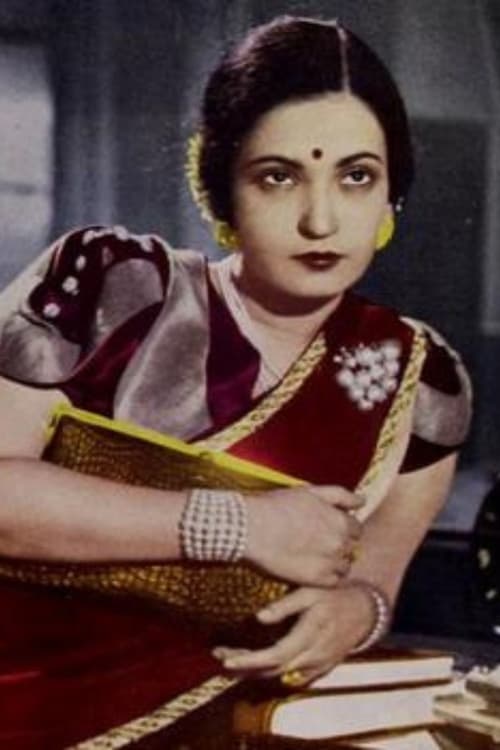
Begum Akhtar was born Akhtari Bai Faizabadi. She belonged to an aristocratic family of Lucknow that had fallen on hard times. Later in life she claimed that her father Asghar Hussein had been a judge, and that he had objected strongly to her taking up singing. However, the truth was her mother, Mushtari Begum, sang for a living, and was technically a tawaif. Mushtari Begum soon realised her daughter had the talent to reach the top. Begum Akhtar sang with her mother on stage when she was thirteen, and gave her first public performance at fifteen, where the head of HMV records became an instant fan and persuaded her to cut a record. Her face and eyes were very expressive, and she knew perfectly the bhao batana style of emotive singing. She trained under Ustad Ada Muhammad Khan of the Patiala gharana. She became expert in light classical, especially the ghazal. She was also acting in films, beginning in 1933 and ending with Roti in 1942 which was her biggest success. From 1943 she studied under Ustad Wahid Khan of the Kirana gharana. In 1946 she married Istiaq Ahmad Abbasi, the Nawab of Kakori. Her husband did not want her to sing and wanted her to live the life of a respectable woman. She struggled to give up smoking and be properly submissive, but she pined without her music and at last he was forced to capitulate. She gave a recording in 1949 and sang for Lucknow Radio. She blossomed, and he relented and allowed her to start giving concerts again. Her new respectability brought her many admirers and students, and for them she reinvented her past, hiding her origins in the tawaif subculture. Later on, when one of her solidly respectable students, Shanti Hiranand, wrote her biography, all of that was omitted or glossed over. This was as Begum Akhtar wanted it; unlike singers like Gauhar Jan, she was embarrassed by her difference and wanted to be accepted in high society. Begum Akhtar was influential in popularising ghazals as well as the light classical styles of thumri, dadra and so on. Her fine style and classical excellence set standards of musical achievement in this field. She had a mesmerising stage presence and easily established a rapport with her listeners. In 1968 she received the Padma Shri, and in 1972 the Sangeet Natak Academy Award. Such notables as Ustad Bade Ghulam Ali Khan and Ustad Ameer Khan praised her work. Begum Akhtar always said she would like to sing till the last day of her life, and this desire of hers was granted, for in 1974 she died immediately after performing in Ahmedabad on 30 October. The government of India awarded her the Padma Bhushan posthumously in 1975.