Production
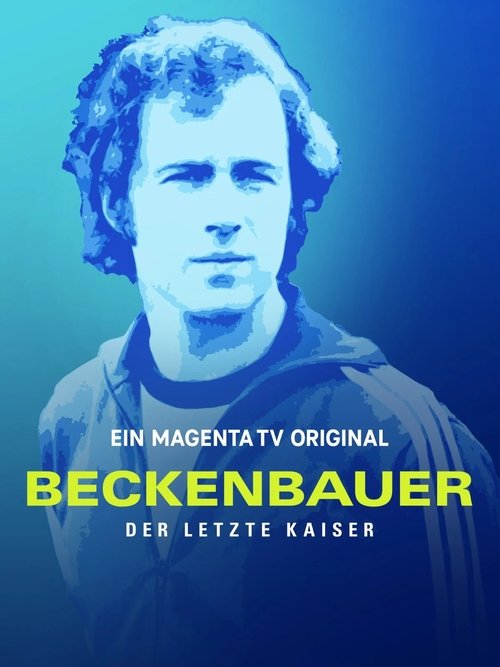
The three-part documentary “Beckenbauer – The Last Emperor” chronicles a life so exuberant it feels as though it were more than one. Torsten Körner, who co-wrote the highly acclaimed biography “Der freie Mann” with Franz Beckenbauer 20 years ago, has crafted a historically precise, at times nostalgic journey through life that connects Beckenbauer’s private life with his public one, the real with the imaginary. From Munich’s “Giesing” neighborhood—known as the “Glasscherbenviertel”—to the hearts of the German people and ever higher, all the way to New York; from the 1966 World Cup to becoming a global figure; and as the “Emperor” and a “beacon of light,” to the most famous German in the world: “Beckenbauer – The Last Emperor” illustrates, as rarely before, what constituted the modernity of both the soccer player and the “pop star” Beckenbauer.
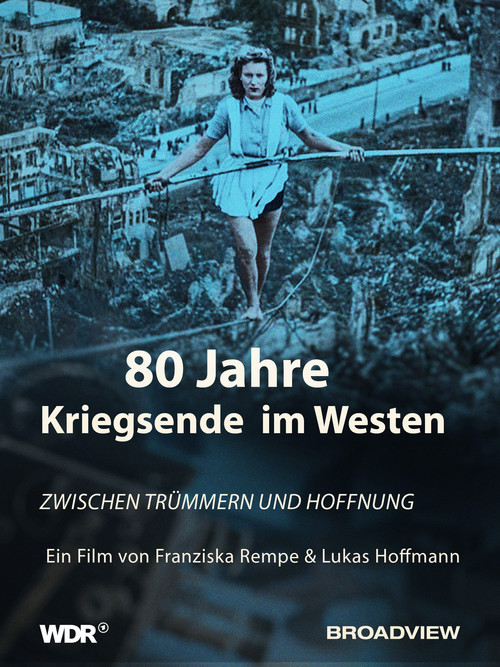
May 8, 1945 – 11:00 p.m. – the guns fall silent on German soil. The greatest war the world has ever seen comes to an end for the Germans along the Rhine and Ruhr. The Zero Hour—Liberation Day—becomes both history and myth. During this time, people like Elisabeth Wilms, a baker’s wife from Dortmund, and Friedrich Lieffertz, a restaurateur from Cologne, become chroniclers. They capture the final days of the war with their cameras. The documentary by Franziska Rempe and Lukas Hoffmann begins with this so-called “Hour Zero.” Along the Rhine and Ruhr, life is gradually returning to the cities. And across Europe, thousands are now making their way back to their homes.
With the final shift at the Prosper Haniel coal mine in Bottrop in December, an era comes to an end: the age of Western European coal mining. *DIE STEINKOHLE* brings to life the challenges people have had to overcome over the past 250 years in extracting “black gold.” And it shows, in an emotional and surprising way, how German and European history are reflected in coal mining.
With the final shift at the Prosper Haniel coal mine in Bottrop in December, an era comes to an end: the age of Western European coal mining. *DIE STEINKOHLE* brings to life the challenges people have had to overcome over the past 250 years in extracting “black gold.” And it shows, in a moving and surprising way, how German and European history are reflected in coal mining.
No description available.
“How Do We Want to Love?”—the title makes it clear that love doesn’t just happen by chance, but that there is also a will behind it. And so we ask ourselves, as lovers and experts: What can we know about love? What should we, as lovers, do? What can we hope for (in the future)—or what should we fear? The focus is on “romantic love” between people who live out religiously influenced, queer, monogamous, polyamorous, conventional, or anti-bourgeois models of love.
An ordinary New Year's Eve at Cologne Cathedral becomes a turning point in recent German history. Told from the perspectives of the victims, the police officers, and the perpetrators, the story reveals how Cologne Cathedral became a chaotic crime scene.
Nuclear has always been a controversial energy source. While Germany is phasing out its nuclear power plants, France is building a new generation of nuclear reactors to keep the lights on. A look at the nuclear debate over the last few decades and what the future holds for atomic energy.
GOOD MORNING, MY BEAUTIES! The film is a vibrant group portrait of East German women from a wide variety of walks of life in the GDR. What they all have in common is that they grew up in the GDR and were shaped by it; they do not view this background as a “burden,” but rather base their self-image and identity on it. The film explores and describes the true state of women’s equality in a country that claimed to have resolved this issue once and for all—in sharp contrast to the Federal Republic of Germany. The book features the voices of female musicians, writers, LPG chairwomen, workers, painters, politicians, and scholars. They all recount the daily grind, their everyday lives, and their struggle for recognition in a repressive state that persecuted, punished, and imprisoned its opponents.
How did New Year's Eve change Germany? Parts of the press are making a U-turn and heralding the end of the welcome culture. The German government is also realigning its refugee policy. At the same time, refugees in Germany are increasingly experiencing xenophobia. But there are still people who remain unimpressed in their humanism despite these events - that gives hope.