Production
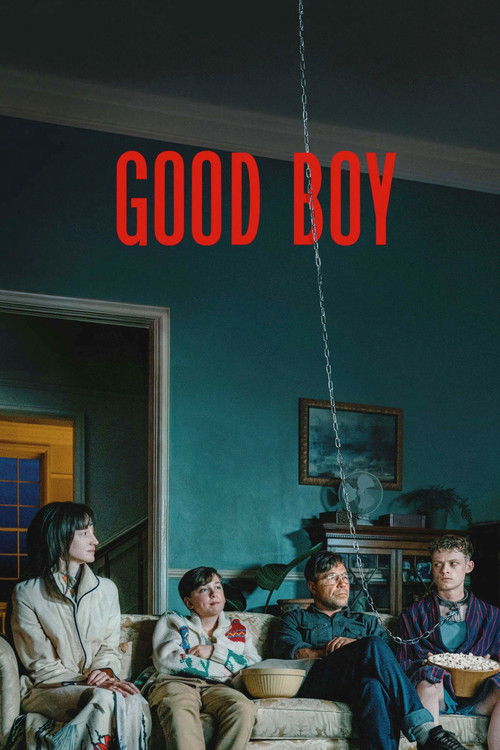
Tommy, a volatile 19-year-old, revels in drugs, parties and violence. After getting separated from his friends on a drunken bender, he is abducted by a shadowy figure. He wakes to find himself imprisoned in the basement of a remote Yorkshire house, inhabited by a very strange family. But what unfolds is not what he could possibly expect.
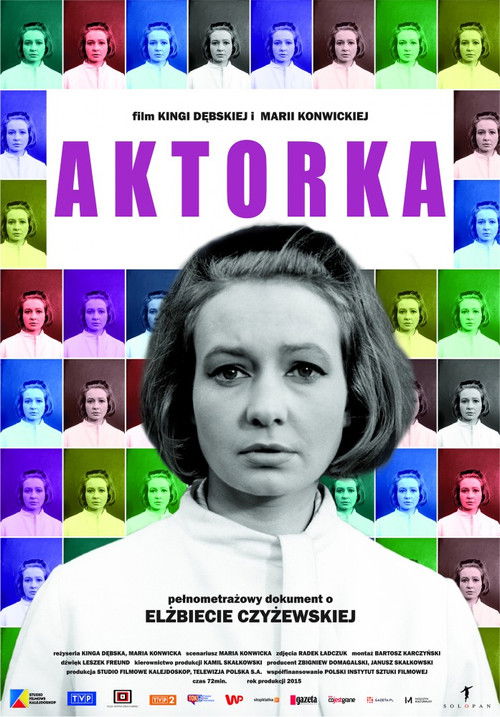
A documentary about Elzbieta Czyzewska, one of Poland's greatest actresses, a beauty icon of the 1960s, who died in 2010. She had a great career in Poland, but the filmmakers focus more on her attempts to make a name for herself as an actress in America, after her sudden emigration to the United States with her husband, American journalist David Halberstam. Friends and acquaintances of Elzbieta Czyzewska speak without embellishment about her failed marriage, her battle with alcoholism won after years, and her attempts to return to Poland. This is a story about the fate of the actress at different stages of her career: at the top, at the bottom and in between.
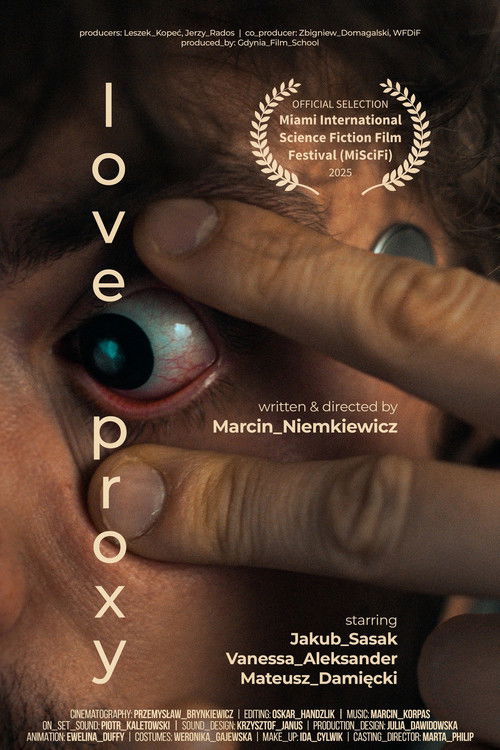
One morning, the protagonist is woken up (or is it still part of his dream?) by mysterious figures who accuse him of not taking part in the competition going on in the world, of living ‘too slowly’, of being a grey ‘everyman’ – a nobody.
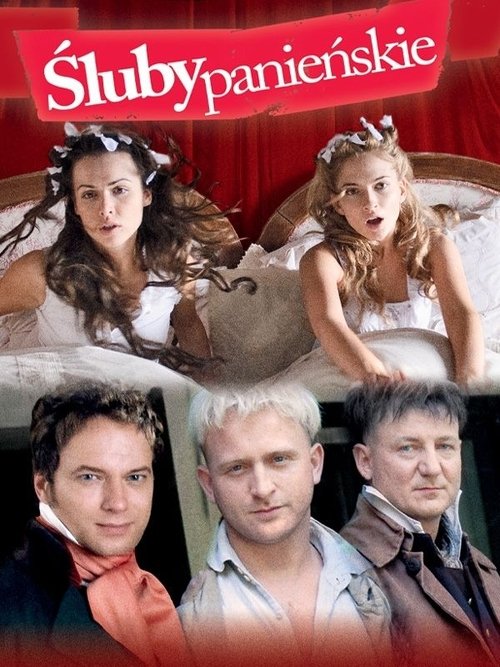
Klara and Aniela are two young girls who decide not to get married. This decision makes bachelors even more eager to conquer them. Adaptation of the classic comedy by Aleksander Fredro.
No description available.
In the 1970s, plaques commemorating four generals, commanders of the Home Army—Michał Tokarzewski, Stefan Grot Rowecki, Tadeusz Bór-Komorowski, and Leopold Okulicki—were placed in St. Hyacinth's Church in Warsaw's Old Town. The film presents little-known fragments of their biographies.
Mother Teresa once said, "If you know how to look, you will find Calcutta all over the world." Kamieńska found those for whom Calcutta was in Poland. The film about the Congregation of the Missionaries of Charity proved to be a turning point in her artistic career. She took up the theme of faith, which had been absent from her work until then, and which would henceforth recur in her subsequent documentaries. In Missionaries of Charity, Kamieńska observes the work and prayer of young nuns. The complementary nature of "ora et labora" in their lives is reflected in the structure of the film. We alternate between places where the sisters help people in need and Mass with Mother Teresa.
The history of Warsaw's Bristol Hotel until 1981, when it underwent renovation.
During an all-night train trip, Jaśmina shares a compartment with Andrzej - a mysterious, older man. At first a conservative and reserved acquaintance evolves into a tender, empathetic and understanding relationship between two alien souls.
Francis Ratay witnesses the theft of church painting "Angel with violin". The entire incident recorded by an amateur camera. The thief turns out to Benedict Weber, gallery owner and art connoisseur. Francis comes to his gallery. Blackmails him, that will provide police record, unless the image in three days back in place.
Simona Kossak - daughter of the painter Jerzy Kossak and granddaughter of Wojciech - deprived of the talent that has defined her family for generations, grows up without knowing the warmth of her despotic mother. When, after graduation, she leaves everything - home, tradition, social conventions - and takes up a job as a scientist in Białowieża, she starts life on her own terms.
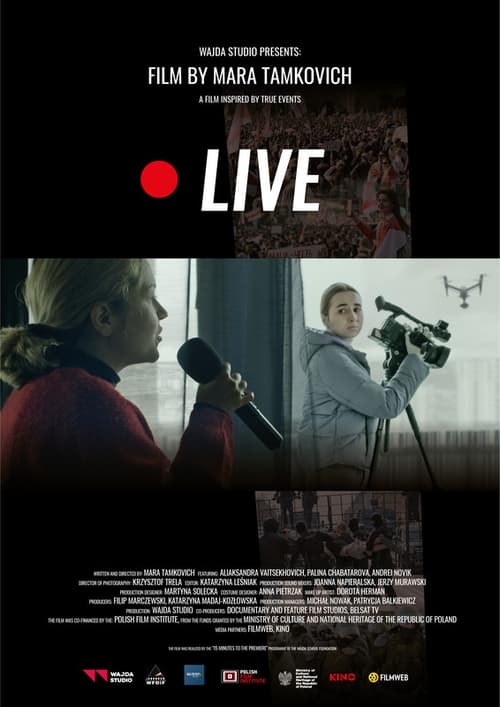
The film is inspired by the real events – the story of Kati Andreevoj and Daria Chultsova – the two journalists from TV Belsat, an independent station broadcasting from Poland and their arrest by the Belarusian police in Minsk.
Janusz Morgenstern was a director of films and TV series that left a permanent mark on Polish cinema, such as ‘Good Bye, Till Tomorrow’, ‘To Kill This Love’ or ‘More Than Life at Stake’. Morgenstern’s portrait is woven out of broadcasts, photos, interviews with his loved ones and his own films.
‘Zmęczone’ is a comedy drama about three female employees of the administration, promotion and education department of a provincial theatre, who decide to write and stage a play in protest against the mobbing they experience from the incompetent artistic management.
Did the 1989 revolution in Central Europe devour its children? This question is answered by representatives of the anti-communist opposition from Warsaw, Prague, Budapest and Berlin. The documentary shows images of the upheaval, with songs by Jacek Kaczmarski, Jaroslaw Hutka and Wolf Biermann as a backdrop.
Polish WWII resistance fighter Witold Pilecki infiltrates Auschwitz, is imprisoned and interrogated by communist officials post-war, depicting his wartime experiences, incarceration, torture, and 1948 execution for opposing Soviet regime.
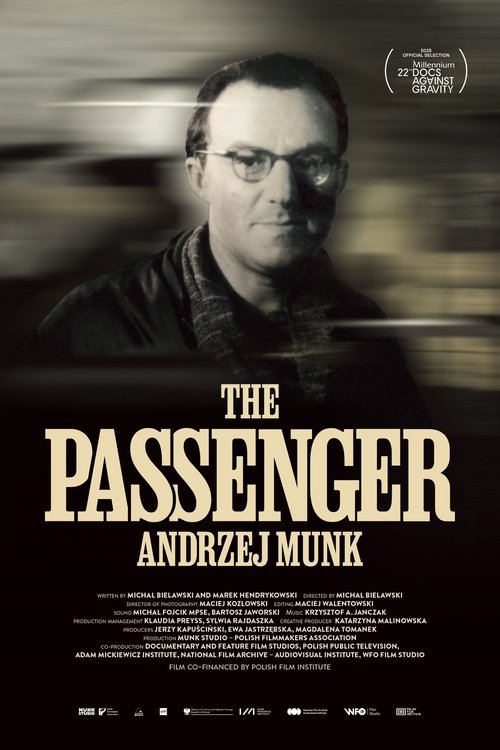
The documentary dedicated to Andrzej Munk, a leading creator of the Polish Film School, was created based on unique archival materials. They made up a story about a man immersed in history, his artistic evolution and the emotions accompanying this process.
It's 1940. German forces are prevailing over Allies across Europe. The crew of the Polish submarine, now serving in the Royal Navy, is waging a heroic fight against the invisible enemy.