Waris Hussein
Directing
Biography
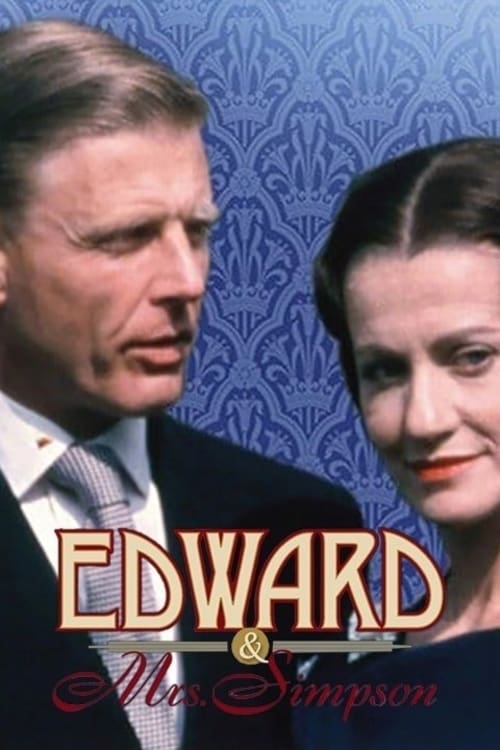
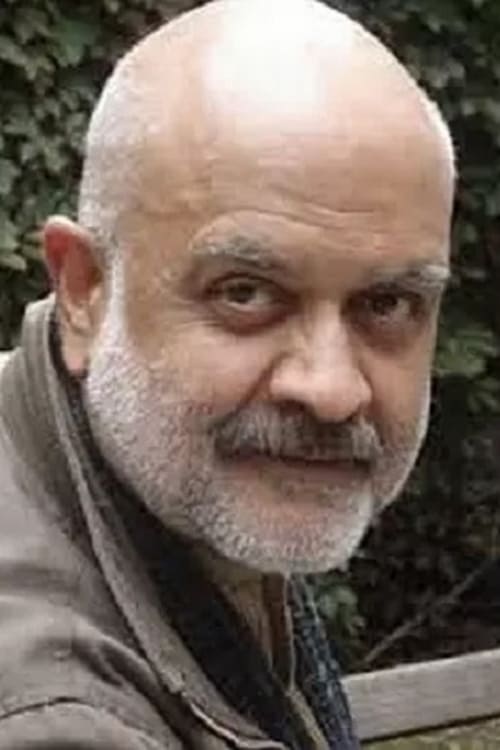
Waris Hussein (né Habibullah; born 9 December 1938) is a British-Indian television and film director. At the beginning of his career, he was employed by the BBC as its youngest drama director. He directed early episodes of Doctor Who, including the first serial, An Unearthly Child (1963), and later directed the multiple-award-winning Thames Television serial Edward & Mrs. Simpson (1978).

Known For

The adventures of The Doctor, a time-traveling humanoid alien known as a Time Lord. He explores the universe in his TARDIS, a sentient time-traveling spaceship. Its exterior appears as a blue British police box, which was a common sight in Britain in 1963 when the series first aired. Along with a succession of companions, The Doctor faces a variety of foes while working to save civilizations, help ordinary people, and right many wrongs.
Doctor Who

Play for Today is a British television anthology drama series, produced by the BBC and transmitted on BBC1 from 1970 to 1984. During the run, more than three hundred programmes, featuring original television plays, and adaptations of stage plays and novels, were transmitted. The individual episodes were between fifty and a hundred minutes in duration.
Play for Today

An anthology series of television plays which aired on BBC1 from October 1964 to May 1970. The plays were usually written for television, although adaptations from other sources also featured.
The Wednesday Play

A BBC television anthology series featuring productions of classic and contemporary stage plays usually broadcast on BBC1. Each production featured a different work, often using prominent British stage actors in the leading roles. The series was transmitted from October 1965 to September 1983.
BBC Play of the Month

Series of single made-for-television dramas.
Screen Two

ITV Playhouse is a British comedy-drama TV series that ran from 1967 to 1983, which featured contributions from playwrights such as Dennis Potter, Rhys Adrian and Alan Sharp. The series began in black and white, but was later shot in colour and was produced by various companies for the ITV network, a format that would inspire Dramarama. Actors appearing in the series included Leslie Anderson, Gwen Nelson, Ricky Alleyne, Pat Heywood, Michael Elphick, Ian Hendry, Edward Woodward, Margaret Lockwood, Jessie Matthews and Lloyd Peters.
ITV Playhouse

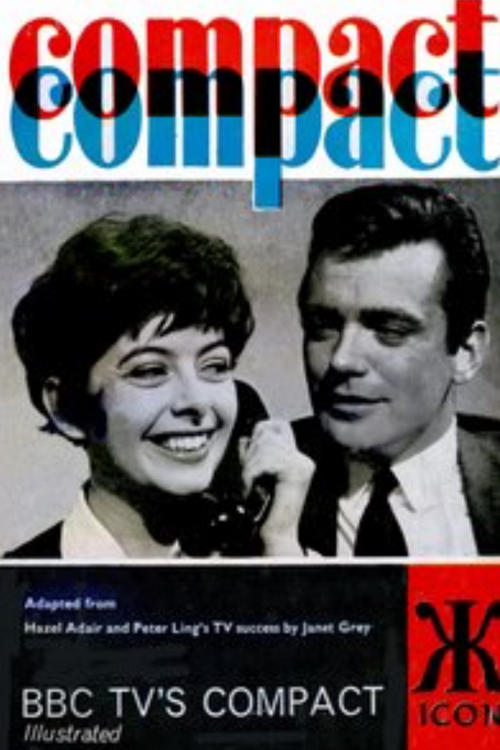
Compact was a British television soap opera shown by the BBC between 1962 and 1965. The series was created by Hazel Adair and Peter Ling, who together went on to devise Crossroads. In contrast to the kitchen sink realism of Coronation Street, Compact was a distinctly middle-class serial, set in the more "sophisticated" arena of magazine publishing. An early "avarice" soap, it took the viewer into the business workplace, and aligned the professional lives of the characters with more personal storylines. The show was scheduled for broadcast on Tuesdays and Thursdays, thus avoiding a clash with ITV's Coronation Street on Mondays and Wednesdays. When Compact began, the editor was a woman, Joanne Minster, yet it was not long before she was replaced by Ian Harmon, the son of the magazine's owner. Despite being largely criticised by reviewers, Compact was popular with the general public, and in 1964 a regular omnibus edition was introduced, broadcast on Sundays. Morris Barry, a some-time actor and BBC director – he directed several Doctor Who stories in the 1960s – took over as producer and was given a brief to spice the series up in view of the criticism it had received from the national press. But the BBC, never comfortable with the concept of soap opera, quietly dropped the series in 1965.
Compact

Doctor Who Confidential is a documentary to complement the revival of the long-running British science fiction television series Doctor Who. Each episode was broadcast on BBC Three on Saturdays, immediately after the broadcast of the weekly television episode on BBC One. The running time of the first two series was 30 minutes, being extended to 45 minutes in the third. BBC Three also broadcast a cut-down edition of the programme, lasting 15 minutes, shown after the repeats on Sundays and Fridays and after the weekday evening repeats of earlier seasons.
Doctor Who Confidential

What are the secrets of our favourite TV shows? Famous names from both sides of the camera reflect on making some of the most popular and influential programmes of all time.
Remembers…

Long-running anthology program sponsored by Hallmark Cards. Beginning in 1951 and continuing into 2019, the series received 80 Emmy Awards, 24 Christopher Awards, 11 Peabody Awards, 9 Golden Globes, and 4 Humanitas Prizes. Early seasons were a weekly live drama, eventually transitioning to videotaped and then filmed productions broadcast as occasional specials.
Hallmark Hall of Fame

Laurence Olivier Presents is a British television series made by Granada Television which ran from 1976 to 1978. The plays, with the exception of Hindle Wakes, all starred Laurence Olivier. Some of the plays were based on productions staged at the National Theatre during the period when Olivier was Artistic Director. In addition to distinguished English actors, the casts assembled for these productions included several Hollywood stars, such as Natalie Wood, Robert Wagner, Joanne Woodward and Maureen Stapleton.
Laurence Olivier Presents

London itself takes the starring role in this series of plays from the BBC – a role which varies between hero and villain, enchantress and harpy. The series features extensive location filming, ranging from Soho to the Law Courts, Wembley to the docks. Of the twelve episodes, eleven are believed to be lost.
Londoners

While still the Prince of Wales, the future Edward VIII meets the married American socialite, Wallis Simpson. Their relationship causes furor in the palace and in parliament, especially when King George V dies, Mrs. Simpson gets divorced, and King Edward announces his intention to marry her.
Edward and Mrs Simpson
Anthology of self-contained dramas that aired from 1977 to 1978.
The Sunday Drama
Black and Blue was a BBC TV comedy-drama series, first broadcast in 1973. The show consisted of six 50–60 minutes episodes, each a separate self-contained playlet. The only connection was the Black and Blue humour theme. The first episode was broadcast on 14 August 1973, with the finale on 18 September 1973. The first, Secrets, was wiped, only surviving thanks to a domestic videotape copy made from the master by producer Mark Shivas.
Black and Blue

Armchair Thriller is a British television programme, broadcast on ITV in two series in 1978 and 1980. Owing something to some of the off-shoots of the earlier Armchair Theatre, the new series used scripts adapted from published novels and stories. Although not properly a horror series it included several supernatural elements. Armchair Thriller was produced by Thames Television, but it included serials made by Southern Television.
Armchair Thriller

The story deals with Gloria Vanderbilt's difficult coming-of-age when, at eleven, she was a pawn in a custody battle between her sybaritic mother and her aunt.
Little Gloria... Happy at Last

The lovely Daisy is the daughter of a Russian prince and an American movie star. After her parents are killed, she flees from her half-brother Ram. She fights her way to the top of the modeling profession and falls in love with a company president. But then, her half-brother arrives on the scene, ready to blackmail and destroy her.
Princess Daisy

Notorious Woman is a 1974 BBC miniseries about the life of French novelist George Sand (Amantine Lucile Aurore Dupin), starring Rosemary Harris in the title role, and focusing on her scandalous life, career, and relationships, particularly with composer Frédéric Chopin. The seven-episode drama, written by Harry W. Junkin and directed by Waris Hussein, won a Primetime Emmy for Harris's performance and explored Sand's defiance of 19th-century conventions, including her male attire and public cigar smoking.
Notorious Woman

Shoulder to Shoulder is a 1974 BBC drama serial created through the collaboration of actress Georgia Brown, filmmaker Midge Mackenzie, and producer Verity Lambert. A dramatisation of the history of the women's suffrage movement in Britain, focusing on the Pankhurst family and their fight for women's right to vote, the six-part series, starring Siân Phillips as Emmeline Pankhurst, is considered a landmark in feminist television drama.