Mehmet Talha Gürel
Directing
Biography
Talha Gürel is an Istanbul-based artist and filmmaker. His practice is situated between sculpture, film, and experimental visual narratives. He is particularly known for his silicone sculptures, figurative abstractions, and unsettling aesthetic language. His work focuses on the human body, everyday situations, and individual perception as its core concerns. In his filmmaking, he prioritizes atmosphere, temporality, and sensory rhythm over conventional narrative, working within the porous boundaries between documentary and fiction. He is influenced by artists such as Jan Švankmajer, Karel Zeman, and Nick Hilligoss, and his cinematic language is shaped by surrealism, the transformation of objects and the body, and the deliberate blurring of the line between reality and imagination. Gürel approaches cinema as a moving extension of sculptural thinking, constructing images as intuitive and physical experiences rather than narrative-driven forms.
Known For
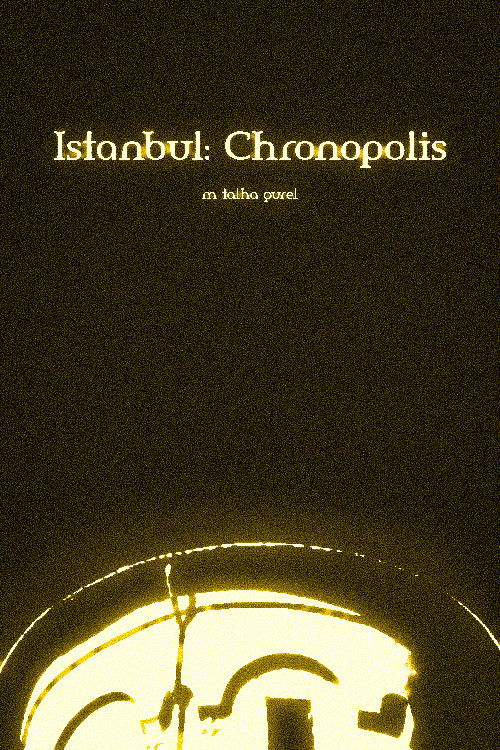
Istanbul: Chronopolis is an experimental documentary that explores the city as a living organism where the linear flow of time is disrupted and the past and future coexist. Structured around a thematic cycle of birth, speed, and decay, the film uses rhythmic visuals and archival footage to bridge temporal gaps. Through a fourteen-minute mathematical edit, it replaces linguistic narrative with the evocative language of time-lapse and slow-motion cinematography. The project invites the audience to transcend chronological time and experience Istanbul as an eternal moment—an entity existing solely within its own timeless cycle.
Istanbul: Chronopolis
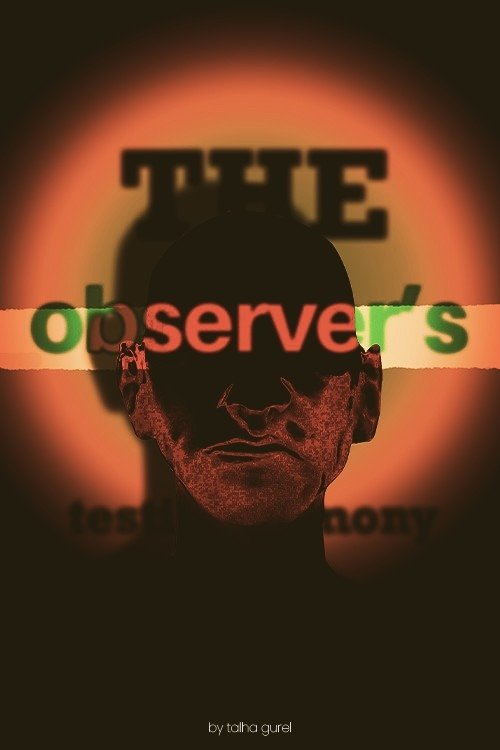
"The Observer's Testimony" is an intense psychological video art piece fundamentally based on Slavoj Žižek's philosophical concept of Parallax. The work utilizes a split-screen format to simultaneously present the transformation of the same clay bust into two contradictory psychological realities: The Left Screen depicts the Hunter's (The Accuser's) hardening into a cold judgment and moral decay, conceptually justified by Murat Kaplan's facial analysis; while the Right Screen reflects the Victim's (The Innocent's) dissolution into helplessness, fear, and ultimate surrender. This organic yet unnatural transformation of the busts places the viewer in the irreducible gap between two contradictory testimonies. The core goal of the work is to demonstrate the impossibility of objective truth by proving that reality is entirely dependent on the observer's subjective point of view.
The Observer's Testimony
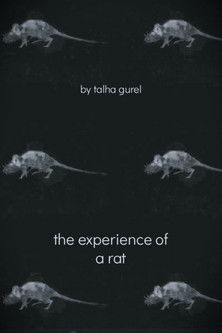
This ultra-short, experimental video art piece serves as a stark apparatus for decoding the aggressive rhythm and discontinuous production of contemporary life. The work is built upon a Stop Motion loop composed of just 12 frames, using this brief, intense format as an installation of shock that conveys the systemic pressure of a speed-obsessed society. The central figure, the rat, is placed to represent the archetypal subject of the urban underclass—the individual whose labor is rendered invisible and who is constantly forced into a struggle for survival. What we observe is not an advancement, but a fruitless scurry trapped in a vicious cycle. As the image repeats, it whispers that what we perceive as progress is, in fact, nothing more than an exhausting, self-referential recurrent routine. Rhythm/12 Frames compels the viewer to question both their own limits of perception and the grim reality of existence reduced to a survival mechanism within the system
The Experience of a Rat

The young guy who wants to be author, he confronts a problem of nowadays. He breaks his own focus. So he could not reach deep focusing. But when he did it he will feel the amazing satisfaction feeling
Anorexia
This ultra-short, experimental video art piece serves as a stark apparatus for decoding the aggressive rhythm and discontinuous production of contemporary life. The work is built upon a Stop Motion loop composed of just 12 frames, using this brief, intense format as an installation of shock that conveys the systemic pressure of a speed-obsessed society. The central figure, the rat, is placed to represent the archetypal subject of the urban underclass—the individual whose labor is rendered invisible and who is constantly forced into a struggle for survival. What we observe is not an advancement, but a fruitless scurry trapped in a vicious cycle. As the image repeats, it whispers that what we perceive as progress is, in fact, nothing more than an exhausting, self-referential recurrent routine. Rhythm/12 Frames compels the viewer to question both their own limits of perception and the grim reality of existence reduced to a survival mechanism within the system