Acting
A police department, lead by an older, experienced detective solve crimes together.
Derrick was a German TV series produced by Telenova Film und Fernsehproduktion in association with ZDF, ORF and SRG between 1974 and 1998 about Detective Chief Inspector Stephan Derrick and his loyal assistant Inspector Harry Klein, who solve murder cases in Munich and surroundings.
Der Kommissar is a German television series about a group of detectives of the Munich homicide squad. All 97 episodes, which were shot in black-and-white and first broadcast between 1969 and 1976, were written by Herbert Reinecker and starred Erik Ode as Kommissar Herbert Keller. Keller's assistants were Walter Grabert, Robert Heines, and Harry Klein who, in 1974, was replaced by his younger brother Erwin Klein.
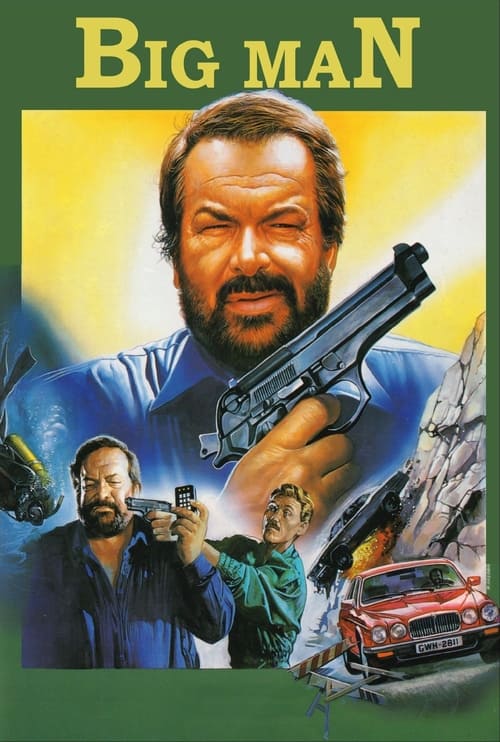
The renowned Insurance International Co. has created an enquiry network, headed by detective Jack Clementi, to defend itself against insurance fraud. Jack has saved the company enormous amounts of money throughout his successful investigations and his bosses are more than willing put up with his brusque manners, his disconcerting frankness, and his intolerance for any form of company bureaucracy. Yet he is a big guy with a huge heart.
Arsène Lupin is a French TV show which was co-produced with German, Canadian, Belgian, Dutch, Swiss, Italian and Austrian TV stations. It was only loosely based on Maurice Leblancs novels. Georges Descrières' portrayal of Arsène Lupin showed more similarity to Graf Yoster than to Maurice Leblanc's original. He behaved in the first place as a perfect gentleman who never got angry. He was always relaxed, because whatever could possibly had bothered him in daily life was taken care of by his butler. It wasn't questioned how he had come to his financial independence although the series sometimes discreetly implied that he was a professional criminal. Besides rescuing damsels in distress Lupin took on criminals, competing with their wit and intelligence. Either he stole paintings from rich people who had to be considered white-collar criminals or he acted as a detective who derailed criminal schemes. However, when he was attacked, he could defend himself effortlessly by using elegant jujutsu methods. Among the guest stars were German actors such as Günter Strack and Sky du Mont. Jean-Paul Salomé said in his commentary on the DVD version of his film Arsène Lupin he had like this series as a child. German TV, one the investors, would broadcast the show eventually between 18:00-20:00 o'clock because it was only allowed to show commercials within that very timeslot. For them to get a financial return on investment the show had to be appropriate for families and also for children who would watch it alone. Subsequently it was nearby to ask to defuse and flatten some of Leblanc's plots in order to avoid possible complaints that could force the station to broadcast the show beyond the "Vorabendprogramm".
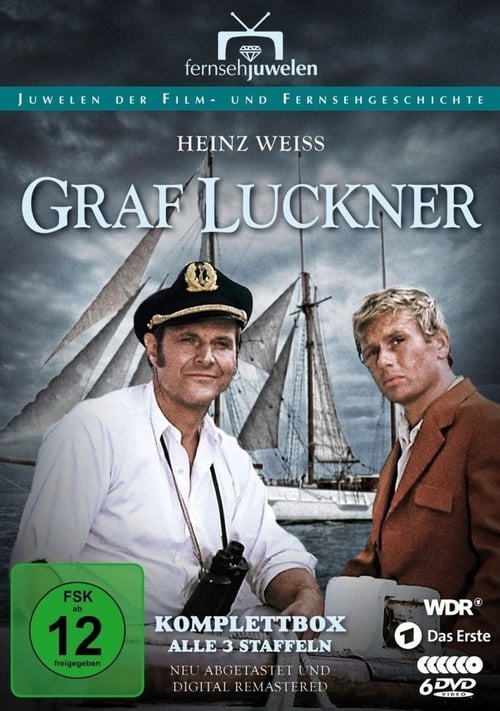
Between the first and second World Wars, we portray glorified and renown naval sea officer Felix Graf von Lucker and his fictitious ship Niobe, which is the 1887 built Amphitrite from Southampton. Von Luckner is famous for his tactical genius in the first World War, especially sinking 14 enemy ships and only losing one crewman, whilst always seeking a peaceful outcome - making him the ideal seaman.
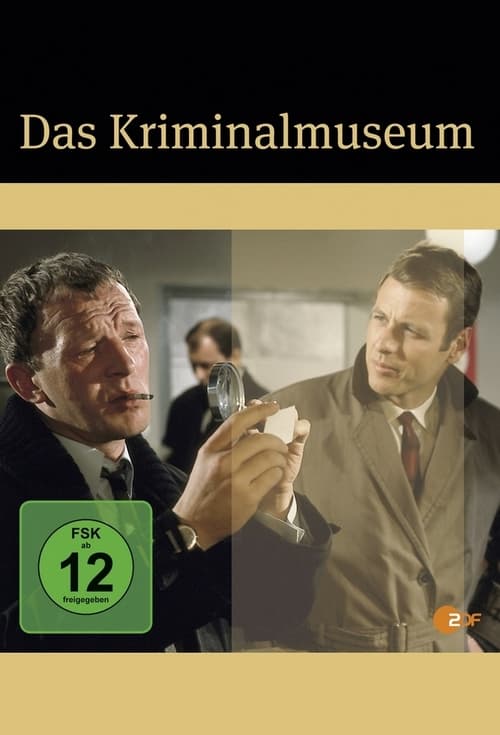
Das Kriminalmuseum was a German television series. It ran from 1963 to 1970 on ZDF and was one of its first programs. Each episode began with a tracking shot through an unspecified crime museum, stopping at one of the displays, whose story was then told. Each episode was between 60 and 75 minutes long and featured different actors as the criminal commissioner. The best known was Erik Ode, who in 1969 moved to Der Kommissar, appearing in 97 episodes. The theme music of the series was written by German composer Martin Böttcher, who also composed the complete scores for five episodes.
The series revolves around the Wagenfeld family from Hamburg. Katharina Wagenfeld moves with her three children from Hamburg to Rosenburg in Bavaria after her husband has an affair. In Rosenburg, she is asked to take over her sick aunt's run-down inn, but this task proves more difficult than expected. But Katharina doesn't give up and tries to build a new life for herself and her children with the Black Rooster .
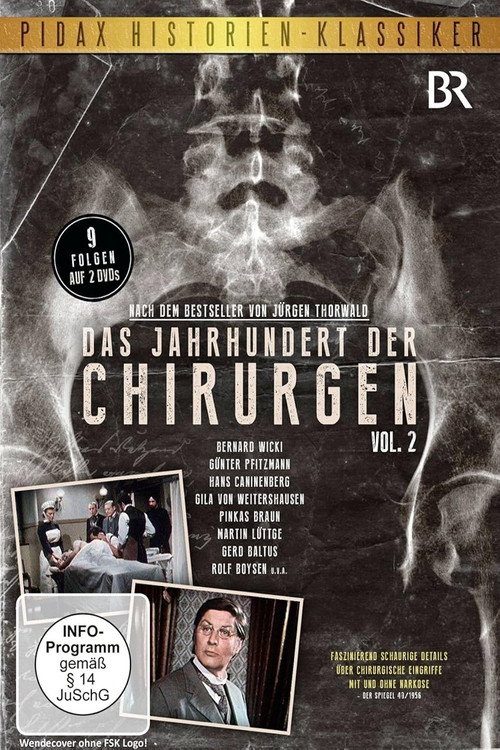
A special insight into medicine presented on film: sterile operations, hospitals used to be built by the wind, anaesthesia, surgical gloves, similar to the films Sauerbruch or Kneip.
A pampered heiress inherits her father's pharmaceutical empire when he dies in a suspicious accident, and soon finds herself surrounded by ruthless board members and grasping family members who will seemingly stop at nothing to profit.
No description available.
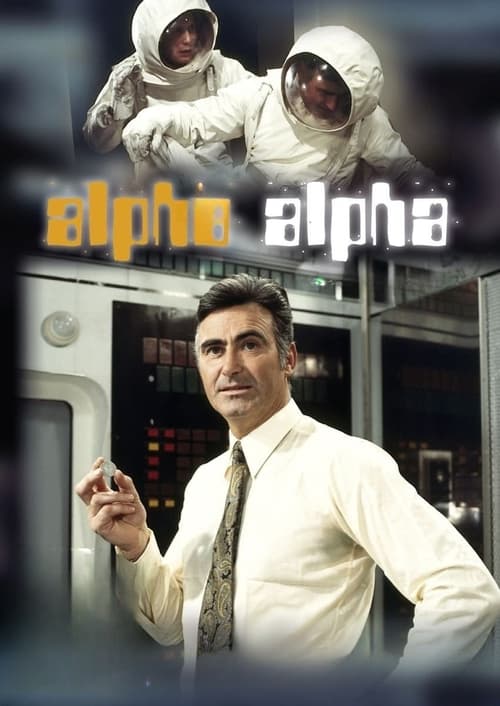
Alpha Alpha was a 1972 German science fiction fantasy television series which aired on ZDF. It starred Karl Michael Vogler, Lilith Ungerer, Arthur Brauss and Horst Sachtleben. Each episode was only 25 minutes long, the series lasted only one season. Karl Michael Vogler played agent alpha of an unnamed secret organization, investigating mysteries, technical and psychic phenomena and even alien encounters. Alpha Alpha's tenor is comparable to the later X-Files drama television series.
A group of teenage girls at camp discuss their various sexual escapades while they read a new journal about sex has been published to help teenagers understand the consequences of sex.
In Part 7, the filmmakers explore what’s lacking in modern German schoolgirls.
This is the 11th of "Schulmädchen" movies and core issues this time is protection of young people and helping them in dangerous or critical situations.
Two young men want to get into an all-girls photo studio to see the scads of beautiful young nude women inside, so they decide to pose as women themselves.
Young women come to Munich for fun and work during the '72 Olympics and invariably wind up naked.
The young farmhand Veit Kolb from Hausberg in Bavaria loses his job at the farmer Kriele, who emigrates to America with his family.
This Softsex-comedy points out what people are doing everything so when they feel unobserved in their closed doors.