Directing
British progressive rock band Pink Floyd perform at the ancient Roman Amphitheatre in the ruins of Pompeii, Italy in 1971. Although the band perform a typical live set from the era, there is no audience beyond the basic film crew.
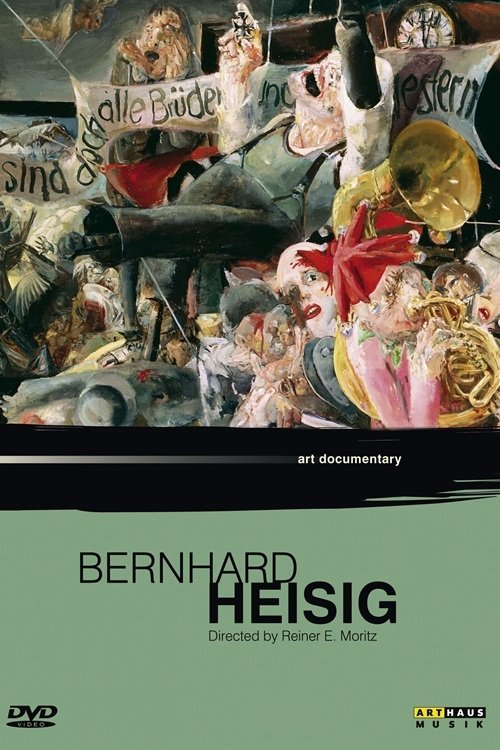
In the mists of war and violence, the Harlequin, trumpet in hand, drifts through ravaged landscape passing a cripple and a marionette: Bernhard Heisig's pictorial worlds shock the viewer by depicting the great dramas of German history. Both a victim and a perpetrator in World War II and in the GDR dictatorship, the artist's search for sense and truth led him to his moving image formulas. Director Reiner E. Moritz converses with the renowned ex-principal of the Leipzig Hochschule für Grafik und Buchkunst (Academy of Visual Arts) about his work, which influenced the development of art for many decades in the rigid GDR system.
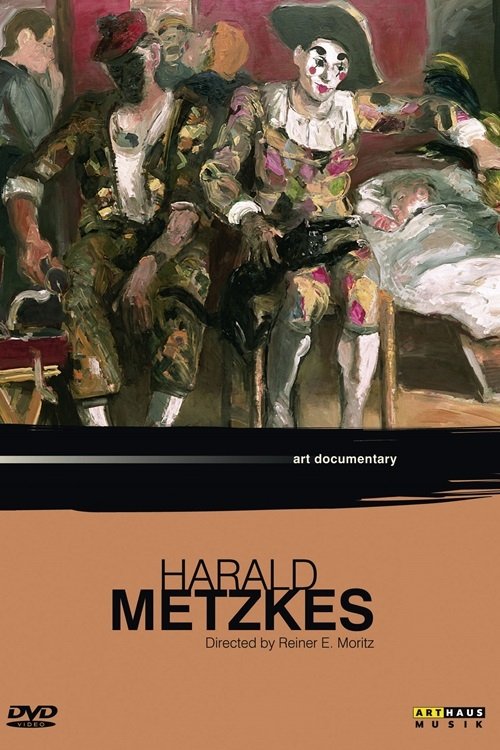
Pierrot, the Harlequin and Don Quixote come from Berlin. They are the actors in Harald Metzkes’ paintings, the parable-like characters in the great tragicomedy of human life, the ambivalent interplay between 'black and white' in daily as well as political life. Using characters from literature, mythology and the circus, Metzkes rejected the ideological appropriation of the GDR state apparatus. His melancholic sensualism made him a protagonist of the Berlin School. Reiner E. Moritz visited the 'Cézannist' shortly after the fall of the Berlin Wall. In conversation with Metzkes, he traces the life and work of one of East Germany's most lyrical artists.
Painter and government official – the two sides of Willi Sitte which made him the most important yet most controversial East German artist. Portraying the working class, defying imperialism or revealing intimate togetherness, he became the leading figure of Socialist Realism. His career in the Association of Fine Artists (VBK) and the Central Committee (ZK) of the SED elevated his status to that of ‘Prince of East German Painting’. Reiner Moritz met the controversial, first-rate draughtsman in his studio after the fall of the Berlin Wall. Through his life and work, he traces the story of Sitte’s artistic development in the service of socialist ideology.
No description available.
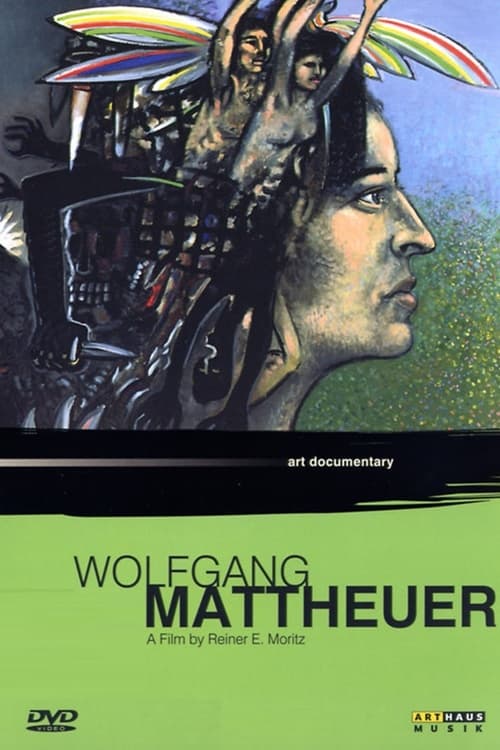
Wolfgang Mattheuer, together with Bernhard Heisig and Werner Tübke, is one of the main protagonists of the Leipzig School. With works such as Behind the Seven Mountains (1973) the graphic artist, painter and sculptor is one of the most controversial and yet most celebrated artists of the former GDR. With the use of mythology, literary references, and ambiguous details, he subverted the ideological edicts of the system. This film presents the great works of this reserved, yet perceptive ‘picture maker’. An insightful interview with Mattheuer introduces us to his eclectic visual world and his metaphorical response to contemporary events and the GDR regime.
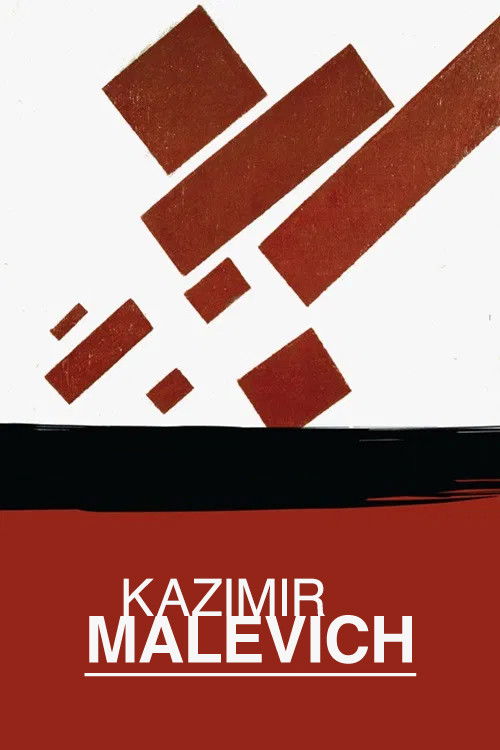
In 1915 the Russian artist Malevich declared a Black Square on a White Background an icon of his times and thus founded a new form of art, liberated from objects – Suprematism. Supported by the Bolsheviks at first, his ‘formalistic’ art was soon considered counterrevolutionary. 50 years later, in 1989, the first comprehensive Malevich retrospective outside Russia was held in Amsterdam’s Stedelijk Museum. It is here that Barrie Gavin outlines the artist’s creative phases and his life story. In doing so, he discovers the most diverse ‘isms’ of the 20th century and one of the most significant pioneers of abstract art.
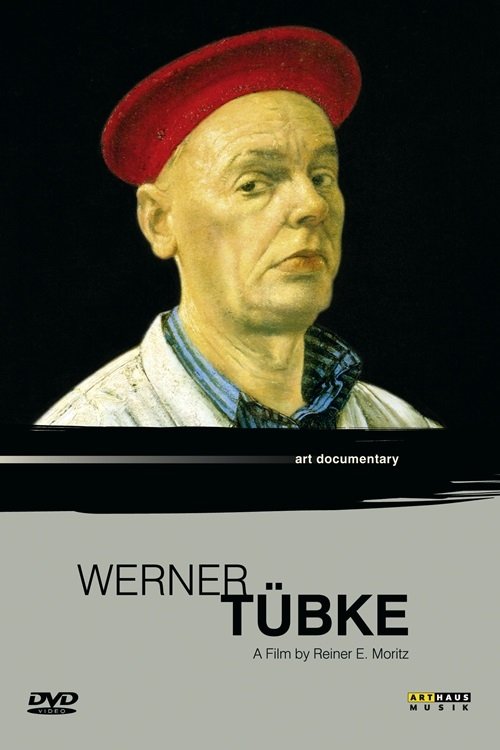
Step right up into the world of Werner Tübke! The painter and illustrator from Leipzig created fantastical imagery, replete with virtuosity and a love of storytelling. In the style of the old masters, he transformed the everyday and the political into something that transcends time, and in that way developed his own distinct, anachronistic viewpoint. As a co-founder of the Leipziger Schule, Tübke paved the way for a figurative art, which has earned him international recognition since the 1970s. Reiner E. Moritz met with the GDR’s extravagant prince of painting in his studio and accompanied him at work on his showpiece, the German Peasants' War panorama in Bad Frankenhausen.
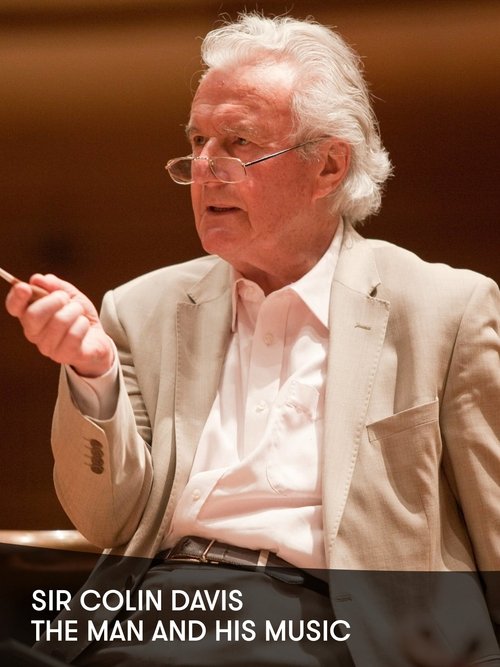
In 2012, just a year before his passing, Sir Colin Davis—president of the London Symphony Orchestra at the time and with over five decades of appearances with the prestigious ensemble—gets an affectionate look in this final video appearance, a documentary by Reiner E. Moritz. Alternating scenes from rehearsals, concerts, operas, master classes, and interviews, this portrait offers an invaluable insight into his charming and energetic personality both on and off the podium. It is clear throughout that the musical legend was also a great man, one who will long be remembered for his tireless commitment to music, both in England and abroad.
The world famous conductor reminisces about his life in a wide ranging discussion about his varied and successful career.
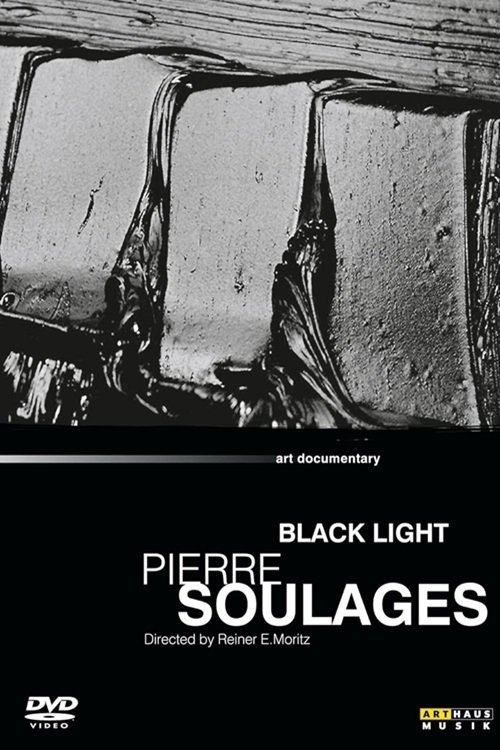
"When speaking of light, in connection with black, this sounds paradoxical. However, in reality, black is a colour of light. You cannot imagine there to be light without black being there, also", Soulages explains - one of the most important French artists of the post-war period. Not only his paintings, but also his glass window works for the abbey in Conques and his self-designed house in Sete, seem like poems made up of light and space. Using 80 specially selected works, the brilliant artist talks about the individual segments of his creative period and provides an insight into the philosophy and aesthetics of his poetic work.
Reiner E. Moritz revisits the history of dance as viewed through the camera lens.