Acting
No description available.
1839. The discontented noblemen assemble at the country estate of count Gábor Falussy, on the pretext of a boar hunt. Also an English engineer arrives for the sake of constructing the railway line leading up to the count’s quarry.
While awaiting his release from the Soviet detention camp he is being held in, a half-starved refugee (Andras Ambrus) finds that an error has been made and his name is not on the to-be-released list. It is then that he is forced to assume the identity of a dead man whose name is on the list. Ambrus at first refuses, but because he was an orphan and cannot produce evidence of his true identity, he has no other choice. However, when he returns to the outer world and the community he was raised in, he is greeted with suspicion. When he tries to claim his part-ownership of a farm from his adopted uncle, he is refused and beaten by farmhands the uncle sets on him.
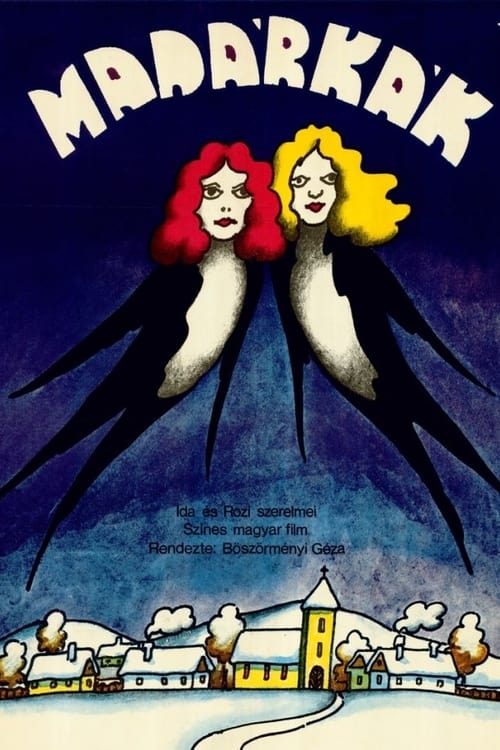
The heroines of this lyric comedy full of burlesque elements are two girls from a village who get totally engrossed in their day-dreaming. Ida and Rozi escape to the city to catch husbands for themselves.
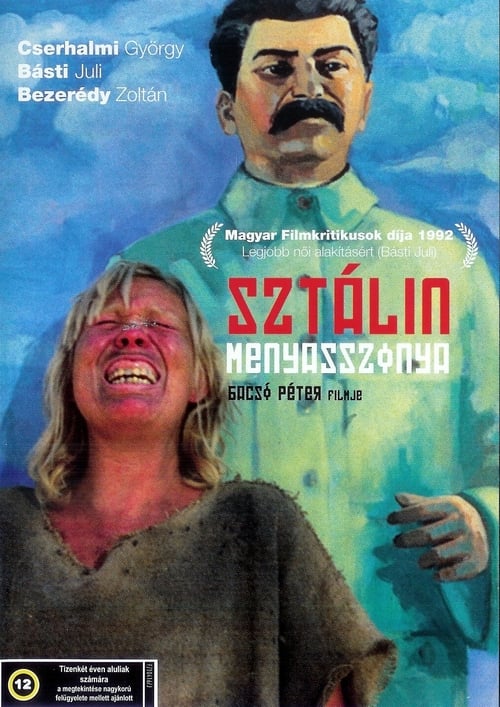
At a dusty crossroads in the Soviet Union villagers surrender their possessions - a horse, a samovar, a goat - to the state. The train which takes them away brings to the village a physically and mentally handicapped woman, barely able to speak. She makes herself bracelets of burrs and studies herself in a cracked and cloudy mirror. Befriended by very few, teased and tormented by many she seeks protection at a huge portrait of Stalin.
1956. Bébé is a painter, but he has not worked for years. The news arriving form Paris about the death of his childhood friend, Halász Petár affects him deeply, but his reflections are continually disturbed by telephone calls: the Alliance for Fine Arts wants to purchase one of the popular self-portraits of Halász.
After the World War I, enthusiastic young people found the intellectual group of Hungarian Communist Party. Their aim is to propagate the communist ideology to the people and get the workers on their side. They have fierce discussions on the new ideas, though their movement is not very successful. They clash with their opposition, attempt to lead people to the Red Army, but without success.
Vera is an engineer and a young divorcée. She is pretty, lonely, and has a boyfriend, Tamás, whom she is dating secretly on a certain day of the week at the week-end house of one of their friends, as Tamás has a family and does not intend to divorce his wife. Vera would like their relationship to be publicly acknowledged.
The rise and fame of Sándor Rózsa, the infamous outlaw of 19th century Hungary.
A traditional Hungarian poetic fairytale that describes the epic adventures of a young shepherd through love, war, magic and death.
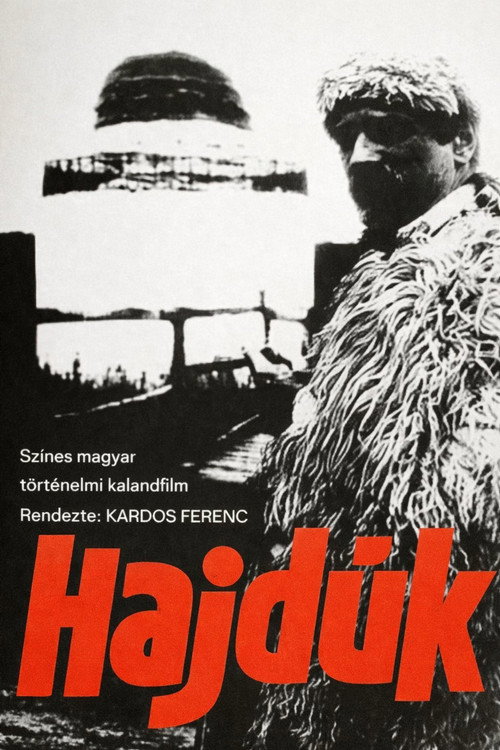
This film, set at the beginning of the 17th century, is the first East-European "Eastern". Bocskai István orders the free Heyducks to shepherd a huge herd of cattle through the country torn to three parts, to the Dalmatian coast, where he can get weapons in exchange, for fighting the Austrians.
The hero of the story that takes place at the beginning of the nineteenth century and recalls real historical personages is Akli Miklós, the court jester of Emperor Ferenc.
A horse goddess gives birth to three powerful brothers who set out into the Underworld to save three princesses from three evil dragons and reclaim their ancestors' lost kingdom.
A subway enforcement officer working in the oppressively gray Budapest metro gets a chance at love — but first he needs to find out why passengers are jumping — or being pushed — to their deaths onto the tracks.
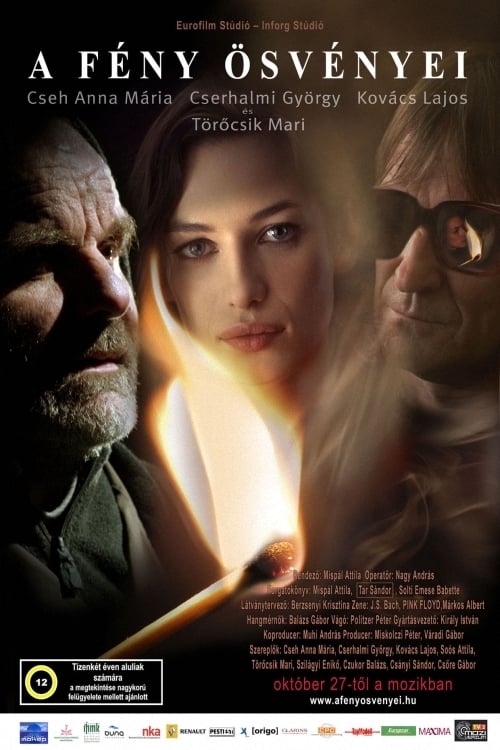
Two stories running in parallel: In one, a model is surrounded by men wanting to use and abuse her though, without realizing it, she is protected by a strange tramp guardian angel. In the other, a blind goldsmith struggles to produce his latest commission in the midst of his alcoholism and depression. Both then descend further and further into their own personal hells until they finally re-find peace with themselves and then their stories briefly merge.
A young refugee, Aryan, is shot while illegally trying to cross the Hungarian border. While tending him back to health, a doctor at a refugee camp discovers that Aryan has gained an extraordinary talent—he can levitate. Aryan is smuggled out by the doctor, who is intent on exploiting his secret.
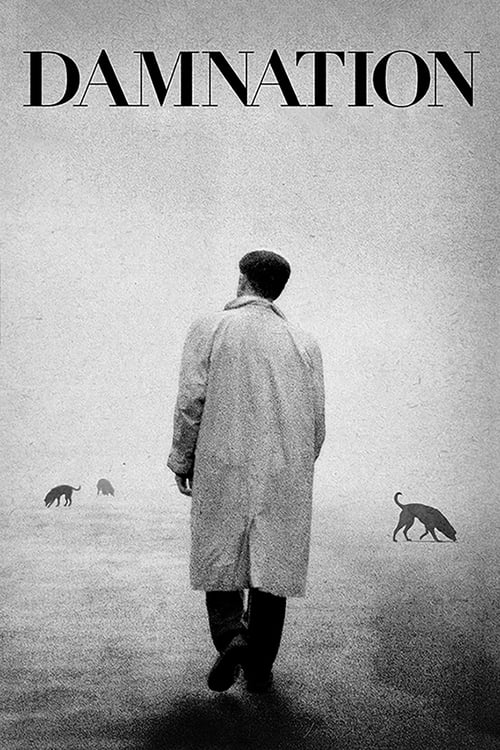
Karrer plods his way through life in quiet desperation. His environment is drab and rainy and muddy. Eaten up with solitude, his hopelessness would be incurable but for the existence of the Titanik Bar and its beautiful, haunting singer. But the lady is married and Karrer is determined to keep her husband away...
The true story of Giorgio Perlasca, an Italian cattle dealer and avowed fascist who — trapped in Nazi-occupied Budapest after Italy's armistice with the Allies — nevertheless saved more than 5,000 Hungarian Jews from the Holocaust through a combination of lies, bribery and derring-do.
Four good friends remain in touch after graduating from high school. Life has taken them down very different paths, yet every year they find time to leave city life behind and travel to the countryside to reminisce about their shared memories. As they do every year, they set their sights on their uninhabited island. They pay no heed to the initial ominous signs. After setting up camp, a Serbian barge moors next to the island, carrying Predrag, an experienced sailor. When one of the boys accuses him of stealing his fishing rod, tempers flare: one night, they kidnap the man and begin to interrogate him. The conflicts between the good friends become increasingly apparent, and old grievances that had been suppressed come to the surface...
A man's story parallels Hitler's rise. Austrian Klaus Schneider, wounded in World War I, recovers in the care of Dr. Emil Bettleheim. Bettleheim discovers that Schneider possesses powers of empathy and of clairvoyance, such that could aid suicidal patients. After the war, with one friend as his manager and another as his lover, Schneider changes his name to Eric Jan Hanussen and goes to Berlin, as a hypnotist and clairvoyant performing in halls and theaters. He always speaks the truth, which brings him to the attention of powerful Nazis. He predicts their rise (good propaganda for them) and their violence (not so good). He's in pain and at risk. What is Hanussen's future?