Eugeniusz Modzelewski
Directing
Biography
Eugeniusz Modzelewski, a pioneer of Polish silent cinema, disappeared during World War II and likely did not survive. Historical sources indicate that, as an opera singer and filmmaker, he was imprisoned in the German Auschwitz concentration camp (camp number 18521).
Known For
No description available.
Kobieta, która widziała śmierć
Film shot in Berlin, edited and supplemented in Warsaw. W. Jewsiewicki believes that the copy produced by the German studio contained numerous distortions of the writer's ideas, which is why director Juliusz Zagrodzki entrusted Eugeniusz Modzelewski with rewrites and reshoots featuring the two main characters. Assuming the film's program was faithful, the screen version of "The Beauty of Life" unfolded as follows: Piotr Rozłucki, the son and grandson of an insurgent, was raised in the Mikhailovsky Corps, far from his homeland and all memories. Promoted to officer status, thanks to his family's efforts, he was assigned to a regiment stationed in Poland, and there, at the home of his superior, General Polenov, he met his daughter, Tatiana. Simultaneously, he became close to a circle of patriotic youth. A struggle rages within the young officer: on the one hand, a passionate and mutual love for a charming Russian woman, and on the other, conscience, homeland, and duty.
The Beauty of Life
Another film, along with BLANC ET NOIR, from the series of pseudo-psychological dramas by Kinofilm. The film has not survived to this day, all copies burned during World War II.
Lokaj
No description available.
Panna po wojnie
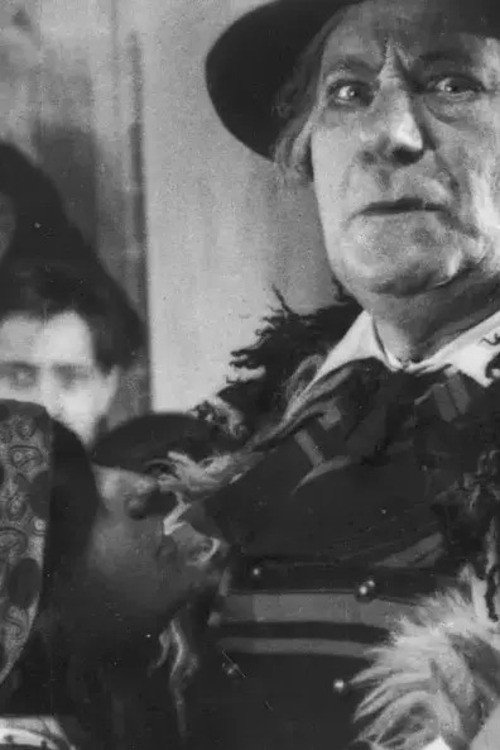
The film was made under the terms of the partition agreement and with the participation of Władysław Reymont. However, numerous cuts and alterations detracted from the film's educational intent. Only Mieczysław Frenkel, who made his screen debut with this film, received praise. The film has not survived to this day, all copies burned during World War II.
Chłopi
A tragedy of a young "senior of the Vistula river rascals". Rysiek Cwaniak accidentally meets a Lady in a city tavern, who, delighted with Cwaniak's dance with her Black Staszka, kidnaps him into a dance whirl. The Lady's eyes strangely hypnotize the young Crafty and for a long time they do not let him forget about this alluring and mysterious Lady, but she, Baron Ilsky's mistress, does not even think about the accidental acquaintance and does not suppose that a momentary joke could shatter the current life of the bunch of people.
Za trzy spojrzenia
Count George Vilbois, descendant of an old French family that emigrated to Poland, is a young, wealthy, and righteous man. However, he is burdened by heredity, and his normal state, at the stroke of twelve at midnight, fades, and the impeccable man... transforms into an apache with all the instincts of a primitive man... He commits criminal acts, of which he knows nothing when he returns to consciousness. On one such nocturnal expedition, he murdered a street girl, Stasia, whom he took up because she bore a strange resemblance to his fiancée, Lila Korska. A few years after their wedding, the unfortunate man's condition deteriorated significantly... and George began to live by day, even as he had once lived only by night. This drew the attention of police agent Maks, whose lover the murdered Stasia was, and who ultimately proved that Count Vilbois was the apache who murdered her. The film has not survived to this day.