FEEL IT.STREAM
Nicolas Philibert

Nicolas Philibert

Directing

Biography

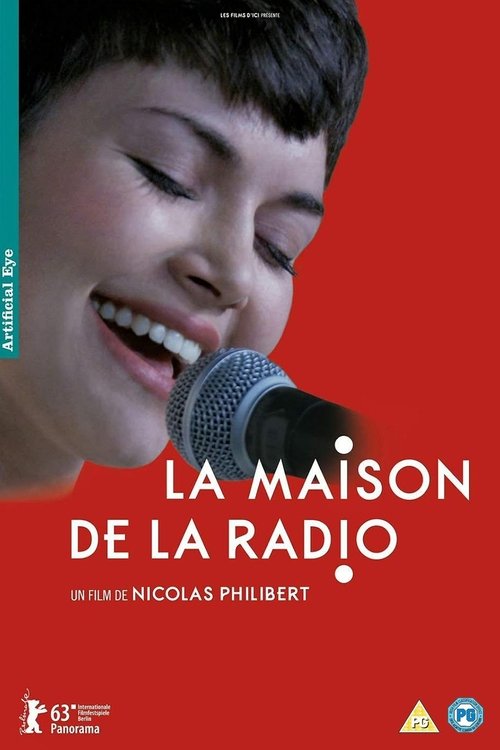
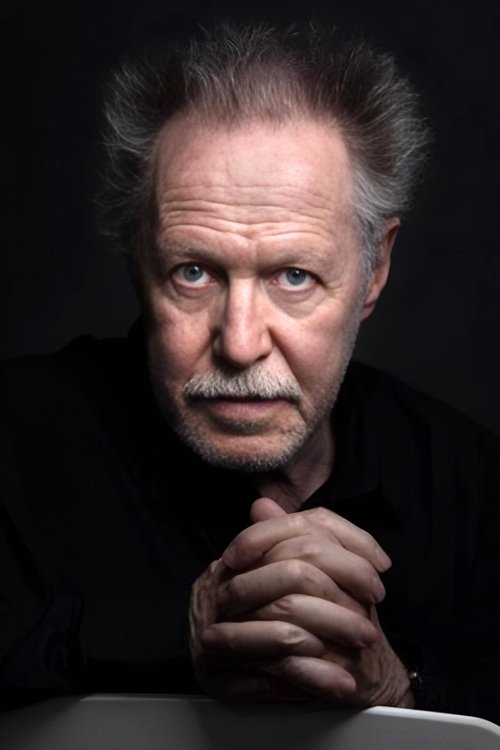
Nicolas Philibert (French: [filibɛʁ]; born 10 January 1951) is a French documentary filmmaker. He has directed films since 1978. At the 73rd Berlinale (2023), he receives the Golden Bear for his film "On the Adamant". Philibert's father was a film lecturer and he attended his talks in his youth. This encouraged him to embark on a film career. He started this with René Allio (1970), as a trainee on Les Camisards as an assistant on Rude Journée pour la reine (1973) and assistant-director on Moi, Pierre Rivière, ayant égorgé ma mère, ma sœur et mon frère... (1975). In 1978 he co-directed with Gérard Mordillat a feature documentary His Master's Voice, in which a dozen bosses of big industrial groups discuss power, leadership, hierarchies and the role of unions. Between 1985 and 1987, he made several films about mountains and adventure for TV, then turned to making feature-length documentaries for theatrical distribution: La Ville Louvre (1990), Le Pays des sourds (1992), Un animal, des animaux (1995), La Moindre des choses (1996) - at the psychiatric clinic of La Borde, as well as an experimental film with the pupils of the theatre school Théâtre national de Strasbourg, Qui sait? (1998). In 2001, Nicolas Philibert made Être et avoir, about daily life in a single class school on a small village in the Auvergne. It won the Prix Louis Delluc 2002, and became a box office and critical success in France and internationally. The film was screened out of competition at the 2002 Cannes Film Festival. With Retour en Normandie (2007), he revisited the traces of a previous films, made thirty years earlier by René Allio, with local peasants playing the lead roles. With Nénette (2010), made at the Ménagerie du Jardin des plantes in Paris, he produced an intimated portrait of the most famous of its inhabitants a female orang-utang, Nénette, held in captivity for 36 years. La Maison de la radio (2013), takes us into the heart of the French Radio headquarters in Paris, finding out who inhabits the place and discovering the mysteries of its long corridors. Over the last fifteen years there have been more than 120 retrospectives or 'homages' to Philibert organised internationally including the British Film Institute (London) and the Museum of Modern Art (New York). He was one of the directors invited to nominate his favourite films in the British Film Institute's 2012 poll. He explains, in French, his motivations, his influences (including Agnés Varda) and the history of his career as a documentary film maker, especially the 'impermeable' frontiers between documentary and drama in an interview recorded in April 2012.

Known For

Télématin
5.8

Télématin is a French breakfast television news show, broadcast on France 2 since January 7, 1985. It is broadcast in Metropolitan France weekdays from 6:30 to 9:00 am CET. TV5 broadcast the show in Canada in its entirety until September 2011: it now shows a 90 minute version between 6:30 and 8:00 am Eastern Time, when the French original version is now 2h30 long. Télématin is hosted by William Leymergie. The show is daily seen by around 40% of the French morning audience, a very high percentage for French TV. In Metropolitan France, the newscasts are presented at 7:00, 7:30 and 8:00, with newsflashes at 6:30 and 8:50, and two press reviews at 7:20 and 8:30. The 6:30, 7:30 and 8:50 newscasts are usually presented by a female reader and the hourly newscasts by a male. The usual readers are Nathanaël de Rinquesen, Sophie Le Saint, Julien Benedetto, Sophie Gastrain, Patrice Romedenne and Frédéric Vion.

Télématin

1985
Quelle époque !
5.0

Talk show hosted by Léa Salamé, featuring incisive, funny, and surprising personalities debating current events in culture, society, politics, and the media. The set is designed as an arena where artists, polemicists, intellectuals, politicians, top athletes, and powerful figures come together. Permanent guest Christophe Dechavanne can intervene at any time during the show. Comedian Philippe Caverivière is also present with a segment dedicated to the political week and another devoted to celebrity news and social media.

Quelle époque !

2022
Le Cercle
N/A

As long as there is cinema, LE CERCLE will be there. It is the only television program of critical debates 100% devoted to cinema. Each week, it offers fiery, joyful and non-condescending jousts on the films on the bill; and invites with "Le questionnaire du CERCLE" directors to come and share their passion for cinema.

Le Cercle

2005
Les Carnets De L'Aventure
10.0

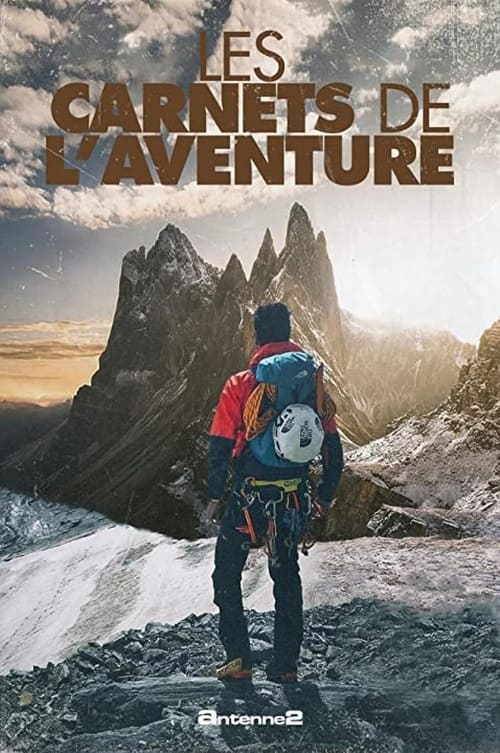
Les Carnets de l'Aventure is a cult French television program of adventure and extreme sports documentaries broadcast on Saturday afternoons on Antenne 2 (France 2) between 1980 and 1989. At the beginning of the 80s, in full transformation of mountain activities into high level sports, Les Carnets de L'Aventure revealed from to the country that invented alpinism to the whole world the "French-Touch" of these talents of the new approach to the mountains and its new disciplines. Patrick Edlinger and solo free climbing with the film La Vie au Bout des Doigts, directed by Jean-Paul Janssen in 1982. But also his brother in arms Patrick Berhault, Christophe Profit in the solo ascent of Les Drus, the trilogies of Jean-Marc Boivin in hang-gliding, the Himalayan expoits of Marc Batard but also those of Patrick Gabarrou, opener of routes in the Alps and elsewhere, Patrick Vallencant and his extreme skiing, Paul-Émile Victor and many others...

Les Carnets De L'Aventure

1977
To Be and to Have
7.3

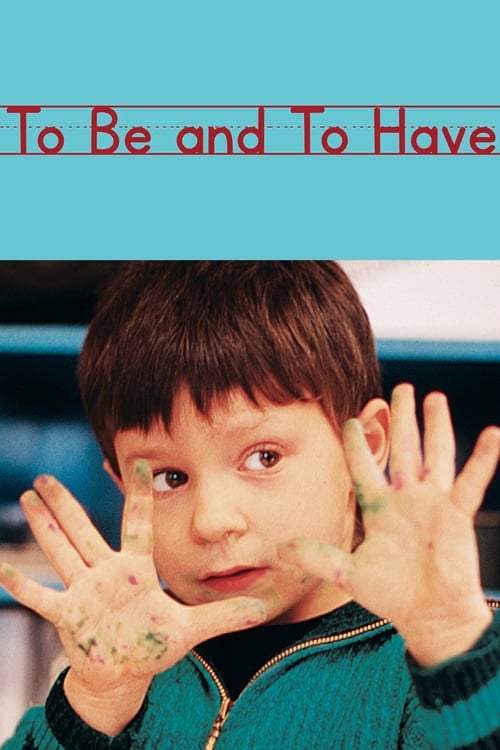
The documentary's title translates as "to be and to have", the two auxiliary verbs in the French language. It is about a primary school in the commune of Saint-Étienne-sur-Usson, Puy-de-Dôme, France, the population of which is just over 200. The school has one small class of mixed ages (from four to twelve years), with a dedicated teacher, Georges Lopez, who shows patience and respect for the children as we follow their story through a single school year.

To Be and to Have

2002
I, Pierre Rivière, Having Slaughtered My Mother, My Sister and My Brother…
6.5

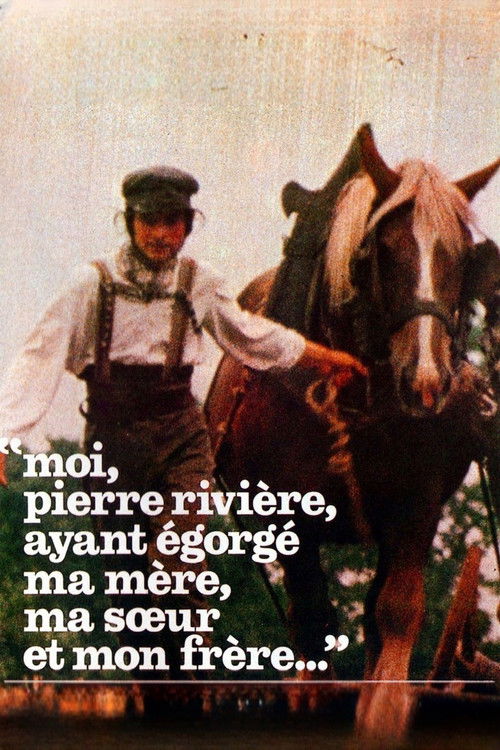
Based on documents compiled by leading French philosopher Michel Foucault, this unique and original film charts the gruesome events which took place in a Normandy village in 1835, when a young man, Pierre Rivière, murdered his mother, sister and brother before fleeing to the countryside. With a cast made up of real-life villagers from the area where the events took place, the detailed re-enactments and careful attention to the gestures of their ancestors serve to create an intense and sometimes disturbing atmosphere of hyper-realism. Details of the crime and of the trial that followed are told from varied perspectives, including the written confession of Pierre himself, and form a rich and complex narrative that interrogates the concepts of “truth” and “history”.

I, Pierre Rivière, Having Slaughtered My Mother, My Sister and My Brother…

1976
On the Adamant
7.1

The Adamant is a unique day-care centre. A floating structure located on the Seine in the heart of Paris, it welcomes adults suffering from mental disorders, offering the kind of care that grounds them in time and space and helps them to recover or keep up their spirits. The team running it tries to resist the deterioration and dehumanisation of psychiatry as best as they can.

On the Adamant

2023
At Averroes & Rosa Parks
7.2

Averroès and Rosa Parks: two units of the Esquirol Hospital, which - like the Adamant - are part of the Paris Central Psychiatric Group. From individual interviews to «carer-patient» meetings, the filmmaker focuses on showing a form of psychiatry that continually strives to make room for and rehabilitate the patients’ words. Little by little, each one eases open the door to their world. Within an increasingly worn-out health system, how can the forsaken be given a place among others.

At Averroes & Rosa Parks

2024
The French Calvinists
6.2

A few years after the revocation of theEdict of Nantes, the Camisards, Protestants from the Cévennes region, mostly peasants and silk workers, formed groups following Gédéon Laporte and fought Louis XIV's dragoons.

The French Calvinists

1972
No image
N/A

Three programs made on the basis of material gathered for the documentary His Master's Voice, where twelve CEOs of large French companies face the camera and talk about power, hierarchy, trade unions, strikes and self-management: Secrets About the Worker; A Spanner in the Works and The Battle Started at Landerneau. The three parts were banned from French national television (Antenne 2) but released at Cinéma La Clef in Paris a few weeks later.

Patrons - Télévision

1979
His Master's Voice
6.6

Jacques Lemonnier of IBM France, Francois Dalle of L'Oreal and other ultrapowerful French moguls are surprisingly candid -- and cold-blooded -- as they discuss their attitudes about business in this startling 1978 documentary. After sounding off about unions, strikes, hierarchy and management, the subjects realized how callous they sounded and managed to convince the French government to suppress the film.

His Master's Voice

1978
The Typewriter and Other Headaches
6.4

This third opus will take us into the homes of some of the Adamant and Averroes & Rosa Parks’ protagonists, during the visits led by their caregivers.

The Typewriter and Other Headaches

2024
The Wonderful Crook
5.6

A manufacturer of furniture sees his business go down and decides to rob banks to pay his staff. Het gets romantically involved with one of his victims.

The Wonderful Crook

1975
Louvre City
7.0

A voyage into the museum's reserves, and part of the extra work involved to mount the expositions after the renovation of the Louvre in the 1980s, when the glass pyramid was added to the classic buildings. From the preservation rooms through the frame and painting retouches by experts, to the personnel instruction on how to be efficient in protecting the collections, and look nice to the visitors.

Louvre City

1990
Baquet's Comeback
10.0

July 1956: like every summer, the actor and cellist Maurice Baquet temporarily deserts the stage and the cinema studios to go to Chamonix where the mountaineer Gaston Rebuffat is waiting for him. A few days later, the two men achieved a historic first, that of the south face of the Aiguille du Midi (3,842 m), a magnificent wall rising like a rampart above the Vallée Blanche. July 1988: to pay tribute to the memory of his friend Gaston, now deceased, Maurice Baquet once again climbed this wall suspended between heaven and earth with the man who, 50 years his junior, is considered one of his best contemporary mountaineers: Christophe Profit.

Baquet's Comeback

1988
Nénette
6.5

Nénette, an orangutan, is the star of the Parisian zoo where she has lived most of her long life. She is a mother of four and has survived three mates, and she bonds only with a few select keepers. The camera rests throughout on Nénette and the other apes in everyday situations. We only see the visitors as occasional reflections in the glass, but we hear their recorded comments and conversations alongside interviews with the zoo keepers.

Nénette

2010
No image
N/A

A series of 55 short films made for the 300rd birthday (1712-2012) of Jean-Jacques Rousseau (1712-1778) puts his philosophy into a new context.

La faute à Rousseau

2012
Christophe
10.0

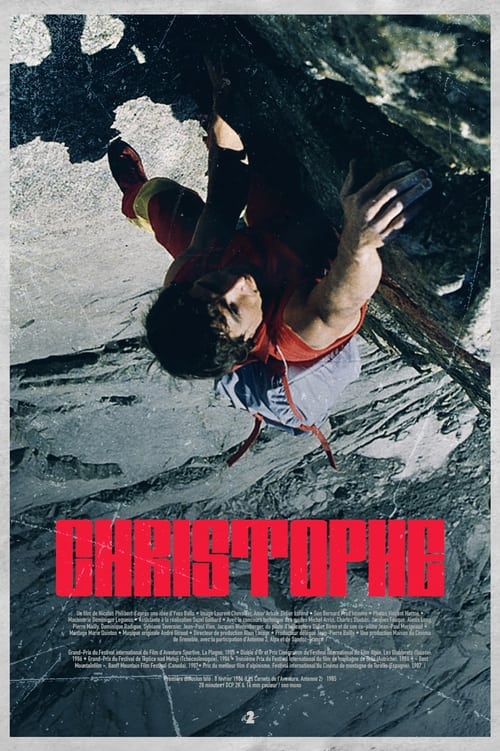
It is 1 p.m. on June 30, 1982, when Christophe Profit, 24, shows up at the foot of Les Drus with his pof bag, his climbing shoes and nothing else. He will try the west face of Les Drus in "solo", in the Mont Blanc massif by "Directe Américaine", 1100 meters of vertical and smooth rock. Christophe will achieve the feat of climbing the wall in free solo, without using a rope or any belaying technique. At 4:10 p.m., barely more than three hours after the start of his ascent, the new climbing star can embrace the Virgin of the Drus at the same time as the career of a high-level mountaineer. Three years later, on July 25, 1985, he climbed the north faces of the Matterhorn, the Eiger and the Jorasses in the same day. Awarded at many mountain film festivals, this great documentary is a magnificent testimony to one man's passion for climbing, the mountains and adventure.

Christophe

1985
In the Land of the Deaf
6.4

Anyone who has ever ventured to the "Land of the Deafs" will have been struck by the strangeness of the choreographed signs with which deaf people express themselves. Developed ages ago, these signs constitute a veritable language. As precise and subtle as speech, they are as effective as spoken language in making a declaration love or providing a detailed technical description. Jean-Claude, Jeanine, Eric, Cyril, Alain, Juliette, Guy, Aurélien and René have one thing in common - they are all profoundly deaf. So they dream, think and communicate in sign language. Which means that they see the world differently. Viewers embark with them on a discovery of the distant land of the deaf, where sight and touch assume enormous importance.

In the Land of the Deaf

1992
Back to Normandy
6.2

A filmmaker returns to Normandy thirty years after a working on a movie based on a local homicide and tries to find the actors who worked on the project.

Back to Normandy

2007