John Wayne
Acting
Biography
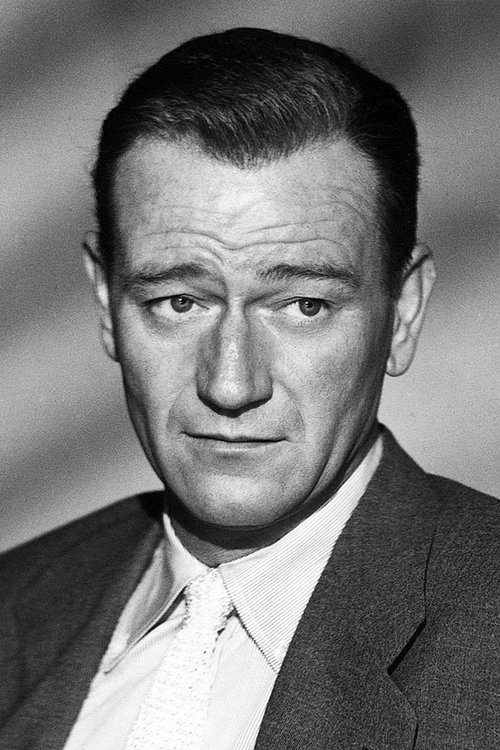
Marion Mitchell Morrison (born Marion Robert Morrison) (May 26, 1907 – June 11, 1979), known professionally as John Wayne and nicknamed Duke, was an American actor and filmmaker. An Academy Award-winner for True Grit (1969), Wayne was among the top box office draws for three decades. Born in Winterset, Iowa, Wayne grew up in Southern California. He was president of Glendale High class of 1925. He found work at local film studios when he lost his football scholarship to the University of Southern California as a result of a bodysurfing accident. Initially working for the Fox Film Corporation, he appeared mostly in small bit parts. His first leading role came in Raoul Walsh's The Big Trail (1930), which led to leading roles in numerous B movies throughout the 1930s, many of them in the Western genre. Wayne's career took off in 1939, with John Ford's Stagecoach making him an instant star. He went on to star in 142 pictures. Biographer Ronald Davis said, "John Wayne personified for millions the nation's frontier heritage. Eighty-three of his movies were Westerns, and in them, he played cowboys, cavalrymen, and unconquerable loners extracted from the Republic's central creation myth." Wayne's other well-known Western roles include a cattleman driving his herd north on the Chisholm Trail in Red River (1948), a Civil War veteran whose young niece is abducted by a tribe of Comanches in The Searchers (1956), and a troubled rancher competing with a lawyer for a woman's hand in marriage in The Man Who Shot Liberty Valance (1962). He is also remembered for his roles in The Quiet Man (1952), Rio Bravo (1959), and The Longest Day (1962). In his final screen performance, he starred as an aging gunfighter battling cancer in The Shootist (1976). He appeared with many important Hollywood stars of his era, and his last public appearance was at the Academy Awards ceremony on April 9, 1979.
Known For

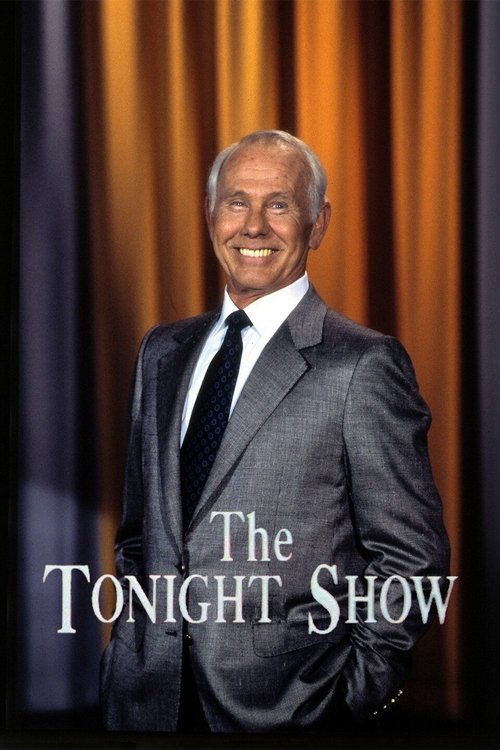
The Tonight Show Starring Johnny Carson is a talk show hosted by Johnny Carson under The Tonight Show franchise from 1962 to 1992. It originally aired during late-night. For its first ten years, Carson's Tonight Show was based in New York City with occasional trips to Burbank, California; in May 1972, the show moved permanently to Burbank, California. In 2002, The Tonight Show Starring Johnny Carson was ranked #12 on TV Guide's 50 Greatest TV Shows of All Time.
The Tonight Show Starring Johnny Carson

The Mike Douglas Show is an American daytime television talk show hosted by Mike Douglas that originally aired only in the Cleveland area during much of its first two years on the air. It then went into syndication in 1963 and remained on television until 1982. It was distributed by Westinghouse Broadcasting and for much of its run, originated from studios of two of the company's TV stations in Cleveland and Philadelphia.
The Mike Douglas Show

An annual awards ceremony recognizing excellence in film and television, both domestic and foreign, bestowed by the Hollywood Foreign Press Association.
Golden Globe Awards

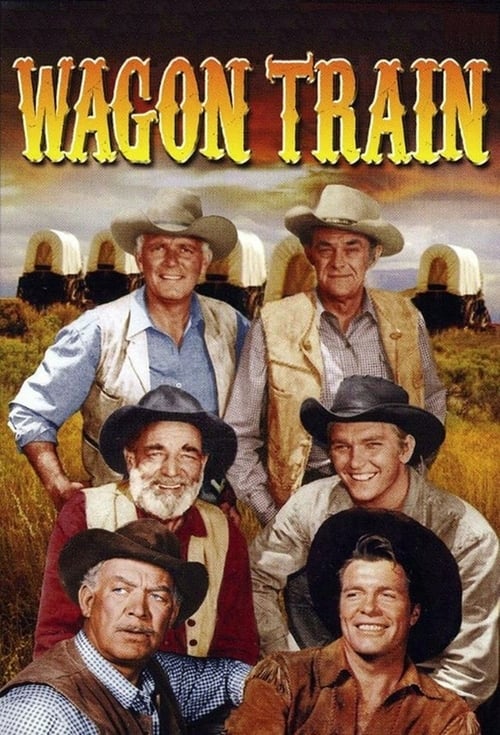
The series initially starred veteran movie supporting actor Ward Bond as the wagon master, later replaced upon his death by John McIntire, and Robert Horton as the scout, subsequently replaced by lookalike Robert Fuller a year after Horton had decided to leave the series. The series was inspired by the 1950 film Wagon Master directed by John Ford and starring Ben Johnson, Harry Carey Jr. and Ward Bond, and harkens back to the early widescreen wagon train epic The Big Trail starring John Wayne and featuring Bond in his first major screen appearance playing a supporting role. Horton's buckskin outfit as the scout in the first season of the television series resembles Wayne's, who also played the wagon train's scout in the earlier film.
Wagon Train

Four panelists must determine guests' occupations - and, in the case of famous guests, while blindfolded, their identity - by asking only "yes" or "no" questions.
What's My Line?

Jed Clampett's swamp is loaded with oil. When a wildcatter discovers the huge pool, Jed sells his land to the O.K. Oil Company and at the urging of cousin Pearl, moves his family to a 35-room mansion in Beverly Hills, California.
The Beverly Hillbillies

No description available.
The Merv Griffin Show

The Lucy Show is an American sitcom that aired on CBS from 1962–68. It was Lucille Ball's follow-up to I Love Lucy. A significant change in cast and premise for the 1965–66 season divides the program into two distinct eras; aside from Ball, only Gale Gordon, who joined the program for its second season, remained. For the first three seasons, Vivian Vance was the co-star. The earliest scripts were entitled The Lucille Ball Show, but when this title was declined, producers thought of calling the show This Is Lucy or The New Adventures of Lucy, before deciding on the title The Lucy Show. Ball won consecutive Emmy Awards as Outstanding Lead Actress in a Comedy Series for the series' final two seasons, 1966–67 and 1967–68.
The Lucy Show

The Red Skelton Show is an American variety show that was a television staple for two decades, from 1951 to 1971. It was second to Gunsmoke and third to The Ed Sullivan Show in the ratings during that time. Skelton, who had previously been a radio star, had appeared in several motion pictures as well. Although his television series is largely associated with CBS, where it appeared for more than fifteen years, it actually began and ended on NBC. During its run, the program received three Emmy Awards, for Skelton as best comedian and the program as best comedy show during its initial season, and an award for comedy writing in 1961.
The Red Skelton Show

Cuban Bandleader Ricky Ricardo would be happy if his wife Lucy would just be a housewife. Instead she tries constantly to perform at the Tropicana where he works, and make life comically frantic in the apartment building they share with landlords Fred and Ethel Mertz, who also happen to be their best friends.
I Love Lucy

No description available.
Sacrée soirée

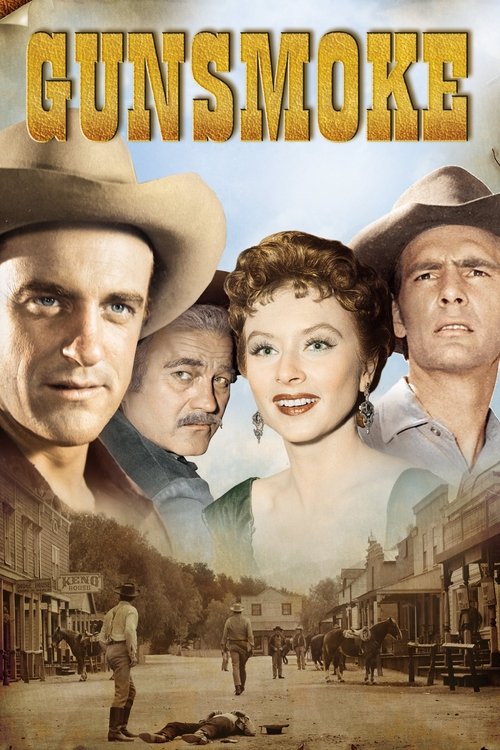
Gunsmoke is an American radio and television Western drama series created by director Norman MacDonnell and writer John Meston. The stories take place in and around Dodge City, Kansas, during the settlement of the American West. The central character is lawman Marshal Matt Dillon, played by William Conrad on radio and James Arness on television.
Gunsmoke

The Ed Sullivan Show is an American TV variety show that originally ran on CBS from Sunday June 20, 1948 to Sunday June 6, 1971, and was hosted by New York entertainment columnist Ed Sullivan. It was replaced in September 1971 by the CBS Sunday Night Movie, which ran only one season and was eventually replaced by other shows. In 2002, The Ed Sullivan Show was ranked #15 on TV Guide's 50 Greatest TV Shows of All Time.
The Ed Sullivan Show

Marcello Mastroianni, Isabelle Adjani, Alain Delon, Martin Scorsese, Woody Allen... the biggest stars in cinema were welcomed by Christian Defaye on his show Spécial cinéma. Between intimate confessions from actors and immersion in the world of the greatest filmmakers, Christian Defaye took viewers on a journey into the fascinating world of cinema for nearly thirty years.
Spécial cinéma

An annual American awards ceremony honoring cinematic achievements in the film industry. The various category winners are awarded a copy of a statuette, officially the Academy Award of Merit, that is better known by its nickname Oscar.
The Oscars

The Colgate Comedy Hour is an American comedy-musical variety series that aired live on the NBC network from 1950 to 1955. The show starred many notable comedians and entertainers of the era, including Eddie Cantor, Dean Martin and Jerry Lewis, Fred Allen, Donald O'Connor, Bud Abbott and Lou Costello, Bob Hope, Jimmy Durante, Ray Bolger, Gordon MacRae, Ben Blue, Robert Paige, Tony Curtis, Burt Lancaster, Broadway dancer Wayne Lamb and Spike Jones and His City Slickers.
The Colgate Comedy Hour

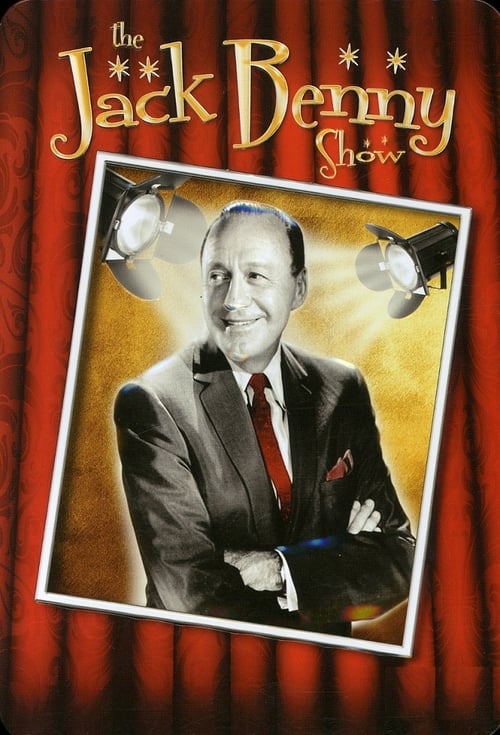
Laugh along with funnyman Jack Benny as he brings his underplayed humor to TV along with regular performers from his radio show days.
The Jack Benny Program

The Bob Hope Show hosted by Bob Hope, debuted on April 9, 1950. During the 1952-1953 season, NBC rotated with other variety shows in a Sunday night block known as "The Colgate Comedy Hour" (Sept. 1950 to Dec. 1955). Also known as, "The Chevy Show with Bob Hope." When the first special debuted in October of 1950 it was the most expensive television program made up to that point - costing an astronomical $1,500 a minute to produce. Bob Hope had his own television show and radio show at the same time. For the next three seasons, The Bob Hope Show was broadcast once a month on Tuesday nights, giving Milton Berle a week off. Bob ended his radio show in April, 1956. Bob Hope also had another show by a similar name, "The Bob Hope Show (All Star Revue)". In addition, he performed in "Specials" for many years. It is the longest running variety program in television's history with a record of 45 years of televised entertainment.
The Bob Hope Show
Tonight Starring Jack Paar is an American talk show hosted by Jack Paar under The Tonight Show franchise from 1957 to 1962. It originally aired during late-night. During most of its run it was broadcast from Studio 6B inside the RCA Building. The same studio would also host early episodes of The Tonight Show Starring Johnny Carson, and Late Night with Jimmy Fallon. Its theme song was an instrumental version of "Everything's Coming Up Roses", and the closing theme was "So Until I See You" by Al Lerner.
Tonight Starring Jack Paar

Well-educated and upper middle class, Maude Findlay is the archetypal feminist of her generation. She lives in suburban Tuckahoe, New York, with her fourth husband, Walter, their divorced daughter, Carol, and grandson Phillip.