Vladimir Osminin
Directing
Known For
The "Good News" is a film dedicated to one of the main holidays of Orthodox Christians: the Annunciation of the Most Holy Theotokos. The main idea of this holiday is the beginning of the liberation of the human race from sins and eternal death, the joyful news about the upcoming birth of Jesus Christ. The film shows how people living in the remote Russian village are preparing for the Annunciation, marking the turning point of winter and the beginning of field work. Everyday details of the parish community life help to feel Russian Orthodox customs that have been formed for centuries.
Good News
The first documentary about the Chernobyl disaster. The eruption of the nuclear reactor, the heroic actions of firefighters and soldiers, the abandoned city of Pripyat, and the invisible death are a warning to humanity about future man-made disasters, and a reminder to those in power about their responsibility.
Chernobyl: Warning
The 70th anniversary of the Moscow Art Theatre is celebrated with new premieres that creatively intertwine tradition and innovation. Stories about the founders of the theatre, Stanislavsky and Nemirovich-Danchenko, and the galaxy of famous actors, including Ivan Moskvin, Vasily Kachalov, and others, are interspersed with film clips of the play Tartuffe. The history of the theater is also the history of its repertoire, which includes such plays as "At the Bottom," "The Cherry Orchard," "Anna Karenina," "The Kremlin Chimes," and many others.
Moscow Art Theatre
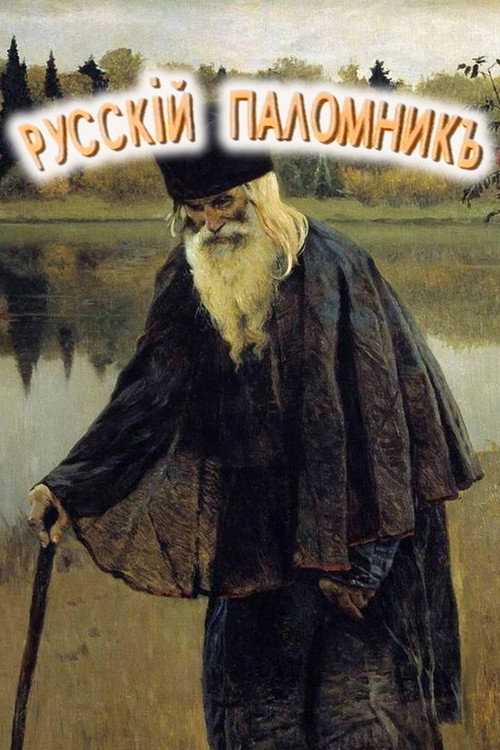
The film depicts the pilgrimage to Jerusalem of schema monk Makary with whom faith is not just the latest craze but the essence of his understanding of life. His main goal is to pray in the Church of the Holy Sepulchre, so the greatest value of his luggage is a huge number of memorial notes. In the Holy Land he meets monks, visits Orthodox churches and shrines, reflects on the eternal principles of human life - love, hope, faith.
The Russian Pilgrim
The life path of Patriarch Tikhon (in the world of Vasily Ivanovich Bellavin, a native of the town of Toropets) is a real discovery for his contemporaries. Elected the first Patriarch of Moscow since pre-Petrine times and He was called to pastoral ministry in the most difficult years — during the revolution and The Civil War. He was persecuted and persecuted by the Soviet government, becoming a martyr. In 1981, Patriarch Tikhon was glorified as one of the New Martyrs and Confessors of Russia.
The Eleventh Patriarch
The submarine and surface fleet of the USSR is the country's pride. From Murmansk to Vladivostok, sailors stand watch in difficult weather conditions, for whom the ship's deck has become their land and the cabin their second home. Submariners, who spend months in the depths of the ocean, face particularly challenging circumstances. The stories of these young sailors, their commanders, and the reasons behind their choice of this courageous profession shed light on their character development and post-service lives.
Watch in the Ocean
About former famous athletes: Z. Mironova, a professor of surgery, N. Ozerov, a sports commentator, and G. Shatkov, a vice-rector of Leningrad University.
Yesterday Champions, Today…
The city of Almalyk in Uzbekistan and the city of Kirovsk on the Kola Peninsula are strongly connected. These are two links in one big chain of development of the national economy in the country. The richest apatite deposit is being developed on the Kola Peninsula. And in Fertilizers are produced from them at a chemical plant in Uzbekistan. The yields of grain and vegetables, as well as their domestic consumption and exports, largely depend on the efforts of the apatite miners at the Khibiny deposit.
For the Land
Entrepreneur Veniamin Masarsky was born in the Novgorod countryside. It was here, in his small homeland, that he led the construction and industrial cooperative Volkhov, becoming its chairman. How does philosophy help production? Masarsky developed his own algorithm for success: innovation should be based on tradition, and economic benefits should be calculated with an eye towards the future.
Confession of a Cooperator
Why have we forgotten our history? This is the question that Fyodor Vikulov, a sculptor who has dedicated his life to creating images of Russian heroes, is pondering. The Patriotic War of 1812 is one of the central themes of his work. Margarita Tuchkova's spiritual feat opens a new chapter in the history of the Battle of Borodino.
1812. Amnesia
The film tells us about the history of the Moscow Donskoy monastery and the personality of Patriarch Tikhon. During the difficult years of persecution of the Russian Church, from November 1917 to April 1925, he led it, trying to keep the Orthodox faith pure.
Zealous Protectress
The Trinity-St. Sergius Lavra is the heart of Orthodox Russia. Its founder, the greatest ascetic of piety, St. Sergius of Radonezh, was famous not only for his transformation of monasticism, construction of monasteries, and miracles, but also for his gracious public service to the state and its "Christ-bearing" people. Called by the chroniclers "the abbot of the Russian land," he reconciled the warring princes and blessed the army for its battle against Mamai's hordes.
Hegumen of the Russian Land
The Iveron Icon of the Mother of God, which opened the way through the Resurrection Gate to Red Square, has long been revered by Orthodox and even non-Orthodox Muscovites. In 1929-1931, the wooden chapel where the miraculous icon was venerated was destroyed by the godless authorities, the icon was confiscated, and the Resurrection Gate was demolished. In 1994-1995, the chapel and gate were restored, and a new list of the Iveron icon was made on Mount Athos.
The Gatekeeper
The Public Committees of Soldiers' Mothers, of which there are already many, promptly respond to any appeal from a soldier who has faced violence, humiliation, or hazing in the army. Their activities are also supported by the military. Through these joint efforts, the army is gradually eliminating the vices that affect both society and the military. These women's organizations are led not only by mothers. There are also young girls, future mothers, who care about the fate of their brothers, fiancés, friends, and fellow students.
Soldiers’ Mothers
How is the 200th anniversary of Alexander Pushkin, whose birthday is celebrated by almost every Muscovite, being celebrated in the capital? With love and grandeur: in squares and streets, in parks and squares, young people are dancing waltzes and mazurkas, actors and musicians are giving concerts, and exhibitions and literary readings are taking place in museums. But the special atmosphere is on Baumanskaya, in the corner of Moscow where the poet was born, was baptized, and lived “without knowing sorrow or trouble.” Of course, Moscow is not all of Russia. But it is here and on this day that you realize how right Ivan Shmelev was when he said that “Pushkin is Russia itself.”
Against the Backdrop of Pushkin
Where does the beauty of the Russian land begin? Is it with a spring that gushes from a hill, or with a golden field stretching to the horizon, or perhaps with a birch grove filled with the song of nightingales? These are the thoughts of the poet and writer Vladimir Soloukhin as he dines in a peasant's house, gathers mushrooms in a forest clearing, and admires the beauty of the ancient Rostov Kremlin. The sound of bells echoes throughout the area: "Russia, Motherland, and people are words of the same root..."
The Spring

About the transformations taking place in the People's Republic of Kampuchea after the fall of the dictatorial regime of Pol Pot; about the social, political, and economic challenges facing the young republic, which is now known as Cambodia.
Spring in Phnom Penh
On the day of the abdication of Emperor Nicholas II, the icon of the Mother of God "Derzhavnaya" appeared to the Orthodox world. Historians and theologians believe that this miraculous event cannot be interpreted in any other way than as the assumption of earthly power by the Queen of Heaven to save the Russian land. The Queen is depicted with the Child Jesus on a royal throne, wearing a royal robe with the symbols of royal authority: a crown, a scepter, and a orb. You can worship the icon at the Church of the Ascension in Kolomenskoye.
The Reigning
Grand Duke Konstantin Romanov was the "father" of the cadet corps in Russia. Today, this tradition is being revived. The cadet corps not only train the next generation of soldiers, but also focus on education and upbringing. This is evident from the personal diary that young cadet Vitya has allowed to be published. In the existing cadet corps in Moscow, boys and girls are taught together, preparing them to become worthy citizens and valiant defenders of their country.
From the Diary of Cadet K
The time of collective farms, state farms, and... agro-towns. The idea of two-storey rural development was first implemented in the architectural workshop of Giproselmash. And then it was put into practice in the Vladimir region. Architect Georgy Zaborsky explains how agro-towns built in Lithuania, Belarus, and the Moscow region differ from each other, and how the national characteristics of the regions and agricultural production conditions affect rural architecture. Residents of the village are discussing a new development project in the Polenovo state farm in the Tula region.