Gilchrist Calder
Directing
Known For
An anthology series of television plays which aired on BBC1 from October 1964 to May 1970. The plays were usually written for television, although adaptations from other sources also featured.
The Wednesday Play

Theatre 625 is a British television drama anthology series, produced by the BBC and transmitted on BBC2 from 1964 to 1968. It was one of the first regular programmes in the line-up of the channel, and the title referred to its production and transmission being in the higher-definition 625-line format, which only BBC2 used at the time.
Theatre 625
An anthology of 1920s set plays and musicals, transmissioned from 10 September to 10 December 1968 on BBC One.
The Jazz Age
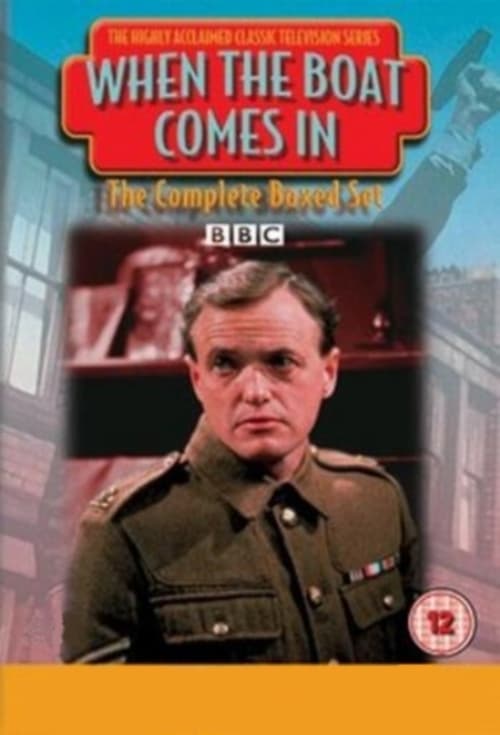
When the Boat Comes In is a British television period drama produced by the BBC between 8 January 1976 and 21 April 1981. Taking place between 1919 to 1937, Jack Ford is a veteran of The Great War who returns to his poverty-stricken (fictional) town of Gallowshield in the North East of England. It dramatises the interwar political struggles of the 1920s and 1930s, and explores the impact of national and international politics upon Ford and those around him.
When the Boat Comes In
This is a series of thrillers designed to keep the audience on the edge of their seats.
Menace
Barlow at Large is a British television programme created by Troy Kennedy Martin and Elwyn Jones. It broadcast from September 1971 to February 1975, with a total of 29 episodes across four series. Stratford Johns reprises his role of DCI Charles Barlow from Z-Cars, Softly, Softly, and Softly, Softly: Taskforce. Barlow at Large originated as a three-part self-contained spin-off from Softly, Softly in 1971 with Barlow co-opted by the home office to investigate police corruption in Wales. Johns departed in 1972, but returned for a further series of Barlow at Large in the following year, Barlow having gone on full-time secondment to the Home Office. In 1974, the series was rebranded Barlow and two further series of eight episodes each followed, introducing DI Tucker. After the finale's transmission in February 1975, Barlow was next seen in the programme Second Verdict in which he, alongside a former colleague, investigates unsolved cases and unsafe historical convictions.
Barlow

London itself takes the starring role in this series of plays from the BBC – a role which varies between hero and villain, enchantress and harpy. The series features extensive location filming, ranging from Soho to the Law Courts, Wembley to the docks. Of the twelve episodes, eleven are believed to be lost.
Londoners

The Enigma Files is a British television detective drama that ran for a single series of fifteen episodes in 1980. Detective Chief Inspector Nick Lewis is tasked with investigating unsolved crimes.
The Enigma Files

Sir Arthur Conan Doyle's non-Sherlock Holmes stories embodying the author's interest in boxing, the supernatural, and medical matters.
Sir Arthur Conan Doyle
A monthly series of highly personal documentary films in which individuals are given a platform to discuss issues close to their heart.
One Pair of Eyes
Second Verdict is a six-part 1976 BBC television series, a dramatised documentaries of classic criminal cases and unsolved crimes from history re-appraised by fictional police officers. Stratford Johns and Frank Windsor reprised for a final time their double-act as Detective Chief Superintendents Barlow and Watt, hugely popular with TV audiences from the long-running series Z-Cars; Softly, Softly; and Barlow at Large.
Second Verdict
Anthology of crime stories in which the telephone plays a key role.
Dial M for Murder
In the year 2050, advances in medicine have resulted in a need for population control. People reaching the age of 100 must submit to a government controlled euthanasia program. The story centers around a 100-year old couple who must now make plans for their funeral.
Wine of India
This play is about a couple trying to overcome the problems in making a successfull clandestine assignation. It was one of a series of playlets by John Mortimer, all named after different parts of London. This was based on a theatrical piece first performed in 1960.
King's Cross Lunch Hour
An anthology series based on the varied stories by W. Somerset Maugham divided into three categories: "Rule Britannia" about colonial life, "Women of the World" which focus on female characters, and "Victims of Fate".
W. Somerset Maugham
A young English exchange student staying with a German family falls for the daughters
Calf Love
Mr Lumley's dazzling sales-talk business sometimes gets out of control.
The Railwayman's New Clothes
When a bossy do-gooder becomes homeless, she is passed from home to home.