
Marianne Hoppe
Acting
Biography
Born in Rostock, Hoppe became a leading lady of stage and films in Germany. She was born into a wealthy landowning family and was initially privately educated on her father's private estate. Later she attended school in Berlin and in Weimar, where she began to attend theatre.[1] Hoppe first performed at 17 as a member of Berlin's Deutsches Theater under director Max Reinhardt. In 1935 she was hired by the controversial German actor and Director of the Prussian State Theatre under the Third Reich, Gustav Gründgens. They were married from 1936-46, until their divorce. Speaking years after the marriage had ended Hoppe stated, "He was my love, but never my great love, that was work."[1] One of the characters in the film Mephisto was reportedly based on her. Hoppe made no secret of her contacts with the Nazi elite in the 1930s/40s, including being invited to dinner by Hitler.[2] Her role in Der Schimmelreiter (The Rider of the White Horse, 1934) made her famous almost overnight, while her "Aryan" face made her a darling of the Nazi elite.[1] Later Hoppe would label this period of her life as "the black page in my golden book".[1] During her time acting at the home of the Prussian State Theatre, the Schauspielhaus, Hoppe developed her analytical approach to acting, which she stated consisted in her "taking apart every sentence" and giving the use of language a brilliance. This method was to be associated with Hoppe throughout her working life.[1] In 1946 her only child, Benedikt Johann Percy Gründgens, was born. Four years later after her divorce from Gründgens, Hoppe had a great success as Blanche Dubois in Tennessee Williams's A Streetcar Named Desire, and increasingly played avant-garde roles, written by authors such as Heiner Muller (Quartett, 1994) and Thomas Bernhard, who became her partner in private life as well. She became a favourite of the young and iconoclastic directors Claus Peymann, Robert Wilson and Frank Castorf. Hoppe died in Siegsdorf, Bavaria, in 2002 from natural causes, aged 93. "German theater has lost its queen", said Claus Peymann of the Berliner Ensemble, whose theatre featured Hoppe's last performance, in Bertolt Brecht's Resistible Rise of Arturo Ui, in December 1997.[2] In one of her last interviews Hoppe stated, "I have a go at happiness every day. That takes discipline, a virtue every halfway decent actor should have."
Known For
Tatort is a long-running German/Austrian/Swiss, crime television series set in various parts of these countries. The show is broadcast on the channels of ARD in Germany, ORF in Austria and SF1 in Switzerland.
Scene of the Crime
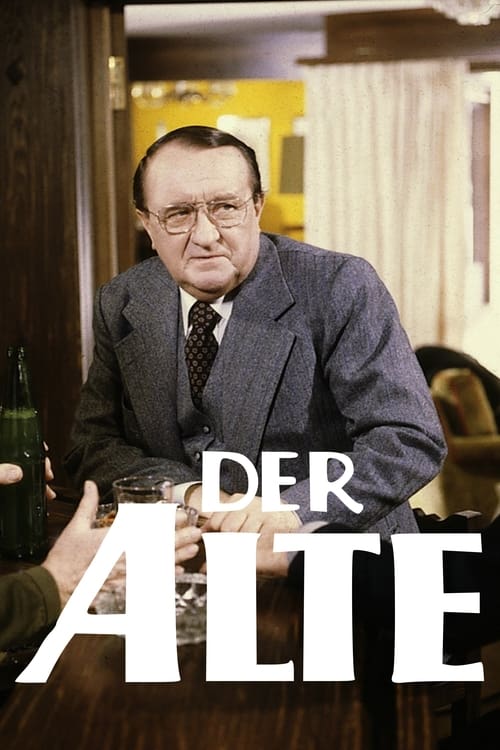
A police department, lead by an older, experienced detective solve crimes together.
The Old Fox

The Bambi, often called the Bambi Award and stylised as BAMBI, is a German award presented annually by Hubert Burda Media to recognize excellence in international media and television to personalities in the media, arts, culture, sports, and other fields "with vision and creativity who affected and inspired the German public that year", both domestic and foreign. First held in 1948, it is the oldest media award in Germany. The trophy is named after Felix Salten's book Bambi, A Life in the Woods and its statuettes are in the shape of the novel's titular fawn character. They were originally made of porcelain until 1958, when the organizers switched to using gold, with the casting done by the art casting workshop of Ernst Strassacker in Süßen.
Bambi
No description available.
3 nach 9
No description available.
German Film Award
No description available.
Goldene Kamera

Der Kommissar is a German television series about a group of detectives of the Munich homicide squad. All 97 episodes, which were shot in black-and-white and first broadcast between 1969 and 1976, were written by Herbert Reinecker and starred Erik Ode as Kommissar Herbert Keller. Keller's assistants were Walter Grabert, Robert Heines, and Harry Klein who, in 1974, was replaced by his younger brother Erwin Klein.
The Commissioner
Annual awarding of the Grimme Awards.
Grimme Award
No description available.
Sabine Christiansen
No description available.
Blauer Panther
No description available.
Bavarian Film Awards
No description available.
Was bin ich?
No description available.
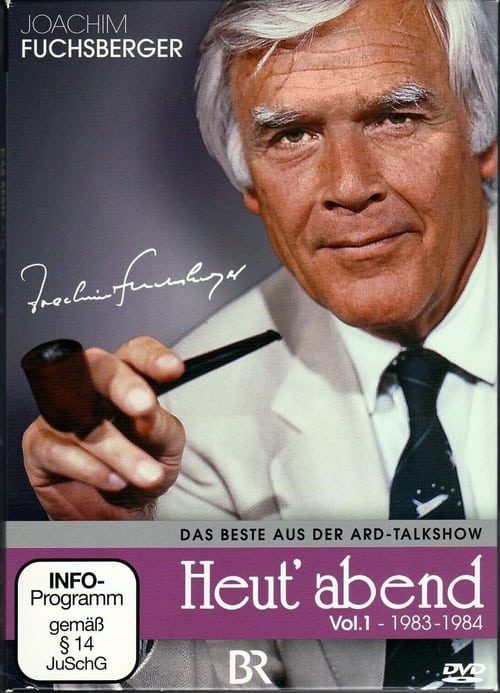
Heut' abend
No description available.
Showgeschichten
No description available.
Gut gefragt ist halb gewonnen

No description available.
Zeugen des Jahrhunderts
No description available.
Leute
No description available.
Zeil um Zehn
A six-part television series, a parody of the Munich newspaper, its gossip reporter Michael Graeter, and its publisher Anneliese Friedmann. The series centres around the tabloid reporter Baby Schimmerlos, who plays in the Munich "Schicki-Micki" scene of the 1980s.
Kir Royal
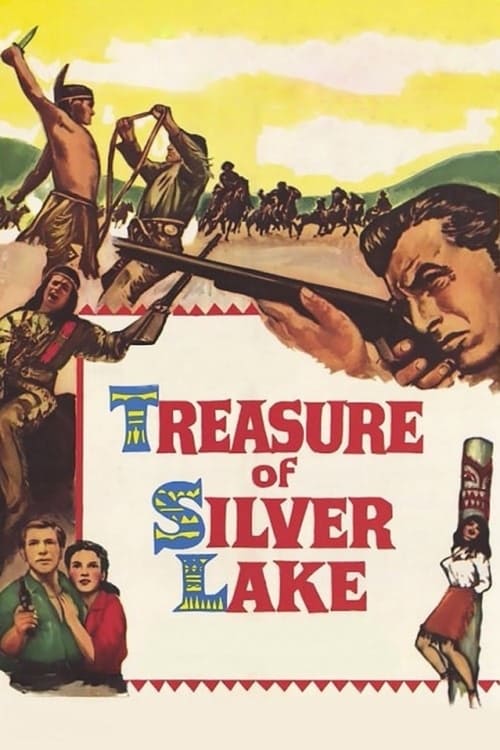
Fred Engel's father is murdered by Colonel Brinkley in order to acquire a treasure map, however the Colonel only acquires half of it, the other half as held by Mrs. Butler. Discovering the scene of the crime, Old Shatterhand and Winnetou help Fred bring his father's murderer to justice and locate the treasure of Silver Lake.