Acting
Witty narration follows the history of Versailles Palace; founded by Louis XIII, enlarged by autocratic Louis XIV, whose personal affairs and amours, and those of his two successors, are pursued in more detail to the start of the Revolution, after which the story is brought rapidly up to date.
Claude is a young man whose girlfriend has just broken up with him. Feeling unable to overcome the pain, Claude has no other idea than to end his life. Back home, he finds five middle-aged or elderly men sitting at the dinner table but he refuses to join the guests and goes upstairs to his bedroom. The worst is prevented thanks to a servant who has caught sight of Claude's revolver. Claude 's uncle joins his nephew and manages to persuade him not to take action. He takes him downstairs to the dining room where each in turn, the five guests start telling their own story. For it happens that they too once had their heart broken and that they too once wanted to die for love.
Celestin works as an organist at a girl's school. By day, Celestin is the meek and mild target of the girls' incessant practical jokes. By night, however, he is the celebrated composer of popular operas -- and the romantic vis-à-vis of a celebrated stage star. When schoolgirl Denise stumbles onto Celestin's secret, she threatens to tell all -- but only if Celestin refuses to escort her to the opening night of his latest opera. As a result, Denise falls in love with a handsome young soldier, while Celestin is accidentally shipped off to an army camp. A series of silly coincidences brings happiness to all concerned by fade-out time.
After serving in the trenches of World War I, Jean Diaz recoils with such horror that he renounces love and personal pleasure to immerse himself in scientific research, seeking a machine to prevent war. He thinks he has succeeded, but the government subverts his discovery, and Europe slides with seeming inevitability toward World War II. In desperation, Diaz summons the ghosts of the war dead from the graves and fields of France to give silent, accusing protest.
The Marcenat couple seem to have everything they need to be happy. However, Odile's frivolity and Philippe's jealousy drive the couple apart. Philippe, manager of the family printing business, finds solace in Isabelle, a long-time employee at the paper mill. Isabelle's routine life, entirely devoted to her work, leads Philippe to strike up a romantic relationship with the playful young Misa. But, faced with Isabelle's grief, Philippe puts an end to the romance. When Odile, inconsolable since their break-up, finally commits suicide, Philippe realizes that she was his true love.
In 1914, in the first months of World War I, Louise Jarraud loses her husband, killed on the front. Shortly after, she gives birth to a baby, who soon dies. Devastated by this double misfortune, Louise decides to dedicate her life to caring for the children of others. She becomes a nurse with several employers, giving her affection to little boys or girls. A widower and another man propose to her but she refuses twice determined as she is to live only for the children in her charge.
When Grover's Corner, a small, uneventful American town, becomes a mirror to an entire society. This Pulitzer Prize-winning classic of American theater, adapted here for television, portrays the Gibbs and Webb families, captured in the immutability of their daily lives in the 20th century.
Young conductor Roberto Lombardini has never known his father who is actually a former musician, a failed piano player who has sunk into alcoholism.
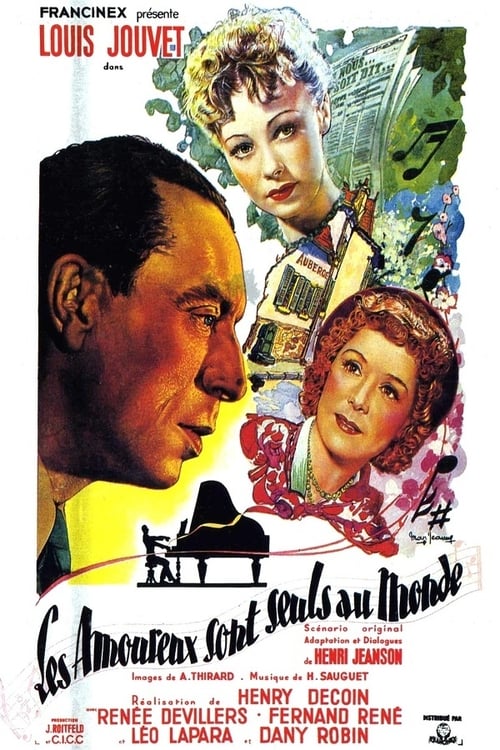
Gérard Favier is a famous composer who is deeply in love with his wife Sylvia. The couple meet Monelle, a pretty, talented young pianist and ardent admirer of Gérard Favier. The musician takes the young woman under his wing and launches her to success. But a tabloid reveals an affair between the composer and his protégée.
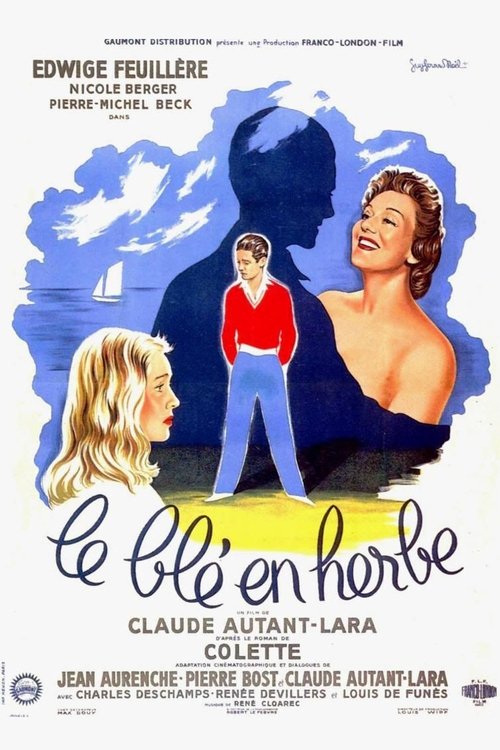
Friends since infancy, two youngsters struggle as their platonic bond blossoms into romantic love with adolescence.
A love between a teacher and his assistant is thwarted, because of their too great age difference.
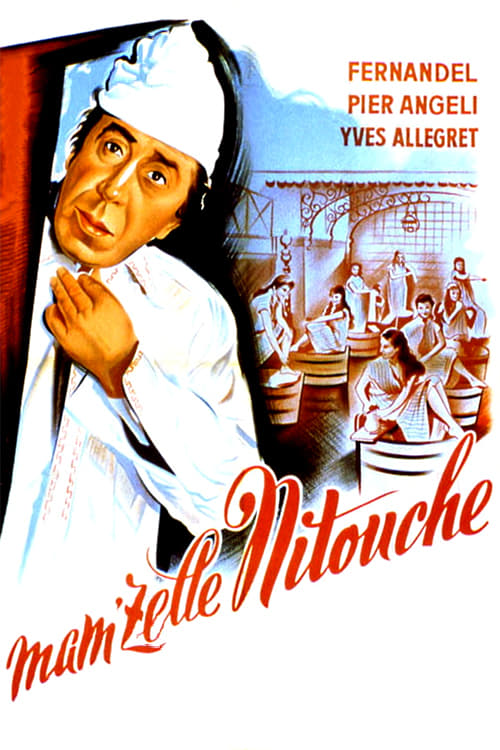
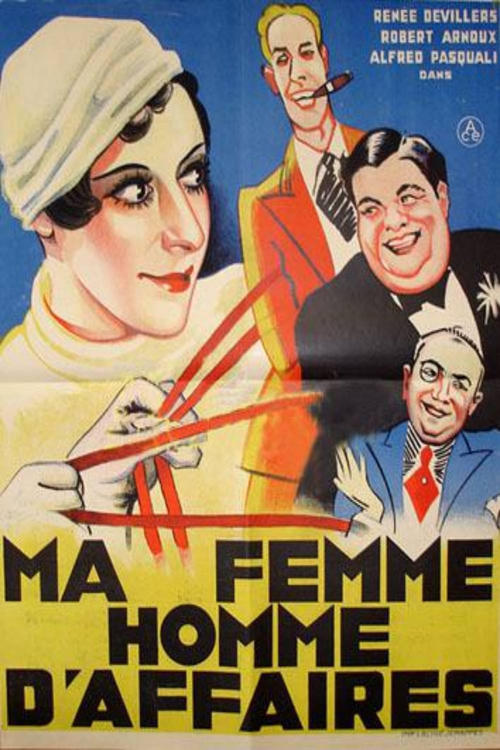
Pierre is timid while his wife is ambitious and suffers from his mediocrity. She pawns everything she owns, rents a sumptuous apartment in a palace, and through bluffing, Pierre is appointed director of a perfume factory and the enterprising Arlette sees all her desires come true.
Professor Louis Delage is a kidney transplant specialist. He is so good in his field that his peers nickname him the "great man". But one day, one of his patients die during surgery and Delage starts doubting. Is he actually such a great man? To fight desperation he decides to take in the deceased child while devoting more time to Florence, his hitherto neglected wife.
Roger Laroque, an honest industrialist, is the victim of a criminal machination by Julia de Noirville, his possessive and jealous mistress allied to the perfidious Paul Luversan, meant to make Roger take responsibility for the crime he himself committed. Laroque is sent to prison, from where he escapes by sea. When he is reported missing, it looks like he drowned. But he reappears with revenge as his objective. He also wants his daughter Suzanne back. For his wife, it's too late, she died of grief.
The tribulations of a banknote, from its exit from a counter to its destruction, passing through dozens of hands.
Alfred Boulard, a good-natured electrician, gives his blood to save Mona Thalia, a great theater actress. Mona Thalia survives and Boulard becomes the man of the hour. Grateful to him, Mona helps Alfred to become a singing star. But his fame will be short-lived.
The story of how the people of Paris cope with the strains and struggles of war, from the siege of the city by the Prussians during the Franco-Prussian War of 1871 to the invasion by the Germans in World War II.
A young provincial engineer sends romantic stories he has written to a cousin in Paris, who claims them as his own work.The writer comes to the city and for a while gets even with his relative by having a fling with the man's wife.
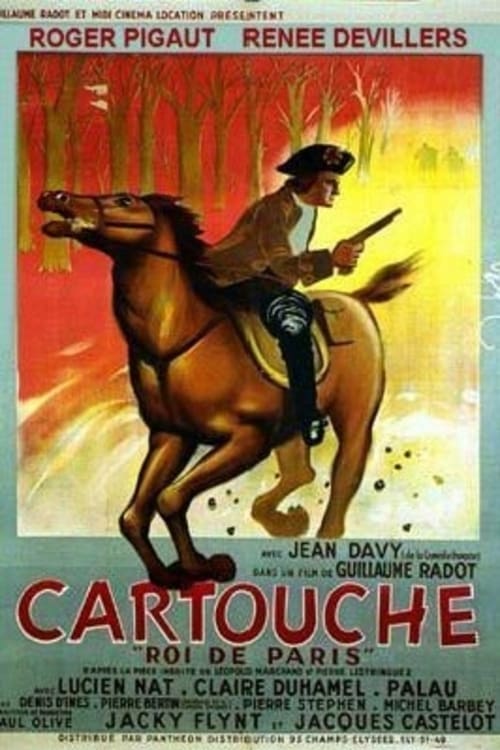
The romantic life of the head of a bandit gang, wanted by the police. Cartouche gets away with being deported to Louisiana after unmasking a plot by a Duke against the throne.
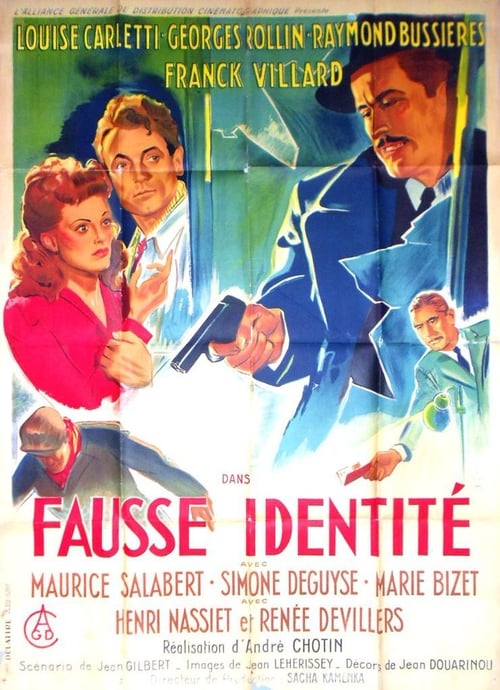
A man who has just deposited a will with a notary is run over by a car. As his overcoat bears the name and address of Emile Blondin on a label, the police go there and discover that the dead man is not Emile Blondin. But this one is soon discovered murdered. The police then became interested in Georges Blondin, the victim's brother, whose goddaughter, Juliette, was also the notary's secretary.