Writing
No description available.
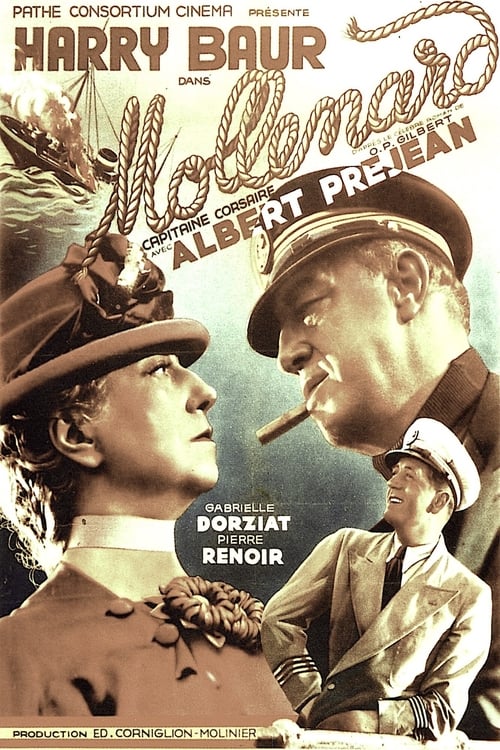
Captain Justin Mollenard works for a company that sells armaments to the Far East. After an eventful stay in Shanghai, where he and his cargo are the victim of a malicious attack, he returns to his hometown of Dunkirk. Mollenard receives a frosty welcome from his wife Mathilde, who resents the way in which he has neglected his family for so many years. Mollenard’s only wish is to get back to sea as soon as he can, but a sudden heart-attack leaves him paralysed and entirely in his wife’s power...
Originally titled Nous Sommes Tout des Assassins, We Are All Murderers was directed by Andre Cayette, a former lawyer who detested France's execution system. Charles Spaak's screenplay makes no attempt to launder the four principal characters (Marcel Mouloudji, Raymond Pellegrin, Antoinine Balpetre, Julien Verdeir): never mind the motivations, these are all hardened murderers. Still, the film condemns the sadistic ritual through which these four men are brought to the guillotine. In France, the policy is to never tell the condemned man when the execution will occur--and then to show up without warning and drag the victim kicking and screaming to his doom, without any opportunity to make peace with himself or his Maker. By the end of this harrowing film, the audience feels as dehumanized as the four "protagonists." We Are All Murderers was roundly roasted by the French law enforcement establishment, but it won a special jury prize at the 1952 Cannes Film Festival.
A group of French soldiers, including the patrician Captain de Boeldieu and the working-class Lieutenant Maréchal, grapple with their own class differences after being captured and held in a World War I German prison camp. When the men are transferred to a high-security fortress, they must concoct a plan to escape beneath the watchful eye of aristocratic German officer von Rauffenstein, who has formed an unexpected bond with de Boeldieu.
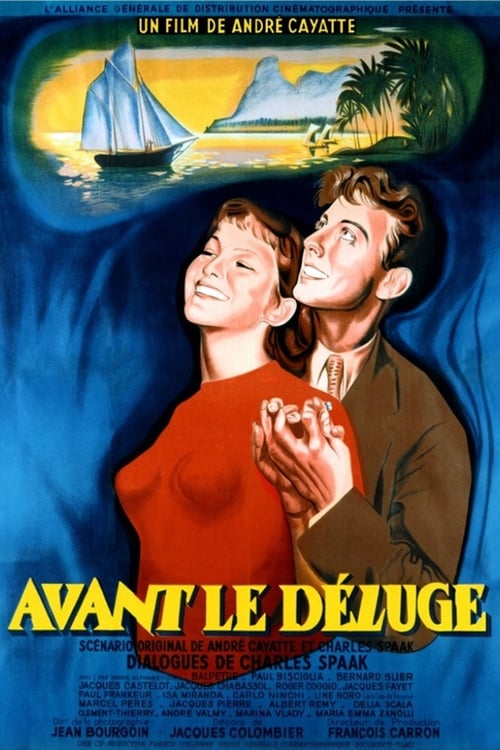
The title of this French "reality" drama, which translates to Before the Deluge, is a play on Louis XVI's famous prognostication, "Apres moi, le deluge." Set in 1950, the film concentrates on five Parisian adolescents. Certain that the next war will herald the apocalypse, the youngster make plans to run off to a desert island and set up a new society. This, however, will require money, which is why the boys decide to pull off a "necessary" robbery. Idealism collapses in the face of cold reality, as the five youths suffer from the consequences of their actions. Avant le Deluge was one of a group of films cowritten by director Andre Cayatte and Charles Spaak which endeavored to explore the touchy social issues of the day: others in the Cayatte-Spaak canon include the euthanasia-themed Justice est Faite and the capital-punishment tract Nous sommes tous des assassins.
The story of the Swiss soldier, Henri Dunant, who was responsible for the founding of the Red Cross, and who was offered the first Nobel Peace Prize.
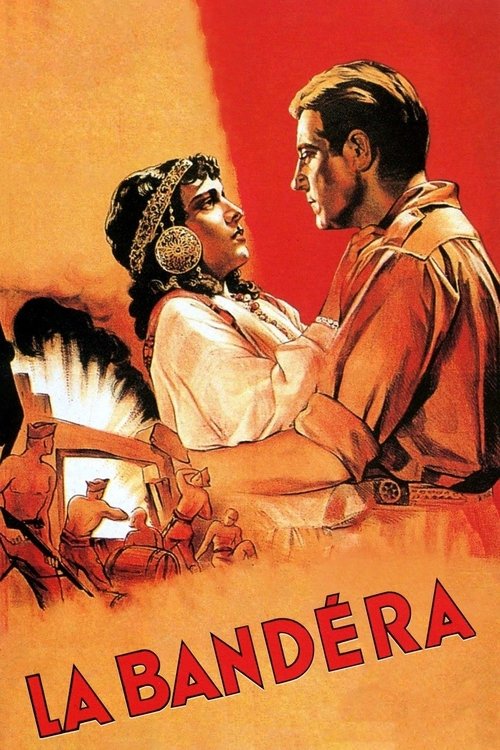
Pierre Gilieth has committed a murder in Paris. He flees to Barcelona, where he runs out of money. So he joins the Spanish Foreign Legion. He meets there two fellow countrymen, Mulot and Lucas. He tries to forget his fault... but Lucas's friendship soon appears to be less unselfish...
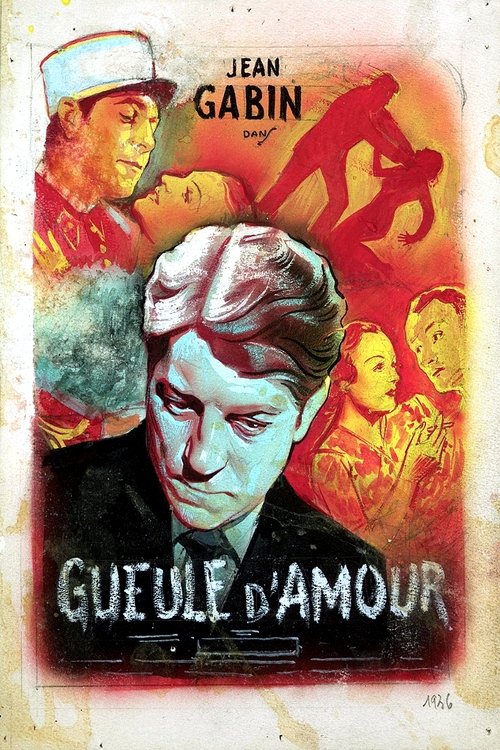
Lucien Bourrache, a good looking non-commissioned officer at the Spahis, is used to charm many women. He met Madeleine Courtois at Cannes. She is beautiful and lives in luxury. He lends her a large amount of money, which she loses gambling. Then she drops him. But Lucien is now in love, and once demobilized, he goes to Paris to find her again. But he's not so sexy without his uniform, and Madeleine and him do not belong to the same milieu.
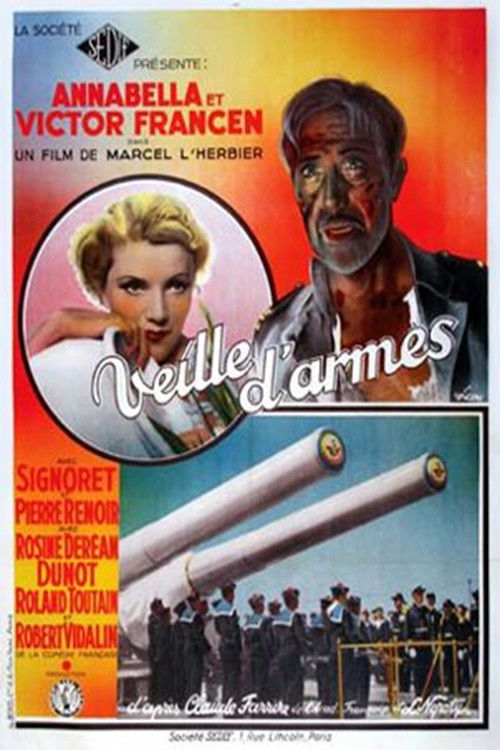
Before the Battle is the English-language title of this espionage melodrama. The first half of the film takes place aboard a French cruising ship, steaming through dangerous waters during WWI. Among the passengers is heroine Jeanne (Annabella), who was once in love with first-officer D'Artelles (Robert Vidalin) but he now seems strangely preoccupied. It turns out that the ship is on a secret mission, which ultimately dooms the vessel to a Lusitania-like death. After the sinking, Captain De Corlaix (Victor Francen) faces a court-martial, and it is at this point that the film clarifies several baffling plot points. Despite its complexity, the story is fairly believable, with the exception of the grafted-on romantic subplot.
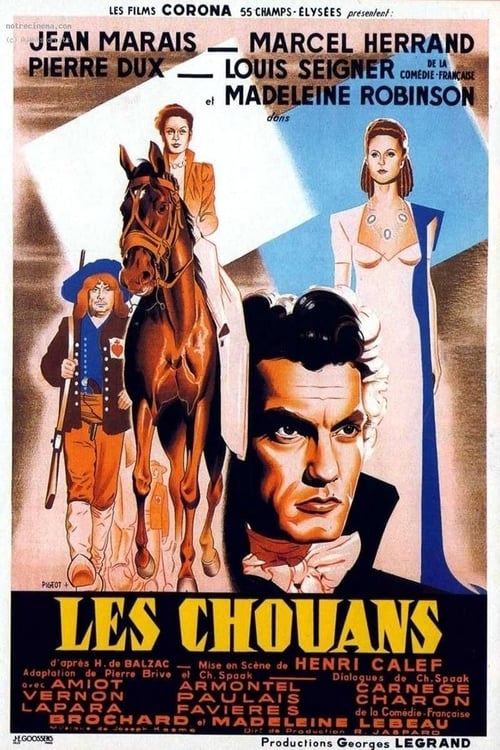
The Marquis de Montauran was appointed to command the Chouans whose first two revolts were crushed. An aristocrat, Marie-Nathalie de Verneuil, is sent by Joseph Fouché to seduce and capture him.
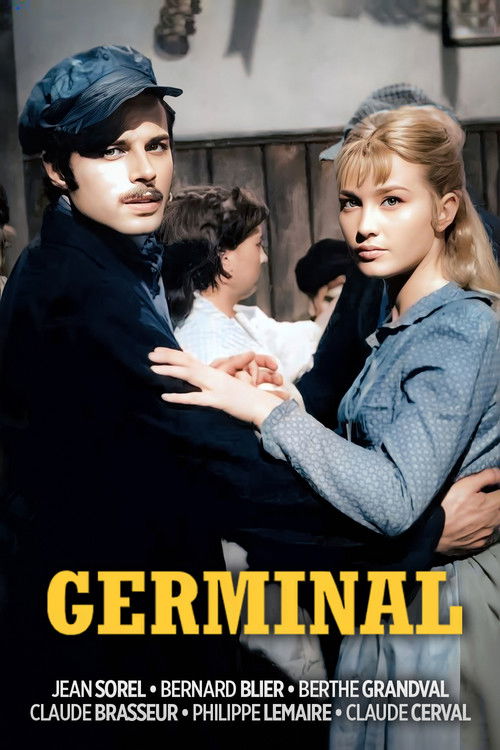
Dismissed from the railroads in 1863 for his union activities, Etienne Lantier found a job at the Voreux coal mine. But work was hard, wages were low and safety left much to be desired. Lantier tried to organize the miners into a union. When mine manager Hennebeau refused to negotiate, the workers launched a general strike, which ended with the intervention of the troops.
A compilation of segments covers the seven deadly sins of greed, wrath, envy, pride, lust, sloth, and gluttony.
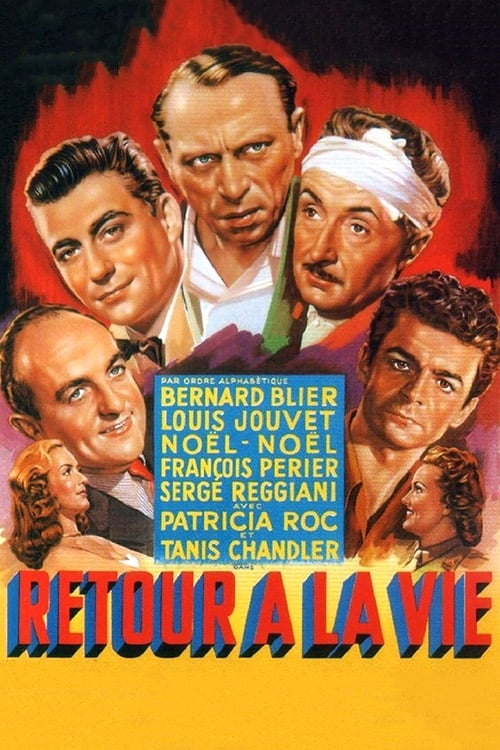
In France in 1946, the difficult return to civilian life of five deportees and prisoners of war after having lived through the hell of the Second World War.
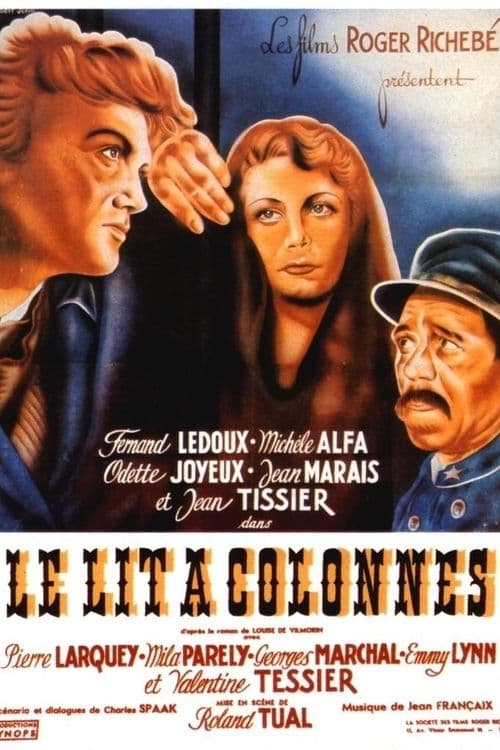
In his prison cell, the composer Remi Bonvent composed an opera, The columns bed. The director of the prison, Porey Cave, succeeds made believe he is the author of this work. The death of the two protagonists will prevent the discovery of the truth.
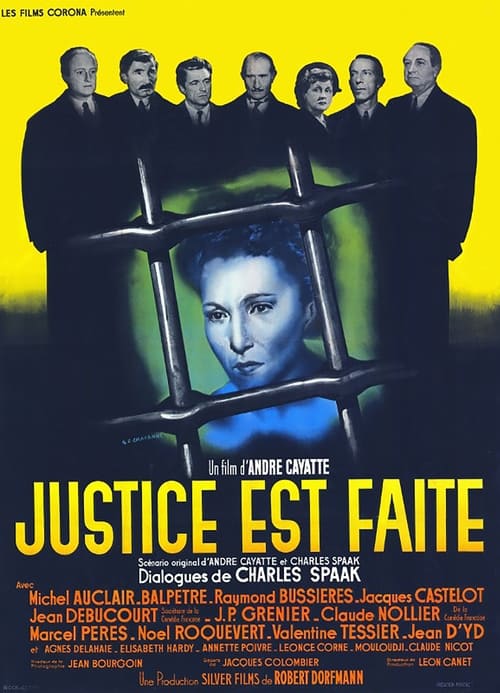
Elsa Lundenstein is accused of having murdered her lover. The jury discusses the case vividly. All members are somehow prejudiced because of personal life experience and subsequently each member reads something different into the presented facts.
Bob Letellier, a good looking rich kid who studies science, makes the acquaintance of Alain, a cynical and immoral young man. The latter introduces him to the existentialist circles of Saint-Germain-des-Prés. Bob is invited to a party and becomes Clo's lover, a rich heiress.
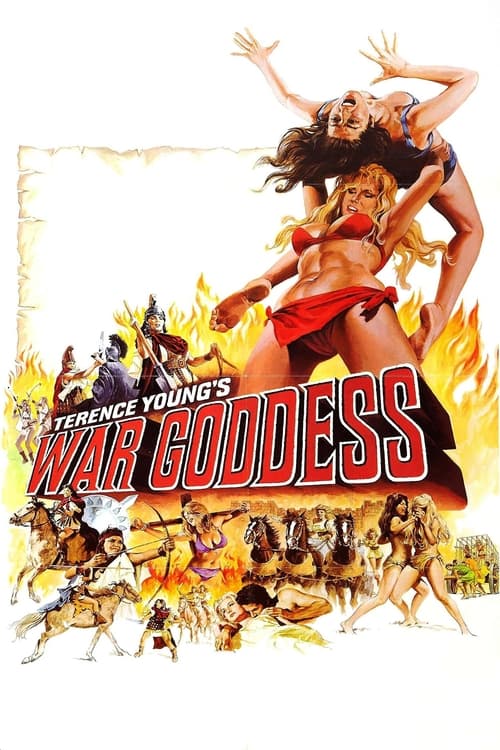
Alena Johnston is Antione, the War Goddess of the Amazons, who must mate with the Greek king Theseus to propogate her race. Traditionally this is done only out of duty, but this time she falls in love with her "boy toy"... a definite no-no for an Amazon queen. Helmed by James Bond director Terence Young and based on a story co-authored by Robert Graves, this sexy and spectacular entry in the sword-and-sandal genre features an incredible bevy of Euro-cult starlets including Rosanna Yanni, Helga Line and Luciana Paluzzi, plus a lyrical score by Academy Award-winner Riz Ortolani.
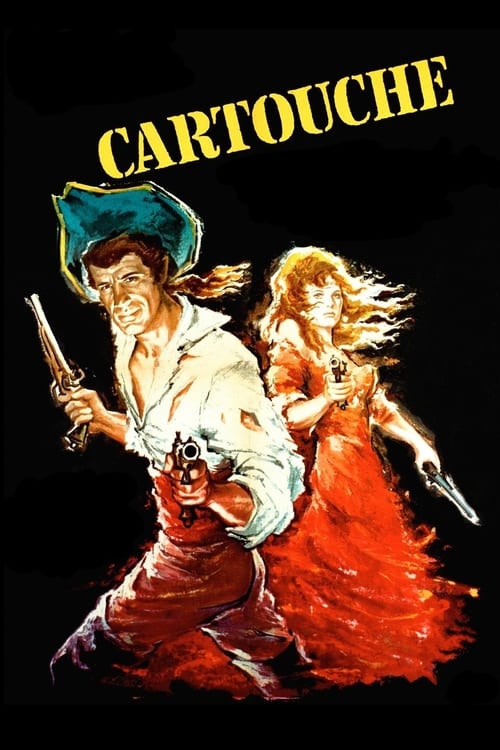
In the 18th century, Louis de Bourguignon is working with the Malichot's gang, but their ways are too 'unethical' for him. He creates his own band, acting under the name of Cartouche, making audacious robberies of the rich people, and even distributing the takings with the poor. Thus, cartouche attracts the people's sympathies, Venus's love, and hate from the Police and Malichot... Cartouche can escape all the traps they set at him - except the entrapments of love. Eventually, he will be saved by a woman, at her own cost.
Tsar Alexandre II meets a young student, Katia. He understands that he loves her and try to send her away but they end up seeing each other again and becomes his mistress. With the help of Katia, Alexandre prepares a liberal constitution, but these reforms make him hostile to the more privileged subjects without satirising the revolutionaries against the regime.
Following the assassination of a financier, several people who had an interest in seeing him disappear are suspected.